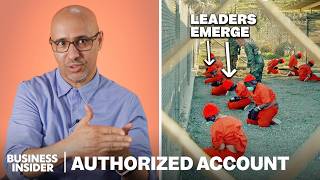

15 Years in Guantanamo: Never Charged
45sA firsthand account of being held without charge for 15 years is shocking and emotionally compelling, sparking curiosity and debate.
▶ Play Clip"Delivers an authentic, detailed insider account that matches the title's promise of explaining how Guantanamo works."
Mohamedou Ould Slahi, a former detainee held for 15 years without charge, provides an authorized account of Guantanamo Bay's operations, including its design, torture techniques, daily life, and the broader implications for justice and democracy.
Slahi introduces himself as a former Guantanamo Bay detainee held for 15 years without charge or conviction, and states he will share everything he is authorized to tell.
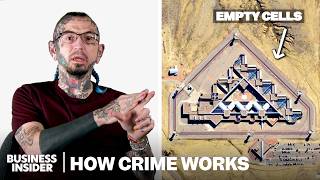
Guantanamo was designed from the beginning to undercut the rule of law, with impossible escape due to multiple gates, security levels, towers, and mines.
Slahi describes his first night on August 5, 2002, being dragged from a plane, subjected to 37 hours of punishment, and placed in a small cell (6x8) with a bean hole, leading to panic and claustrophobia.
For 9 months, Slahi was in general population, where he learned English from other detainees, and observed how leaders emerged and guards manipulated communication through rumors.
Slahi details torture methods: sleep deprivation for 70 days, threats of sexual assault, three instances of sexual assault, and waterboarding once, which he nearly died from.
Surviving torture gave Slahi a certain strength, but he notes that others did not survive, and journalists were not allowed to see the true conditions.
His grandmother's teaching to be kind kept him going. He protested via a 5-day hunger strike and refusing to talk to interrogators, but both were broken by torture.
FBI agents used fake names and threatened that another team would torture him. Richard Zuley's team did torture him, and a letter from the DoD threatened his mother's kidnapping and sexual assault.
In early 2004, Slahi wrote a confession under duress, after which he was designated for the death penalty, though he felt numb to the news.
In 2005, he received lawyers; in 2010, a judge ordered his release for lack of evidence, but he remained imprisoned for 7 more years, deemed 'unreleasable'.
Slahi describes the maze-like layout with multiple gates, a 6x8 cell with a metal bed, and the yard with a high wall, never seeing sunrise or sunset in 15 years.
Operating cost per detainee is about $1 million a month, with contractors making fat profits, and third-country nationals (TCNs) paid as little as 'one buck a day'.
Guards' duties and interactions, including a friendship with Sergeant Steve Wood, who later became a friend and godfather to each other's children.
Slahi was captured due to a phone call from a cousin using Osama bin Laden's phone, leading to his kidnapping and transfer to Jordan, a CIA black site.
He never saw his mother again; learned of her and his brother's death 11 years later, leading to a breakdown and suicide watch.
He wrote his diary in Arabic, French, and German, hiding it from guards, and later reconstructed it in eight weeks after his original was confiscated.
His book 'Guantanamo Diary' was published in 2015, the first by a detainee, making him feel free inside prison.
Released on October 17, 2015, to Mauritania, he describes his first experiences of freedom, including watching the sunset and eating national dishes.
He now lives in Rotterdam, runs a consultancy, and emphasizes kindness and learning as key lessons, having learned Dutch and gained citizenship.
Guantanamo was established under the Authorization for Use of Military Force, detaining about 900 people, with more deaths than convictions, and remains a symbol of authoritarianism.
Slahi calls for closing Guantanamo, noting its symbolic importance, and emphasizes the lack of accountability and his personal forgiveness.
Slahi's account reveals the systemic failures and human rights abuses at Guantanamo Bay, emphasizing the need for accountability and closure, while his personal journey highlights resilience and forgiveness.
How long was Mohamedou Ould Slahi held in Guantanamo Bay?
15 years
What was the size of the cell Slahi was kept in?
6x8 feet
02:34
What was the name of the first torture block Slahi was sent to?
Oscar Block
02:15
How long did Slahi endure sleep deprivation during interrogation?
70 days
06:39
What was the approximate cost per month to keep a detainee at Guantanamo?
$1 million
17:25
What was the name of the guard who became Slahi's friend?
Steve Wood
21:09
In which country was Slahi first taken after his kidnapping?
Jordan
24:22
What was the title of Slahi's published diary?
Guantanamo Diary
31:21
How many people were taken to Guantanamo Bay according to Slahi?
About 900
37:07
What was the name of the film based on Slahi's story?
The Mauritanian
31:44
Design to Undercut Rule of Law
Reveals the intentional legal design of Guantanamo, a key insight into its function.
00:12Enhanced Interrogation Techniques
First-hand account of specific torture methods, providing factual evidence of abuses.
05:39Saving Grace and Protests
Shows personal resilience and the limits of protest under torture.
09:00Cost and Corruption
Exposes the financial incentives behind Guantanamo's operation, a critical systemic critique.
17:25Guantanamo's Establishment and Legacy
Connects Guantanamo to broader authoritarian trends, a powerful concluding argument.
36:12[00:00] My name is Mohamedou Ould Slahi. I was held and detained in Guantanamo Bay for 15 years. I was never charged or convicted of any crime. And this is everything I'm authorized to tell
[00:12] you. Guantanamo Bay was designed from the beginning to undercut the rule of law. Escaping was impossible. There are so many gates and so many levels of security.
[00:29] Even if you miraculously get out of everything and survive the shot of the towers and survive the mines outside, you find yourself in the water. If you are under interrogation like in my case,
[00:43] you are inside the cell. You can shout all you want. No one is going to hear you. I will never forget my first night in Guantanamo Bay. August the 5th of 2002. Before that flight,
[01:04] I never heard of the place. I was kidnapped right after 9/11 and I was held incommunicado and I remember being dragged out of the plane. I was walking dead. I was under constant punishment
[01:21] for I think 37 hours. The only thing I was feeling was total and utter terror, confusion, and disorientation, and still feel to this day the beating. We were taken to a place and I stayed the
[01:41] best part of the day under the baking sun. If you remember the photo that they showed, those people kneeling with goggles, blindfold. I was one of those people. They put me in those red infamous
[02:00] uniforms. They took my pictures, my fingerprints, and it was almost surreal. They asked what languages you speak. So back then I told them I spoke Arabic, German and French. So my English
[02:15] was not functional. They start to interrogate me. I don't know how long they took me to Oscar Block. Oscar block is one of the torture blocks. There was India block. I went also to India block. But
[02:34] my first torture block was Oscar. And Oscar was like divided to small what we call them fridges, very small cell, 6x8. And I never forget my first night when the door slam shut. There was nothing
[02:54] in there. And I am claustrophobic. I start to panic. I couldn't breathe. There was only this bean hole, a very small hall through which they give you food and they talk to you. They also do
[03:08] the head count. When they count the detainees, they do it every 15 minutes or so. And because this way you cannot sleep because they will open it, you know, it's very heavy metal. This is when
[03:21] it hit me. I know there was no one to save me. I knew I was on my own against the most powerful country in the world, arguably the most powerful country ever. And they can do anything they want.
[03:44] For 9 months, my whole time, I was with general population. I was very happy. I could talk to other detainees. My neighbors, some were very famous; David Hicks from Australia and another
[04:01] detainee Moath al-Alawi. I was general population but I was in a cell. So we were not...like I was not sitting with them or anything. One of the British guy and the Australian guy he started
[04:14] to teach me English, you know just I just hear and then memorize. I wasn't allowed to have papers. I wasn't allowed to have pens. In that social order in a prison, leaders emerge.
[04:28] People who want to be a leader with religious authority or age authority. People with knowledge, especially of the English language. If you know the English language that's a privilege because
[04:41] the guards use you to translate between them and other detainees and that gives you like a special place where you can like expect detainees to give you a special respect. The guards were completely
[04:57] aware of everything that was going on and they used to their advantage. When they see leaders, they want to talk to the leaders to keep control of the prison population. What also they do,
[05:13] they spread rumors. They put a rumor in one block and they see how it develops in the other blocks because they want to see the communication between the blocks, how information flows. They relay messages but mostly fake news that was spread by interrogators.
[05:39] In the general population in Guantanamo Bay, I was taken to interrogation every single day. Let me tell you about enhanced interrogation technique. After 9/11, American public,
[05:55] and rightly so, was putting a lot of pressure on the government to hold people accountable who killed 3,000 people. But American government after two years was none the wiser. And instead of
[06:10] being honest with the public, saying we screwed up, they said, "We think those people who are who already arrested are bad people, but how can we make them bad people? How do could we
[06:24] bump them from detainee to real criminal who are responsible? We want full-fledged confessions." Full-fledged confessions they did not get. So they want to use torture. What was applied on me, it
[06:39] started with sleep deprivation. The interrogation was 24 hours. I remained in that 70 days. So, and then they threatened me with like sexual assault. They did to me sexual assault three
[07:01] times. What was done was stripping and then touching you. There was no penetration. I was waterboarded once. I almost died. And you know the problem enhanced interrogation technique
[07:20] even if they apply them you know 100% the way it was written is torture but they went beyond them because it's a Pandora box. I give you two example. One time they took me to the fridge,
[07:42] a place where they put you. They keep you very cold and then they would come to me and then they would pour water on me and the pour water would get cold and then they told me they would
[07:57] keep doing this until I decide to speak. I was so cold and hypothermia start to set in I couldn't speak and then this Sergeant, I never forget it. Her name is Mary. Sergeant Mary, she asked him
[08:14] to stop I don't know whether she saw that I was dying and the other one is when they took me for the water boarding and beating I was beating everywhere I couldn't breathe but I survived.
[08:32] And if you survived, you have certain strength. But there are people who did not survive. That's why they did not allow journalists to Guantanamo. They allow now the highly orchestrated visit where
[08:45] they show you only what they want to show you. When Barack Obama came, that they stop torture. Torture was already illegal. It was illegal during George W. Bush's time. And after his time,
[09:00] and today. But if you're powerful enough, you can torture people and you can get away with it. You know what really kept me going? My saving grace I contend was the teaching of my grandma. My grandma
[09:16] always told me Mohamedou, Allah wants you always to be a kind person. So to protest my detention, there are two things I personally did. None of them worked. So I started with hunger strike and
[09:35] I did five days and I stopped because I knew I couldn't continue because my plan was not to die and it's painful. And the other thing I did I refused to talk to my interrogators. They
[09:53] would ask me question. Your name? No answer. Where are you from? No answer. Always would tell them in the beginning, you need to tell me why you kidnapped me and I will talk to you. As
[10:10] long as you don't answer this question, I will not talk to you. And this was broken with torture. When they torture me, I was talking like a bird, like a singing bird.
[10:29] I'm going to talk about the difference between my treatment through the FBI, CIA and the military intelligence. I'm tempted to say they are working together very closely.
[10:41] CIA people who interrogate me in Guantanamo Bay, they did not present themselves. I only assume they are CIA. But FBI will present themselves; this is my name and I'm FBI. But they give you
[10:55] fake name as it turned out. So Rob Sidler and Chris were my interrogators. Later on I learned that those are fake names. They never tortured me. But they told me if I don't talk to them,
[11:10] there is another team that would come and torture me. And I was so stupid and I told them bring it on. This is when Richard Zuley's team, (Richard Zuley is a contractor), he start
[11:22] to bring his team. They start to torture me and they brought me a letter from the department of defense and the letter said that they would kidnap my mother. They insinuated she would be, she would
[11:37] be also sexually assaulted, and they say because I refused to confess to my crimes. And I lost, I lost it. I told them, I would confess to anything you want. I'm sorry I was not cooperating. And so
[11:58] early 2004, I wrote my confession. They told me to write my confession. And after I did that, two things happened. First, the good guys of the CIA with the necktie who don't torture people came
[12:16] to collect the fruits. Second thing what happened I was designated for death penalty and I remember same guy who helped me write the confession he came to me and said you are now a death penalty
[12:33] case. I'm not a brave guy but I wasn't scared I had no feeling I just was looking at him with his
[12:45] lips moving explaining to me what death penalty means everybody will die. I, you, your neighbor, everybody will die. But the fact that someone comes to you and looks into your eyes and say,
[13:01] I am going to kill you and I'm starting the process to kill you. That's another level of dealing with our mortality. I wasn't thinking about death. I was thinking about all the things I
[13:20] regretted in my life. The thing unraveled in early 2005. In mid 2005 I received for the first time my American lawyers. And along with them I was also assigned to a new prosecutor, Air Force Colonel
[13:38] Moe Davis. The government did not want me to go to any court. They did not allow me to go to their periodic review and they made these kangaroo court what they call C.R.T. (Combative Review Tribunal),
[13:55] something like that. And then nothing. In 2009 my lawyer succeeded to get a hearing and I testified in the hearing. I wasn't allowed to go to court. I could only do through a computer connection video
[14:12] call because I was not allowed to go to the US. In 2010, I received the decision of the judge. He said there is no evidence to hold Mohamedou and he ordered my release. And then I was stuck in the
[14:29] system. It's four years after that. They allowed me to go to a PRB. This is a periodic review board set up by Obama administration. I stayed seven long years in a prison after I was declared
[14:46] innocent. The dilemma of Guantanamo Bay the only way out if you had committed crime because they could say he did commit this we can convict him and then he can get out. But you didn't commit
[15:00] anything. You've seen too much. You know and then you are unreleasable. As later my government told me, when they asked the US government for my release they told them he's unreleasable.
[15:20] When you come to the prison as soon as you enter the door you are mine. I will explain to you. Of course you are escorted and you go inside and then you will go to the next gate at least you
[15:32] have to go through fourth gates in order to get to my area. And then after that you have to go inside a building, there's a door. And then inside that building there is a cell inside that building. So it's like a maze the cell where 6x8 there is a metal bed which is part of the cell
[15:56] there is a hole and a sink in the middle of the door there is a bean hole through which they give you food. In the beginning during the torture program there is no...you don't leave the cell.
[16:10] The interrogation is inside but when the torture program died down, I had the right to go outside, outside the cell. Of course the yard was five by five. There is like a perimeter very long wall.
[16:31] Snap screen they call it. In 15 years I never saw the sun rise or sun goes down. Never in 15 years. Sometime I climb try to climb a little bit but I never made it to see the sun rise or the sunset.
[16:49] Cross talk meaning talking to a detainee. You are not allowed to talk to them. That happened actually. It was not allowed to talk to a detainee from another block. When the detainee is with you,
[17:04] you can talk to them because he's next to you. But when the detainee is another block, you cannot shout and communicate with them. If you are under interrogation like in my case, there is no way for you to talk to anyone anyway. You are inside the cell.
[17:25] Do you know how much it costs to operate Guantanamo or like how much it cost to keep somebody there? The information I got consistently from the people who spoke to me in Guantanamo Bay, either interrogators or guards, it's about $1 million a month. It's crazy because this is a very
[17:44] big business. If you have a good contract with the government, they send you to Guantanamo Bay, let's say, to provide clothes. We have no clothes, just a uniform. And then they
[17:57] bring like almost slave labor. Like they call them TCN, third country nationals, mostly from the Philippines and Jamaica. Those are the people who do the heavy lifting of cooking,
[18:12] cleaning and driving stuff around. They also are the builders. So those big companies, prison companies, very big establishment in the US, they come get very fat contracts in Guantanamo Bay and
[18:27] then employ like Jamaicans and Filipinos. This is something I saw with my eyes. Of course, I did not ask them what they paid them, but the guard they joke about them. They call them "one buck a day."
[18:41] That's their name. A guard is paid the same thing whether he was in Guantanamo or in Iraq. It's very public because you are paid based on your rank and that's very known something you can go online and
[18:58] see it. I think this is only like a shot in the dark. I think most money goes to intelligence contractors like psychologist who can sit with you and tell them how to break a detainee. Not
[19:15] even the FBI or the CIA like contractors. They call it the sliding door. So it's a very corrupt system. So if you are an FBI agent, you are 15, you work 10 years, 15 years, you said goodbye, I'm
[19:33] leaving. You come back knocking, you say now I'm I want to be a contractor. And then there when you make the real money and that's where the money in Guantanamo Bay is. The guard's job is to keep you
[19:47] imprisoned safely. If you are sick, they call the medics. They serve your food because you cannot serve yourself and they keep you incarcerated. If you try to run away, they force you inside
[20:01] yourself. If you become irate, they will put you in chains. I remember this guard. They told me to clean their room. I want to clean their room because I want to spy to see what they're doing.
[20:16] So, they were lazy. His name is Edmond. How do I know his name? Even though they were like hiding their names, they told me, "Come clean our space." I said, "This is my opportunity." After I'm done,
[20:32] he gave me one Pepsi. So then we started like the relationship, you know, I am like the slave. This is the privilege of to be nobody, you know. I was important in my family, important in my country.
[20:52] But now I was nobody. Anyone can beat me. No one respects you. Anyone can order you around. Steve Wood whom I met for the first time in 2004 came to my cell and he asked me to drink a
[21:09] cup of coffee with him. He was the sergeant of the guards. He asked me whether I can play card games. Then I say he just teach me and he taught me Rummy. And then I, you know, start smoking him.
[21:23] He said, he says in his story that he smoked me but I smoked him and now we are friend. He came to visit me two times in Mauritania, one time in the Netherlands, you know. And I'm the
[21:38] godfather of his daughter, Summer. He's the godfather of my son, Ahmed. And Steve and I are working to make the world a better place through understanding, dialogue, and freedom.
[21:57] When I was captured, I was living and working in Mauritania.
[22:17] The backstory of why American intelligence was interested in me was very simple. I received a phone call from my cousin who was a friend of Osama bin Laden using the phone of Osama bin
[22:34] Laden. Very legitimate call, family call. He wants me to help his father who was sick, held in the hospital. That was it. And I was completely, you know, blissfully unaware. And from that moment on,
[22:53] completely not to my knowledge, I was being followed. Of course later on my family talked to my cousin what's went on when this was public. He said I did not use the phone of us. He said
[23:11] that and I tend to believe him and then 9/11 happened and several weeks after 911 I was with my mother. I just I finished working. Back then I was programmer an IT person. Back then you have
[23:28] to code every single line on your own. So and I had a very good living you know for Mauritanian standards. I was taking care of my mother, taking care of my family, taking care of my
[23:40] sisters and two police agents came in civilian clothes, plain clothes. They have this air of confidence authority. There is no arrest warrant. They don't need an arrest warrant. They only need
[23:59] marching orders from the President who received marching orders from the United States of America.
[24:22] I was kidnapped and taken to Jordan. So the United States of America asked Mauritania to arrest me and they said why you want him arrested? They said because he did unspeakable crimes in relation to
[24:40] 9/11. Mauritania is very small country back then, 3 million or 2.5 million. So they took me to Jordan and Jordan was a very well oiled machine of CIA torture and disappearances. I wish
[24:57] I could tell the viewers here that I was brave or I wasn't scared. I was so scared I almost lost my
[25:09] mind. I was taken to Jordan where I stayed in darkness eight long months. I was beaten. I was
[25:23] made to listen to tort other people being tortured all night long. I spent almost a year in other black site namely in Jordan and Bagram that is an American air base in Afghanistan. I never saw
[25:41] my mom again and I could to this day the image of my mom in the rear view mirror is seared in my memory. She was praying frantically. She held her prayer beads and she was
[25:58] praying for my return. A return that never, never happened. 11 years after that in Guantanamo Bay, two officers came to me and they told me, "Mohamedou, your brother died and your mom too."
[26:16] And then my world collapsed. In Guantanamo Bay, especially for me who was in isolation, you have
[26:28] to grief inside yourself. You have to pray alone and even so that you know we were not allowed to have grieving counsel and imam. And I remember him bringing me a a priest, but not any priest,
[26:50] a black priest. And that's why I love American sense of a humor because they figured, okay, this guy is a Muslim. What a big difference could be between a Muslim and a black guy, black Christian.
[27:05] And this poor guy started reading from the Bible and so sweating. I said do it. You don't have to do anything. I you are free to go. And then they left and then I started like you know punishing my
[27:22] body and I stood up and sung the Quran 12 hours, 6 hours, and then I collapsed in myself. And then later on I woke up and then I sunk six hours and I think after one or two days, I don't remember,
[27:40] they took me to the hospital they put me on suicide watch because I was completely devastated.
[27:54] So I was in general population when I started to write my diaries. I did not have papers. I did not have a pen. But I did steal papers and pen from my neighbors who had the right to have them.
[28:14] I wrote in Arabic, in French and in German at the same time. I did not write in English because my English was not good enough. And then in June 2003 when I was put in the program of torture,
[28:29] they took everything. They found everything and then they deprived me of everything I wrote. I would wait until end of 2005 and I was given the right to communicate with my lawyers. I could
[28:47] write them letters. I wrote the whole diary in eight weeks. I wrote very small. I wrote on both sides of the papers because I want to look small. I didn't want them to think, "Oh, he's writing a
[28:59] lot." Then I kept sending them, numbering them until I wrote everything. In Guantanamo Bay, there is no 100% privacy between me and my lawyer. So, the government can see also the letters. So,
[29:18] my lawyer can read my letter. She can close it and give it back to the government. The government said, "We will not read it. Just put it there." But don't talk about it. But if my lawyer said, "Oh, this is good information. I'm taking this to my to my office and this could help me also
[29:39] my publicity." They said, "You cannot take it from here from there is a room in DC just for our letters. If you take it, we have to read it." That's exactly what happens in my case because she
[29:54] saw this is very important material. I need to take it because this would prove his innocence. They read they said we read it. It's bad. It's not going. And then it stays with them seven
[30:09] or eight years between seven and eight years. They refusing they were refusing to give it to my lawyer. And after a big battle, they took out a lot of it. Heavily censored. They give her a copy
[30:27] that is heavily censored. 2015, the heavy censored version was published. I was in prison. It was the first book ever written as the first account by a detainee in Guantanamo. I never forget that day.
[30:44] I was sitting pretending to learn Spanish and in myself and the first news item I think was my photo with my book. I felt free inside prison because when your story is out there,
[31:04] when your family knows you never betrayed their values, the values you were raised on, that is when you feel free. When you know also the world is sympathizing with you,
[31:21] you know because you are not a criminal, you know you are being wrong. My book is called Guantanamo Diary. There is also a companion of the film with the same name, the Mauritanian.
[31:44] I was released October 17th, almost 9 years ago. I was released to Mauritania. I never forget that day. Never. I remember this Air Force captain, blonde. She stuck her head through the bean hole
[32:03] and she was smiling the most beautiful smile. I never saw her before. She said, "You know that you are going home." She was happier than I was. You know that shows you character you know they
[32:16] shows you that the people a lot of people who are working there they really they really were aware of the pain they were causing to families to people who were incarcerated you know wrongfully.
[32:31] I remember what I had in myself. I had a couple of DVDs of the show Two and a Half Men. And if you are watching that, you should be ashamed of yourself. And I had Shakespeare plays. I read
[32:49] them. I didn't understand jack. And they were just the thick book. Everybody who could see in myself Shakespeare plays think that I'm a smart guy. And I had the photos of my family over the
[33:04] years. I was horrified to meet my family. I and I wouldn't recognize them because the kids I left two years they are now 17. The person I left with 15 years is now 30 years of age. Faces changes.
[33:27] Then I would look at the photos and test myself photo after photo and then write the names on the backside just like you know those training cards you know I was released to Mauritania. The first
[33:42] things I did first I walked very long I went to the dunes I want to see the sunset like looking straight at Guantanamo Bay because the only thing that separate Mauritania from Guantanamo Bay is
[33:55] the sea. I could look straight at Guantanamo Bay and watch the sunset. And I ate thieboudienne, one of our national dishes. Is really good. Like rice with fish. Very spicy. I drank Mauritanian
[34:14] tea. Life's good. Life's good. I'm telling you. I don't know how to explain freedom to people who never lost their freedom because it's very hard. I couldn't sleep for nights and I remember for the
[34:32] first time I had a phone and then like the whole world opens and I would watch YouTube's over and
[34:44] over and over useless videos completely no life what I'm doing now I won the peace prize of the Netherlands I have my own consultancy company in the Netherlands. I live now in Rotterdam,
[35:05] actually it's called Rotterdam. Every day I walk the street and I never forget like almost four years ago when I came to the country for the first time the biggest lesson kindness to
[35:20] be kind to everyone and learning because learning English in prison saved my life people start talk to me understanding me I start so after I want to repeat that in the Netherlands and my first
[35:35] day I start speaking the language I integrated so quickly and I went and I did all the test and I passed the test and then I was like granted the citizenship and it was so much easier to
[35:54] to travel with a Dutch passport. I'm banned from visiting the US for life and that's a win-win situation by the way. I'm not planning anytime soon to go there.
[36:12] Guantanamo Bay was established by the former President George W. Bush through authorization to use military force because of what they called preemptive strike doctrine or something like that.
[36:34] What does it mean? If you watch movies, it means something like minority report on steroid. Meaning that the president want to the people with power like military, CIA,
[36:51] FBI, tell them I don't want you to take criminals and put them on trial. I want to take people who would be criminal and arrest them. So there is no crime. About 900 people were taken to Guantanamo
[37:07] Bay. More people died in Guantanamo Bay than people were convicted. Those are some of the cases we know happened because they were revealed. But there are people who died and we do not know
[37:23] about them. They just disappeared. If you come to Guantanamo Bay as someone who is not a prisoner, then you will see a sign that says Guantanamo Bay JTF, which is joint task force. JDG, joint
[37:39] detention group, honor bound to defend freedom. Why should you convince anyone that you are a person of honor and that your duty is to defend freedom? And why should it be in the most infamous
[37:58] notorious prison arguably in the world? As of January, there are 15 people in Guantanamo Bay. And we are only talking about people in Guantanamo Bay. We never talk about the families of people in
[38:15] Guantanamo Bay. We never talk about the families of the people who lost their loved one on 9/11. Where is justice for those people? How long is going to take some of them passed on? Never seen
[38:33] just never looking at the face of the person or the persons who killed their loved ones in cold blood. I know detainees because I am I belong to the network of former detainees.
[38:49] One detainer two nights ago text me. He said he's very cold. He's living in a place it's very cold and he doesn't have money to buy food. He doesn't have money to buy a blanket. And we had to start a
[39:07] reason for him to buy him a blanket and something to hit the US government is shifting more and more toward abandoning the values of democracy and going more to authoritarianism. Guys, I grew up in
[39:28] a military dictatorship. I know dictatorship when I see one masked Asians without arrest warrant who take people away from their neighborhood that's not a democracy now they doing it on the mainland
[39:42] of the United N America if you allow this now they will go for the citizen I am part of campaign to close Guantanamo Bay specifically the UK campaign we need more voices because the Guantanamo Bay
[39:59] It's very symbolic. Guantanamo is not in Russia. It's not in some far away dictatorship. It's under the color and authority of the United States of America. Rule number one, the US government never
[40:14] makes mistake. There is no accountability. There was no accountability during the war crime in Vietnam and there is no accountability during the war in Iraq or in Afghanistan,
[40:27] etc., etc. And I did not ask for anything. I forgave the United States of America. I forgave the people who did all of this to me. And I did this for myself.
[41:09] then please subscribe and comment with more topics that you'd like us to cover in this series.
⚡ Saved you 0h 41m reading this? Transcribe any YouTube video for free — no signup needed.