Hybrid Cars Run on Electric at Low Speeds!
34sReveals the surprising fact that hybrid cars consume zero fuel in city traffic.
▶ Play Clip Animated Engineering | Explore the World
"The title accurately promises an explanation of how hybrid cars work with a focus on components and animation, and the transcript delivers exactly that."
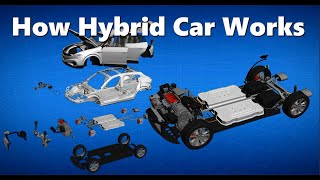
How does a hybrid car work? This video explains the seamless blend of internal combustion and electric technology in a hybrid car, covering key components like the gasoline engine, electric motor, battery, motor generators, and the power split device. It highlights how the system optimizes efficiency through regenerative braking and intelligent power management.
At low speeds, a hybrid car can operate solely on electric power, resulting in zero fuel consumption.
Under more demanding acceleration, the gasoline engine engages to propel the vehicle and also drives a generator to recharge the electric motor's batteries.
The advanced rechargeable battery stores energy captured during braking or from the gasoline engine. Some hybrids also include a 12-volt auxiliary battery for features like lighting and door locks.
When the start button is pressed, onboard computers (ECUs) assess the hybrid battery's status, and monitor engine and ambient temperatures.
The inverter converter regulates high voltage flow to/from motor generators, which serve dual roles as both motor (providing power) and generator (recharging the battery).
The power split device efficiently manages power distribution between the engine and motor generator, transmitting power to wheels during acceleration and cruising.
During braking, the electric motor acts as a generator, capturing kinetic energy from the wheels and converting it into electrical energy to recharge the battery.
Special cooling systems manage the temperature of the engine and battery to maintain optimal performance and longevity.
Sophisticated suspension systems and power steering contribute to a smooth, balanced, and comfortable driving experience.
Hybrid cars produce fewer emissions due to the electric motor's assistance, allowing the gasoline engine to operate at a more efficient RPM range, resulting in reduced fuel consumption.
The synergy between the gasoline engine, electric motor, and supporting systems makes hybrid cars more efficient, eco-friendly, and capable of reducing our carbon footprint.
What is the purpose of a power split device in a hybrid car?
It efficiently manages power distribution between the engine and motor generator, functioning like a continuously variable transmission.
01:41
What does an inverter converter do?
It regulates the flow of high voltage to and from the motor generators.
01:20
How does regenerative braking work in a hybrid car?
During braking, the electric motor acts as a generator, capturing kinetic energy from the turning wheels and converting it into electrical energy to recharge the battery.
01:55
What is the role of the 12-volt auxiliary battery in some hybrids?
To power various features such as lighting, windows, and door locks.
00:52
What does an electronic control unit (ECU) do when the start button is engaged?
It assesses the hybrid battery's status, and monitors engine and ambient temperatures.
01:08
Electric-Only Low Speed Operation
Explains a key difference from traditional cars: zero fuel consumption at low speeds.
00:20Regenerative Braking Principle
Describes an innovative technique for capturing energy that would otherwise be lost.
01:55Reduced Emissions via Efficient RPM
Highlights a major environmental benefit of hybrid design.
02:40[00:00] How does a hybrid car work? Let's dive under the hood of a hybrid car to explore its intricate components that seamlessly blend internal combustion with cutting-edge electric technology.
[00:20] Unlike traditional cars, hybrid cars represent a blend of gasoline engine and electric motor. At low speeds, the car can solely operate on electric power, resulting in zero fuel consumption.
[00:34] Under more demanding acceleration, the gasoline engine engages to propel the vehicle, while also driving a generator, responsible for recharging the electric motor's batteries. The battery is like the fuel tank for the electric motor, storing and supplying energy to power the vehicle.
[00:52] These advanced batteries are designed to be rechargeable, and store energy captured during braking, or through the gasoline engine. Some hybrid cars also have a 12-volt auxiliary battery, to power various features such as lighting, windows, and door locks.
[01:08] The moment the start button is engaged, it activates the onboard computers, known as electronic control units, to undertake tasks such as assessing the hybrid battery's status, monitoring engine and ambient temperatures.
[01:20] The hybrid battery's power is then directed to the inverter converter. This essential component regulates the flow of high voltage to and from the motor generators. The motor generators, as their name implies, serve a dual purpose, functioning as both a motor for providing power, and a generator for recharging the hybrid battery.
[01:41] A power split device, which functions similarly as a continuously variable transmission, efficiently manages power distribution between the engine and the motor generator. The power is transmitted to wheels during accelerating and cruising.
[01:55] As we move to the braking system, you'll notice something special, regenerative braking. When you brake, the electric motor acts as a generator, the system captures kinetic energy from the turning wheels and converts that into electrical energy, and channels it back into the battery pack.
[02:13] Efficient cooling is crucial for hybrid cars, to maintain optimal performance. Special cooling systems manage the temperature of the engine, and battery to ensure longevity and efficiency.
[02:26] While not exclusive to hybrids, hybrids use sophisticated suspension systems for a smooth journey, and power steering for effortless maneuverability. These elements combine to offer a balanced and comfortable driving experience.
[02:40] Lastly, we arrive at the fuel tank and exhaust system. Hybrid cars produce fewer emissions compared to their conventional counterparts. When the gasoline engine is running, it's often operating at a more efficient RPM range, due to the electric motor's assistance, resulting in reduced emissions and fuel consumption.
[03:01] The synergy between the gasoline engine, electric motor, and various supporting systems makes hybrids more efficient, eco-friendly, and capable of reducing our carbon footprint.
⚡ Saved you 0h 03m reading this? Transcribe any YouTube video for free — no signup needed.