
I Learned to Code at 8 Years Old
45sThe speaker's unique origin story of learning to code from a book at age 8 before the internet is both nostalgic and inspiring, hooking viewers with a relatable yet extraordinary beginning.
▶ Play Clip"Delivers a solid, actionable roadmap that matches the title's promise of a start-over plan, though it's more reflective than a strict tutorial."
The video is a personal reflection from an experienced developer who has been coding for 27 years. He shares his journey from learning BASIC from a book at age eight to building websites and applications, and then offers a practical, project-based roadmap for beginners who want to learn to code in 2023. He emphasizes starting with basics, building real projects, and learning by doing.
The creator has been coding for 27 years, starting at age eight with a BASIC book borrowed from his dad, because the internet wasn't mainstream yet.
When the internet arrived, he used a 56k modem and created his first website in Microsoft Word, saving documents as HTML pages.
He moved on to website builders like Dreamweaver (then Macromedia) and learned by taking apart other websites' code to understand how they worked.
He learned PHP to make websites dynamic, Visual Basic on Windows 98, and even sold an application he made for his dad, earning more than any part-time job.
At university, he studied physics and learned C and Fortran, then used C and C++ in his first job, picking up many languages since.
If he started over, he wouldn't change much: he'd build things he wanted to build for fun, avoiding the paradox of choice about languages and frameworks.
He advises starting with HTML and CSS, building projects, and learning incrementally. This builds a portfolio and makes learning easier to remember.
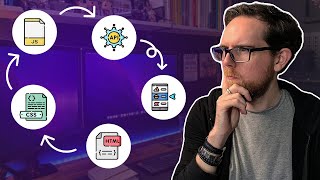
His step-by-step plan: learn HTML/CSS, host a static site, learn enough JavaScript to call an API, build your own API with Express.js, and learn a database like MySQL or MongoDB.
Most applications are CRUD (Create, Read, Update, Delete). He recommends creating tools that scratch your own itch, like a to-do list or movie library, because you'll actually use them.
Learning involves making mistakes and failing repeatedly. He warns against watching endless tutorials without building anything, and emphasizes that getting started is key.
The creator's core message is that the best way to learn to code is to start building real projects from day one, using a simple stack (HTML, CSS, JavaScript, and a database), and to embrace failure as part of the learning process.
What was the creator's first programming language and how did he learn it?
BASIC, learned from a book borrowed from his dad at age eight.
What tool did he use to create his first website?
Microsoft Word, by saving a document as an HTML page.
00:43
What is the recommended first step in the learning path?
Learn HTML and CSS and build a static website, then host it.
04:00
What does CRUD stand for?
Create, Read, Update, Delete.
04:57
What is the creator's advice on choosing a language or framework?
Avoid the paradox of choice; just start with basics and build projects.
03:02
Why does the creator recommend building projects that scratch your own itch?
Because you'll actually use them, which makes learning more effective and memorable.
05:12
What is a key part of learning according to the creator?
Making mistakes and failing over and over again.
05:30
27 Years of Coding
Establishes the creator's credibility and long-term perspective on learning to code.
Avoid Paradox of Choice
A practical principle for beginners overwhelmed by too many language/framework options.
03:02Concrete Learning Path
Provides a clear, actionable sequence of technologies to learn, which is highly valuable for beginners.
04:00Build for Your Own Itch
Emphasizes intrinsic motivation and practical application as key to retaining knowledge.
05:12Embrace Failure
A crucial mindset for developers, countering the fear of making mistakes.
05:30[00:00] but mine's a little bit different. Yes, you heard that right, 27 years. I was eight years old when I first learned to code and
[00:14] It was a book on basic that I borrowed from my dad, from I learned to code from a book, not through choice, but because The internet wasn't mainstream yet, and it'll be a few years yet before I heard
[00:26] that familiar sound from a 56 k modem. than something from a sci-fi film. number or very rudimentary chatbots.
[00:43] When the internet finally did arrive to my little corner of the so it didn't tie up the phone line and stop my relatives from calling. phone line, which kept my mom happy.
[00:57] I actually created my first website in Microsoft Word, believe it or not. You can actually save a document as a HTML page and then view it in your browser. server that my ISP gave me,
[01:13] I started using other website builders such as Dreamweaver, which was Macromedia Dreamweaver back then before it was bought out by Adobe. and drop elements inside the ui.
[01:27] of how other websites are built. just to see how they worked. I took apart my dad's ZX spectrum.
[01:40] And I took this enthusiasm of taking things apart into So if there was a cool menu effect that I wanted to use, I'd save the I'd delete piece by piece until all I was left with was the code for the menu.
[01:57] started learning that as well. I soon moved on from making static websites. I wanted my websites to actually do something, so I learned PHP
[02:10] I started learning that as well. On the side, I was learning a bit of Visual Basic on windows 98, and I even made an application for my dad, which I later sold on marketplaces and forums.
[02:22] I made more money than I ever could from any part-time job. As new technologies came out, I started learning those too just When I went to university, I learned other program languages
[02:34] such as C and fortran, and I carried on making websites on the side. Now I studied physics, so it wasn't exactly a major part of the curriculum. In my first job out of university, I was coding in c and c plus plus.
[02:47] Since then, I've picked up a lot of different languages along So how would I learn to code if I was to start over? So I wouldn't learn to code from a book, although there are
[03:02] But to be honest, I probably wouldn't do too much differently I just built things I wanted to build because it would be fun. I didn't have the paradox or choice around what language or what framework to pick.
[03:19] I started with the basics such as HTML and CSS and used that to build out the what I wanted, I then learned some more. Start with the basics and start building projects.
[03:35] something, learn it and keep learning. Not only will it be easier to remember everything that you're learning,
[03:47] up a portfolio of projects that you can show to a future employer. test that you'd given them was the first time that they'd used GitHub,
[04:00] It's one thing to say that you have experience, but it's another thing If I was to learn to code step by step, I'd do this. I'd learn HTML and CSS and build a static website and then host
[04:13] I'd then learn enough JavaScript just to be able to call an api. it's actually doing something. for the weather or for stock prices.
[04:27] make sure it's not related to the application that you're building. For the next step. I'd learn how to code my own API using JavaScript and express js.
[04:42] You could even call one of the free APIs from inside your API to do this. Doesn't matter what database you learn, it could be MySQL or MongoDB, or Postgres.
[04:57] If you know a little bit of HTML, CSS, JavaScript, and how to read Most applications are what we call CRUD applications. Try and create tools and websites that are gonna scratch your own
[05:12] itch so create a to-do list app or a movie library, or maybe a If you are creating something that you're actually going to use, it'll The first application that I built used go-to statements instead of loops.
[05:30] getting started and building something. video after YouTube video, but never actually building anything.
[05:42] A key part of learning is making mistakes, failing over and over again, and then If you are serious about being a software developer, then you need to know that So make sure you watch this video next.
[05:55] Thank you for watching, and I'll see you in the next video.


⚡ Saved you 0h 06m reading this? Transcribe any YouTube video for free — no signup needed.