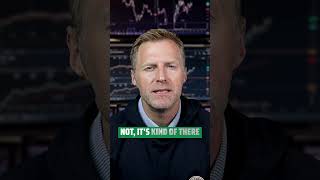

3 Questions Before Every Trade
43sOffers a clear, actionable framework that traders can immediately apply, sparking curiosity and saving.
▶ Play Clip"Delivers a concise, usable framework, but the promise of a 'full breakdown' is deferred to an external link."
This video presents a systematic three-question framework that a professional trader uses before entering any position. The framework grades trades based on catalyst, setup, and confirming variables, and links the resulting grade to position sizing.
Before trading, ask if something real happened to create the opportunity today, such as an earnings beat, analyst initiation, FDA approval, or index inclusion. A moving stock price alone is not a catalyst. Without a catalyst, the trade gets a D grade and is usually skipped unless the setup is exceptional.
Evaluate whether a clean, recognizable pattern exists on the chart, such as a failed breakout, range break, or 90 EMA continuation. If the setup requires 'squinting' to see, it is at best a B grade.
Check if confirming variables favor the trade: direction of a hot sector, expanding volume, institutional presence on the tape, and a trending market regime. More 'yeses' result in a higher grade.
Higher grades justify larger position sizes. The entire system is summarized as: ask the three questions, grade the trade, and size accordingly. The video references a full breakdown of a real trade in the link below.
The core takeaway is that disciplined trading relies on a repeatable three-question framework that grades opportunity quality and directly ties that grade to position sizing, preventing overexposure on weak setups.
What is the first question a trader asks before putting on a share?
What's the catalyst? Did something real happen to create this opportunity today?
00:03
Name three examples of a real catalyst mentioned in the video.
Earnings beat, analyst initiation, FDA approval, index inclusion.
00:17
What grade is assigned to a trade with no catalyst?
D grade.
00:17
What are three examples of a clean setup mentioned in the video?
Failed breakout, range break, 90 EMA continuation.
00:44
What grade is assigned to a setup that requires squinting?
B grade at best.
00:44
List the four confirming variables mentioned in the video.
Direction of a hot sector, expanding volume, institutional presence on the tape, market regime trending.
00:56
How does the grade affect position sizing?
Higher grades justify bigger position sizes.
01:11
Catalyst as a prerequisite
Establishes a clear, objective filter that prevents trading on mere price movement.
00:03Clean setups only
Emphasizes pattern quality over subjective interpretation, reducing false signals.
00:31Confirming variables stack
Shows how multiple confirmations increase confidence and justify larger size.
00:56Grade-to-size link
Directly ties risk management to a scoring system, making position sizing systematic.
01:11[00:03] Before I put on a single share, I ask three questions in order always. Question one, what's the catalyst? Did something real happen to create this opportunity today? Not the stock is moving, that's not a catalyst. An
[00:17] earnings beat, an analyst initiation, FDA approval, index inclusion, something that explains why institutional money might show up that wasn't here yesterday. No catalyst, you're at a D grade. You usually don't trade it unless
[00:31] the setup's really good. Question two, what's the setup? Is there a pattern? Is it Is it actually clean? Not it's it's kind of there if you squint, but does it jump off the chart? Failed breakout, range break, 90 EMA continuation,
[00:44] your playbook says. If the setup requires squinting, it's maybe B at And question three, are the confirming variables in your favor for the trade?
[00:56] direction of a hot sector, expanding volume, institutional presence on the tape, market regime trending? None of these or or all of these stacked. More yeses is a higher grade. Higher grades are bigger size. That's
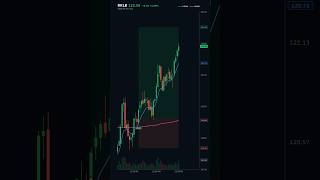
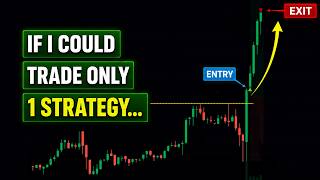
[01:11] it. That's the whole system. I applied all three questions to a real trade from the other day. We walked through the grade, the position size, the entry, the exit, full breakdown in the link below.

⚡ Saved you 0h 01m reading this? Transcribe any YouTube video for free — no signup needed.