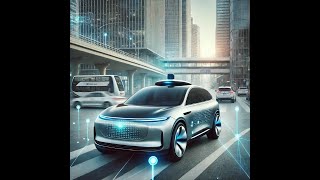

How Self-Driving Cars Work
44sThe opening scene of a silent car gliding through traffic grabs attention and sets up a futuristic, curiosity-driven hook.
▶ Play Clip"The title accurately reflects the content, which thoroughly explains how self-driving cars work and their future impact."
This video explains how self-driving cars work, covering the key technologies like LIDAR, radar, cameras, and AI that enable autonomous navigation. It also discusses the history, ethical challenges, and future impact of autonomous vehicles on transportation and society.
Self-driving cars, or autonomous vehicles (AVs), use AI, machine learning, sensors, and software to drive without human intervention, promising to reduce accidents and improve efficiency.
Early concepts appeared in sci-fi like Blade Runner and Knight Rider. Real development began in the 1980s with Carnegie Mellon's NavLab and DARPA's Grand Challenges in the 2000s.
Google launched its autonomous car project (now Waymo) in 2009, and Tesla integrated driver assistance systems. Companies like Uber and GM also invested heavily.
LIDAR creates 3D maps using laser beams; radar detects objects at long range; ultrasonic sensors aid parking; cameras recognize traffic signs and pedestrians. Redundancy ensures safety.
Self-driving cars use extremely detailed maps with road layouts and signs, combined with GPS for centimeter-level positioning, and update routes in real-time using sensor data.
Machine learning algorithms and neural networks process sensor data to recognize patterns, predict behavior (e.g., pedestrian crossing), and make driving decisions.
Vehicle-to-vehicle (V2V) and vehicle-to-infrastructure (V2I) communication allow cars to share speed and location data, and interact with traffic lights for smoother traffic flow.
The perception layer interprets sensor data; the planning layer decides actions (e.g., lane change); the control layer executes steering, braking, and acceleration.
Waymo uses LIDAR, radar, and cameras for 360-degree view, trained on millions of miles of data. Its AI predicts behavior of other road users for safe navigation.
The trolley problem raises moral dilemmas: should the car prioritize passengers or pedestrians? Legal liability in accidents is unclear, requiring new laws.
Fears include loss of control, job displacement in trucking/taxi industries, and cybersecurity risks of hacking. Companies are developing countermeasures.
Autonomous vehicles could reduce car ownership, reshape cities (less parking), improve public transport, and boost productivity, but also cause job losses.
Self-driving cars are a transformative technology with the potential to make transportation safer and more efficient, but ethical, legal, and public acceptance challenges remain before full autonomy becomes widespread.
What does LIDAR stand for and what does it do?
Light Detection and Ranging; it emits laser beams to create a detailed 3D map of surroundings.
03:58
Name three types of sensors used in self-driving cars.
LIDAR, radar, ultrasonic sensors, and cameras.
03:43
What is the role of the planning layer in self-driving car software?
It makes decisions about what the car should do next, such as changing lanes or stopping at a red light.
07:54
What is V2V communication?
Vehicle-to-vehicle communication, where cars share information about speed, direction, and location to prevent accidents.
06:55
What was the DARPA Grand Challenge?
A competition starting in 2004 where teams developed vehicles to autonomously navigate desert terrain, marking a turning point in autonomous vehicle research.
02:13
How does Waymo's AI predict pedestrian behavior?
It uses machine learning trained on millions of miles of driving data to predict whether a pedestrian is likely to cross or remain stationary.
09:08
What is the trolley problem in the context of self-driving cars?
A philosophical dilemma asking whether an autonomous vehicle should prioritize the safety of passengers or pedestrians in an unavoidable accident.
09:48
What are two public concerns about self-driving cars mentioned?
Loss of jobs in driving industries and the risk of hacking.
11:05
Sensor Redundancy
Explains how multiple sensors work together to ensure safety even if one fails.
03:43AI Decision-Making
Describes how neural networks process data to make real-time driving decisions.
05:40Ethical Dilemmas
Raises the trolley problem and liability questions that are critical for regulation.
09:36Societal Transformation
Discusses potential changes in car ownership, city design, and public transport.
12:03[00:00] how self-driving cars work, a new era of transportation. As the sun dipped below the horizon, a silent autonomous vehicle glided smoothly down the highway. No human hands gripped the steering wheel, no foot hovered over the pedals.
[00:15] The car navigated the busy streets with precision, handling traffic, pedestrians, and even unexpected obstacles without faltering. This futuristic scene, once a dream of science fiction, is now fast becoming a reality
[00:28] in the modern world of self-driving cars, self-driving cars, also called autonomous vehicles, AVs, have rapidly evolved from a theoretical concept to an emerging presence on the roads today. These cars equipped with artificial intelligence, AI, machine learning, sensors,
[00:44] and highly sophisticated software are designed to drive without human intervention. They promise to revolutionize transportation by reducing accidents caused by human error, improving fuel efficiency, and providing a new level of convenience and accessibility.
[00:59] But what makes a self-driving car autonomous? How does it work? Understanding these vehicles requires guiding deep into the intersection of cutting-edge technologies, including AI, sensors, cameras, radar, and decision-making algorithms.
[01:15] Self-driving cars must not only be able to see and interpret the world around them, but also to react in real-time through dynamic nature of driving environments. The idea of self-driving cars has roots in both science fiction and early technological innovation.
[01:30] For decades, stories of cars that could drive themselves have filled the imaginations of riders and engineers alike. Films like Blade Runner and TV shows like Nightrider featured vehicles that could think, drive, and even interact with humans, laying the groundwork for what seemed
[01:46] like far-off dreams. But behind the fiction, real-world engineers were working on autonomous vehicles, as early as the 1980s. One of the earliest projects was Carnegie Mellon University's Navelab.
[02:01] An autonomous vehicle initiative that sought to use AI and computer vision to drive cars. The Defense Advanced Research Projects Agency, DARPA, part of the U.S. Department of Defense,
[02:13] began sponsoring autonomous vehicle research in the 1990s, particularly for military applications. DARPA's Grand Challenge in 2004 were teams competed to develop vehicles that could autonomously navigate complex desert terrain, marked a turning point in the field.
[02:29] Though none of the vehicles finished the race in 2004, subsequent challenges saw marked improvements, showcasing the growing potential of the technology. In 2009, Google launched its autonomous car
[02:41] project, now known as Waymo, with the aim of creating fully self-driving vehicles. Around the same time, Tesla began integrating advanced driver assistance systems into its electric vehicles, laying the groundwork for more sophisticated autonomous functions.
[02:56] These companies, along with others like Uber and GM, poured billions of dollars into research, pushing the boundaries of what autonomous vehicles could do. The history of autonomous vehicles is one of rapid technological advancement.
[03:09] Today, we see cars with features like lane-keeping assistance, automatic braking, and adaptive cruise control, all of which form the building blocks of fully autonomous vehicles. But what makes these vehicles work? The answer lies in a mix of powerful sensors, AI,
[03:26] and machine learning. At the heart of every self-driving car is a combination of sensors, cameras, artificial intelligence, and mapping technologies that allow the vehicle to see its surroundings, process that information, and make driving decisions. To understand how self-driving cars work,
[03:43] it's essential to break down the key technologies involved. Self-driving cars rely on an array of sensors to perceive their environment. Each sensor has a specific role, providing the car with different types of data.
[03:58] LIDAR, light detection and ranging, is one of the most critical sensors in self-driving cars. LIDAR works by emitting laser beams and measuring how long they take to bounce back after hitting an object. It creates a detailed 3D map of the surroundings, allowing the car to detect
[04:13] obstacles, pedestrians, and other vehicles. Radar is used for detecting objects at longer ranges in various weather conditions. It's particularly useful for tracking the speed of nearby vehicles and
[04:26] detecting objects in the car's blind spots. Ultrasonic sensors are typically used for low-speed situations, such as parking. They detect nearby objects and help the car navigate tight spaces. High-resolution cameras mounted around the car provide visual data that is processed by machine
[04:42] learning algorithms. Cameras can recognize traffic signs, lane markings, pedestrians, and other vehicles. The sensors and cameras work together, providing overlapping fields of view to ensure that the car has a complete understanding of its environment. This redundancy is crucial for
[04:58] safety, ensuring that the car can still operate if one sensor malfunctions or faces limitations, such as LIDAR struggling in rain or fog. Self-driving cars rely on extremely accurate maps to navigate.
[05:11] These maps are far more detailed than those used by typical GPS systems. They include information about road layouts, lane markings, speed limits, and the locations of stop signs and traffic lights.
[05:24] The car's onboard GPS system works with these maps to position the car within a few centimeters of accuracy. In addition, the car constantly updates its understanding of the environment using data from its sensors. If a road is blocked, for example, the car can adjust its route in real time.
[05:40] At the core of a self-driving car's decision-making process is AI, specifically a type of AI known as machine learning. Machine learning algorithms allow the car to recognize patterns in the data it
[05:52] collects from sensors, such as identifying other vehicles, pedestrians, and potential hazards. Neural networks, a type of machine learning model, inspired by the human brain, are trained on vast amounts of driving data. These networks learn to recognize traffic signals, predict the
[06:08] behavior of pedestrians, and make decisions in real time. For example, if a pedestrian steps off the curb, the car's AI must quickly determine if the person is about to cross the street or if they are simply standing at the edge. Over time, as self-driving cars accumulate more data from real-world
[06:25] driving conditions, they become better at handling complex situations. AI systems are continuously trained and improved, making the car smarter and more capable. In the near future, self-driving cars
[06:40] will not only rely on their own sensors and AI, but also on communication with other vehicles in infrastructure. This is known as vehicle to vehicle, V2V, and vehicle to infrastructure, V2I
[06:55] communication. With V2V, cars can share information about their speed, direction, and location. This can prevent accidents by warning nearby vehicles of sudden stops or dangerous conditions.
[07:07] V2I allows cars to communicate with traffic lights, road signs, and even construction zones, enabling smoother traffic flow and safer navigation through busy intersections. The software that powers a self-driving car is often referred to as the car's brain.
[07:23] It is the system that takes all the data from the car's sensors and makes decisions in real time. This process happens in milliseconds, and requires immense computing power. Self-driving cars use several layers of software, each responsible for different aspects of driving.
[07:38] The perception layer is responsible for interpreting the data from the car's sensors. It uses AI and machine learning to recognize objects such as cars, pedestrians, and road signs. The perception layer must constantly update its understanding of the environment as new data comes in.
[07:54] Once the car understands its surroundings, the planning layer takes over. This part of the software is responsible for making decisions about what the car should do next. For example, should the car change lanes, slow down, or stop at a red light?
[08:10] The planning layer must balance safety, efficiency, and comfort, all while making the split second decisions. Finally, the control layer translates the decisions from the planning layer into physical actions, such as steering, braking, or accelerating. The control layer must be extremely precise
[08:28] to ensure smooth and safe driving. In practice, self-driving cars are continuously processing huge amounts of data, comparing it to pre-existing maps and models of how traffic should behave,
[08:40] and making decisions based on that information. For example, if the car's perception system detects a cyclist swerving into the lane, the planning layer may decide to slow down, or change lanes, to avoid a potential collision. Waymo, formerly the Google Self Driving Car Project,
[08:56] is a leader in autonomous vehicle technology. Waymo's cars use a combination of LiDAR, radar, and cameras to create a 360-degree view of their surroundings. Waymo's AI system is trained
[09:08] using millions of miles of driving data, both from real-world testing and computer simulations. One of the unique aspects of Waymo's technology is its ability to predict the behavior of other road users. For example, if a pedestrian is standing at the edge of a crosswalk, the car's software
[09:23] predicts whether that person is likely to cross or remain stationary. This predictive ability is key to making autonomous cars safe and reliable, in complex driving environments. As promising as
[09:36] self-driving cars are, they also raise significant ethical and legal challenges. One of the most widely discussed dilemmas is the trolley problem. This philosophical thought experiment
[09:48] asks, if an autonomous vehicle must choose between swerving to avoid one person, potentially hitting another, what should it do? While rare, such situations require the car's AI to make decisions that have moral implications. Should the car prioritize the safety of its passengers,
[10:05] or the safety of pedestrians? How should it balance risks in unavoidable accidents? These are questions that not only engineers, but also ethicists and policy makers must grapple with, beyond ethical dilemmas, self-driving cars also raise legal questions, who is liable in the
[10:21] event of an accident. Is it the manufacturer, the software developer, or the car's owner? Current legal frameworks are not fully equipped to handle these questions, and governments around the world are beginning to draft laws and regulations to address them. In many countries,
[10:37] self-driving cars are still in the testing phase, operating under strict regulations that require a human driver to be present to take control, if necessary. As the technology becomes more advanced
[10:49] and widespread, new laws will be needed to define the roles and responsibilities of car manufacturers, software developers, and passengers. The concept of self-driving cars also raises concerns among the general public. Many people fear losing control, relying entirely on machines to make
[11:05] life or death decisions. Others worry about the loss of jobs and industries like trucking and taxi services where autonomous vehicles could replace human drivers. There's also the fear of hacking.
[11:18] If a self-driving car is essentially a computer on wheels, could it be hacked by malicious actors, endangering the passengers or others on the road? Companies developing autonomous vehicles
[11:31] are aware of these concerns and are working on cybersecurity measures to prevent such incidents. The future of self-driving cars is bright, but the road to full autonomy is still being caved.
[11:45] While we already see advanced driver assistance systems in many cars today, fully autonomous vehicles are still in the testing phase. As self-driving cars become more common, we can expect significant changes in the way we live in mood. Car ownership, for example, made a client as people turn to
[12:03] ride-sharing services using autonomous vehicles. Without the need for a human driver, services like Uber or Lyft could offer lower-cost rides, making it more convenient and affordable for people to get around without owning a car. Public transportation systems may also evolve. Imagine fleets of autonomous buses
[12:20] that can optimize their routes in real-time based on traffic conditions and demand. This could lead to more efficient public transport systems and reduce the need for personal cars in urban areas. Autonomous vehicles could also reshape cities themselves. Without the need for parking lots or garages,
[12:36] cities could repurpose this space for parks, housing, or other public uses. Traffic congestion could be reduced as cars communicate with one another and coordinate their movements, making urban transportation more efficient. While self-driving cars promise many benefits, they also pose economic challenges.
[12:54] Jobs in driving-related industries, such as trucking, delivery, and taxi services, could be lost as autonomous vehicles take over. On the flip side, new jobs in fields like software development, AI
[13:06] and robotics will be created to support the growing industry. There is also potential for economic growth as self-driving cars reduce accidents and improve productivity. Commuters could use travel time to work, read, or relax, leading to a boost in overall productivity. Governments around the
[13:23] world are grappling with how to regulate self-driving cars. In the U.S., the National Highway Traffic Safety Administration, NHTSA, has issued guidelines for autonomous vehicle testing, but comprehensive laws are still in development. In Europe, countries like Germany have passed
[13:40] legislation allowing for autonomous vehicle testing, but with strict conditions. As autonomous cars become more common, laws will need to evolve to address issues like insurance, liability, and safety standards. International collaboration may also be necessary to create a consistent framework
[13:55] for self-driving cars, especially as they cross borders in regions like Europe. Self-driving cars represent one of the most exciting technological advancements of the 21st century. They have the potential to make transportation safer, more efficient, and more accessible. With the combination
[14:11] of advanced sensors, AI, and machine learning, autonomous vehicles can navigate complex environments, predict the behavior of other road users, and make split-second decisions to avoid accidents. However, the road to full autonomy is still under construction. Challenges related to ethics,
[14:26] law, and public perception must be addressed before self-driving cars become a common sight on our roads. As these issues are resolved, we can expect to see self-driving cars playing an increasingly
[14:38] important role in our daily lives, reshaping the way we live, work, and move. The future of transportation is autonomous. Self-driving cars are not just a technological curiosity. They are the next step
[14:53] in humanity's ongoing quest to improve how we move through the world. While the journey may be long, the destination promises a safer, more efficient, and more connected future for all.
⚡ Saved you 0h 15m reading this? Transcribe any YouTube video for free — no signup needed.