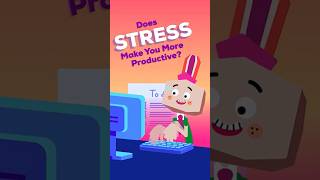

How Stress Rewires Your Brain
45sReveals the surprising cognitive downsides of stress in an easy-to-digest format.
▶ Play Clip"The title accurately reflects the content, which explains how stress hormones affect the brain and body, delivering exactly what it promises."
This video explains how stress hormones like adrenaline and cortisol affect the brain and body. It covers the short-term benefits and long-term risks of stress, including its impact on memory, decision-making, and eating habits, and offers practical solutions like dietary changes and sleep to break the stress cycle.
Adrenaline increases heart rate and breathing, while cortisol enhances alertness. Short-term stress can help with repetitive tasks but hinders problem-solving because cortisol prioritizes muscles and impulses over cognitive function.
Chronic high cortisol levels weaken memory and decision-making over time. The body remains on high alert, requiring constant energy, which leads to cravings for fatty and sugary foods.
Eating junk food temporarily lowers cortisol and satisfies fuel demands, but this creates a 'doom loop' where more junk food consumption leads to more stress, perpetuating the cycle.
Dietary adjustments can help: Omega-3s (found in fatty fish) reduce stress reactivity, and chocolate can boost cellular defenses. However, the most effective solution is sleep, as cortisol levels naturally drop around midnight, allowing the stress response system to reset.
What are the primary effects of adrenaline and cortisol during stress?
Adrenaline makes your heartbeat and breathing faster, while cortisol makes you more alert.
00:02
Why can stress hinder performance on difficult tasks?
Cortisol forces your body to prioritize muscles and impulses over problem-solving, which can impair performance on difficult tasks.
00:14
What are the long-term cognitive effects of high cortisol levels?
High cortisol levels can weaken memory and decision-making over time.
00:14
How does cortisol influence food cravings?
Cortisol affects hormones that make you feel full, leading to cravings for fatty and sugary foods.
00:27
What dietary component can reduce stress reactivity?
Omega-3s, found in fatty fish, can make you less reactive to stress.
00:40
When do cortisol levels naturally reach their lowest point?
The natural lowest levels of cortisol occur around midnight, when the stress response system resets.
00:53
Stress Hormones Explained
Clearly distinguishes the roles of adrenaline and cortisol, providing a foundational understanding of the stress response.
00:02Cognitive Trade-Off
Reveals a counterintuitive effect: stress prioritizes muscles over problem-solving, which can impair performance on complex tasks.
00:14Stress-Eating Cycle
Explains the feedback loop between stress and junk food cravings, highlighting a common behavioral trap.
00:27Dietary Mitigation
Offers a practical, actionable tip: consuming Omega-3s can reduce stress reactivity.
00:40Sleep as Reset
Identifies sleep as the most effective way to break the stress cycle, with a specific biological mechanism (cortisol dip at midnight).
00:53[00:02] Yes and no. Adrenaline makes your heartbeat and breathing faster, while cortisol makes you more alert. A little short-term stress can help you crunch through repetitive tasks, but for difficult ones, stress can work against
[00:14] you because cortisol forces your body to prioritize your muscles and impulses over problem-solving. Over time, high levels of cortisol can leave your memory and decision-making weaker. Being on high alert requires energy and you soon
[00:27] need to refuel. As cortisol also affects hormones that make you feel full, you'll likely crave fatty and sugary foods. At first, you may feel less stressed as eating meets your fuel demands and may even lower your cortisol levels, but
[00:40] this can become a doom loop. Eat more junk food or feel stressed. Tweaking your diet can help. Omega-3s, found in fatty fish, can make you less reactive chocolate [music] can boost your cells'
[00:53] defenses. But the best way out of the cycle is sleep. Your natural lowest levels of cortisol are around midnight, when your stress response system resets. resilient [music] to stress-related diseases. So, before stress becomes a
[01:07] diseases. So, before stress becomes a deadly poison, get some rest. [music]


⚡ Saved you 0h 01m reading this? Transcribe any YouTube video for free — no signup needed.