
AdSense is NOT the money maker
45sChallenges the common belief that AdSense is the primary income for YouTubers, sparking curiosity.
▶ Play Clip"Delivers solid strategies for monetizing beyond AdSense, but the title oversells 'stupid rich' and includes a lengthy self-promo for Blueprint."
The video challenges the common assumption that YouTube creators primarily earn through AdSense, revealing that successful creators diversify revenue streams. The speaker, an experienced creator, shares his own revenue data and strategies for monetizing audiences effectively in 2026, emphasizing the importance of understanding viewer intent and building a brand beyond ads.
For most successful creators, AdSense makes up a small percentage of their income. Example: Linus Tech Tips mentioned AdSense is a small part of his revenue.
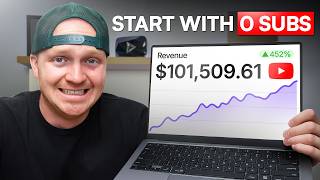
The speaker shares his own videos: 10M views earned $167K, 18M views earned $487K, and 43M views earned $900K, but these are still a small portion of total earnings.
Views don't always equal money. Watch time is more important than views because longer watch time leads to more ads. Views without intent don't matter.
Ad revenue is unpredictable (e.g., down 60% in January). YouTube takes about 50% cut. Creators have no control over these factors.
Ask what your viewer is trying to achieve. This helps choose the right monetization path for your audience.
Different channels sell differently. Example: Mr. Beast made $500M selling chocolate bars. A bread-making TikToker earns $200-300K/year selling courses.
Entertainment channels sell toys/CPG products; community-led channels launch masterminds/webinars; educational channels sell mentorships/software.
Blueprint offers free courses (University, Mini), a subscription service (Premium), and coaching/mentorship. This shows a funnel from free to high-ticket.
The speaker regrets not selling products earlier. He started selling merch at 2M subscribers but should have started at 100K.
Every video should showcase your brand. Example: Logan Paul built the 'Maverick' identity, leading to $1M in merch sales per day.
Don't just talk about products; explain why they matter. Involve your audience in product creation (e.g., designing a shirt).
Every video on his big channels includes a promo scene dedicated to the product, connecting brand with product.
Move audience to email/phone lists to reduce risk of platform bans. Example: 500,000 orders collected, enabling direct sales.
Avoid sleazy sales tactics. Make selling part of your brand identity so it doesn't feel like a sale.
You need a good product. Poor quality will lose trust. Selling is about building a marketing machine.
Physical products (hoodies), digital products (courses, apps), experiences (theme parks, live shows), and content licensing (e.g., Mark Rober on Netflix).
Old videos continue to earn. Example: A 3-year-old video made $4,000 in the last 28 days without any work.
To make real money on YouTube in 2026, creators must diversify beyond AdSense, understand their audience's intent, and build a brand that integrates products naturally. The key is to treat YouTube as a marketing engine, not just an ad platform.
What percentage of revenue does AdSense typically make up for successful creators?
A small percentage.
00:28
What is more important than views for AdSense revenue?
Watch time.
02:01
What is the first step to making money on YouTube in 2026?
Stop optimizing or chasing views.
01:33
What are the risks of relying solely on AdSense?
Ad revenue is unpredictable, YouTube takes a 50% cut, and you have no control.
02:27
What should you ask yourself before choosing a monetization path?
What is your viewer trying to achieve?
03:36
Give an example of a creator who monetizes a niche audience effectively.
A bread-making TikToker who sells courses and earns $200-300K/year.
04:15
What did Logan Paul do to sell merchandise?
He built the 'Maverick' brand identity and showed what it means to be a Maverick in every video.
07:35
Why is it important to capture audience information off-platform?
To reduce risk of platform bans and enable direct sales.
10:04
What are the three types of products you can sell?
Physical, digital, and experiences.
12:59
What is an example of licensing content?
Mark Rober licensing his content to Netflix.
14:36
Real revenue numbers
Provides concrete examples of how much AdSense can earn, but also shows it's a small part of total income.
00:40Unpredictability of ad revenue
Highlights the risk of relying on AdSense due to uncontrollable factors like seasonal drops and YouTube's cut.
02:27Niche monetization success
Shows that even a niche channel (bread-making) can earn significant income by selling courses.
04:15Logan Paul's brand integration
Demonstrates how integrating products into brand identity can lead to massive sales.
07:35Off-platform audience capture
Emphasizes the importance of owning your audience data to mitigate platform risks.
10:04[00:01] YouTube creators right now are not focused on going viral? I myself have years. And everyone thinks when they're getting into content creation, I got to go viral to make money. And sure, that is true. So, you're probably assuming
[00:15] that the majority of a content creator's money comes from AdSense, the ads played on the videos, just like the ad that you might have watched on this video. But the truth is for most successful creators, AdSense actually makes up a
[00:28] very small percentage of their revenue. For example, Lionus Tech Tips was just on a podcast and he talks about how AdSense makes up a small percentage of things he's making his money on. So,
[00:40] today's video I'm going to show you how to get stupid rich on YouTube in 2026 without using AdSense. Now, let me be clear. YouTube AdSense can make you money, of course, but for most creators, that's not actually how they make their
[00:54] money, right? So, here's a video I uploaded uh last year. This video has 10 million views, made 167K in revenue. Here is another video that we uploaded, 18 million views, made 487K,
[01:06] and here is the final boss. This is one of my highest performing revenue videos uploaded in the past couple years. 43 million views, 900K in revenue on this you're thinking. You're like, "Bro, that's an insane amount of money." It
[01:20] is, but it also makes up a small portion of all the money we make. So, from a big creator's perspective, let's break down how to make money in 2026 as a content creator. The first step to this entire process is to stop optimizing or chasing
[01:33] views. Now, this is kind of a double-edged sword because in order to grow your brand as a content creator, you need views. But a lot of creators more money, more views, more money, more
[01:46] they don't always connect. And look, I get it because views feel like progress. and better, it feels like you're stepping up because you are. And YouTube AdSense [music] is going to pay you based on views and watch time. But more
[02:01] importantly, watch time is more important than views. Because if you can longer and longer and longer, you're going to rake in more and more advertisements. [music] That's why this video was able to make so much money.
[02:13] other videos on YouTube that are 43 million views, but they [music] might be a 3inut a 4-minute video. They might not even cross 100K in revenue. But look, in 2026, views without [music] intent don't matter. And what I mean by that is that
[02:27] channel and you think that you're going to make all your money on YouTube way [music] because there's a lot of uncontrollable factors that you are depending your entire business on. The first thing is ad revenue is completely
[02:40] [music] great, the next month it's terrible. For example, I'm filming this video right now in January. My ad revenue is down [music] nearly 60% money. The second thing is YouTube takes a cut. YouTube takes about 50% of all
[02:53] you're seeing [music] right here is money that I got, but YouTube actually probably made a total of another $900,000 on this video. So, they cut me a check for 900K and then YouTube also made 900K from this video. But the scary
[03:07] thing is you have no control over this. Now, obviously YouTube is a big company. they're going to do anything bad. I've been working with YouTube for 14 years. process. But I'm just saying you have no control over this. You're just hoping
[03:22] they get more views. What I'm trying to get at here is that if AdSense is your only stream of income, you're probably going to get out earned by someone who is monetizing their channel better with other revenue streams. So before you
[03:36] product or whatever you're going to do with your YouTube channel, ask yourself what is your viewer trying to achieve. And once you're focused on why your audience is watching your video, you can choose the right path to monetize for
[03:49] them. And that leads me into step two, picking the monetization path that fits your [music] audience. Not every YouTube channel should sell the same way. Some creators make a lot of money with merch, and some creators like Mr. Beast make a
[04:02] pretty sure last year he made 500 million selling chocolate bars, which is just insane. But also, don't fall into the trap of thinking that you can't offer [music] something to your audience because your audience is different or
[04:15] it's unique. That's just not true. There's this lady on TikTok. She [music] basically makes bread. That's like her entire channel, just making bread. All types of bread, sourdough bread, Italian bread, whatever. She sells courses,
[04:28] mentorship, and education on how to make really good bread. She makes [music] really good bread. She makes [music] anywhere from 200 to 300K a year and very many videos past a million views, [music] but she figured out how to
[04:41] monetize her audience very effectively. That's what we're trying to get at here. So, for example, my big YouTube channel, the big unspeakable channel that has pretty much an entertainment channel. So, we offer entertainment for younger
[04:54] audiences. And what do we sell? We sell toys and we sell CPG products. The reason we sell that is because it's so wide. Our audience is so widespread that it's something that everyone can pick up because we get nearly a 100 million
[05:07] people watching our channel every single month. So there needs to be a product that everyone can kind of gather to. But then you have like community-led channels that might launch, you know, masterminds or webinars or all types of
[05:20] stuff for their audience. And then you have educational channels. They sell mentorships or coaching or some type of software, which is exactly what we sell at Blueprint. So, this is a perfect time for me to tell you what our offer is. I
[05:33] right now. So, this is how Blueprint makes money. First off, we have Blueprint University and Blueprint Mini. It's two courses that you can learn how to be a content creator, but they're 100% free. You can go to our website,
[05:45] You can learn everything about making a thumbnail, editing your video, and this million views every single month. But then when you're ready to take it to the Blueprint. And it's a subscription where we can help you manage your YouTube
[05:59] scripts, your publishing dates, pretty much everything that you need as a And it's on the same website. But then again, you're still going to need a next? You apply for coaching and mentorship. And that's where you can
[06:13] work with my team one-on-one. We actually have weekly calls and daily helping creators grow. and we're building a community of creators as that is pretty expensive to join, but it's a highly exclusive white glove
[06:27] you and help your channel grow and do a full audit on your performance and your you can check the links down [music] in the description. But I'm pretty much running you through how my blueprint channel makes money and we only have
[06:41] like 200,000 subscribers and the channel's doing not too bad. Like, we're your monetization path, the next thing you have to figure out is how do you how do you do that? So, that's the next step. Let's begin. I'm not going to lie,
[06:54] long to figure out. Here is how many YouTube videos I uploaded every year. And I posted 200 videos, 400, 800, 800, 500. And throughout all of these years, I didn't sell a product. And the main reason I didn't sell a [music] product
[07:09] product. I didn't know why I wanted to sell a product. But I probably could have made millions of dollars throughout those years if I would have sold I didn't even sell merchandise. I started selling merchandise when I had
[07:22] like two million subscribers. I probably should have started when I had like 100k you learn. Let's do a marketing 101 lesson. Every single video that you put out, you should somewhat be showing off your brand, getting [music] people to
[07:35] buy. A great example of this is Logan Paul. Whether you love him or you hate the day when he had his YouTube channel, Maverick and what [music] it's like to be a Maverick. Every single video he
[07:50] talked about this, but being a Maverick was his brand, his [music] clothing. So, every video he didn't just tell you about a new shirt he launched. Hey guys, I got a new shirt. Go buy it. No, he showed you what it meant to be a
[08:03] Maverick and Mavericks wear his merchandise. And this resulted in him making a million dollar [music] in a day, multiple days in a row where he did a million dollars per day in sales. He talks about this on his podcast and a
[08:17] >> I sold a million dollars in merch in [music] one day. In that one day, I did the same thing the next day. And then I was like, let me let me stop you there. I did the same thing the day after that. >> That's insane. And that's [music] just
[08:32] selling a t-shirt and some hoodies. And when I look back at this YouTube journey, obviously there's a lot of mistakes I made. I didn't build any trust in my videos. I didn't really talk about my products, but not just talking
[08:44] about the products, but what do they mean to me? Why do [music] I sell what I sell? I would also wait too long to introduce something. I should have been [music] Like, hey guys, I'm designing a shirt right now. What do you guys think?
[08:56] people can comment in the comment section and get involved [music] with the product making process. It's like don't be scared to show your work. And of course, one of my big things is I did not promote products and videos as
[09:09] [music] often as I should. Now, I know this might sound insane, but it's not. Every single video we produce on [music] our big channels has to have a promo inside of it. Whether promoting toys or promoting some of our CPG products, but
[09:23] not just a promo, not just a, "Hey guys, we got some fruit snacks, go buy them." No, like an entire [music] scene of the video needs to be dedicated to showing what the product is about. And this is not to be a sellout and just
[09:37] sell a bunch of stuff, but it's more [music] so to connect our brand with our product. So when people think of our brand, they also think of our product. associations and you have to basically convert your audience to think about you
[09:51] that's something that takes time. You need a lot of videos to in order to do about is super important. This is about capturing your audience off the platform because obviously there's a lot of risk that could happen. Let's say you're a
[10:04] Instagram and something happens and your account gets taken down or you're on Tik Tok, you post something, your account gets flagged and your products get banned off of the Tik Tok shop. Like there's so many little things that could
[10:17] happen that are out of your control. Now, obviously try to be a goody goody strike, but sometimes stuff happens. You want to try to move your audience off platform. Now, I don't mean like posting your videos somewhere else, but what I
[10:30] mean is capturing their information. Now, obviously do this a legal way, but capturing people's email, their phone numbers, their customers, their profiles. This is what we do. So, when we launch like our merchandise, for
[10:42] example, we have over 500,000 orders that we've shipped out. So, we have 500,000 people that have given us basically their information in order for us to ship the order. So, when we have new sales coming in the future, we can
[10:55] just send those sales to 500,000 previous buyers and we will likely sell out before we even put it on our YouTube channel. The next very important thing I want to talk about is converting into value, not pressure. When you sell
[11:09] something on your YouTube channel, you don't want to be that salesman. Think of the sleazy salesman sitting at the car dealership trying to get you to buy this dealership trying to get you to buy this brand new Jeep for $32,000 down. You
[11:21] don't want to be that guy. I'll just be honest. People hate being sold. And a lot of people know they're being sold when they're being sold. Like, it's pretty obvious. Now, look, I'm not going to give you a whole sales 101 lesson
[11:33] some great books that you could just go purchase about sales if you really want to learn about sales. But the best form of sales is making it not feel like a sale. Make it part of your brand, part of your identity. Kind of like what I
[11:47] said earlier. When people watch one of my videos on my channel, we want to associate my brand with fruit snacks and toys because that is my identity. And once people associate when they say, "Oh yeah, that's an Unspeakable video. Oh
[12:01] love his fruit snacks." That's [music] when I'm not selling. It's part of my you have to have trust with your audience, which means you need a good freaking product. Okay? So you you can't just put out some shirt that is terrible
[12:16] quality but has a good design. The shirt has a good design. Cool. That will get people to buy it. But then when they own the shirt and they put it in the washing machine eight times and then the shirt color fades away because it's a terrible
[12:30] quality, they are going to lose trust in you because they bought that product down to is selling something to your audience. Because the biggest thing about being a content creator is you are basically building an entire marketing
[12:45] product. So obviously you want to sell something to your audience. Whether you sell a bunch of brand deals or maybe it's affiliate sponsorships where you basically a brand deal and you get a cut of what you're able to sell. The next
[12:59] thing is you need to sell some sort of product on your channel. Now that could be a physical product or a digital product. This is something we sell on this for Halloween. This is a physical product. We ship it to people. A hoodie
[13:12] would be a physical product. Anything you can hold in your hand, obviously. Now, a digital product would be like a course, an education membership, maybe a video game, a mobile game, an app. Those are all digital products that you can
[13:27] is you could sell experiences. Now, there's not very many creators that do opened an [music] entire theme park in actually have our own theme park as well. It's called Boulder Adventure that
[13:41] in-person experience. You could be like Dude Perfect and you could sell live show tours. Dude Perfect has been touring the world for I think the last 2 or 3 years and a lot of their shows sell out. We also did our own live show as
[13:55] was awesome. But we kind of just decided that we can make equal amount of money just by posting YouTube videos. So we kind of just didn't continue down be a good opportunity. And obviously the other way to make money through content
[14:10] selling your content. We've done some sold a lot of our content. Basically sold our content catalog to companies kind of cool. So there's a lot of videos that I have on my channel that I don't
[14:23] actually own anymore. Now obviously this video I own because I see the revenue the monetization to them anymore. [music] So you could sell your content. could license your content to another platform. Now obviously this is a higher
[14:36] like Mark Robber doing this where they are actually licensing their content to content and Mark Robber show actually did really well. I'm pretty sure it was like top 10 on Netflix for like a couple weeks. Good job Mark. Very nice. And it
[14:51] obviously like if you post YouTube videos, you can make money for years, video like this video right here. Look at this. This video has been alive for $990 days. I posted this video like 3 years
[15:05] ago. So this is obviously the total revenue. The last 28 days, this video made $4,000 in revenue. I haven't touched this video in [music] 3 years. know people say passive income doesn't exist, but I I think this is a little
[15:18] Anyways, I'm going to make an entire course for you guys called Blueprint our website. I'm going to work on I'm right now. I'm getting very close to getting done writing it and then me and
[15:30] basically going to teach you how to scale a YouTube company from $0 all the way to to $100 million in sales. From brand deals to content to licensing to audience interested. This is a big big program I've been working on for a long
[15:45] you guys. All the information is pretty much ready. We just got to film it. So check out some of our other programs, and if you want some coaching, check out and if you want some coaching, check out Blueprint Premium as well.
⚡ Saved you 0h 15m reading this? Transcribe any YouTube video for free — no signup needed.