

Why I'm NOT a Dropshipper
54sReframes dropshipping as a middleman business, challenging the viewer's assumption and creating instant curiosity.
▶ Play Clip"Genuine, step-by-step framework with real tactics, but frequent tool promotions and a soft pitch for his agency keep it from being great."
This video presents a step-by-step framework for starting dropshipping in 2026, with a focus on building a sustainable brand rather than chasing short-lived product trends. The creator argues that the traditional 'product flipping' model is dead, and instead teaches a 'middleman' approach that emphasizes customer-first research, validation, fast store setup, smart traffic testing, and long-term defensibility. It includes walking demonstrations of tools like Meta Ad Library, Mana, Drop Magic, and sourcing via 1688.com.
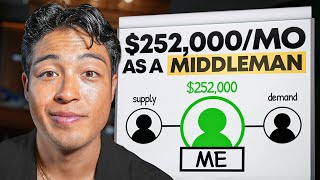
Everyone teaches the same method: find a winning product, run ads until it dies, then repeat. This leads to no recurring revenue, no brand, and constant resets to zero. The creator positions himself as a middleman who connects buyers and suppliers, not a product flipper.
Gymshark started with dropshipping gym apparel but became a billion-dollar brand by understanding they were in the customer business, not the product business. This mindset shifts the focus from chasing trends to building something that compounds.
Most people pick a product first, then try to find buyers. The correct order is to find people who already have a problem and bring them a solution. The first step is 'feed conditioning'—using Instagram to surface product ads by engaging with them.
Look for comments that show actionable intent—people tagging friends ('we need this for the trip') or saying 'finally something that works'—rather than generic 'cool' or 'nice'. Real-time comment activity (minutes or hours ago) is a strong signal a product is working right now.
Search for the brand or product in the Meta Ad Library. If ads have been running for months and are still active, it means the product is profitable—otherwise, they'd stop spending on expensive Facebook ads. Continuous ad spend is proof of validation.
Mana (a paid tool) provides extra insight like the number of ad sets, creative performance, and revenue data. It filters active video ads by runtime, and even lets you look at a store's traffic—like seeing 2.8 million monthly visitors for a competitor.
Check 3-, 2-, and 1-star reviews for the product on Amazon. Complaints like 'wish it came in different sizes' or 'quality is cheap' reveal gaps you can address with your own positioning or product improvements—this becomes your competitive angle.
Don't spend two weeks perfecting a Shopify store. Use Drop Magic to generate a branded store from an AliExpress or competitor link in minutes. The goal is to look legitimate enough to test ads; you can improve later after validating.
For real margins, skip AliExpress and search on 1688.com (Alibaba's domestic Chinese site). Products there are 30-40% cheaper. Contact suppliers and ask if they work with agents, or message the supplier directly for an agent recommendation. Provide clear requirements to get better quotes.
Instead of dumping $1,000 into untested ads, save your competitors' best-performing ads (those running for months with high engagement). Study the hook, format, and angle, then recreate with fresh footage. Run one Facebook campaign with $50/day and 5-10 ad creatives, let the algorithm optimize.
To prevent competitors from copying you, collect customer emails and phone numbers from day one for repeat sales. As volume grows (100-150 orders/month), invest in custom packaging and develop direct manufacturer relationships to cut costs, improve shipping time, and co-create product improvements—assets nobody else can copy.
The future of dropshipping lies in abandoning product-flipping in favor of building a middleman brand that compounds through customer data, unique packaging, and direct supplier relationships. Start tonight by conditioning your feed and doing product research—action beats waiting for the perfect setup.
What is the 'middleman method' in dropshipping?
Connecting people who have problems with people who have solutions, rather than chasing trending products. It means thinking of yourself as a connector, not a product flipper.
01:36
What comments in Instagram ads indicate real purchase demand?
Comments tagging friends ('we need this for the trip') or saying 'why didn't this exist before' show real intent, unlike generic comments like 'cool' or 'nice'.
04:38
How do you validate a product using the Meta Ad Library?
Search for the brand and see how long ads have been running. If ads have been running for months and are still active, it proves the product is profitable because no one keeps spending money on unprofitable ads.
06:51
What is 1688.com and why is it useful?
1688.com is Alibaba's domestic Chinese site aimed at local buyers. Products there are 30-40% cheaper than on Alibaba or AliExpress, but the site is in Chinese and you need to use a translator.
19:18
What is the recommended initial Facebook ads budget and structure?
One campaign with a $50/day budget, no interest targeting, and 5-10 different ad creatives (same hook, text, and product, only video changes). Let it run 3-5 days and let Facebook push budget to winners.
23:03
What three moats does the creator suggest building for a durable dropshipping business?
Customer data (emails/phone numbers), custom packaging, and direct manufacturer relationships.
25:08
How do you find a supplier agent on 1688.com?
Contact suppliers that carry your product and ask if they work with agents or can recommend one. Give them your full requirements: product, quantities, target shipping time, and future plans like custom packaging.
20:13
What is the purpose of checking Amazon's 3-, 2-, and 1-star reviews?
To identify what customers dislike or find missing in the product, which gives you a competitive angle you can address in your positioning or improve on.
09:03
Gymshark's Middleman Success
Illustrates that starting with dropshipping and evolving into a customer-focused brand creates a billion-dollar company, not just a product-flipping hustle.
01:07Start With Problems, Not Products
Reverses the common beginner mistake and reveals a research-first approach that dramatically reduces risk.
03:44Ad Longevity as Validation
Provides a simple, powerful signal for confirming a product's profitability before spending a dollar.
05:48Moats Defeat Copycats
Shifts focus from short-term wins to long-term defensibility by building assets (data, packaging, supplier relationships) that cannot be copied.
24:28[00:01] realize it. See, everyone's teaching you the same thing. Find winning products, money. And yeah, that works for like 3 build something that actually lasts. The whole approach right now is built around
[00:14] chasing quick wins. Find a product, write it until it dies, find another one compound. They just reset you back to happens. You follow all the steps. So, you pick a product, you set everything
[00:26] up, you spend money on ads, and then nothing or you lose money, and everyone products or you didn't spend enough on ads or the market is too saturated. But problem is that you're optimizing for the wrong thing. So, in this video, I'm
[00:40] if I were starting from zero today and how to build something that compounds so Let's get into it. I am not a drop shipper. I never have been. And yeah, I someone who's built multiple sevenfigure stores doing exactly what everyone calls
[00:54] what I'm actually doing, I'm a middleman. I'm connecting people who provide it. The same way that Uber doesn't own cars, Airbnb doesn't own homes, Amazon doesn't manufacture most of what they sell. But the best example
[01:07] started out drop shipping gym apparel from suppliers, but they didn't stay a They built a billion-dollar company because they understood they weren't in customer business and that changes everything about how you build. You see,
[01:22] product flipping. You find something trending, you ride it until it dies, has such a bad reputation. But when you realize you're a middleman, you stop chasing products and you start building something that actually compounds. So,
[01:36] being a middleman is the best method out there, how it works, why it matters, and what you'd actually do starting from zero in 2026. Let's get into it. So, why traditional drop shipping? Well, with drop shipping, you are basically
[01:49] gambling. You're looking for the next hot product, hoping it takes off before the trend dies. It's like trying to win the lottery every month. And that works sustainable. You build a store, you make a few thousand, the product dies, and
[02:01] you're back at zero. No reoccurring revenue, no brand, no momentum, just the problem with drop shipping. You're relying on products to make you money. Now, the middleman method flips [music] that. You're not writing trends. You are
[02:13] solving actual problems. You're focused on who you're selling to. Now, instead of being a product flipper, you become the connector between people who want them. And when you build like that, you're not starting from scratch every
[02:26] You're collecting data and improving systems that make your business stronger every single sale. And that's why I always say, I am not a drop shipper. Middlemen build long-term businesses. And if you want to build something that
[02:38] actually lasts in 2026, something that compounds instead of resets, you got to down exactly how to do that step by step. All right, so before we get into that we're taking here because most people just jumped straight into finding
[02:51] actually the problem. Here's the thing. When you start with the product, you are you pick right, and if it doesn't work, you just wasted weeks and hundreds of instead is we're going to validate everything before we spend real money.
[03:04] you're confirming people are actually making money on it. Then you build fast to test, not to be perfect, but to gain proof of concept with a minimum investment. And then this is the part that most people skip. Once you know
[03:17] actually makes you defensible, the MOATs. And that's the approach. You invest in what makes you different. Now, the reason why this matters in 2026 specifically is because ad costs are higher than ever. Tracking is messier,
[03:31] you can't afford to just throw stuff at the wall anymore. you need to be surgical. So, here's how to do it. All right, so the very first thing is thing, most people do this completely backwards. They find some random product
[03:44] out who to sell it to. And that is why they fail. Now, what you want to do is find people who already have a problem and then bring them the solution. So, let me show you exactly how I would do this. Now, before you invest in any paid
[03:56] I call it feed conditioning. First thing that you want to do is set up a fresh 20 minutes, just engage with every product ad that you see. I want you to like the post, save it, click through to the website, and you can even comment if
[04:10] so what's going to happen is Instagram's algorithm is going to be like, okay, they're engaging, they're liking, they seem to have some interest, and maybe something. And [music] your feed is going to flip dramatically. So within
[04:25] anywhere from 10 to 15 minutes, you will start seeing product after product. Now, looking through all these product based ads, I want you to look in the comments. And we are not looking for products that are making people say, "Oh, that's
[04:38] cool." Or, "This is really nice." Or maybe even, "I want this." We are tagging their friends and saying things like, "We need to get this for the trip." Or, "Finally, something that actually works or why didn't this exist
[04:52] entertainment and the other's actual demand. And you want to check when those seeing these comments from days or hours ago, 30 minutes ago, that's a really product is working right now as of this moment. And I want you to look for
[05:06] complaints, too. If people are saying, "I love this, but I wish it came in but that is a good sign because that's a the same thing on Facebook, just scroll, engage with all these product based ads,
[05:18] and let that algorithm start showing you more and more opportunities. So, to product ads, look for comments showing real demand, and pay attention to the find products within communities or niches that people actually want. All
[05:32] with the right signals, the next thing is validation. And just because people that it's making money right now. You need some sort of way to verify that. So let me show you how I do this. The first method is the meta ad library. And I
[05:48] meta ad library for you guys to easily access. And so let's just say that you loop earplugs right here, noise reduction earplugs. It's either for you're looking at all these comments, the comments look pretty promising,
[06:02] really nice website, so on and so forth. So, the first thing that you want to do is go to the meta ad library and you want to specifically search for the brand itself. So, it would be in this case, Loop Earplugs. You can generally
[06:14] go to the bottom and find their Facebook page just like this. This is one of the easier ways to get to the meta ad library of this exact company. We'll go to the about. We'll go down to page transparency. We'll go to see all. And
[06:26] then we will go down to go to ad library and it's going to direct us right to uh their ad library with all the active ads that they're running for this product. You can also type in the product name itself. This would just be like earplugs
[06:38] or noise reduction earplugs and it'll pop up all the competitors or any store keyword. In this case, we're going direct to loop. So, now that we can see all these ads right here, what we're looking for is if we see that they just
[06:51] started running these ads, let's just say a month ago, and it's still active today, then that is [music] a good sign. Even if we scroll down to months ago, that is a good indication because no one's just going to continue to spend
[07:03] money on these types of ads if it is not making them money on a daily basis because of how expensive Facebook ads are. So, that tells you that the product is validated. People are actively buying it as of now for this specific company.
[07:16] Now, the ad library works really well, but if you want to see things like the per ad, how many adsets that they're store traffic, I like to use this tool right here called Maneta. And I'll make
[07:29] trials that I can find for any of the tools that I use in this video below. But anyway, once we are in Mana, what we want to do is we want to head over to ads and then we can specifically look for the competitor brand that we just
[07:42] the reason why I find this so useful is because of these filtering options that we have on the lefth hand side. So, with the normal ad library, I'm just kind of scrolling through endless amounts of ads. With mana, I can specifically
[07:55] So, you can see that I have already pre-selected I only want to see videos. I only want to see ads that are currently active, not non-active ads. And then runtime. It's going to then filter ads that have been running. In
[08:09] week. And then from here, it's going to populate all these ads. It'll show how many adsets are using this ad, how long they've been running. So, if we click views. We'll be able to see the description that they're using, the
[08:22] destination link that they are sending us to, of course, the website, and then this ad. So, now, if I want to get a deeper dive into this store specifically, all I have to do is go to trending shot and then type in the store
[08:35] name right here. All right. So, now that I'm at the dashboard for this store, you visit. So we can see that they're doing 2.8 million visitors per month. They're doing about average 25K per day. We can
[08:50] see the bestselling products, their best performing ads along with the Shopify products and then we can see all their ads just like this. So really cool feature. All right, so I'll search for this product on Amazon and I'm
[09:03] specifically looking at these reviews and I'm looking at the three, two, and one star reviews. I want to get to know what is actually missing with this product. what isn't hitting the mark with this product right here. After you
[09:15] might find something along the lines of, "I love this, but I wish it had better instructions or this works really well, but cheaper quality than I expected." And again, that is your competitive angle. All right, so to recap, the meta
[09:29] brands have been running ads along with how many creatives that that brand is marketing. But if you want to see the revenue data, the tracked stores, a filtering by the actual spend and ad sets and just have like an entire
[09:44] overview database, you would use something like a mana or a similar tool validated the product, it is now time to build your store. And honestly, this is where the approach has changed the most in the last year or two. Now, it used to
[09:58] be you would spend like two weeks setting up a Shopify store. You'd pick a your copy, set up all your pages, and then by the time that you're done, you product. But now, the goal is not to build a perfect store. The goal is to
[10:13] get something live that looks legitimate enough to test with and then improve it like this. If you have already validated that people are buying this product, you saw the revenue data, you know it works. So, the store isn't the variable that
[10:26] you're testing. you're testing whether you can make this work with your ads and that you can get a functional [music] store up, the faster that you can actually start testing and making money. So, let me show you exactly how I'd do
[10:39] thing, you need Shopify. Pretty straightforward. You can head into the description of any one of my videos and I will attach a $1 offer for 3 months. Shopify for a single dollar for 3 months. You're not going to find a
[10:52] better deal than that. So, pretty simple. You just enter your email like this. Press go. Right. So, as you can see, the $1 offer is attached to this exclusive 97% off discount. Just going to subscribe for $1 and we should be
[11:05] the store design, you need to get your domain. So, as you can see, my store URL is going to be something along the lines of gibberish.mmyshopy.com. of gibberish.mmyshopy.com. Mine is trkwk-67.mmyshopy.com,
[11:20] actual domain to start things off. First thing that you're going to want to do is go to settings. After that, you're going to want to go to domains just like this. Now, I personally like to use storere
[11:32] just makes it really obvious about what your site is or what you are doing with your website. So, if someone sees Mr. Beast.store, they immediately know that selling something. So, there is no confusion. And then on top of that,
[11:47] there's actual data that shows that the store domains get better traffic and ranking. We can see that we have like CR7 fragrances.tore store. But honestly, So, let's just say that we're going after that noise reduction earplugs like
[12:01] Loop is. I would search something along the lines of Quiet Life or Focus Ear. And also, I would highly suggest you guys using AI chatbt or whatever AI tool names because I think it's much better if you're not very creative like myself.
[12:17] But in this example, we're just going to use focus ear. And we can see that it is available. So, I'm just going to add it to cart like this. Proceed. First of all, you don't need the privacy protection. Isn't absolutely necessary.
[12:30] protection. Isn't absolutely necessary. And it is $29, but if you use my code, cents. So, it's kind of like a no-brainer. So, you can see that it is no-brainer. So, you can see that it is now from $29 to only 99 for you guys to
[12:43] get your own custom domain. So, that whenever someone types in focus.store, your website. All right. So once we go back to here, as you can see, it's a very simple connection process. All I have to do is connect the website just
[12:56] like this. Shouldn't take you more than a minute or two. And now that the domain build the store. And here's where most people would start customizing the theme nitpicky about what they want. Don't do that. So what I use instead is this tool
[13:11] right here called Drop Magic. I use pretty much every single store builder and this one is the [music] best of its kind currently. I will leave a link for you guys to easily access it below. Now, the reason why I'm recommending this
[13:24] specifically is because it's the fastest way to get from zero to a store that actually looks like a real brand, even if you have no coding experience or color theory understanding. You give it a product, it generates the entire store
[13:38] homepages, the policies, basically generic template. It's actually building it based on your niche or product. But most importantly, your chosen angle that you select. Let me just show you how to
[13:51] say, for example, this is our main competitor right here, loop, or we could even just find the AliExpress link. You can do either or. So, I'll just like drag and drop like this. So, we can either take the listing right here and
[14:05] drop it into Drop Magic. Or you can just take the competitor link like I'm doing you're going to add an AliExpress link or Shopify store, Amazon store, Etsy store, and it's going to start doing its market research. It's going to scan the
[14:17] page. It's going to figure out what this is selling. It'll read all the copy, start doing its thing. All right. So, we can see that it has come up with a Of course, I want English. All right. So, who are you selling to? This depends
[14:31] approach this product with. Are you going to be targeting uh people for people that want to go to events and reduce noise? So, you can choose as you want. I'm just going to go with, let's just say, concert enthusiasts. It's
[14:45] going to go here for our hook angle. Okay. And we can go in with stylish sound protection. So people that still want to look somewhat decent without having super big bulky earplugs. So it looks like it has chosen selected images
[14:59] looks like it has chosen selected images and then also pulled some AI generated another thing. It will automatically create AI generations for you without you even asking. So we'll go to our store. We'll select all these images and
[15:13] build out the theme. As you can see, it has populated a page for us. Uh it has used some of the AI images like this and it has created a structure that looks
[15:25] off of ground zero really good, really clean. And this is what the product page still need to fix this image. Let's just do it right now. What's really cool is that it integrates Nano Banana and we can basically edit this image however we
[15:39] want. We can also add in a reference image to make it look however you might want it to look based on a competitor. I said make this image look clear with a concert background. And look at that. And obviously this is first go. It's not
[15:52] absolutely amazing. But yeah, just crazy that you can do that that simply all on one platform. This is what the product page looks like. It builds out a product page. It also builds out a homepage. Same thing. Got the homepage that looks
[16:07] like this. And then we have a reviews page. If I want to add another product, all I have to do is press add a new product, paste the product URL from different product variants, let's just say I wanted to go with the dream
[16:22] version which was for sleep. I can import that by simply taking the link of the competitor or same thing can go on AliExpress, find another product variant, add it into there, and then it's going to formulate a product page
[16:35] specifically for that product skew. We can change and toggle with pretty much this. So, templates, colors, fonts, so on and so forth, icons. I can also add
[16:47] in a section. If I want this on my product page, I can generate this and it's going to generate a your brand versus the competitor. So, you can see versus the competitor. So, you can see what fits best on your store between
[17:00] like, you know, product pages, various features. We can even add like a reviews to add in the sticky add to cart, we can see that it's now here on the bottom. so that when I am scrolling, it's constantly right here to remind the
[17:16] So, there's all these little things that you can play around with. And then once you're like, okay, this looks pretty good. I'm happy with how it looks. You can scan this QR with your phone and see exactly how it looks like live at the
[17:30] moment from your phone. Once you are happy, you simply just press publish. You connect your store. And since we already created a Shopify account with that $1 offer, we just clicked existing Shopify store. We go back to Shopify
[17:43] Shopify store. We go back to Shopify just like this and we copy our URL right just like this and we copy our URL right here. We go back and then we install it and we connect. Now, it's going to go ahead and connect to Shopify and the
[17:56] store has been connected. So, if we go here back to our online stores, we go to themes. So, we'll just go into customize and we can still make any adjustment that we would like on Shopify. We can still, you know, move the banners just
[18:08] like that. So on and so forth, but I just think the UI is better on Draw Magic. Uh either way, doesn't really matter. Whatever you find most useful. But the main thing is that your store needs to look legit enough that someone
[18:22] And that's pretty much it. Everything else you can dial in later as you progress, as you learn more about your audience. All right, so your store is done. Now, you need to make sure that when someone actually buys, the product
[18:35] gets to that customer. The next part of this process is fulfillment. And look, fulfillment tool is totally [music] fine. It gets the job done. Orders are not doing everything manually, which is good and that works. But the thing is,
[18:48] build something real, you need to understand how to source your own agent at some point in time, not just rely on a tool that everyone else is using. everything changes. You get competitive pricing. You can negotiate. You can
[19:03] [music] access to alternate shipping lines. So, you are getting faster can even work with them to customize your own product or source other actually separates you from everybody else. Now, here's something that most
[19:18] for agents, don't just search on AliExpress. Go to 1688.com. It's basically Alibaba's domestic Chinese site. So the prices are going to be way buyers, not international buyers. You'll see the exact same products that you see
[19:33] on Alibaba for like 30 to 40% cheaper. You just, you know, need to convert the currency from Chinese yuan to USD or whatever your currency may be. Now, the site is in Chinese, so you'll need to use Google Translate. But take note that
[19:46] when you find a product on here, you reach out to that supplier and ask if international orders. Now, most of them do. And because you found them on 1688, you're already starting with better pricing than if you just went to
[20:00] AliExpress or even Alibaba. Here's how you actually reach out to these agents. Now, the easiest way is going on 1688 or you can even use Alibaba if you want. Find spires that carry your product and message them directly. Now, you're not
[20:13] [music] asking them for a quote right away. You're asking if they work with agents or if they can recommend one. Now, when you reach out, you need to be clear about what you're looking for. And most people will just say, "Hey, can you
[20:25] random quote with terrible terms. What you want to do is give them the full need? What quantity that you're starting with? Target shipping. Is it 5 to 7 planning to scale and want custom packaging eventually that you need
[20:41] competitive pricing and alternate shipping options. So, this positions you as someone who's serious, [music] not just someone testing random stuff. Now, you need to know exactly what to say and what questions to ask. So, I put
[20:53] template that you can literally just send to agents and it covers pricing, shipping times, payment terms, custom packaging, all of it. It's going to be create like a notion document for you guys. Now, once you have your own agent,
[21:06] anymore. You've got someone working with you, negotiating for you, helping you scale. That is a completely different game. Right? So, that is fulfillment and traffic, which is actually getting people to your store, which is most
[21:19] into it. And this is where I see a majority of people mess up. They think that they need to dump $1,000 into Facebook ads on day one and just hope and pray that something works. That is the wrong play. If you're just starting
[21:31] starting from zero today. I wouldn't reinvent the wheel. I'd use what's competitors. So, the ones that you found in that validation phase, they're spending money figuring out what work. They've tested different hooks,
[21:45] why would you start from scratch? It doesn't really make sense, right? So, what I would do is I would save their best performing ads. So, the ones that have been running for weeks or months, the ones that have a ton of engagement,
[21:58] a lot of spend, the ones that they're creating iterations off of, those are to replicate essentially. Now, you're not going to rip their exact video and run it as is, but we are going to study it. So, what's the hook? What's the
[22:11] problem that they're leading with? What is the format? Is it a UGC style? Is it a demonstration? Is it a testimonial? Are they running simply plain static image ads? You take that framework and you recreate it. So the same angle, the
[22:23] same structure. You just film fresh with your own spin on it. Now look, if you're completely strapped for cash and short on time, you could hypothetically download their ads and re-edit them, cut them up differently, put them together,
[22:37] and add your own text overlays, change the pacing, whatever. I don't really infringement and also like you want to have your own original content. but for the initial testing just to see if the concept works, it is an option. Just do
[22:50] it at your own discretion. But honestly, the best play is recreating the concepts with fresh footage. So, even if you're filming from your own phone, that's own content, whether it's recreated or your own version, here's how to actually
[23:03] test it. So, you're going to set up one campaign on Facebook, budget it at $50, targeting, so you basically don't have to touch anything but the country that interest targeting. let Facebook figure it out. It does a much better job than
[23:17] you're running anywhere from 5 to 10 different ad creatives. So, different product, same text copy. The only variable within all these ad creatives is going to be the video itself. Let it run for 3 to 5 days. See which creatives
[23:32] purchase and Facebook will naturally push more budget to what's working. This you see what's working, that is when you bring in UGC creators. So you get custom you don't spend money on any of that
[23:46] with the basic versions first. So validate with what's already proven, so at this point, you've got the full framework, you know how to build store, get traffic. But here's the thing, knowing what to do and actually
[24:00] different things. And honestly, that's where most people get stuck. They know launching the ads or knowing when to kill a campaign or when to scale, that one-on-one help from my team and I to walk you through this entire process.
[24:14] up your store, and literally tell you what to kill, what to scale, and how to spots open right now. We'll literally run your store like it's our own. Now, be the first link in the description. All right, so now that you're making
[24:28] got a product that works, money is coming in, this is where 99% of people dies, and they're back to square one looking for the next product. That is the hamster wheel. But what separates the people who build real businesses
[24:42] over [music] is this next part. I call it building moats. And if you're not familiar with the term a moat is basically anything that protects [music] your business from competitors. So it makes it harder to compete with. Look,
[24:54] this point, the product research, the store, the ads, anyone can copy that. can copy your story, they can source the same product, but what they can't copy here's what you need to focus on once you are starting to make sales. The
[25:08] first thing is customer data. From day one, you need to be collecting emails, phone numbers from every single person who buys from you. [music] Every single realize that getting someone to buy from you again is 10 times easier than
[25:21] Most drop shippers don't do this. They make a sale, they fulfill the order, and that is it. They never talk to that customer again. That is leaving money on follow-up emails saying things like, "Hey, how was the product working for
[25:34] Here are some other products that you may like. You're building a transaction. And this is where it gets really powerful. You can use this list for sales promos, recommended products, new product launches, discounts, and
[25:46] especially for big holidays like Black Friday, Cyber Monday, Christmas, when You've got a list of people who already trust you, have who have already bought from you. And over time, that customer list becomes your most valuable asset.
[25:58] you test something, you've got people who already trust you and already bought can't copy your customer list. The second thing, custom packaging. Once you're doing consistent volume, anywhere from 100 to 150 orders a month, you need
[26:11] to start working on custom packaging. And I don't just mean slapping a logo on a box and calling it your custom packaging. I mean the whole experience. So, branded boxes, thank you cards, inserts that show people how to use a
[26:23] product or what to buy next. Now, why does this matter? Because when someone gets your package and it looks like a real brand, not just some random thing from China, like a white box with whatever on it, they're way more likely
[26:35] to post about it or even keep the box. And you can just ask yourself, do you keep the Apple product boxes? I have I don't know how many Apple product boxes throw them away because they're so nice. They feel valuable. They seem valuable.
[26:48] off your packaging, that becomes the protection. That's the content that your competitors can't fake. Third thing, manufacturer relationships. Once you're from agents and you go directly to manufacturers. Now, this is where
[27:02] working with manufacturers, you can negotiate even further than what you were getting with your agent. You can customize the product. You can order in bulk and send inventory to, for example, 3PL so that you get that shipping down
[27:15] to 3 to 5 days instead of 2 to 3 weeks. And most importantly, you can work with them to improve the product based on what your customers are telling you. So, either AliExpress or the same agents everyone else uses. You're working
[27:27] directly with the people making the product. Now, here's why this matters. packaging, manufacturer relationships. They all compound. So, the customer list better. Your relationships with manufacturers get stronger. Your margins
[27:42] improve. Your shipping gets faster. And all of that makes you harder and harder shipper anymore. You're building an actual brand. And that's what separates you from everyone else. All right, so look, I know this was a lot. And if
[27:56] where do I even start?" Just start with product research. Condition your feed tonight. Spend 20 minutes. See what you find. Because the biggest mistake people once. They want the perfect store, the perfect product, the perfect ads, all
[28:10] just start moving. You'll figure it out as you go. And if you want that agent this video, everything is in the description. Otherwise, I will catch you description. Otherwise, I will catch you guys in the next one. Let's get it.


⚡ Saved you 0h 28m reading this? Transcribe any YouTube video for free — no signup needed.