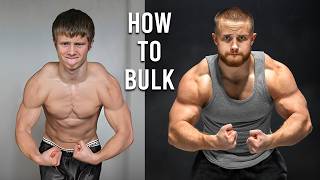

The Truth About Bulking vs Main Gaining
58sChallenges the popular 'main gain' trend with personal results and evidence, sparking debate.
▶ Play Clip"Title is mostly honest – the video delivers practical bulking advice, but the promised 'pro' results are supported by personal experience and study data, not a guarantee."
This video explains why a proper bulking phase is the most effective way to build muscle, countering the common fear of fat gain. Jeff shares his personal year-long bulk results, including significant lean mass increases measured by DEXA and ultrasound, and provides a science-based blueprint for diet, training, and supplements.
Jeff has been on a proper bulk for a full year with optimized training and nutrition, achieving the most gains in years.
Old-school dirty bulks cause excessive fat gain, while main gaining (recomp) limits muscle growth. A proper bulk balances both.
Jeff's bulk since January has been tracked with DEXA and ultrasound, showing significant muscle gain. He is a subject of a McMaster University case study.
Your body prioritizes survival over muscle building. A caloric surplus signals that starvation is not a threat, allowing energy to be allocated to muscle growth.
A study showed the bulking group (4,300 cal/day) gained significantly more fat-free mass than the main-gaining group (2,500 cal/day), with no additional fat gain in beginners.
Beginners: 1-2% of body weight per month. Intermediate/advanced: 0.5-1% per month. Example: a 170 lb intermediate should gain 1-2 lb per month.
A 5-10% surplus above maintenance is sufficient. Jeff maintains at 2,800 cal, bulks at ~3,000 cal. A dirty bulk of 50-100% surplus causes rapid fat gain.
Eat 0.7-1 g of protein per pound of body weight. Keep dietary fat at 20-30% of total calories. Jeff eats 170 g protein, ~80 g fat on 3,000 cal.
Training triggers muscle growth; diet alone is not enough. Beginners should focus on basics; intermediates need 8-15 sets per muscle per week; advanced can use specialization programs.
Yes, do moderate cardio (e.g., walks, basketball) 2-3 times per week to improve conditioning and tolerate more volume, unless you have an active job.
Basic: 5 g creatine, protein powder, 200 mg caffeine pre-workout. Additional: fish oil (2 g EPA+DHA), magnesium, vitamin D, multivitamin with ashwagandha (not broadly recommended).
What is the definition of a bulk?
Eating more calories than you expend (caloric surplus) to gain weight, ideally mostly muscle.
2:10
According to the transcript, why does a caloric surplus benefit muscle growth?
Because the body prioritizes survival; a surplus signals no starvation threat, allowing energy for muscle building.
2:41
What was the daily caloric intake of the bulking group in the study mentioned?
Approximately 4,300 calories per day.
3:26
What is the recommended weight gain rate per month for an intermediate/advanced lifter?
0.5 to 1% of body weight per month.
4:21
What calorie surplus percentage does Jeff recommend for a lean bulk?
5 to 10% above maintenance.
5:26
How can you estimate your maintenance calories if you don't know them?
Multiply your body weight in pounds by 14 to 18, or use a tracking app like Macro Factor.
5:54
How much protein per pound of body weight does the transcript recommend during a bulk?
0.7 to 1 gram of protein per pound of body weight.
6:37
What percentage of total calories should come from fat in a proper bulk?
20 to 30%.
7:14
Why is dietary fat more easily stored as body fat than carbohydrates?
Because fat is already fat, while carbs must be converted through a complex biochemical process.
7:03
What training volume range does the transcript suggest for intermediate lifters per muscle per week?
8 to 15 sets per muscle per week.
9:56
Survival priority over muscle
Explains the evolutionary reason why a caloric surplus is necessary for optimal muscle growth – a key scientific principle.
2:41Study compares bulking vs main gaining
Provides concrete evidence that bulking (4,300 cal/day) leads to significantly more fat-free mass than main gaining (2,500 cal/day), even in beginners.
3:18Small surplus is sufficient
Challenges the dirty bulk approach by showing that only 5-10% surplus is needed to support muscle growth without excess fat gain.
5:04Precise protein recommendation
Gives an exact range (0.7-1 g per lb body weight) that is actionable and evidence-based.
6:34Training drives muscle gain on a bulk
Emphasizes that diet alone is not enough – training intensity and volume determine how much of the surplus is used for muscle.
9:15[00:00] I've been bulking for this entire year
[00:01] straight an actual proper bulk with
[00:04] optimized training and nutrition and
[00:06] I've made the most gains that I've made
[00:07] in years and in this video I'm going to
[00:09] try to convince you to do the same if
[00:11] you click this video I'm sure you're
[00:12] interested in building some more muscle
[00:14] but maybe you're not sure if bulking is
[00:15] a good idea you've probably heard that
[00:17] the heavy bulking that bodybuilders do
[00:19] is outdated Bro Science but a lot of
[00:21] people still do them three servings of
[00:24] checks let's pour on I don't know 3 cups
[00:27] of milk or so so that puts me about 170
[00:29] G of of carbs 25 g of protein and about
[00:32] 25 G of fat for this whole bowl or you
[00:35] may have even heard that you don't need
[00:36] to bulk at all you can just main gain
[00:38] meaning you maintain your weight while
[00:40] gaining muscle don't bulk don't
[00:44] cut main gain the reality is old school
[00:48] dirty bulks do build muscle but they
[00:50] also have a problem they cause way more
[00:52] fat gain than muscle gate there are
[00:54] thousands of stories from people online
[00:56] who figured this out the hard way and
[00:57] it's caused a lot of people to swing all
[00:59] the way way back to the opposite end of
[01:01] the spectrum never actually committing
[01:03] to a bulk and playing it safe with main
[01:05] gaining forever and sure main gaining is
[01:07] possible but it has a problem too you'll
[01:09] never build as much muscle with main
[01:11] gaining as you will with a proper bulk
[01:14] so in this video I'm going to explain
[01:15] why bulking is most effective for
[01:17] building Nole I'll show you the exact
[01:19] meals that I'm eating in my own bulk and
[01:21] I'll teach you how to set up your own
[01:22] science-based bulking plan for maximum
[01:24] muscle gain and minimum fat gain I've
[01:27] been doing a proper bulk since January
[01:29] 1st so just about a year it's the first
[01:31] serious bulk I've done in a long time
[01:33] and I've built a significant amount of
[01:34] muscle measured by both dexa and
[01:36] ultrasound so that's tiny little Gap
[01:38] that's fat and then from here to here is
[01:41] all muscle and did I mention that is my
[01:43] weaker arm and that I can't reveal
[01:46] exactly how much muscle I've gained yet
[01:48] cuz I'm the subject of a case study at
[01:49] McMaster University but I'll say it's
[01:51] more than I expected and I'll reveal the
[01:53] results of that study in the New Year if
[01:55] your main goal is to build muscle and
[01:56] you've never done a proper bolt before I
[01:58] strongly encourage you to do what I did
[02:00] this year I'm not the only one who's had
[02:01] success with bulking here a few examples
[02:03] from some of my followers who've also
[02:04] done bulking the proper way this is what
[02:06] you can expect when you actually commit
[02:08] to a bulk and do it right a bulk is when
[02:10] you eat more calories than you expend
[02:13] putting your body in a caloric Surplus
[02:15] if you do this you'll gain weight and if
[02:17] you bulk the right way that weight
[02:19] should mostly come from muscle instead
[02:21] of fat a lot of people completely
[02:22] freestyle their bulk gain a ton of fat
[02:25] and end up giving bulking a worse rep
[02:26] than it actually deserves now at this
[02:28] point you're probably wondering why
[02:30] should I do a bulk anyway why not just
[02:32] recomp forever the answer is that you'll
[02:34] never build as much muscle through
[02:35] recomping as you will through proper
[02:37] bulky you'll probably never reach your
[02:40] full muscular potential that's because
[02:41] your body doesn't really care about
[02:43] building muscle your body cares about
[02:44] survival in evolutionarily speaking
[02:47] survival means not starving to death so
[02:49] if your body doesn't have a surplus of
[02:51] calories it'll use the limited energy
[02:53] available to do more important things
[02:55] like making sure that your organs have
[02:56] enough glucose empowering your immune
[02:58] system to fight off pathogens again you
[03:00] can still build some muscle in a caloric
[03:02] deficit or at caloric maintenance as
[03:04] long as you train hard it just won't be
[03:06] as high on the priority list on the
[03:07] other hand if you're in a caloric
[03:09] Surplus your body knows that starvation
[03:11] isn't a threat and it can allocate more
[03:13] energy toward the less evolutionarily
[03:15] imminent process of getting more jacked
[03:18] the research shows this as well this
[03:19] study had one group of subjects main
[03:21] gain on about 25 200 calories per day
[03:24] and another group bulk on about 4,300
[03:27] calories per day both groups followed
[03:29] the same training plan for 8 weeks and
[03:31] after 8 weeks the Bulan group gains
[03:33] significantly more fat free mat I found
[03:36] it super surprising that in this study
[03:37] the bulking group actually didn't gain
[03:39] any fat either it was basically all lean
[03:41] tissue that they gained but that's
[03:43] probably because they were new lifters
[03:45] when you look at studies on more
[03:46] experienced subjects bulking still
[03:48] causes more muscle gain but it also
[03:50] causes more fat gain but again there is
[03:52] a way to avoid that excess fat gain and
[03:54] next I'll explain exactly how to do that
[03:56] through your diet training cardio and
[03:59] supplements how much fat you gain on
[04:01] your bulk mainly depends on how fast you
[04:03] gain weight if you gain weight too
[04:05] quickly the majority of that weight will
[04:07] be fat building muscle takes time and
[04:09] you can't force feed muscle growth the
[04:11] general scientific consensus for lean
[04:13] bulking is to gain 1 to 2% of your body
[04:16] weight per month if you're a beginner
[04:18] and 0.5 to 1% of your body weight per
[04:21] month if you're an intermediate to
[04:22] Advanced lifter so let's just say you've
[04:24] been training for 2 years and you weigh
[04:26] 170 lb that means you should gain about
[04:28] 1 to 2 lb per a month on your bulk
[04:31] that's pretty slow it means if you bulk
[04:33] for the entire year like I'm doing you'd
[04:35] gain 12 to 24 lb if you're closer to
[04:37] being a beginner it's definitely
[04:39] possible that 100% of your weight gained
[04:41] could be from lments especially if you
[04:43] have good genetics but if you've been
[04:44] training for a while and you're closer
[04:46] to your so-called natural muscular limit
[04:48] half of it could be lean and the other
[04:49] half could be fat in my opinion that's
[04:51] okay though because you've still made
[04:53] gains rather than just spinning your
[04:54] wheels and you can always do a cut after
[04:56] your bulk is over to trim that fat off
[04:58] as long as you cut Rel ATIV L slowly
[05:00] train smart and eat enough protein you
[05:03] should retain most of that new muscle
[05:04] that you added on your bulk so to gain
[05:06] weight at the appropriate rate how many
[05:08] calories should you eat well you
[05:09] definitely shouldn't do the old school
[05:11] dirty bulking approach where you just
[05:12] eat as much as humanly possible these
[05:14] dirty bulks usually result in a massive
[05:16] caloric Surplus as much as 50 to 100%
[05:19] above maintenance without some serious
[05:21] anabolic assistance that type of bulk
[05:23] will simply cause rapid fat gain instead
[05:25] studies show that even a 5 to 10%
[05:28] caloric Surplus is enough to give your
[05:30] body the resources that it needs to lay
[05:31] down new muscle tissue without ramming
[05:33] those extra calories into your fat
[05:35] stores I maintain my weight at around
[05:37] 2800 calories per day if I eat 2,800
[05:40] calories I don't gain weight and I don't
[05:42] lose weight so when I bulk I simply
[05:44] increase my calories by 5 to 10% up to
[05:47] around 3,000 calories per day then I'll
[05:50] adjust those calories up or down
[05:51] depending on if I'm gaining too fast or
[05:53] too slow if you don't know your
[05:54] maintenance calories you can simply
[05:56] multiply your body weight in pounds by
[05:58] 14 to 18 and that should get you in the
[06:00] right ballpark or you can screenshot the
[06:02] steps on screen to figure it out for
[06:03] yourself or better still you can
[06:05] download the macro Factor app for 2
[06:07] weeks for free track your weight and
[06:09] what you eat for those two weeks and the
[06:11] app will give you an extremely accurate
[06:12] number for your metabolic rate and your
[06:14] maintenance calories the app will also
[06:16] update and adjust your calories
[06:17] throughout your bulk as your metabolism
[06:19] adapts and it's the app that I've been
[06:21] using to run my own nutrition for this
[06:22] entire year I'm a part owner and I help
[06:24] develop the app so if you're interested
[06:26] I'll have a little more info about that
[06:28] at the end okay so that's how you set
[06:29] your calories up but you obviously
[06:31] shouldn't get all those calories from
[06:32] donuts and ice cream you need to eat
[06:34] enough protein to lay down new muscle
[06:36] tissue the best science shows that 0.7
[06:38] to 1 g of protein per pound of body
[06:41] weight is plenty when bulky so I weigh
[06:43] 180 lb and I've been eating about 170 g
[06:46] of protein per day on my bulk you also
[06:49] want to monitor your fat intake on your
[06:50] bulk too little dietary fat can lower
[06:53] testosterone but too much fat can lead
[06:55] to excess fat gate despite what low carb
[06:57] Advocates say dietary fat is much more
[07:00] easily stored as body fat than
[07:01] carbohydrate is that's because fat is
[07:04] already fat while carbs have to be
[07:06] converted to Fat through a fairly uous
[07:08] biochemical process before they can be
[07:10] stored as fat so I'm not a fan of high
[07:12] fat bulks or low fat bulks ideally 20 to
[07:15] 30% of your total calories should come
[07:18] from fat based on these numbers going
[07:19] back to me in my 3,000 calorie bulk I
[07:22] should eat between 65 and 100 G of fat
[07:25] per day I usually land around 80 g per
[07:27] day so this is my protein this is my my
[07:29] fat and then I just fill in any
[07:31] remaining calories with carbs pretty
[07:33] easy all right and this is what a full
[07:34] day of bulking looks like for me I
[07:36] usually wake up at around 7:30 a.m. and
[07:39] I have an energy drink or a coffee
[07:40] coffee is probably the healthier option
[07:42] since it's packed with antioxidants and
[07:43] has a huge body of science showing
[07:45] health benefits I think energy drinks
[07:47] are also okay in moderation I'm not
[07:48] hungry when I first wake up so I end up
[07:50] eating breakfast at around 10:00 a.m.
[07:52] which is 1 cup of egg whites and one
[07:53] whole egg scrambled with one slice of
[07:55] turkey bacon mushrooms onions and
[07:58] spinach and I put 15 G of shredded
[08:00] cheese on top of the eggs and for carbs
[08:02] I have 60 G of oats with almond milk and
[08:04] 100 G of blueberries I also take most of
[08:06] my supplements with this Meal which I'll
[08:07] come back to in a minute if it's a busy
[08:09] morning and I don't have time to cook
[08:10] I'll just have a protein shake with some
[08:11] oats at 1:00 p.m. I have my pre-workout
[08:14] meal which is 100 G of lean ground
[08:16] turkey jasmine rice Greek yogurt
[08:18] shredded cheese Sriracha a kiwi and 100
[08:21] G of blackberries after this meal I have
[08:23] a pre-workout supplement and then I
[08:24] train about an hour later after training
[08:26] I have a protein shake and a banana and
[08:28] then in the evening my diet becomes a
[08:30] lot more flexible some nights I'll order
[08:31] a peita or a burrito sometimes I get
[08:33] sushi or Thai food but it's often
[08:35] chicken potato sour cream and broccoli
[08:38] with a side of roasted sunflower seeds
[08:40] for healthy fats then before bed it's
[08:42] Greek yogurt honey and peanut butter
[08:44] with a side of popcorn if I have any
[08:46] calories left over I usually have
[08:47] something sweet like some candy or
[08:48] chocolate again when you track your
[08:50] Macros you can be a lot more flexible
[08:52] with the foods you eat and you can even
[08:53] eat some junk food as long as it fits in
[08:55] your daily totals and remember when
[08:57] you're bulking you have a higher caloric
[08:59] intake than usual that means you need to
[09:01] make sure that you're putting those
[09:02] calories to use in the gym a lot of
[09:04] people make the awful mistake of
[09:06] slacking off with their training on
[09:07] their bulk and I've done this in the
[09:09] past myself but this is a Surefire way
[09:11] to guarantee that you gain more fat than
[09:13] muscle after all it's your training
[09:15] that's going to trigger new muscle
[09:16] growth as important as your diet is your
[09:19] training is what will determine how much
[09:21] muscle you gain on your bulk so you need
[09:23] to take it seriously if you're still in
[09:25] your first year of training focus on the
[09:26] basics when proper technique for the
[09:28] basic EX ex sizes and learn to push
[09:30] yourself hard with good form splits
[09:33] don't really matter at this point bro
[09:34] split push both legs upper lower full
[09:36] body they all work pick what you like
[09:38] just try to be in the gym at least 3
[09:40] days per week with four to five gym days
[09:42] per week likely being most optimal if
[09:44] you're an intermediate meaning you've
[09:45] been training hard for 1 to 3 years you
[09:48] can start to add some more volume as an
[09:49] intermediate you should be doing more
[09:51] sets than you did as a beginner but
[09:53] intensity is still the most important
[09:55] thing at this stage you should be doing
[09:56] around 8 to 15 sets per muscle per week
[10:00] big complex muscles like the back seem
[10:02] to tolerate more volume so you might
[10:04] want to do more sets for your back than
[10:06] you do for your chest I'll put a table
[10:07] up here on screen from my upcoming book
[10:09] the muscle ladder breaking down weekly
[10:11] set volumes that I recommend for each
[10:12] muscle at this stage it might also be
[10:14] smart to ditch the Bro split for one of
[10:15] the other options since it'll help you
[10:17] avoid junk falling if you're an advanced
[10:19] trainee meaning you've been training
[10:20] hard and smart for more than 3 years you
[10:23] could consider running a specialization
[10:25] program for your bulk this is when you
[10:27] increase your training volume for just
[10:28] one or two muscles at a time for example
[10:31] if you need to bring up your delts you
[10:32] could add 20 to 40% more volume for your
[10:35] shoulders each week so if you currently
[10:37] do 15 sets for your shoulders each week
[10:40] increase that to 18 to 20 sets per week
[10:43] this is also in things like length and
[10:44] partials my reps and advanced exercise
[10:46] techniques can help you e those extra
[10:49] marginal gains should you do cardio on a
[10:51] bulk I think for the most part yes you
[10:53] should the idea that cardio kills your
[10:55] gains is based on outdated lowquality
[10:57] science staying in good cardiovascular
[10:59] shape as you bulk is not only good for
[11:01] your health it also help you tolerate
[11:02] more volume if your cardio sucks you're
[11:04] really going to struggle through your
[11:05] leg days you may not be able to get as
[11:07] many reps as you could have gotten if
[11:08] your conditioning was better that's
[11:10] because your heart and lungs will give
[11:11] out before your legs do that said if you
[11:13] work a very active job such as in
[11:14] construction or as a server you may not
[11:16] need any extra cardio at all but if you
[11:18] work a desk job you probably should do
[11:20] some extra cardio I personally do two or
[11:22] three moderate intensity cardio sessions
[11:24] per week by going for a brisk walk or
[11:26] playing some late basketball for
[11:27] supplements I've talked about all the
[11:28] basic boring stuff in other videos so I
[11:30] won't go into those details again here
[11:32] the basic advice is to Take 5 G of
[11:34] creatine per day use protein powder as
[11:36] you need it and consider taking about
[11:37] 200 Mig of caffeine before your workouts
[11:39] as long as it doesn't mess with your
[11:40] sleep but on this bulk there are a few
[11:42] other things that have been taking I
[11:43] take six fish oil capsules every morning
[11:45] which gives me two grams of combined EPA
[11:48] and DHA eating more Omega-3s is one of
[11:50] the easiest things you can do to improve
[11:52] nearly every facet of your health from
[11:54] your heart to inflammation to brain
[11:55] function and anxiety I've also been
[11:57] taking a magnesium supplement before bed
[11:59] low magnesium is associated with low
[12:01] testosterone and poor sleep two things
[12:03] that are very important for muscle gain
[12:05] I also take a vitamin D supplement
[12:06] because I don't get a lot of sunlight
[12:08] low vitamin D is also linked with low
[12:10] testosterone so if you aren't getting
[12:11] enough naturally supplementation is an
[12:13] easy way to prevent your test levels
[12:15] from dropping other than that I take a
[12:16] basic multivitamin in the morning with
[12:18] 600 Mig of ashwaganda root although I
[12:20] don't really feel like there's quite
[12:21] enough safety data on ashwaganda yet for
[12:23] me to recommend it broadly and if you
[12:24] guys want to optimize your bulk like
[12:26] I've done this year I'd strongly
[12:27] recommend downloading macro fact you can
[12:29] try it out for 2 weeks for free if you
[12:31] use code Jeff when you download the app
[12:33] it's the only app that uses
[12:34] science-based algorithms to figure out
[12:36] your exact metabolism and then it
[12:38] updates your nutrition each week just
[12:40] like a coach would it really is like
[12:42] having me as your own personal nutrition
[12:43] coach but for a tiny fraction of the
[12:45] cost it also comes with all kinds of
[12:47] amazing tracking tools so you can
[12:48] monitor not only your calories and
[12:50] macros but also every vitamin and
[12:52] mineral that way you can figure out what
[12:53] foods you need to eat more of and what
[12:55] foods you need to eat less of to improve
[12:57] your health we just hit 200 100,000
[13:00] active users and we have an amazing
[13:01] engaged community on Facebook and Reddit
[13:04] that you can be a part of if you have
[13:05] any questions about the app you'll
[13:06] always get an answer there so I'll put a
[13:08] link to the free trial in the
[13:09] description box down below or you can
[13:11] scan this QR code over here next to my
[13:13] head and try it out for yourself don't
[13:15] forget to leave me a thumbs up if you
[13:16] enjoyed the video subscribe if you
[13:17] haven't already and I'll see you guys
[13:19] all here in the next one



⚡ Saved you 0h 13m reading this? Transcribe any YouTube video for free — no signup needed.