

1 Year Transformation Upper Body Workout
45sShows dramatic before/after results with real data (DEXA, ultrasound) and promises exact exercises, making it highly aspirational and educational.
▶ Play Clip"The title accurately reflects the content: the video details the exact upper body workout used for a one-year transformation, with measurable results and specific exercise techniques."
This video presents the exact upper body workout routine used for a year, which resulted in significant muscle gains. The creator explains the specific exercises and techniques he credits for his transformation, emphasizing progressive overload and training to failure.
The creator's upper body workout over the last 365 days transformed his physique, adding 2.7 lbs of lean mass measured by DEXA and increasing bicep peak measured by ultrasound after 15 years of natural training.
The most effective chest exercise for him was the incline barbell bench press. It targets the chest and front delts, with bonus triceps and side delt activation, and a 45-degree incline grows upper pecs without sacrificing mid/lower pec growth compared to flat bench.
Used a slightly narrower grip to increase range of motion, hitting more triceps without losing chest tension, and took the last set to failure every time, dumping the weight forward onto safety bars.
Seated cable flyes stretch the pecs more than compound presses. Technique includes setting the bench far out, controlling the negative, squeezing elbows together, and avoiding letting elbows drop to maintain tension on the pecs. Last set to failure.
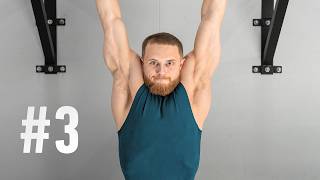
Weighted pull-ups were the biggest contributor to back gains, promoting pull-ups to S tier. They engage the entire back, lats, mid traps, rhomboids, low back, biceps, and core. The creator progressed from 30 lb for 6 reps to 60 lb for 6 reps over the year.
Think about getting the chest to the bar rather than the chin, and pull with the back by driving elbows down and in. Use liquid chalk and straps to avoid grip limiting gains. Don't worry about feeling the lats; consistent overload will grow them.
High cable lateral raises target side delts for a wider X-frame look. Cables provide consistent tension throughout the range of motion, with peak tension when the arm is at a 90-degree angle to the cable. A recent study found cables and dumbbells grow delts similarly.
The most common mistake is shrugging the weight up, which lets upper traps take over. Instead, sweep the weight out, not up. Use a wall drill to feel the side delts engaging.
Deficit Pendlay rows activate the entire back from neck to hips. Standing on a bumper plate increases range of motion for a deeper lat stretch. For hypertrophy, keep the positive explosive but control the negative; use lengthened partials on the last set.
The biggest mistake is not getting fully horizontal; a torso parallel to the floor forces gravity to work against scapular retractors. Use straps or chalk to avoid grip limiting back gains. Last set to failure.
Cable overhead triceps extensions are likely the most effective tricep exercise, causing 50% more long head growth and 40% more overall growth than push downs. Set up the cable high, squat underneath, and use legs to lift into position to save energy.
A study comparing Bayesian cable curls to preacher curls found non-significant trends favoring Bayesian curls. The creator includes both in his routine: Bayesian curls on upper body day, preacher and hammer curls on pull day. All to failure.
The creator recommends focusing on compound exercises with progressive overload, taking sets to failure, and using specific technique cues like a narrower grip on presses and driving elbows down on pull-ups. A full upper/lower push/pull/legs program is available.
What was the measured lean mass gain after one year of this upper body workout?
2.7 lbs measured by DEXA scan.
0:16
Which chest exercise did the creator find most effective and why?
Incline barbell bench press at 45 degrees; it hits upper pecs harder while still working mid and lower pecs as well as flat bench, and allows for progressive overload.
0:30
What technique cue improved the incline bench press?
Using a slightly narrower grip to increase range of motion while maintaining chest tension.
1:54
How does the seated cable fly differ from the pec deck?
The seated cable fly allows a deeper stretch than most pec decks provide.
3:36
What grip width did the creator use for weighted pull-ups?
A grip in between fully pronated wide grip and neutral grip.
5:52
What common mistake do people make on pull-ups according to the creator?
Worrying too much about feeling their lats; pull-ups are meant to get you strong, not necessarily feel the lats.
5:59
How much weight did the creator progress on pull-ups over the year?
From 30 lb for 6 reps to 60 lb for 6 reps.
6:22
What is the primary benefit of high cable lateral raises over dumbbell lateral raises according to the video?
Cables provide consistent tension throughout the range of motion, with peak tension when the arm is at a 90-degree angle to the cable, especially in the stretched position.
7:10
What mistake do people commonly make on lateral raises?
Shrugging the weight up, which lets upper traps take over instead of side delts.
8:48
What technique does the creator recommend for deficit Pendlay rows to improve hypertrophy?
Keep the positive explosive but slow down the negative to maintain eccentric tension, and use lengthened partials on the last set.
9:54
What study is cited regarding triceps exercise effectiveness?
A study comparing overhead extensions to pushdowns found that overhead extensions caused 50% more growth in the long head, 40% more in lateral and medial heads, and 40% more overall triceps growth.
11:06
What is the most common setup mistake for cable overhead triceps extensions?
Setting the cable too low, wasting energy getting into position; instead set the cable high, squat under it, and use legs to lift the weight.
11:24
What was the takeaway from the study comparing Bayesian cable curls to preacher curls?
Non-significant trends favored Bayesian curls, but the study was underpowered; both exercises may grow biceps equally well.
11:48
Measured Lean Mass Gain
Provides objective evidence of the program's effectiveness using DEXA and ultrasound measurements.
0:16Research on Incline Press
Cites a study showing incline press grows mid and lower pecs as well as flat bench, with added upper pec growth.
1:21Pull-Ups Promoted to S Tier
Demonstrates a change in opinion based on a year-long experiment, highlighting the exercise's effectiveness for back growth.
4:17Don't Overthink Lats Feeling
Challenges the common pursuit of 'feeling the muscle' and emphasizes progressive overload as the key driver of growth.
5:59Cable vs Dumbbell Lateral Raise Study
Recent study (December) showed both grow side delts equally, but notes the study didn't use the same technique (sweep across body) as the creator.
7:46Importance of Being Horizontal in Pendlay Row
Explains biomechanical reason: gravity directly works against scapular retractors at full horizontal, making the exercise more effective.
10:22Overhead Triceps Extension Superiority
Quotes study showing 50% more long head growth and 40% more overall triceps growth compared to pushdowns.
10:58Bayesian Curl vs Preacher Curl Study
Acknowledges non-significant trends and potential lack of statistical power, showing nuance in interpreting exercise science.
11:48[00:00] This is the upper body workout that I
[00:01] used for the last 365 days. And it
[00:04] transformed my physique. It took my back
[00:06] from looking like this to this and my
[00:09] chest and shoulders from looking like
[00:11] this to this. And even after 15 years of
[00:14] natural training, I still managed to
[00:16] gain 2.7 lbs of lean mass measured by
[00:19] DEXA. And I even added some extra peak
[00:21] to my biceps measured by ultrasound. And
[00:24] in this video, I'll show you the exact
[00:26] exercises and technique cues that made
[00:28] the biggest difference for me this year.
[00:30] Let's get into it. I think this was
[00:32] hands down the most effective exercise
[00:34] for growing my pecs this year. The
[00:36] incline barbell bench press. It mostly
[00:38] targets the chest and front delts with
[00:40] some bonus triceps and even side delt
[00:43] activation since the side delts help
[00:45] stabilize the bar from drifting forward
[00:47] or backward. I picked the incline
[00:48] barbell press over the incline dumbbell
[00:50] press because of the barbell's overload
[00:52] potential. I ran this program for a full
[00:54] year, and while dumbbells are great,
[00:56] once you get pretty strong, they become
[00:58] big, bulky, and awkward. But you can
[01:00] always add a little weight to the
[01:01] barbell. And while I am a fan of the
[01:02] Smith machine, I went with free weights
[01:04] here to get more out of the stabilizing
[01:05] muscles, especially those side delts.
[01:08] There's a growing trend of only doing
[01:10] the most stable machine-based version of
[01:12] lifts. But I think that's gone a bit too
[01:14] far. Even for pure hypertrophy, freee
[01:17] compound lifts still have a lot of
[01:19] value. And research backs this up. An
[01:21] incline barbell bench press clearly
[01:23] grows your chest. In fact, a 45 degree
[01:25] incline press will hit your upper pecs
[01:27] harder while still hitting your mid and
[01:29] lower pecs just as hard as a flat bench.
[01:32] The study from Chavez and colleagues
[01:33] found that the incline press grew the
[01:35] mid and lower pecs just as well as a
[01:38] flat bench, but the incline press had
[01:40] that added bonus of growing the upper
[01:42] pecs more. The incline press is also
[01:44] very timeefficient because it kills two
[01:46] birds with one stone. you really don't
[01:49] need both a flat press and a vertical
[01:50] press if you just meet in the middle
[01:52] with a 45°ree incline. Now, the main
[01:54] technique cue that I focused on this
[01:56] year was using a slightly narrower grip
[01:58] to increase the range of motion, and
[02:00] that'll hit a bit more triceps without
[02:02] losing chest tension. And of course, I
[02:03] took the last set to absolute failure
[02:06] every time. I never use a spotter to
[02:07] help me get the weight up. I wanted to
[02:09] give it my all this year and then just
[02:10] fail on my own accord for scientific
[02:12] consistency. Failing on a heavy compound
[02:14] lift can be a bit intimidating at first,
[02:16] even for experienced lifters. But
[02:18] there's really nothing to be scared of.
[02:19] Just press until you can't press
[02:21] anymore, and then dump the weight
[02:22] forward onto the safety bars. Now, the
[02:24] most common mistake I see here is
[02:26] bouncing the bar off your chest. Yes,
[02:28] you can lift more weight this way, but
[02:30] remember, progressive overload is when
[02:32] you add a little weight or a rep from
[02:34] week to week, and that only counts if
[02:37] your technique stays consistent. So,
[02:39] control the descent, do a slight pause
[02:41] on your chest, and then press the weight
[02:43] up and slightly back. Okay, next is
[02:45] where I slow things down a little bit
[02:46] more and put all the tension exactly
[02:48] where I want it, on the pecs. The seated
[02:51] cable fly will also stretch the pecs
[02:53] more than the heavy compound press that
[02:55] we did first. For these, set a bench
[02:57] pretty far out in front. Grab both
[02:59] handles, hold them tight to your chest,
[03:01] and walk out in front of the bench. As
[03:03] you sit down, you don't want to get
[03:04] pulled backward, so ease yourself into
[03:07] the seat. Then press the handles forward
[03:09] into the starting position. And from
[03:10] there, begin your first rep with a nice
[03:12] and controlled negative. Try to get as
[03:14] deep as your shoulders will comfortably
[03:16] allow. And then squeeze the weight
[03:17] forward using your pecs. Try to focus on
[03:20] bringing your elbows together, not just
[03:22] your hands. This will keep tension on
[03:24] your chest and prevent your triceps and
[03:25] front delts from taking over. From
[03:27] there, sweep the weight out and back in
[03:29] an arc, not just back. So, try to think
[03:32] about covering as much space as possible
[03:34] as you do the negative. Now, I picked
[03:36] these over a pec deck because I do find
[03:38] I can get a bit deeper here than most
[03:39] pec decks allow. And I do them seated
[03:41] over standing because if you're seated,
[03:43] you'll be a bit more stable, which means
[03:45] no tension coming from the weight stack
[03:46] is being lost to my ankles or my low
[03:48] back, which will have to do some
[03:50] stabilization when I'm standing.
[03:52] Remember, our goal here is pure pectoral
[03:54] isolation. Now, the most common mistake
[03:56] I see here is letting your elbows drop.
[03:58] This puts your pecs at a mechanical
[04:00] disadvantage and worsens the line of
[04:02] pull for the pec fibers. So, keep your
[04:04] elbows up and think about hugging a big
[04:06] tree as you fly forward. Then, sweep the
[04:08] weight out in a wide arc on the
[04:09] negative. And again, last set to
[04:11] failure. No exceptions. I think the
[04:13] biggest gains I made this year were in
[04:15] my back. And I owe a lot of that to one
[04:17] exercise, weighted pull-ups. I know I
[04:19] infamously put these in A tier instead
[04:21] of S tier last year, but after this
[04:23] 365day experiment, I'm officially
[04:26] promoting pull-ups to S tier. Pull-ups
[04:28] light up your entire back. Your lats
[04:30] handle the shoulder extension. Your mid
[04:32] traps and romboids will light up during
[04:34] scapular retraction. And your low back
[04:36] will engage for stabilization. Your
[04:38] biceps and brachiialis will take care of
[04:40] elbow flexion. And there's also going to
[04:41] be some muscle activation in your core
[04:43] since you aren't seated like in a lat
[04:45] pull down. Now, I went with a pull-up
[04:47] over a lat pull down mainly because I
[04:49] think they're harder and I didn't want
[04:51] to shy away from the more challenging
[04:52] exercises this year. I'm also focusing a
[04:55] lot on progressive overload for this
[04:57] experiment. And I find that with lat
[04:58] pull downs, once you get strong enough,
[05:00] it just becomes near impossible to avoid
[05:02] swinging back and forth. However, with
[05:04] pull-ups, you are more limited in how
[05:06] much you can swing and sway, especially
[05:08] once you get some weight strapped to
[05:09] you, and especially if you do a pause in
[05:11] the bottom of each rep. I'm not saying
[05:12] pull-ups are better than pull downs.
[05:14] They each have their strengths. But yes,
[05:16] I attribute most of my back growth this
[05:18] year to doing a lot of weighted
[05:20] pull-ups. Two simple technique cues.
[05:22] Think about getting your chest to the
[05:23] bar rather than just getting your chin
[05:25] over the bar. This will help you stay in
[05:27] control of the movement better. And
[05:28] then, this may sound obvious, but as you
[05:30] pull, you want to think about pulling
[05:32] with your back rather than with your
[05:34] arms. Your arms are just connectors. So,
[05:36] instead of pulling with your arms, think
[05:38] about driving your elbows down and in.
[05:41] This will activate your lats and prevent
[05:43] your biceps from taking over. I also use
[05:45] both liquid chalk and straps on these so
[05:48] my grip doesn't limit my back gains. And
[05:50] for the experiment, I use this grip in
[05:52] between a fully pronated wide grip and a
[05:54] neutral grip. I just find it a little
[05:56] more comfortable on my shoulders, but
[05:57] they all work. A very common mistake
[05:59] here is, oddly enough, when people worry
[06:01] too much about feeling their lats.
[06:04] Pull-ups aren't a feely exercise.
[06:06] They're not really supposed to feel
[06:08] amazing. They're supposed to get you
[06:09] jacked and strong. So, pull yourself up
[06:12] and then lower yourself back down under
[06:14] control. Increase the weight you're
[06:16] pulling over time. And if you do that,
[06:18] your lats are going to grow whether you
[06:19] feel them or not. So, when I started
[06:22] this experiment, I did 30 lb for six
[06:26] reps on day one. And now I just did 60
[06:29] lb for six reps. And that's just
[06:31] straight progressive overload. Pretty
[06:33] happy with that. And yes, that was my
[06:35] last set. So, taken to failure as
[06:37] always. If you can't do weighted
[06:38] pull-ups yet, no problem. Just start
[06:40] with assisted pull-ups. You can use a
[06:42] band or a machine and gradually reduce
[06:44] the assistance. Eccentric only pull-ups
[06:46] are also a great progression tool. Just
[06:48] use a box so you can start at the top of
[06:50] the range of motion and then lower
[06:51] yourself down slowly and repeat. My side
[06:54] delts also definitely improved
[06:55] throughout the course of this experiment
[06:56] and I attribute most of that to this
[06:58] exercise right here. High cable lateral
[07:01] raises. Just two or three sets of 8 to
[07:03] 10 reps, but I push those sets hard.
[07:05] When done right, these almost
[07:07] exclusively target the side delts, which
[07:09] are arguably the most important muscle
[07:11] fibers for creating that wide tapered
[07:13] X-frame look. And I use cables here
[07:16] because they provide consistent tension
[07:17] throughout the range of motion, unlike
[07:19] dumbbells where there's no tension at
[07:21] the bottom and peak tension only kicks
[07:22] in at the very top. Also, by setting the
[07:24] cable higher, you'll make the movement
[07:26] hardest when your delts are most
[07:28] stretched. Yeah, I do think the
[07:30] importance of the stretch was slightly
[07:31] exaggerated on social media for a while,
[07:34] but it's still true that with cables,
[07:36] peak tension always occurs when there's
[07:38] a 90° angle between your arm and the
[07:40] cable. And that happens early in the
[07:42] range of motion when the pulley is set
[07:44] high. Now, a study published just this
[07:46] past December compared cable lateral
[07:48] raises to dumbbell lateral raises. The
[07:50] study we've all been waiting for. At
[07:52] least I was. Each subject trained one
[07:54] arm with cables and the other arm with
[07:56] dumbbells twice a week, five sets per
[07:58] session, all sets to failure. After 8
[08:01] weeks of training, they found that both
[08:03] exercises grew the side delts about the
[08:05] same. So, if you don't have access to
[08:07] cables, the good news is dumbbells still
[08:10] get the job done. That said, this study
[08:12] didn't have their subjects perform cable
[08:14] lateral raises quite the way I do them.
[08:16] They stopped the range of motion
[08:17] directly at their side, which I'd argue
[08:19] means they were missing out on one of
[08:21] the main potential benefits of using a
[08:23] cable, which is that extra range of
[08:25] motion you get by sweeping the weight
[08:27] across your body. Still, based on this
[08:29] new data, I doubt cables versus
[08:30] dumbbells is a true game changer. What
[08:33] matters most is choosing a variation
[08:35] where you can feel your side delts
[08:36] working and pushing that variation hard
[08:39] with good form. I still use both cables
[08:41] on my upper body day and dumbbells on my
[08:43] push day. And of course, last set goes
[08:46] to failure. Now, by far the most common
[08:48] lateral raise mistake is shrugging the
[08:50] weight up. This will cause your upper
[08:52] traps to take over and rob your side
[08:54] delts of tension. Instead, focus on
[08:56] sweeping the weight out rather than
[08:58] lifting it up. If you're struggling to
[09:00] get a feel for this, stand up against a
[09:02] wall and push your arm out sideways
[09:04] against the back of your forearm. Apply
[09:06] pressure gradually against the wall and
[09:08] you should feel your side delts really
[09:10] turn on. That's the exact intention you
[09:12] should be using on your lateral raises.
[09:14] Think out, not up. This next exercise
[09:16] will activate every single muscle fiber
[09:18] in your entire back from your neck down
[09:20] to your hips. It's the deficit penlay
[09:23] row. And if you're not doing it, I
[09:24] genuinely think you're missing out. You
[09:26] get amazing mid trap engagement from the
[09:28] scapular retraction, high levels of
[09:30] upper and lower trap activation from
[09:32] scapular stabilization, solid lat
[09:34] activation from shoulder extension, and
[09:37] your spinal erectors will light up since
[09:38] they have to fire isometrically
[09:40] throughout the entire set to keep you
[09:42] locked in that horizontal position. By
[09:43] standing on a bumper plate, you'll
[09:45] increase the range of motion, giving
[09:46] your lats a deeper stretch at the bottom
[09:48] than a traditional floor level row. I
[09:51] also tweaked the execution for
[09:52] hypertrophy. Instead of the typical
[09:54] explosive up drop down style, I keep the
[09:57] explosive positive but slow down the
[09:59] negative to maintain eccentric tension
[10:01] and control. Then on the last set, I
[10:03] push beyond failure by using lengthen
[10:04] partials. Yes, I still do these on some
[10:07] exercises. So when I can't get that full
[10:09] squeeze at the top, I still grind out
[10:11] another three or four reps in the
[10:13] stretch position where the lats are the
[10:15] strongest. I know some of you are sick
[10:16] of lengthen partials, but this is a spot
[10:18] where they really make sense, especially
[10:20] given the lat strength curve. Now, the
[10:22] biggest mistake here is just not getting
[10:24] fully horizontal. Being more upright
[10:26] isn't necessarily wrong, but when your
[10:28] torso is parallel to the floor, gravity
[10:30] is pulling directly against your
[10:32] scapular retractors. This forces your
[10:34] mid traps and romboids to work much
[10:36] harder. The only way to make a
[10:37] traditional higher torso angle row hit
[10:39] the same is by compensating with more
[10:41] weight. But pound-for-pound, penlay rows
[10:44] are simply more challenging, so I didn't
[10:47] shy away from them this year. Also, make
[10:49] sure you use straps or at the very least
[10:51] chalk. If you're letting grip hold you
[10:53] back here, you're definitely leaving
[10:54] back gains on the table. Last set to
[10:56] failure. For triceps, I'm using what
[10:58] current research shows is likely the
[10:59] single most effective movement, not just
[11:02] for the long head, but for all three
[11:04] heads, the cable overhead triceps
[11:06] extension. This study compared overhead
[11:08] extensions to push downs and found that
[11:10] overhead extensions caused 50% more
[11:13] growth in the long head, 40% more growth
[11:15] in the lateral and medial heads, and 40%
[11:18] more growth in the triceps overall. It's
[11:20] a killer. If I only have time for one
[11:22] triceps exercise, this is the one. Now,
[11:24] the most common mistake here actually
[11:26] happens before the set even starts
[11:28] during the setup. Most people set the
[11:30] cable way too low, then waste a bunch of
[11:32] energy trying to spin and twist
[11:34] themselves into position. Instead, just
[11:37] move the cable up higher, squat
[11:38] underneath it, and use your legs to lift
[11:40] the weight up into place. Then, take a
[11:42] step or two forward, and you're ready to
[11:44] go. No wasted energy. Failure. All
[11:46] right, biceps. This part's super cool
[11:48] because a few new studies on biceps
[11:50] growth just dropped. And wouldn't you
[11:52] know it, there's even one comparing my
[11:54] personal favorite, the Beijian cable
[11:56] curl, to the classic preacher curl. The
[11:58] results? Well, there were
[12:00] non-significant trends favoring the
[12:02] Beijing curl, but nothing statistically
[12:04] significant. That could be because the
[12:07] study was underpowered. It only had 15
[12:09] subjects and it ran for just 10 weeks.
[12:11] Or it could mean that both exercises
[12:13] grow your biceps equally well.
[12:15] Regardless, on my upper body day, I've
[12:17] been doing Beijian curls because based
[12:19] on the totality of the evidence, I still
[12:21] suspect they have a slight edge,
[12:23] especially thanks to that deadly combo
[12:25] of long muscle length and high tension
[12:27] in that lengthen position. Failure. But
[12:30] to be sure, on my pull day, where I
[12:31] train biceps again, I do preacher curls
[12:34] and hammer curls. Failure. Failure. Now,
[12:36] if you want my full upper lower pushpull
[12:38] legs program, it's available now at
[12:40] jeffnnipper.com. I'll link it down below
[12:42] and I'll also put a discount code in the
[12:44] description box just for YouTube so you
[12:46] can save 25%. Also, thanks for all the
[12:48] love on the last video. My brother and I
[12:50] went through the comments and we were
[12:51] blown away by all the support and love.
[12:53] We both really, really appreciate it.
[12:55] We've also both started experiment
[12:57] number two, so make sure you subscribe
[12:59] so you don't miss what's coming next.
[13:00] All right, thanks for watching, guys.
[13:01] I'll see you all here in the next



⚡ Saved you 0h 13m reading this? Transcribe any YouTube video for free — no signup needed.