

The Real Edge in Options Trading
60sChallenges common beliefs about options trading by revealing the true source of edge, sparking curiosity and debate.
▶ Play Clip"The title promises income with a small account, and the video delivers solid educational content on put credit spreads, though it doesn't specifically address small account strategies beyond general sizing advice."
This video provides a comprehensive guide to put credit spreads, a popular options trading strategy for generating income. It explains the mechanics, the underlying probability edge, and the critical role of delta and position sizing in determining long-term success. The video also includes a practical example using GE stock to illustrate how different delta choices perform in real market conditions.
The video introduces put credit spreads as a powerful premium selling strategy, noting that while many traders know the mechanics, few understand why it works and how delta impacts results.
A put credit spread is a bullish to neutral strategy involving selling a put and buying a lower strike put. This defines risk, capping both maximum profit and loss before entry.
The edge comes from probability, not being bullish. Selling out-of-the-money options collects premium from protection, and options tend to overprice implied movement versus realized movement.
Delta serves as an approximation of probability. Higher delta means more premium and risk but lower probability of success; lower delta means less premium and risk but higher probability.
Low delta spreads win more often, collect smaller credits, and create smoother equity curves, but require more winners to overcome losses. High delta spreads offer larger credits but more frequent losses and larger swings.
Position sizing is the key to long-term success. Traders blow up accounts due to sizing, not strategy. Assume losses will occur and size trades to survive and stay in the game.
Professional traders focus on expectancy, not win rate. High win rate can have poor expectancy and vice versa. What matters is the relationship between average winner, average loser, and probability of success.
Put credit spreads perform best in stable or rising markets with elevated volatility that contracts. They struggle when volatility expands rapidly, markets trend sharply lower, or correlations increase.
Decide profit targets, loss limits, and exit conditions before entering a trade. Management is about controlling losses, not eliminating them, to prevent one loss from damaging months of progress.
Using GE, the video compares a 20 delta spread (collecting $1,020 premium, $3,980 margin) with a 45 delta spread (collecting $2,455 premium, $2,545 margin). Both are positive theta, negative vega, negative gamma, and positive delta.
By May 15th, after a sharp pullback, the 20 delta trade still made money because time passed and theta worked in favor. The 45 delta trade also made money but profits came in faster due to delta and theta.
Put credit spreads are not a shortcut or guaranteed income. The real edge comes from understanding probability, controlling risk, and consistently applying the same process over time.
Put credit spreads are a structured way to sell risk with defined losses, and success depends on delta selection, position sizing, and expectancy. Over the long run, profitability is determined by how you manage hundreds of trades, not any single one.
What is a put credit spread?
A bullish to neutral options strategy where you sell a put and buy a lower strike put, collecting a credit and defining risk.
01:12
Where does the edge in put credit spreads come from?
The edge comes from probability, not being bullish. Options tend to overprice implied movement versus realized movement.
02:13
How does delta relate to probability?
Delta serves as an approximation of probability. Higher delta means lower probability of success, while lower delta means higher probability.
03:09
What is the trade-off between low delta and high delta spreads?
Low delta spreads win more often but collect smaller credits; high delta spreads offer larger credits but more frequent losses.
03:48
Why is position sizing critical?
Traders blow up accounts due to sizing, not strategy. Proper sizing ensures survival so probabilities can work over time.
05:12
What is expectancy?
Expectancy asks what happens after hundreds of trades, focusing on the relationship between average winner, average loser, and probability of success.
05:55
When do put credit spreads perform best?
They perform best in stable or rising markets with elevated volatility that contracts.
06:23
What is the purpose of trade management?
To control losses, not eliminate them, preventing one loss from damaging months of progress.
06:52
In the GE example, what was the margin for the 20 delta spread?
The margin was $3,980, calculated as the width of the spread minus the premium collected.
08:51
Why did the 20 delta trade still make money after a pullback?
Because time passed, and theta worked in favor, bleeding off extrinsic value even though the stock returned to entry price.
10:14
Probability is the Edge
Clarifies that the edge in put credit spreads comes from probability, not directional bias, which is a fundamental insight for traders.
02:13Delta as Probability
Explains that delta is not just directional exposure but also a probability approximation, which is crucial for strike selection.
03:09Position Sizing is Key
Emphasizes that most traders blow up due to sizing, not strategy, highlighting the importance of risk management.
05:12Expectancy Over Win Rate
Shifts focus from win rate to expectancy, a professional mindset that is essential for long-term profitability.
05:55Theta Works in Your Favor
Demonstrates with a real example how time decay can make a trade profitable even if the stock returns to entry price.
10:14[00:01] most powerful premium selling strategies available to options traders, the put credit spread. Many traders understand the mechanics of a put credit spread. They know they're selling one put and
[00:14] money. What most traders don't understand is why the strategy works, how delta impacts results, and why two traders can use the exact same strategy and have completely different outcomes.
[00:29] The goal of this video is not just to teach you what a put credit spread is. The goal is to teach you how to think about put credit spreads like a By the end of this video, you'll understand
[00:42] represents, where the edge comes from, how probability and delta work together, the relationship between premium collected and risk taken, how position sizing impacts long-term
[00:57] results, how different deltas affect account growth and drawdowns, when put credit spreads perform best, when they struggle, and then we'll go through some examples together. At its core, a put credit spread is a bullish
[01:12] to neutral options strategy. You're selling downside risk, you're collecting credit up front, and your goal is simple. You want the stock to remain above your short strike. The trade consists of two options,
[01:27] selling a put option, buying a lower strike put option. The short put generates income, the long put limits risk. The result is a defined risk trade where both your maximum profit and maximum
[01:42] loss are known before entry. This is one of the biggest advantages over naked options. The trade is structured so that your risk is capped. accounts to participate in premium selling strategies without taking
[01:58] unlimited risk. Most beginner traders think the edge comes from being bullish. That's not actually where the edge comes from. The edge comes from probability. Every option has a probability attached to it. When we sell out of the money
[02:13] options, we're selling strikes that statistically have lower probability of being reached. We're collecting premium from that protection. Over time, options tend to contain more
[02:28] implied movement than what actually occurs. That difference between implied movement and realized movement is where premium sellers often find their edge. Think about what we're really doing.
[02:42] We're acting as the insurance company. Insurance companies don't win every claim. They don't need to. They simply need the premiums collected They simply need the premiums collected over time to exceed the claims paid out.
[02:54] Put credit spreads operate under a very similar concept. Now, let's discuss what I believe is the single most important concept when trading put credit spreads. Many traders think of delta as directional exposure.
[03:09] While that's true, it also serves as a approximation of probability. As delta increases, premium increases, risk increases, probability decreases.
[03:21] risk increases, probability decreases. As delta decreases, premium decreases, As delta decreases, premium decreases, risk decreases, probability increases. This creates one of the most important decisions you'll make as a trader.
[03:34] How much premium are you willing to collect in exchange for taking more risk? There's no perfect answer. Every trader must determine where they are comfortable operating. Let's begin with lower delta spreads.
[03:48] Generally speaking, lower delta spreads win more frequently, collect smaller credits, experience fewer challenge positions, create smoother equity curves. The trade-off is that you'll need a larger number of winning trades
[04:01] to overcome a losing trade. Many traders love low delta spreads because they create consistency. The account grows slower but often grows Now let's move closer to the money. As you move closer to the current stock
[04:15] price, premium increases, credit increases, probability decreases. Higher delta spreads can produce larger individual winners. The challenge is that losses occur more often. This creates larger swings in account
[04:30] Some traders can handle this. Others begin to occur. There's no right answer. The key is understanding the trade-offs. This is where most traders make
[04:43] mistakes. They see larger premium, they assume it must be better. But higher premium exists because risk is higher. The market isn't giving away free money. Every additional dollar of credit is
[04:56] compensation for taking additional risk. Whenever you evaluate a put credit spread, ask yourself, am I being paid enough for the risk I'm taking? Not how much money can I make? Those are two very different questions.
[05:12] strategy that ultimately determines success, position sizing. Most traders don't blow up an account because of a strategy. They blow up because of sizing. A put credit spread can have a high
[05:26] probability of profit and still destroy an account if too much capital is The goal is survival. The goal is consistency. The goal is staying in the game long enough for probabilities to work in your favor.
[05:40] When sizing trades, assume losses will occur because they will. The question isn't if, the question is when. If a single trade creates emotional stress, Professional traders focus on expectancy, not win rate. Expectancy
[05:55] asks a simple question. What happens after hundreds of trades? You can have high win rate and poor expectancy, low win rate and excellent expectancy. What matters is the relationship between the average winner,
[06:09] relationship between the average winner, average loser, probability of success. probability trades can sometimes create poor results. together. Put credit spreads generally perform
[06:23] best when markets are stable, markets are rising, volatility is elevated and then contracts. They become more difficult when volatility expands rapidly, markets trend sharply lower,
[06:37] correlations increase across the market. Understanding the environment is just as itself. A great strategy in a poor condition can produce poor results. Now let's discuss management.
[06:52] already know where you'll take profits, where you'll take losses, what conditions would cause an early exit. One of the biggest mistakes traders make is creating rules after the trade is
[07:07] Professional traders make decisions before entering, not after. The purpose of management is not to eliminate losses. The purpose is to control them. Losses are part of the business. Our
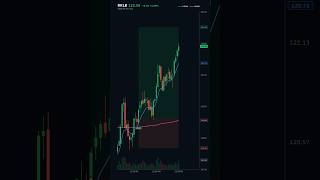
[07:21] goal is to simply prevent one loss from damaging months of progress. Now let's get to some examples. So in this example, we're going to look So in this example, we're going to look at GE and we're going to go back to just
[07:34] some simple technical analysis and say here's our low. We came all the way back up higher, hit another low, look at actually an entry right around here.
[07:47] So, for a date, we're going to use April 23rd of this year. And we're just going to show how this would have worked in going closer to the money and collecting more premium and going a little bit
[08:00] further away from the money, collecting some less premium. And I want to show trade. Now, here GE moves up and then has a nice
[08:12] steep pullback and then shoots back up higher again. So, we're going to look at each of those trades from a low delta and a higher delta to see how they would perform when that pullback happens.
[08:24] that pullback happens. So, here we're entering a 20 delta put credit spread and we're going five wide for our longs and buying that protection. So, in doing so, this 20 delta, in theory, the market maker is
[08:37] saying that there's a 20% chance of this expiring in the money. So, we have an 80% chance of it not expiring in the money. In doing so, we're collecting a premium of $1,020.
[08:51] And the broker is going to look at our account and say we are going to be margined $3,980. They take the width of the spread and subtract the premium and that is how your margin is going to be calculated.
[09:04] If we go closer to the money, we're selling a 45 delta, so giving us roughly a 50/50 shot of it expiring worthless. Still buying that same protection five And let's look at a little bit difference in what's actually happening
[09:19] here. Now, our total margin is actually lower because we're collecting a larger credit. credit. So, here we're collecting $2,455.
[09:33] And the broker is going to margin us $2,545. credit. It doesn't necessarily mean this trade is going to guarantee more profit.
[09:45] We are still both positive theta throughout as you will see. Negative Vega, negative gamma, and positive delta. So, the trade structures themselves are very very similar.
[09:59] are. Let's start with the 20 delta put credit Let's start with the 20 delta put credit spread.
[10:14] And again, that theta is coming into the picture as well as the trade is moving But, one thing I want to jump to really quick is we saw there was a sharp move
[10:26] in GE throughout this. So, let's skip forward to May 15th and would have performed. Now, we are right back to where we Now, we are right back to where we started on the trade, and this trade has
[10:40] made money. And the reason why is time has passed. We started 29 days to expiration. So, we want to make sure that as we're going further out in time, we also have that theta working in our
[10:54] favor, so that extrinsic value is bleeding off of those trades. this particular example. We have moved up and moved back down to where we up and moved back down to where we entered, and the trade still made money.
[11:08] bullish strategy because the market can just kind of channel sideways, and the income. Now, let's go back and take a look at how the 45 delta would have performed
[11:22] how the 45 delta would have performed during the same time. profit is coming in much more quickly into this trade. And the reason being is as this goes through, your deltas are going to start
[11:37] helping you in there, as well as data is going to start kicking up as well. direction. Now, let's skip forward to May 15th and see how this trade would
[11:49] look. Still making good money. Still making good money. Again, we have now moved
[12:01] and then had the trade work back against us. This is the power of using spreads instead of just buying a long call. You have theta working for you, you have vega working for you on an up move, and
[12:18] that is how you can limit the amount of risk that you take while making sure that you're making money even if the market goes nowhere. A put credit spread is not a magic strategy. It's not a shortcut. It's not
[12:31] guaranteed income. It's simply a structured way to sell risk while keeping losses defined. The real edge comes from understanding probability, controlling risk, and consistently applying the same process
[12:43] over time. If you focus on delta selection, position sizing, and expectancy, you'll begin to see why professional traders view put credit spreads as a foundational income strategy.
[12:55] Because over the long run, success isn't determined by a single trade. It's determined by how you manage hundreds of trades.


⚡ Saved you 0h 13m reading this? Transcribe any YouTube video for free — no signup needed.