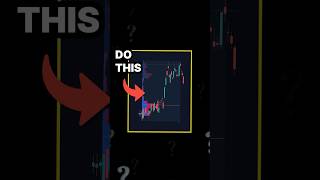

Predict Reversals with Value Area
45sTeaches a specific, actionable trading strategy in under a minute, appealing to novice traders seeking quick tips.
▶ Play Clip"Delivers exactly what the title promises — a concise, actionable reversal prediction method."
This video presents a method for predicting price reversals using volume profile analysis. It focuses on identifying the value area where 70% of market trades occur and using it to spot reversal signals.
Mark the range from low to high of a move and enable VAH and VAL in volume profile settings to find the value area.
The value area (between VAH and VAL) is where 70% of market trades occur, making it a key zone to watch.
If price pushes outside the value area low but rejects with a larger lower wick, target take profit at the opposing level.
If price shoots through the value area fast, leaving a bearish fair value gap, wait for price to wick back inside the gap, then trade to the downside.
What is the Value Area in volume profile?
The area between VAH and VAL where 70% of market trades occur.
00:16
What settings need to be enabled to see the value area?
Enable VAH and VAL in the volume profile settings.
00:16
When price rejects the value area low, where should you set your take profit?
Target the opposing level (e.g., value area high).
00:31
What should you do after a bearish fair value gap is left behind?
Wait for price to wick back inside the gap, then trade to the downside.
00:44
What percentage of market trades occur in the value area?
70%
00:16
Value Area as a 70% Zone
Provides a concrete, measurable definition of where the majority of market activity occurs, giving traders a clear reference point.
00:16Rejection Wick Reversal Signal
Offers a specific price action pattern (larger lower wick) that signals a potential reversal, with a clear trade setup.
00:31Fair Value Gap Continuation Play
Explains how to trade a fast break through the value area using a fair value gap, highlighting a high-probability explosive move setup.
00:44[00:00] Here is how to predict exactly when a reversal is about to happen on any chart First you need to find the area where 70% of the market is entering trades. Mark from the low to the high of a move. Next go to your settings of the volume
[00:16] profile. Make sure vah and val are enabled. In between these two white lines in the value area, and is where 70% of the market is entering trades. Which if 70% of the market is entering in this area, we can use it to our advantage.
[00:31] If price pushes outside the value area low, but then suddenly rejects with a larger lower wick. With your take profit targeted to the opposing level.
[00:44] But say instead of rejecting, price does this, where it shoots through the value area fast. Leaving behind a bearish fair value gap. Just wait for price to wick back inside the gap. Then trade to the downside as these will be some of the most explosive moves.
⚡ Saved you 0h 01m reading this? Transcribe any YouTube video for free — no signup needed.


![BEST MACD Trading Strategy [86% Win Rate]](https://img.youtube.com/vi/rf_EQvubKlk/mqdefault.jpg)