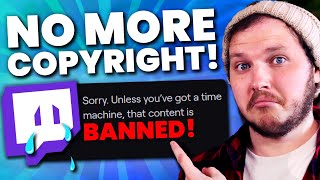

You're Using Music WRONG in Your Content
45sOpens with a bold, provocative claim that grabs attention and challenges viewers' current practices.
▶ Play Clip"Delivers solid educational content but includes a lengthy sponsor segment, slightly diluting the promised value."
The video explains the complexities of copyright law as it applies to content creators, clarifying misconceptions about DMCA, safe harbor, and fair use. It provides practical guidance on finding and using music safely, highlighting the risks of free music and the benefits of licensed services like Epidemic Sound.
The video opens by stating that common beliefs about using music in streams and videos are wrong, and that creators risk copyright strikes, takedowns, and bans by following bad advice.
The Digital Millennium Copyright Act (DMCA) protects creators' work from being used without permission. It applies to all content, including music, and is often misunderstood.
All music is technically copyrighted. 'Copyright-free' labels are misleading; artists and labels have systems to allow use, but permission is not automatic.
Warnings (muting/demonetization), takedowns (removal of content), and strikes (three strikes can lead to channel deletion) are the main actions rights holders can take.
Copyright actions come from rights holders (artists, labels, or buyers), not from platforms like Twitch or YouTube. Platforms only act when asked, to maintain safe harbor.
YouTube can detect copyright before publishing, while Twitch mutes VODs after live streams. Muting is not a strike; it's Twitch protecting itself under safe harbor.
Safe harbor means platforms are not liable for user content if they comply with takedown requests. This is why Twitch and YouTube don't proactively police copyright.
Fair use is not about clip length (e.g., 7 seconds). It requires transformative use (parody, critique, education). Using short clips without transformation is not fair use.
Even if you believe your use is fair, rights holders can still issue claims or takedowns. You must decide whether to contest them.
The creator has used Epidemic Sound for 5 years due to its 40,000 songs and 90,000 sound effects, all under one license, usable on any platform without restrictions.
Always look for a usage rights or creative commons page. Examples: Chillhop (requires sign-up and credit), GameChops (requires credit), and Good Kid (offers a license generator).
Free music leads to content sounding generic, and artists may not own their rights, leading to sudden strikes if they sign with a label.
The creator received strikes after an artist signed with a label, despite having written permission, showing the fragility of verbal or written permission.
Splitting VOD tracks does not protect from strikes, and giving exposure is not a favor to artists. The creator recommends using licensed services to avoid risking your channel.
The video concludes that using music safely requires understanding copyright law and choosing reliable sources. The creator strongly recommends licensed services like Epidemic Sound to avoid the risks of free music and to maintain content quality.
Challenging Common Beliefs
Sets the stage by debunking widespread myths about music usage, immediately engaging the audience.
Safe Harbor Explained
Clarifies a complex legal concept in simple terms, crucial for creators to understand platform liability.
03:48Fair Use Misconception
Corrects the popular '7-second rule' myth, providing a clear, actionable definition of fair use.
04:31Personal Strike Experience
A real-world example of how written permission can become invalid, emphasizing the need for reliable sources.
11:23[00:00] Everything you know about using music in your streams and videos is wrong. You've been lied to by people who know even less than you, and are opening your entire channel up to receiving copyright strikes, takedowns, and even being banned. Today we need to clear up and explain what is safe to use,
[00:14] what the hell DMCA is, what safe harbour means, how to tell if you've actually been copyright striked, but most importantly, we're going to show you how to actually find and use music in a way that will protect you, your content, and your platform.
[00:27] Everything I explain in today's video will be linked in the description so you can fact check me yourself, but for now, let's get straight into it. If we're talking safe music then we need to clear up some major misunderstandings around the NCA, copyright strikes and Twisted State Harbour.
[00:40] Mainly, what the fuck is all of that? In its simplest form, the NCA or the Digital Millennium Copyright Act is meant to protect artists and, well, anyone who makes anything, really, from having their work stolen, stolen or used without their permission. As a content
[00:55] creator, it's even protecting you. If you want the nitty-gritty, I'll link sources in the description, but for now, you've likely heard of it most often talked about in regards to TV shows, movies, or most likely, music. You've been told you need to use copyright-free music on your streams and
[01:09] videos, so you go find Spotify playlists or YouTube mixes that have that in the title. Except there is a massive issue here. Those aren't copyright-free. Technically all music, and really everything that's been created, is copyrighted. However, certain artists and labels
[01:23] have systems in place to let you use their music and their art. This could be through credit, it could be through a paid service, or a number of other ways that I'll show you later in the video. I'll also point out how just because something says copyright
[01:35] free in the title, does not in any way mean it actually is, and weirdly, even if a musician says it's safe and gives you express permission, it also might not be. So there are three major ways you'll likely know of the MTA being used against creators,
[01:50] they often get mixed up, confused, or misconstrued. So let's clear those up quickly. A warning would be what most of you have had in the past. This is to let you know that you've used content without the express permission of the rights holders. And because of that, you might have been muted, demonetized,
[02:04] or potentially all of the earnings from that content have been redirected to the actual rights holder instead. A tier above a warning is a takedown. This means the rights holder has said, hey, I don't want you using my work or material at all,
[02:16] and I want that content taken down. This can also redirect any earnings you had from that content over to them as well. And finally, the dreaded copyright strike. This is a bit of a weird one, but most platforms such as Twitch and YouTube
[02:28] allow creators to receive three strikes before deleting their channel entirely. Over time, these strikes can and will expire if you start following copyright rules, so it's pretty unlikely you'll be banned. Now, it's really important to understand that these different warnings,
[02:41] takedowns, or strikes aren't coming from the platform. This isn't Twitch or YouTube trying to bully creators. They're coming from the right holder. Whether that is the artist themselves, a record label or potentially another party who has bought the rights.
[02:53] And yes this system does mean sometimes people can misuse these tools across all platforms Whether that pretending to own the copyright material or simply by using it to strike creators despite them actually having every right to use it Luckily platforms have a way to help if this happens
[03:08] YouTube, for example, allows you to contest the claims and say you have the rights, so does Twitch, but where they differ is YouTube often detects copyright material before the video goes public and will warn you early on to make a change.
[03:21] Sadly, Twitch being live, you don't actually have this option. Instead, if Twitch takes copyright material, your VOD after the stream will have segments muted. This isn't a strike, despite what people keep telling you. It's actually just Twitch trying their best to protect creators.
[03:35] Because, as I said, platforms aren't issuing or acting on DMCA at all. Twitch cannot take action without the right quarter asking them to. If they did, they'd be breaching safe harbor. Which leads me to ask, what the f*** is safe harbor?
[03:48] In short, Twitch is saying, Our streamers, by going live, have agreed to a terms of service that they will only use material they have the right to use. We trust they are doing that, but if you see them not doing that, you can ask us to do something, and we will, but we aren't responsible or liable.
[04:05] This protects Twitch from any trouble, and it's why everyone was laughing at Kickstarp when they went to XQC's stream and told him, Hey, can you stop watching The Dark Knight? Because they unwittingly admitted they knew copyright was being breached,
[04:18] making the site liable and responsible. With all of that covered, how do we find safe music if even music that says it's safe might not actually be? And does using music or even short clips like sound effects or memes technically fall under fair use?
[04:31] Well, no. The answer is just no. Like the MCA and strikes in general, fair use is grossly misunderstood, and I don't think it matters how many times I cover it. there will be another hundred people spreading this information in the comments.
[04:43] Like how people seem to say that if a clip is under seven seconds long, it's safe to use. But I guess I'm going to push this boulder up the hill anyway. So, the way I like to explain fair use in its simplest form is by being transformative.
[04:55] So, parody, critique, education, and while using smaller amounts of the work might help you towards a fair use argument, you still need to transform, critique, parody, or use those small amounts of copyrighted material
[05:07] in a way that would be, could be, or should be one of those categories. Just having it so Baby Got Back plays for six seconds every time someone subscribes isn't fair use. One of the best examples of fair use would be Drew Gooden watching terrible Christmas movies,
[05:21] showing small segments and cutting back to himself where he critiques them for entertainment and comedy, and then continuing on. Or Anthony Fantano critiquing an entire album. Well, actually that's not a good example, because he rarely uses the music that he's reviewing in order to avoid copyright.
[05:35] Because to be as clear as possible, you can still receive a copyright claim or a takedown for what you believe is fair use. But again, that isn't the platform, remember? It's the right holder deciding they don't want their work used that way, and now it's
[05:50] your place to decide if you'll argue and fight that decision. Okay you understand DMCA fair use and copyright a decent amount better I would say So now let talk about how to tell if music is actually safe to use and the different rules artists often put in place to let you use their music That all coming up as well as a bunch of free examples but first I need you to
[06:10] understand we're about to enter a lot of grey area. Every artist is different, and accidentally using music from the wrong artist or player can land you in hot water. I'll explain, again later, exactly how I got myself in trouble by doing this.
[06:22] And that's essentially why for the past 5 years, I've so much only used epidemic sound for my music and my sound effects, which is why, when they offered to sponsor this video, I was incredibly excited. Look, I could sit here and run through how Epidemic Sound has 40,000 songs and 90,000
[06:36] sound effects, all restrictions free, you can use them as much as you want on any social media you want, all under one license, you can publish worry-free worldwide, you've heard it all before, and you know they have all of that.
[06:48] So instead, I want to show you just how powerful and important good music actually is. I'm going to show you two clips. I want you to tell me which one you think is more engaging, emotive, and just genuinely better in the comments.
[07:00] I think we got it this time. I'm feeling really... I'm feeling powerful, chat. I'm feeling solid. Like we could honestly defeat mountains. I think we got it this time. I'm feeling really... I'm feeling powerful, chat. I'm feeling solid.
[07:12] Like we could honestly defeat mountains. Sorry, that's a big one. I'm going to run right into it, and I've died. I think we got it this time. I'm feeling really powerful. I'm feeling powerful, chat.
[07:25] I'm feeling solid. Like we could honestly defeat mountains. I think we got it this time. I'm feeling really powerful. I'm feeling powerful, chat. I'm feeling solid. Like we could honestly defeat mountains. Which is going to be the big one.
[07:37] I'm going to run right into it, and I've died. It's pretty obvious when you see it side by side like that. The music and sound effects make the content feel so much more impactful. Like magic, it conveys a completely different feeling for the content.
[07:50] What isn't obvious is just how easy it was to find the music for the example. Genuinely, as a streamer and YouTuber you'll spend most of your time trying to find good music, but with Epidemic Sound, you just go to their website, search up action rising or
[08:02] sad music or even just use their mood board or genre categories and well, you're met with a crap load of options. You can go by popular if you just want the hits that everyone loves or hum through listening to each until you find what matches your style.
[08:14] Right now you can click the link in the description to start taking your content to the next level thanks again to Epidemic for supporting the channel. Now if you still want to risk it, let's talk about navigating the waters of copyright safe music online. My rule of thumb when it comes to music is to always look for a usage rights or creative comments page for that artist.
[08:30] I won't use music unless I can confidently find that. Let's look at some examples. First we have Chill Hop. This is a free lo-fi record label that makes music primarily for creators to use in the background. Every video has a link to use their music in videos and streams, and once you click it,
[08:43] In detail, they explain how you need to sign up, connect your socials, and also credit the music you use in the description or as an entire panel on Twitch. They have also a very clear FAQ on every other way people try to use their music.
[08:55] Killhop is a great example of finding safe free music. Another great example would be GameShop who produce video game remixes for a similar reason If we visit their YouTube and find a link back to their creators comments they simply ask for musicians to be credited when their music is used This is less strict and can open up to other issues but it still enough for me to
[09:12] feel confident in using the music if I wanted to. What about something I wouldn't feel confident with though, despite the artists saying it's safe? Well let's look at Hypermotion. If we visit one of their songs that a lot of creators love using and check their description,
[09:24] it says to check their YouTube bio for how to use it. If we check that, it says we can use it only on Twitch streams and for videos on YouTube it will be copyright claimed, but if we email them, they'll manually remove the claim or
[09:37] have it resolved. Already you can see I don't feel super confident with this option, but it gets more difficult because if we check a different video and see the description, it asks for a different approach. You simply need to credit them and won't need to do anything else.
[09:50] With all these extra steps and then a confusing series of guidelines, it's a real use your own risk situation. Personally, I prefer and love how Good Kid have handled it. They tweet as anyone can use any of their music at all, and they have a creator hub
[10:03] to answer questions, but also made it so you can generate a license for the video if you want to be completely protected. There are two major problems that come with using free music like these ones I've suggested, specifically with chill hop, game shops, or from artists who give you express permission.
[10:17] First, I think when you use free music as available to everyone, your content quickly ends up sounding, well, just like everyone else. You'll notice if you spend even a small amount of time on Twitch that every single stream at some point will use the Game Chops video game soundtrack remixes.
[10:32] And if you grew up on YouTube like I did, then you'd likely be able to recognize the same dozen songs by No Copyright Sound that were used in every single video for a decade. The second major issue, and this is to do with getting permission, is that sometimes the artist might give you permission when they don't have the ability to, or worse, later might lose the ability to.
[10:53] Many artists don't actually own the rights to their own music, and in fact their label or management does. And I learned this the hard way. I won't name names, but an artist who I love gave me express written permission several times via email, Twitter DMs, and Discord conversations across three years that I could use their music with credit.
[11:11] And then one day, they signed with a record label who began muting and striking all of my content that I used their music in. When I asked the artist, they said the deal they signed meant they actually had no control
[11:23] and didn't realise it was going to happen. That experience is why I so heavily recommend Epidemic Sound these days and why I was okay with them sponsoring this video. And now, let's clear up the last two misconceptions because I know they will be brought up in the comments. No, splitting your VOD track so music you use on streams doesn't appear in VODs doesn't
[11:40] protects you from strikes. You're still using copyright material and live strikes do exist. You're still using artists hard work without permission and no, you aren't doing them a favor by giving them exposure. You don't have enough viewers to help them that. You are not
[11:54] that important. So stop risking your entire platform being banned and instead, if you want to actually learn how to make good content and be discovered, click here. And if you want to support the channel for just $1 a month, click here. See you guys next week.
⚡ Saved you 0h 12m reading this? Transcribe any YouTube video for free — no signup needed.