
AI Summary
The video discusses a trading scenario where the trader missed an initial move in the semiconductor sector but successfully capitalized on a related stock, AMD, by using sector analysis and a bearish risk reversal options strategy. The focus is on the process of finding alternative entries and managing risk dynamically.
Chapters
The trader was late to the SMH breakdown, missing the initial move in semiconductors.
Instead of chasing, the trader looked for other semiconductor stocks that hadn't moved yet but were likely to follow, leading to AMD.
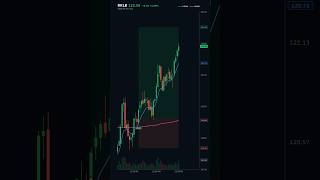
AMD's breakdown below VWAP and failure to reclaim it became the entry trigger, with sector weakness as confirmation.
Entered a bearish risk reversal: selling a call credit spread and buying a put debit spread, allowing for risk layering.
Within 15 minutes, the call credit spread paid for the put debit spread, dramatically reducing downside risk.
Used a 15-minute 90 MA as a trailing guide and targeted 80-90% of the spread's maximum profit.
Exited around 12:20 with approximately 84% of the maximum value of the position.
The lesson was the process: accepting missed setups, using sector analysis, and using options to reduce risk.
The best trade often comes from a secondary stock after analyzing the entire sector, not the first chart you see. The process of sector analysis and dynamic risk management is more valuable than the profit itself.
Mentioned in this Video
Tutorial Checklist
Study Flashcards (5)
What was the trader's initial missed move?
easy
Click to reveal answer
What was the trader's initial missed move?
The breakdown of SMH, the semiconductor ETF.
00:02
What technical indicator was used as the entry trigger for AMD?
medium
Click to reveal answer
What technical indicator was used as the entry trigger for AMD?
AMD breaking below VWAP and failing to reclaim it.
00:44
What options structure was used for the trade?
medium
Click to reveal answer
What options structure was used for the trade?
A bearish risk reversal: selling a call credit spread and buying a put debit spread.
01:12
How did the trader reduce downside risk?
hard
Click to reveal answer
How did the trader reduce downside risk?
The call credit spread paid for the put debit spread within 15 minutes.
01:41
What was the exit target for the option spread?
easy
Click to reveal answer
What was the exit target for the option spread?
Roughly 80% to 90% of the maximum potential profit.
01:56
💡 Key Takeaways
Sector Analysis Over Chasing
Demonstrates a disciplined approach to finding alternative entries when missing a move.
00:31Options for Risk Layering
Shows how options can be structured to dynamically reduce risk as a trade works.
01:12Process Over Profit
Emphasizes that the trading process is more valuable than the outcome.
02:25Full Transcript
[00:02] because I was late. In our pre-market meeting that morning, one of the themes we were discussing was weakness in semiconductors. The obvious trade was SMH, the semiconductor ETF. The problem was that I didn't catch the move right
[00:15] away. Around 10:16, SMH started to break down. By the time I noticed it, it felt like the party had already happened. The move had already started and I my plan. At this point, I could have either chased the move or accepted that
[00:31] I missed it. Instead, I started cycling through other semiconductor names. What I was looking for was simple. If the sector was weak and the leaders in the sector already breaking down, is there another stock that hasn't moved yet but
[00:44] is likely to follow? And that's when I found AMD. What immediately caught my attention was the setup was cleaner. I moved down to the 2-minute chart and focused on VWAP. As AMD broke below VWAP and then failed to
[00:58] reclaim it, that became my trigger. The sector weakness had already been confirmed. Now I had a technical entry that I could define risk around. Once the setup was confirmed, I entered a bearish risk reversal.
[01:12] The structure consisted of selling a five-lot call credit spread and using spread. Now, the reason I like this structure is because it allows me to layer risk. Initially, my risk was defined by the
[01:26] chart. If AMD reclaimed VWAP and started showing strength, the trade thesis would be invalidated. But as the position started working, I the call credit spread to effectively pay for the put debit spread.
[01:41] That happened in about 15 minutes. My downside risk was dramatically reduced and the position gave me much more flexibility. On the chart side, I used a 15-minute 90 MA as my trailing guide. As long as AMD stayed below that, I wanted
[01:56] to remain in the position. On the option side, I was looking for roughly 80% to 90% of the maximum potential profit of the spread. As the day continued, AMD kept moving lower with the sector.
[02:10] Around 120, I was filled at approximately 84% of the maximum value position. For me, the biggest lesson from this trade wasn't the profit. The lesson was the process. First, I was willing to
[02:25] setup. Second, I used sector analysis instead extended. Third, I used options to continually Third, I used options to continually reduce risk as the trade developed.
[02:39] SMH gave me the idea. AMD gave me the entry, and the option structure gave me the flexibility. That's a great example of how sometimes the best trade isn't the first chart you see. It's the stock you find once you've
[02:54] done the work to understand what's happening across the entire sector.