The More I Learned, The Harder Trading Got
45sRelatable paradox of overcomplicating trading with knowledge, sparking curiosity and engagement.
▶ Play Clip"The title promises a counterintuitive trading insight, and the video delivers exactly that—a personal, honest reflection on why more knowledge can hurt performance."
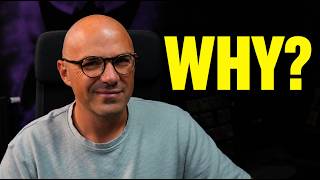
A seasoned trader shares a counterintuitive lesson: the more he learned about trading, the worse his performance became. He argues that knowledge without clarity leads to analysis paralysis, and the real goal is to simplify and master one approach.
The speaker initially thought he knew everything about trading, but as he learned more, trading became harder.
With more knowledge, every candle, indicator, and timeframe seemed to contradict each other, leading to self-doubt and inaction.
The goal isn't to know more; it's to need less. Find the one setup that makes sense and master it.
The speaker's favorite setup is RSI divergence, and he no longer needs multiple reasons to enter a trade.
The Trading Floor program provides a structured roadmap: learn concepts, demonstrate understanding, practice on demo, then trade live.
Knowledge Can Hurt Performance
Challenges the common assumption that more knowledge always leads to better trading results.
00:30The Goal Is to Need Less
Provides a clear, actionable principle for traders overwhelmed by information.
04:39Master One Setup
Offers a practical strategy for simplifying trading decisions.
02:25Structured Learning Works
Highlights the importance of a step-by-step educational approach over random video watching.
03:35[00:00] When I started trading and then started teaching trading on YouTube, I thought I pretty much knew everything that I needed to know. Then as like 90 tutorial came out, the comments started flooding in. Can you make a video about this strategy? Can you explain this indicator? What about this pattern?
[00:15] And if I didn't know it well enough to teach it, I'd go learn it, I'd study it, I'd practice it, I'd test it, and then I'd either come back and explaining why I thought it worked or tell people it was complete garbage, like the orb strategy.
[00:30] After doing this for years, you'd think I became a much better trader. But unfortunately, something really strange happened. The more I learned about trading, the harder trading became. When I knew less, the chart was simple.
[00:42] I'd see my setup, I'd take my trade, and I was done. But once I'd learned dozens of strategies, indicators, patterns, different ways of reading price, I'd see my setup, and then I'd see five reasons why I shouldn't take it.
[00:56] Maybe I saw bullish divergence telling me to buy, but then I remembered something about market structure that looked bearish. Then there was a Fibonacci level. Then the higher time frame didn't look right. And an indicator I tested six months ago was telling me the opposite thing.
[01:09] Suddenly I wasn't analyzing the market anymore. I was arguing with myself. And because I could make that intelligent argument for buying and an equally intelligent argument for selling I did the safest thing Nothing I sat on my hands and this is where I think a lot of traders actually screw themselves over We assume more knowledge equals better
[01:30] trader. And in the beginning, that's absolutely true. You need to learn. You need to understand risk, market structure, entries, exits, indicators, different strategies. You need enough knowledge to
[01:42] actually figure out what makes sense to you. But eventually, there's a point where the additional information stops giving you clarity and starts giving you more reasons to doubt yourself. Imagine you're looking at a chart and you only know one setup. Either the setup is there or it isn't.
[01:57] That's a pretty easy decision. Now imagine you know 20 setups. Every candle can mean something. Every indicator can contradict another indicator. Every time frame can tell you a different story.
[02:09] You've become more knowledgeable, but your decision making has gotten worse. And I think I eventually figured out what the goal actually is. Learn everything you can, but don't try to trade everything you learn. Learn enough to discover the one thing that makes the most sense
[02:25] to you, then simplify. For me, one of those things has always been the RSI divergence. I've tested other strategies. I've traded other strategies. I've made more videos about trading concepts that I could ever remember by heart But if you put a chart in front of me and tell me I can only keep one setup I know exactly what I looking for and that an incredible feeling because now I don need 10 reasons to enter a trade I need my reason And this is why I think
[02:51] the trading floor has one of the best educations you can possibly get in A trading. I don't think somebody that's brand new should go on the internet, watch three videos, pick a strategy, and immediately start risking money. What the trading floor has done has built an interactive
[03:06] syllabus. It's exactly like a roadmap. It'll take you from point A to point B. You start at the beginning, you learn all of the trading concepts in order, then you actually have to demonstrate that you understand them. And eventually you have to take what you've learned and use it on a demo
[03:20] account. Only after that do you progress into actually doing it live. So basically, if somebody follows the roadmap all the way through, they don't finish because they watched a bunch of videos. They finish having actually gone through the process of placing a trade themselves,
[03:35] including completing a profitable live trade. And there's a reason that I like this structure a lot. Because the objective isn't to turn somebody into a walking encyclopedia of trading terminology. The objective is to make them capable of making a decision without somebody holding their hand through the process.
[03:51] And I think that's the distinction I missed when I was learning trading. Knowledge is useful, but clarity is what you actually trade. If you know 12 strategies and every chart leaves you confused all that knowledge is not helping you I rather have one set up and understand it completely Know exactly when I allowed to trade it Know exactly when I wrong and execute the same boring thing over and over
[04:15] and over again. So learn everything. Experiment. Backtest things. Find out what's bullish. Find out what actually works for you. But eventually stop collecting strategies. Pick the thing that makes
[04:27] the most sense to you and get ridiculously good at that one thing. Because after years and years of learning about day trading, one of the most useful things I've learned is this. The goal isn't
[04:39] to know more. The goal is to need less. Anybody new into day trading, I highly suggest using the trading floor as their school of learning for day trading. It takes you literally from knowing
[04:51] nothing about day trading to actually placing your first profitable live trade in a step-by-step process you learn all of the indicators you learn all of the strategies you learn all of the concepts whether it's price action market structure ICT SMC
[05:09] whatever acronym you can think of you will learn it in this program not only that if you have questions they'll help you along the way you can find everything that you need at TRDflor.com thank you so much for joining me today I know this video wasn't for a majority of you but the new people I promise you
[05:24] this is the way to go so if you know somebody that's new into trading send them this video. Again, thank you so much for watching and we will see you in the next one.
⚡ Saved you 0h 05m reading this? Transcribe any YouTube video for free — no signup needed.