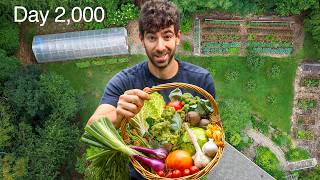

5 Years of Gardening Mistakes in 1 Minute
60sHigh relatability and educational value as the creator shares hard-learned lessons, appealing to both novice and experienced gardeners.
▶ Play Clip"The title promises 5 years of lessons and delivers exactly that—a dense, practical list of gardening insights with minimal fluff."
The video shares 10 hard-earned gardening lessons from five years of experience, emphasizing that gardening is a year-round, multi-season endeavor rather than a single summer event. The creator covers techniques like interplanting, succession planting, choosing low-effort crops, using insect netting, and embracing imperfection to maximize food production.
The first lesson is that gardening isn't just a summer activity. Cool-weather crops like spinach, carrots, and garlic can be planted right after the last frost, months before typical summer planting. Observing local farmers' markets helps align planting times with natural seasons.
Interplanting involves growing summer crops (like tomatoes, peppers, eggplant) between spring crops that are nearing harvest. This maximizes space, provides shade for young plants, and avoids leaving bare soil. It's a technique that took years to master but significantly boosts yield.
Choose crops like onions and garlic that have minimal pest, disease, and animal issues. These 'guaranteed' crops reduce workload and increase success rates, allowing more time for needy vegetables. Experimentation is key to finding what thrives in your specific climate.
Insect netting is the first and best line of defense against pests. Cover young, vulnerable plants with hoops and netting to protect them from insects and animals. Remove netting once plants are established. Organic sprays like BT are used for specific pests like cabbage moths.
Focus on plant varieties known to grow well in your garden rather than experimenting with many new ones. For vegetables like cabbage, carrots, and onions, flavor differences are minimal, so stick with proven performers. Treat the garden as an ongoing experiment, keeping what thrives and replacing what doesn't.
Select fruit tree cultivars that are naturally resistant to common diseases. For example, Honeycrisp apples are notoriously difficult to grow, while varieties like William's Pride are resistant to apple cedar rust. This saves time and frustration, leading to more fruit production.
Some fruit trees, like persimmons and figs, are naturally pest-resistant due to thick, glossy leaves. These low-maintenance trees produce abundant fruit with minimal intervention. Prioritize these over popular but pest-prone varieties like apples and pears.
Look for unconventional spaces to grow food, such as shaded areas for mushrooms, fence lines for berries, or the outskirts of the garden for fruit trees. This expands your growing area and increases overall food production.
Integrating flowers and diverse plants into the garden attracts pollinators, controls pests, and creates a healthier ecosystem. This mindset shift from 'only food' to 'ecosystem' improves overall garden health and productivity.
Accept that nature is unpredictable; some crops will thrive while others fail. Instead of striving for perfection, judge progress year-over-year. This mindset reduces frustration and keeps the gardening journey exciting and rewarding.
The overarching takeaway is that successful gardening is a continuous journey of learning, experimenting, and adapting. By shifting mindset from a single-season event to a year-round ecosystem, and by choosing the right crops and techniques, anyone can significantly increase their home food production.
What is the first lesson about gardening seasons?
Gardening is not a one-season event; cool-weather crops can be planted right after the last frost, months before summer.
00:02
What is interplanting?
Growing summer crops between spring crops that are nearing harvest to maximize space and provide shade.
02:12
What are examples of low-effort, high-reward crops?
Onions and garlic, which have minimal pest, disease, and animal issues.
04:26
What is the first line of defense against pests?
Insect netting, which covers young plants to protect them from insects and animals.
06:14
Why choose proven varieties?
Because they are known to grow well in your garden, reducing risk and increasing success.
08:16
What is an example of a disease-resistant apple variety?
William's Pride, which is naturally resistant to apple cedar rust.
10:22
Which fruit trees are naturally pest-resistant?
Persimmons and figs, due to their thick, glossy leaves.
12:09
How can you find more room to grow food?
Use unconventional spaces like shaded areas for mushrooms, fence lines for berries, and outskirts for fruit trees.
13:32
Why is plant diversity important?
It attracts pollinators, controls pests, and creates a healthier ecosystem.
15:09
What is the final lesson about imperfection?
Embrace imperfection; judge progress year-over-year rather than striving for perfection.
16:15
Year-round gardening mindset
Challenges the common belief that gardening is only a summer activity, opening up more growing opportunities.
00:02Interplanting technique
A practical method to maximize space and yield, often overlooked by beginners.
02:12Insect netting as primary defense
Highlights a simple, effective, and organic solution to pest problems.
06:14Disease-resistant fruit varieties
Saves years of frustration by choosing cultivars that naturally resist common diseases.
10:22Embracing imperfection
A mindset shift that reduces stress and encourages long-term learning in gardening.
16:15[00:00] So five years ago, this yard was nothing more than a big patch of grass, and today it is a thriving garden and ecosystem that produces thousands of pounds of fresh food a year. But it certainly didn't start out that way, and over the last five years, I've made just about every gardening mistake imaginable, and I've learned a lot of lessons the hard way.
[00:20] So today I'm sharing with you ten lessons I wish I knew when I started gardening that hopefully can save you some headaches and jumpstart your success growing your own food at home. All right, so the first lesson that just completely changed how I garden is realizing that gardening
[00:36] is not a one-season event. So my first garden ever was on a rooftop in Brooklyn, and I did pretty much what every beginner gardener does. May rolls around, it starts getting nice out, I went to the nursery, bought some tomatoes, peppers, basil, zucchini, planted everything
[00:50] in my garden, and I let those plants run their course, and that was pretty much my garden for the entire year. And this is how most big nurseries are set up, where their seedlings are at their optimal stage for planting right in the middle of spring when it's super nice out. And it trains
[01:05] most gardeners to think of gardening as just this summer thing you do. When I was growing up, I always heard that Mother's Day, which is right around mid-May, was sort of the definitive date you were allowed to plant in the ground. Like it was some type of garden law. And that is definitely
[01:19] a good timeline when you're talking about those warm weather summer crops. But if you choose to plant any cooler weather crops, like your spinach, carrots, beets, broccoli, cauliflower, cabbage, garlic, onions, all of those veggies realistically can go in the ground right after your last frost,
[01:35] which in reality is months before people start planting their first veggies in the ground. And honestly, the best way to get in tune with this is just to start going to farmer's market. Because farmers are certainly going to know when things grow well and taste the best. So just see when
[01:48] things are coming in season and you'll get an idea in your garden when to plant these things out. That's certainly how I learned years before I had a serious garden like this. And honestly, just this one simple mindset shift of taking advantage of multiple seasons of growing food
[02:03] probably doubled the amount of food I grow every single year. But the question is how do you actually put that into action which brings me into lesson number two which is interplanting crops. Now you might be thinking to yourself if I fill my beds up with all of these different spring crops
[02:18] where am I going to have space for those summer crops like the tomatoes and the peppers and the eggplant. And that's exactly where the technique of interplanting crops comes into play. And it It took me years to really figure out how to incorporate this technique into my gardening.
[02:32] So right now, all the vegetables you see in here were planted at the end of winter or early spring. And we've been harvesting some already, and the rest of them will be harvested within the next few weeks. But the problem is, they're taking up pretty much all of the space in this garden right here.
[02:47] And if I were to wait to harvest all of this stuff to plant new seeds, I would be way behind on those summer crops. But if we take a little closer look, it's going to reveal a secret weapon in this garden. So all of these snap peas are close to running their course.
[03:01] Still delicious. But we'll pull them soon. And what's already established, ready to go? Tomatillos. Lining the entire bottom of this bed. Or over here, we've already been removing some snap peas. We've got cucumbers. Already ready to go.
[03:14] Interplanted with these snap peas. Over here, we've got onions that are going to be about a month to harvest. Right in between. Interplanted. Eggplant. All lining this bed. Garlic over here. We're going to harvest that next week. what's in between already established peppers baby in this garlic patch i've got some tobacco
[03:30] already established ready to go more peppers we've got this beautiful broccoli heading up we'll harvest that over the next month and right behind it interplanted are beautiful beans already putting out beans so as those spring crops were getting bigger and closer to harvest we were already
[03:46] direct selling seeds under those plants and interplanting seedlings that way they could be nice and established and well on their way by the time we harvest everything else and i've actually found that they establish even better this way because the spring crops are providing
[03:59] a little bit of shade, protecting them from that intense sun. Plus, you're never leaving bare soil exposed, which is much closer to how nature works. Now, if you miss that interplanting lingo, that's totally fine. The next best thing is just succession planting, when right when you harvest
[04:14] these spring crops, you've got a nice established seeding ready to go in the ground, giving you at least a few weeks of a head start. Now maybe you watching this video and you thinking to yourself Mike you telling me to plant three different seasons of plants Isn that a ton more work Well not necessarily if
[04:35] you choose the right crops to plant, which brings me into lesson number three. Always grow low effort, high reward crops. Because no matter what level of gardener you are, nature will constantly humble
[04:47] your ass. So we want to at least make sure we have some more guaranteed crops in the garden to increase our chances of success. Now exactly what those low effort high reward crops are going to change for everyone depending on their climate and their growing condition. For me I'm surrounded by
[05:03] one of them which is onions. The other crop that I have in that bed is garlic. With both of these plants I get almost no pest issues, no animal damage, and very little disease pressure. So I pretty much have zero maintenance at all. All I have to worry about is having some healthy soil.
[05:17] I plant them and I get to enjoy the bounty and the harvest, which I know may trigger some people because I've seen you in the comments who struggle with both of those plants. And that's exactly why you need to experiment during those first few years and figure out what grows best in your
[05:32] own garden. For us, we continue to increase the amount of garlic and onions we grow every single year because not only are they incredibly delicious, but you can harvest them at different stages throughout the growing season. And honestly, they just sit there, they grow, they look nice,
[05:45] which gives me a little bit more time to focus my energy on vegetables that are more needy and need a little bit more attention. And of course, all of these onions and garlic are interplanted with different summer crops, so once we harvest them, those warmer crops are established and ready to go.
[05:59] Now unfortunately not all crops are low effort.
[06:15] I grow plenty of things that different bugs and animals absolutely love and destroy. Which brings me into lesson number four, organic pest control. And this was something I was terrible at when I first started my garden.
[06:28] My plants would get absolutely destroyed and it was very upsetting. But over the years, through all of those failures, you slowly figure things out and you learn what each crop needs to stay protected and healthy. And the first line of defense and the best line of defense by far is what you see right here.
[06:45] Insect netting. There is nothing better than insect netting. It takes a little bit of effort to put up, but we use it everywhere. Aside of the lower effort crops that I just mentioned that don't get the bug pressure, we pretty much cover every single plant while it's still young and establishing,
[06:59] because this is when it's most vulnerable, and different insects and animals can completely take it out and ruin your entire crop. We use these simple hoops that you can buy on Amazon or any garden store, and we pop over these long rows of insect netting that cover the entire bed,
[07:14] and just use rocks to kind of keep everything in place. It's a super simple setup but it's made probably the biggest difference in producing more food in this garden. So all of these brassicas that would normally get destroyed by cabbage moss or rabbits,
[07:26] they're going to get covered while they're young and then once they're big and healthy we can remove the netting. This year we also covered our sweet peas to protect the young shoots from birds and squirrels. And once they become big, strong, healthy plants, the netting can get removed and you can pick freely.
[07:39] We also try to protect all of our squash while it's growing nice and strong so that squash vine borer can't get into that young tender plant and lay its eggs. Then we'll remove the covers so the flowers on the squash can be pollinated. Now we also use a handful of organic sprays when we need them.
[07:53] And I'm not going to get into all the details on this, but the learning curve is pretty simple. You notice a pest, you take a picture and identify it, you look up the best organic treatment, and most of them work really well. It's just a matter of staying on top of it. And over time you build the knowledge, and this pest protection leads to much healthier plants
[08:09] for much better and bigger harvests. Speaking of pests, you see just like hundreds of these cabbage moths around. So now that all these brassicas are way too big for that bug netting, we'll go around
[08:23] and we'll spray these plants with the organic BT, which is going to protect them from laying eggs and getting worms in your cabbage. But I want to talk about lesson five, which is the reason we have these absolutely beautiful
[08:35] rows of brassicas lining these beds. And that's because we choose proven varieties. And as a beginner gardener, it's almost impossible not to get a little overzealous flipping through those seed catalogs or walking through your local nursery and you just see all these cool
[08:50] varieties and you think well I want to grow that And that definitely part of the fun and it good to experiment early on But if you really want to grow a lot of food and maximize your success you want to tune in and focus on those proven varieties that you know grow well in your garden
[09:04] For instance, these beautiful cone-shaped cabbage. Look at this thing. Super dense, nice cabbage right here. We planted this variety one year, and it did extremely well,
[09:17] which is why we have an entire row of it. And when it comes to something like cabbage, different varieties are not going to taste that much different. Which is why this year we're only growing two varieties that we know grow well in this garden.
[09:29] And the same goes for carrots. We used to plant all these different colors of carrots, but we didn't have that much success. Now we plant one or two varieties and we are crushing the carrot game. The same goes for onions and beets and broccoli.
[09:42] These are vegetables that don't have that much variance in flavor. So I'm fine just picking the best variety that grows well for me. Now there are exceptions to this when it comes to say, tomatoes or peppers.
[09:54] I can't resist. I plant a ton of different varieties, but I know both of those crops do well for me. And there's just so much variety in color and shape and flavor that I can't resist. So you want to think of your garden as this ongoing experiment.
[10:06] Every season you're gathering data, you're keeping varieties that thrive, replacing ones that don't. Before long, your entire garden will be filled with plants that you already know are going to succeed.
[10:19] All right, so we're moving away from the vegetables to talk about my absolute favorite thing to grow. Also, the most frustrating thing you can grow, which are fruit trees. But this next lesson could save you a lot of frustration.
[10:33] So I planted my first fruit tree about six years ago, and I now probably have over a hundred different fruit trees growing here. And let me tell you, I wasted years of my life on a few of them because I didn't know about this lesson, which is the plant disease resistant variety.
[10:48] Take this honeycrisp tree right here. Everyone knows honeycrisp apples are delicious. One of the most popular apples nowadays. But most people don't know they're an absolute nightmare to grow.
[11:00] This is why you're seeing Cosmic Crisp explode. Because farmers are just fed up. These trees are very prone to disease. Which means they take a lot of maintenance to stay healthy so they'll produce fruit. So of course when I was picking out those early trees,
[11:13] I went with things that I knew tasted good. things that I liked with very little thought on actually how they would perform in my environment. But a much better move is to plant cultivars that are naturally disease resistant which is very easy
[11:25] to look up online. Take for instance this dwarf williams pride apple that I planted just last fall. I'm currently training it to espalier on this trellis and this thing is naturally resistant to apple cedar rust and fire blight which we get both of those here on Long Island since it's super wet
[11:40] and humid. I planted this tree last fall. It looks beautiful. It already has apples on it compared to that honeycrisp tree, which I constantly have to spray, still gets diseased, and I haven't had freaking apples on it in five years. So the moral of the story is, don't just think about the
[11:55] varieties that you know, because there are so many delicious varieties out there that just aren't grown commercially, but they're going to perform so much better in your backyard, and it's going to be so much less maintenance, so you can spend your time harvesting the fruit rather than constantly
[12:08] just spraying these trees and hoping for the best. Now, disease is not the only thing you're going to be dealing with when it comes to fruit trees. Incest will mess your fruit trees up. Which brings me right into lesson number seven, which is to plant some more pest-resistant fruit trees. And
[12:24] I'm standing right in between two fruit trees that are the best example of this. So right here, I have this beautiful Aspoliate Asian pear, which is producing some nice little fruits here. But if we look at the young, tender shoots coming out, this is kind of gross. All of these little eggs
[12:39] are actually aphid eggs that the ants are farming for the sugars that come out of them. They're milking these aphid eggs and it's all over these young shoots. Gross. Now if we walk over to these persimmon trees we've got these thick glossy leaves which are basically insect proof. You can see
[12:56] beautiful persimmon growing all over this tree. Now a persimmon is not going to be as popular as say an apple or a pear, but they are absolutely delicious and they're so easy to grow that
[13:09] I just continue to plant them in different parts of the garden. And the same thing goes for fig trees which have a natural chemical defense against insects and because they so tough and maintenance free I continue to plant more figs around my garden So to be tempted by the popular varieties that you already know and I do have those in my garden
[13:28] but there are a lot of varieties of fruit trees that are naturally resistant to pests, and if you plant more of those, you'll spend a lot less time fighting bugs and a lot more time harvesting fruit. So when I started this garden five years ago, I focused on growing food in very
[13:42] distinct spaces like this. Like I was a farmer or maybe a raised bed like a standard garden that I was used to. But every single year I've continued to expand and find pockets of the garden that I never thought I would be growing food in. And that brings me to lesson number eight. There always
[13:57] seems to be more room to sneak in growing food. So a few examples right here. This area is shaded by these trees. So I didn't think I'd ever be growing fruit trees but I started a little pawpaw
[14:09] orchard which actually loves growing on the outskirts where there is more shade. And these pawpaws are growing super well. Or over here where there's even more shade. You might not think you can grow food, but if you've watched these videos, you know I grow a ton of mushrooms on these logs,
[14:25] in this new mushroom tent. So much amazing food with minimal effort in a completely shaded area. Or if we cruise around to the side of the greenhouse, I've turned this entire sort of dead space over here into a berry patch. Oh, pretty bugs. Nice to see you. Super low maintenance,
[14:41] tons of food. Or if we head over here, we've got your traditional beds where, of course, I'm growing food. But you know, a non-traditional place, just on the fence line, right in the wood shift. I'm growing cucumbers, I'm growing beans. So when you're taking a little stroll through the
[14:54] garden, you can always be asking yourself, is there room to squeeze in more food? All right, as we walk through the pollination garden, lesson number nine is a huge mindset
[15:07] shift I've had over the years, which is embracing pollinators and plant diversity. Literally, a beautiful moth just landed on the camera. Oh, when I first started gardening, I only cared about growing food.
[15:20] Every square inch had to produce something I could eat. Flowers, they kind of felt like a waste of space. But over time, I realized food doesn't grow in isolation. It grows as part of an ecosystem. And the more diversity I added to my garden, the healthier everything became.
[15:33] So now I intentionally plant flowers throughout my vegetable beds because not only does it look nice, but they attract beneficial insects that are going to pollinate my crops, they help control pests, and they create just a much healthier and balanced garden.
[15:45] And that's just annual flowers. Right here is the perennial flower garden. And it wasn't always this lush and full of life. Over the years, I've continued to just build it out with different plants. And now it's just an unbelievable source of life in the garden.
[16:00] And because of all that, it's one of my favorite places to just hang out and watch the nature around me. All right, I'm ending on what has been the most humbling part of gardening by far.
[16:14] The biggest lesson of all, which is embracing imperfection. Because for me, I am definitely a bit of a perfectionist. And that's always going to be in direct conflict with growing food. Nature has a mind of its own.
[16:26] Every year is going to be completely different. Some crops are going to thrive. Others are going to struggle. And you really don't get to choose. Take this year, for example. We had a very cold spell in spring. So all the trees bloomed with beautiful flowers. And then a lot of flowers died and they didn't properly pollinate.
[16:40] So less fruit. But that colder weather, on the other hand, was the perfect conditions for all of these young brassicas to really thrive. And don't get me started on these goddamn animals. I have tried everything to protect these fruits.
[16:53] Look what the squirrels do around here. They will chew right through the mesh netting and through the freaking plastic cage on these peaches. Now, does that frustrate me? Hell yeah. Gardening can be devastating, but every year nature's going to teach me something.
[17:06] I'm going to learn. I'm going to come back stronger. And what I've started to do that's helped me a lot is not judge my garden on perfection because that's impossible. Or is everything perfect? Who knows? I started judging my garden on the prior year because generally things do improve year to
[17:21] year and that's sort of my new goal. Am I continuing to get better at this? Am I producing more food every year? Because all of this that we're doing, it's not about reaching some finish line. It's one long journey of learning, experimenting, and getting a little better every single few years.
[17:37] And honestly, that's what keeps it so exciting every single year. I'm going to shut this camera off because I chose to film this video like an idiot during a heat wave. And I'm about to pass out.

⚡ Saved you 0h 17m reading this? Transcribe any YouTube video for free — no signup needed.