
Why You're Terrible at Deadlines
44sThe planning fallacy is a relatable struggle that everyone experiences, making this hook universally engaging.
▶ Play Clip"Delivers exactly what the title promises: a detailed month-long time tracking experiment with honest results and actionable insights."
The video documents a 30-day experiment where the creator times every single task, from brushing teeth to working, to understand how time is actually spent. It explores the planning fallacy—the tendency to underestimate task duration—and reveals surprising data about productivity, parenting, and personal habits.
Nobel Laureates first proposed the planning fallacy, which describes how people systematically underestimate the time needed for future tasks due to optimism and ignoring potential obstacles.
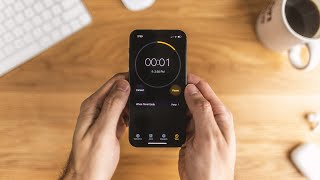
The creator used the Toggle app, grouping tasks into categories like 'personal' (reading, meditating, chores) to simplify tracking. Starting and stopping the timer is simple and provides a visual breakdown.
To set better deadlines, one should look at similar past projects and analyze typical durations, taking into account potential obstacles. This approach grounds expectations in real data.
The very act of starting a timer made the creator more aware of time, reducing mindless scrolling. This Hawthorne effect is why tracking is effective.
After one week, the creator logged only 20 hours of work—far less than expected. This baseline highlighted how much time was lost to task switching and inefficiency.
To reduce context switching, the creator committed to 30-minute work blocks without distractions. Short timers improved focus and accountability.
Over 30 days: 39% sleep (~7h/day), 14% work (~5h 13min/weekday), 10% family, 7% chores, 5% exercise (36h weightlifting), 4% food prep, 3% hygiene, 1% personal, and 0.5% toilet. 33 hours were untracked.
Tracking everything is excessive; focus on key categories. Allow for interruptions and remember that expertise doesn't make tasks quick—building a YouTube video still took 54 hours.
Timing every task for a month provides invaluable data about time allocation but is unnecessarily extreme. The biggest lesson is that awareness alone improves productivity, and using past data to set realistic deadlines is more effective than optimistic guessing.
What is the planning fallacy?
The tendency to underestimate the time needed for future tasks, first identified by Nobel Laureates.
00:29
What method does the creator suggest to improve deadline setting?
Reference class forecasting: analyze similar past projects and their durations to set realistic deadlines.
03:31
How many hours of work did the creator log in the first week?
20 hours.
05:06
What percentage of his time did the creator spend on work over the month?
14% (about 5 hours 13 minutes per weekday).
08:50
How long did it take to make the video about sleep?
54 hours total: 28 hours filming and 26 hours editing.
11:05
Tracking Changes Behavior
Demonstrates the Hawthorne effect in a real-world setting—simply measuring time alters how it's used.
04:12Real Work vs. Perceived Work
The creator was shocked that he only worked 20 hours weekly, revealing how much time is lost to distractions.
05:06Work Time Breakdown
Quantifies the gap between desired 40-hour workweeks and actual 26-hour average (including weekends).
08:50Track Only What Matters
Practical advice: don't track every minute—focus on key categories to avoid burnout.
11:45[00:00] from brushing my teeth, to folding laundry, I'm timing every task down to the minute, I've always been terrible at planning projects
[00:15] I have an idea, I put together a timeline, and yet the deadline flies by. why we're often so terrible at planning,
[00:29] and why that might involve picking up a stopwatch. why I think they're so great later on in the video. I wanna find an app that will help
[00:44] and that can also give me weekly reports So I tried a dozen of the best rated time management apps that would work perfectly for this experiment.
[00:56] but I found that it can work equally well I simply hit the little play button here. and then I stop the timer when I'm done.
[01:11] and the last tab shows me a breakdown of exactly how I'm spending my time. where all my time goes these days,
[01:24] to make a single YouTube video. after making videos for 20 years, but I don't, After a couple days of tracking,
[01:40] I thought that creating hundreds of unique tasks so instead of separate tasks for reading, meditating, I created one category of tasks called personal,
[01:53] preparing and eating food, quality time with family, doing chores, weightlifting, playing baseball, hygiene, So right when you open up Toggle,
[02:07] If I want to start a new one up again, and the task gets started, super simple. and useful view of how I spend my time.
[02:24] which is definitely way more than zero minutes. I love the whooshing noise they make as they go by." so many of us have issues with deadlines
[02:40] It's called the planning fallacy. first proposed by Nobel Laureates, and refers to the tendency for individuals
[02:52] associated with future actions or put another way, we suck at setting deadlines. It could be that we're overly optimistic
[03:07] so this one will be a breeze There is loud construction next door, or we lack relevant information.
[03:19] from making one about productivity, the list goes on. One in particular is called reference class forecasting,
[03:31] Basically the next time that you go about setting a deadline Look at similar projects Analyze how long it typically takes you
[03:44] that you might encounter along the way. in real world data and experiences, to timing every task.
[03:57] what one full week of tracking looks like. So this is a snapshot here of all of my tasks You can see here, family, work, family,
[04:12] I did notice something interesting the moment and it's that I became much more aware of Let's just say that when you start a timer
[04:24] you're less likely to spend 20 minutes browsing Instagram. The very act of tracking was starting to change my behavior. and workout logs are so effective,
[04:38] As extreme as it is to start and stop a timer all day long, to how I spend my time each day. after my first week.
[04:52] is the amount that I've been working. I logged 20 hours of work last week, Honestly, I knew that I wasn't working a lot,
[05:06] than I possibly thought it could be. If I had a boss, I'd probably be fired by now. I've been struggling with my role as a parent
[05:20] and so I haven't been doing as good of a job and so I'm trying to get back on track.
[05:32] and the good news is now I have this like baseline of 20 hours that hopefully I don't go below how can I change my behavior in the coming weeks
[05:45] to improve the amount of time that I'm spending working? one area that I knew I could improve was task switching. I'd get back to work, but then take a quick snack break.
[05:59] and have no clue where I left off. and committing myself to working I knew from past experience this was a really good way
[06:14] and usually you don't stop at 30 minutes. This kind of tracking is incredibly tedious and it adds a layer of friction to everything that I do,
[06:27] I started to work more. and I was more accountable to myself but the biggest lessons were still to come
[06:39] Since I'm timing everything this month, I thought, and see if I can fit it into 45 seconds, starting now.
[06:51] and after a long search and lemme tell you, and effortless to customize.
[07:03] You can easily add new content, pages, and blog posts. It's so intuitive a baby could do it. and set up your G Suite email accounts
[07:17] and I can update it whenever I want to. Squarespace is the all-in-one platform and when you're ready to launch,
[07:29] to save 10% off your first purchase of a website or domain. Thanks to Squarespace for supporting my channel. the next time that you wanna build a website.
[07:43] Alright, so I timed every task for a month and I've really learned a lot from it. to a 24 hour day
[07:55] because I didn't do a perfect job of timing every task. 22 minutes and 28 seconds over the course of the month, which means that there were around 33 hours unaccounted for.
[08:09] All righty, so over the past 30 days, I have dedicated 39% of my time I should say attempted sleep
[08:21] that I woke up to rock my son back to sleep, I'm dedicated to sleeping each day.
[08:33] That ended up being about seven hours per day. This is really anything that I would qualify as quality time this was the area that I was most interested in improving
[08:50] I spent 14% of my time working. That ends up being five hours and 13 minutes per weekday. and the added accountability of tracking my time
[09:03] of course, I was still disappointed that I wasn't hitting the 40 hours I wanted to, It's because I'm spending more time with my son
[09:15] I think when I first started to see my low numbers I thought like, oh man, I'm only working 20 hours a week,
[09:27] I'm only working 20 hours a week? Like how cool is it that I've built this life I know that I wouldn't be able to slow down
[09:39] throughout my twenties and early thirties. and working really hard for this moment right now
[09:51] where I can have a slower season of my life. I spent 36 hours weightlifting. since I'm power lifting now
[10:05] but weightlifting in general has always been nearly 18 hours of preparing and eating food. because I am subscribed to a boxed meal prep service.
[10:21] with the additional responsibilities of being a parent. 18 hours of hygiene, six and a half hours of personal time,
[10:34] this is another harsh reality of being a parent. and finally, four hours on the toilet all month. and account for my imperfect tracking I mentioned earlier.
[10:50] how my time gets divided up any given month these days. how long does it take me And the one video that I tracked over the past month
[11:05] was about how much sleep I'm currently getting as a new dad, it took me a total of 54 hours to make it. and 26 hours editing.
[11:18] in the future, how to set deadlines going forward, and my videos in the months to come,
[11:32] I'll have a much more clear idea of the average and I can hopefully better plan my projects going forward
[11:45] That's the hope, at least. I have a few important takeaways that might help, My experiment was needlessly extreme.
[11:57] but the reality is that I only needed to track the things I might just track my work tasks and personal tasks. isn't exactly useful information.
[12:11] and allow for interruptions, This is really productivity 101, but sometimes you need to relearn these lessons
[12:24] especially when you have a significant change in your life doesn't mean it will be quick. Making videos isn't really that difficult anymore,
[12:37] It still takes time to sort through No matter what your area of expertise, or building a YouTube channel with integrity,
[12:51] because I talk about that stuff there. Thanks for watching.

⚡ Saved you 0h 13m reading this? Transcribe any YouTube video for free — no signup needed.