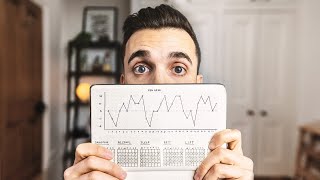

Why I Track My Mood Daily (and the weirdest entries)
51sThe relatable struggle of quantifying daily happiness and the humorous, specific diary entries make this segment both entertaining and thought-provoking.
▶ Play Clip"Delivers exactly what the title promises, with personal anecdotes and data analysis; minor sponsor and filler prevent a perfect score."
The video documents the creator's year-long experiment of tracking his daily mood on a scale from -2 to +2, along with journaling summaries. By analyzing the data, he uncovers trends about the impact of work and fun on his happiness, leading to insights about self-awareness and personal growth.
Set an alarm at 7 PM each night to reflect and rate the day on a 5-point scale from -2 (awful) to +2 (amazing), with zero as fine.
To capture the day's nuance, wrote a full paragraph summarizing events and feelings, which later helped identify patterns.
Cited Rob Dyrdek (tracking every minute), Jim Collins (spreadsheet accounting), and Tim Ferriss's podcast on the value of data for self-awareness.
Wanted to objectively see if he was as happy as he assumed, given that bad moods can distort perception.
Had 24 days at +1 after taking a month off work, indicating strong correlation between breaks and positive mood.
Logged 19 days at zero or lower due to partner's first trimester sickness, showing external factors heavily influence mood.
Over 365 days: 69 amazing (+2), 169 good (+1), 98 fine (0), 25 bad (-1), 4 terrible (-2). Overall, a net positive year.
Work appeared in 119 entries, both on best and worst days. Working over 10 hours consistently led to negative scores.
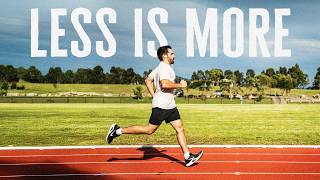
27% of best days involved fun activities (e.g., sports, travel, games), highlighting that prioritizing fun boosts happiness.
The experiment shows that consistent mood tracking can reveal patterns and prompt actionable changes, such as balancing work and fun to improve overall happiness.
What scale was used to track daily mood?
A 5-point scale from -2 (awful) to +2 (amazing) with zero as fine.
00:55
How many days were rated amazing (+2) over the year?
69 days.
07:38
What percentage of best days involved fun activities?
27%.
09:30
Which month had the most negative days and why?
November, due to partner's first trimester sickness; 19 days at zero or lower.
05:28
What was the key finding about work hours?
Working over 10 hours consistently led to negative mood scores.
08:47
How many times did 'work' appear as a keyword in daily summaries?
119 times.
08:20
Fun is Often Neglected as an Adult
Highlights a counterintuitive insight: prioritizing fun directly correlates with happiness, yet adults often deprioritize it.
09:30Work is a Double-Edged Sword
Shows that work appears on both best and worst days, but excessive hours tip the balance negative.
08:20External Factors Majorly Impact Mood
Demonstrates that life events (partner's sickness) can significantly skew daily scores, emphasizing context.
05:28Self-Awareness Through Data
Illustrates the principle that objective tracking combats distorted self-perception during bad moods.
04:07[00:00] Each night, I'd look back on my day and give myself a score. How many times did I get so frustrated that I plowed my head through drywall?
[00:15] of tracking your mood and happiness over the years. - Every single day I track how I feel zero to 10 - [Narrator] But I've never tried it up until now.
[00:28] and a greater sense of awareness over my feelings? This video is sponsored by Squarespace, - All right, so my very first step was to figure
[00:43] Now to create some consistency around this habit, I decided to set an alarm each night at 7:00 PM. reflect, and give it a score.
[00:55] on a five point scale from minus two to plus two. Minus two being awful, minus one being bad, zero being fine, I found out pretty early on
[01:09] It felt like I was "Did I have a good day today?" I mean, my mood varies so wildly from the time I wake up
[01:21] that it's really hard to tell. one thing that really helped me was to write down a summary a full paragraph.
[01:34] January 6th, spent six hours trying to screw eight holes March 20th, ate two donuts, played Last Of Us, October 13th, got Nat pregnant, score,
[01:47] plus two. by writing down this reflection summary, - I didn't realize until later
[02:00] as I looked back on my year and tried Top performers from different fields all of record keeping for years.
[02:15] Rob Dyrdek systematically tracks every minute of his day. and it pumps into a dashboard. So I could tell you exactly where I spend every single hour
[02:31] - [Narrator] He then ranks each day on a scale - This now gives me insight to what things would pull and take energy from the quality of my life through the lens
[02:43] of myself, and what's going on in my life. - I take it to a fanatical level. bestselling author of "Good to Great" tracks his day
[02:58] He talked about his approach on Tim Ferriss's podcast. I open a spreadsheet The first thing is just a simple accounting
[03:11] and then the second cell is the number and what this is a totally subjective, like Dyrdek and Collins get from tracking their mood,
[03:26] and if that time is being spent wisely. to things because you're looking at it through the lens of first, second, third order consequences.
[03:40] after they step back and analyze this data, After all, data doesn't really help - As impressed as I was
[03:52] I was really just doing this for one reason. I wanted to find out if I was as happy as I hoped I was. for the fact that we actually do a really bad job
[04:07] and that's because if we're in a funk, My life is miserable." - [Narrator] As someone who has struggled
[04:20] I frequently fall into these patterns I could look back and say, "Hey, you know what? to track each day, the good ones and the bad.
[04:32] - I don't know if I like it. (soft music) how much more self-aware I was over my feelings.
[04:46] Am I really going to let this ruin my day? I will definitely let this ruin my day.
[04:59] in September when Nat and I took a month off I had 24 days that were a plus one This was the first month that I'd ever taken off from work
[05:13] with taking weekends off, it was a really strong signal The year wasn't without its challenges. November was one of the worst months that I had all year.
[05:28] I logged 19 days with a score of zero or lower. Nat was sick from her first trimester of pregnancy so I wouldn't really worry too much
[05:42] (coughing) I realized the handwritten journaling system I was using
[05:54] So out of sheer necessity, I gave up the pen and paper This definitely made things easier and I felt a little bit more accountable each day
[06:09] from taking a step back after 365 days to spot bigger trends in my life and happiness. No, not a smooth transition into a YouTube advertisement,
[06:25] That's why I use Squarespace. I think they're amazing, and I think for the rest of your life and document it all
[06:39] First, you go to squarespace.com and buy your domain name, and you decided that that was totally okay because that would be absolutely crazy.
[06:52] which is really easy because all of them are so beautiful. and tweak your fonts so they're just right. into losing your sanity because you've overcommitted
[07:09] From there, you can set up your online store, - [Narrator] Visit squarespace.com today for a free trial make sure you go to squarespace.com/mattdavella
[07:23] - Click the link in the description below Thanks so much to Squarespace for sponsoring this video. I tracked every single day for 365 days
[07:38] (accelerating sound) 69 amazing days, 169 good days, 98 fine days, 25 bad days,
[07:51] Using the five point scale, I could add up all (drum roll) that means that I had a good year.
[08:05] if there was anything I could learn So I pulled everything into this spreadsheet here. summary, and keywords.
[08:20] that I can now sort my daily scores to find trends and here are the biggest lessons that I learned. Work and productivity came up a lot, 119 times in total.
[08:35] up both on my very best days as well as my very worst days. because I burnt out from working over 12 hours in a day.
[08:47] many of my best days were rated plus two because of work. Simply sitting down at my desk, getting lost in my work, I already knew that I had a complicated relationship
[09:03] that I never ranked a day positively because I worked over 10 hours, but there were many negative days So this could really be one thing that I work
[09:18] on going forward slash continue to work on going forward Can I cut myself off before I reach that 10 hour mark? for 12 and a half hours now.
[09:30] - [Narrator] The one trend that surprised me the most is the keyword fun. 27% of my best days happened because I did something fun.
[09:43] and I tried to become an adult as fast as I could and leaving video games, travel, and sports behind. for fun by traveling with Nat, by learning how to golf,
[09:59] by joining a softball team for the first time in five years, - [Speaker] Fore. People who regularly track their mood
[10:12] and identify underlying issues and I think that's true. that forces you to confront the things The goal isn't to get rid of bad days entirely.
[10:25] to challenge yourself, to improve your circumstances, to the life you wanna live. And yes, if you were wondering, I do my own stunts.
[10:40] (smash)

⚡ Saved you 0h 10m reading this? Transcribe any YouTube video for free — no signup needed.