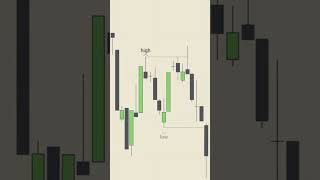

7 ICT Concepts That Change How You See Markets
43sA rapid-fire list of powerful trading concepts is highly shareable and educational for beginners, sparking curiosity and saving.
▶ Play Clip"Delivers a quick overview of ICT concepts but oversells 'mastery' in a minute; it's a teaser, not a full guide."
This video presents seven core ICT (Inner Circle Trader) trading concepts in under two minutes, aimed at beginners. It covers market structure, liquidity, displacement, and timing, emphasizing how institutional activity drives price movements.
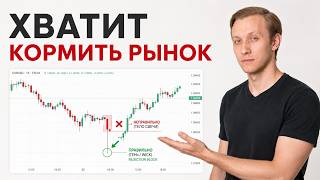
The last candle that closes in the opposite direction from where the price wants to go. This is where institutionalists are positioned.
When the price breaks the high or low, then immediately reverses. Institutions collect stops before the real move.
When the price moves so fast that it leaves a gap. This shows large orders that move the market.
Occur when the price closes through a support or resistance. This signals that the original movement has failed and a reversal is underway.
Highs and lows within a larger movement. Price likes to collect them before the real move.
Every movement: Accumulation, manipulation, distribution. Learn to see manipulation and trade distribution.
Specific times when institutions are most active. Trade during these windows for the most likely setups.
Mastering these seven ICT concepts provides a foundational understanding of institutional trading dynamics, emphasizing that market movements are driven by institutional activity and liquidity collection.
What is the First Block in ICT?
The last candle that closes in the opposite direction from where the price wants to go.
00:02
What are liquidity raids?
When the price breaks the high or low, then immediately reverses, collecting stops.
00:16
What does displacement indicate?
Large orders moving the market, leaving a gap.
00:29
What is an inverted fair value gap?
When price closes through support/resistance, signaling a failed move and reversal.
00:29
What is internal range liquidity?
Highs and lows within a larger movement that price collects before the real move.
00:45
What are the three phases of the Power of Three?
Accumulation, manipulation, distribution.
00:45
What are kill zones?
Specific times when institutions are most active.
01:00
Institutional positioning
Explains where institutions place orders, a core ICT concept.
00:02Liquidity raids
Reveals how stop hunts work, a key market manipulation tactic.
00:16Displacement
Shows how to spot large institutional orders via gaps.
00:29Power of Three
Summarizes market cycles into three phases, a foundational principle.
00:45Kill zones
Highlights the importance of timing in trading.
01:00[00:02] change the way you see the market. First. A Blocks. The last candle that closes in the opposite direction from where the price actually wants to go. This is where institutionalists are positioned . The second liquidity rates,
[00:16] when the price breaks the high or low, then immediately reverses. Institutions collect stops before the real move. Third. Displacement is when the price moves so fast that it leaves a gap. This shows large orders that
[00:29] move the market. Fourth. Inverted fair value gaps occur when the price closes through a support or resistance. This signals that the original movement has failed. A reversal is underway. Fifth. Internal range liquidity. Hai and within a
[00:45] larger movement. Price likes to collect them before the real move. Sixth. Power of tree. Every movement. Accumulation, manipulation, distribution. Learn to see manipulation. Trade distribution. Seventh. Kill zones. This is a
[01:00] specific time when institutions are most active. Trade during these windows and you will get the most likely setups. Master these seven concepts and you will begin to understand the market. Save this post and study it again and again.
[01:14] You can also find more information on trading in my Telegram channel. Write the word IC in the comments and I'll send you a link and a guide. y
⚡ Saved you 0h 01m reading this? Transcribe any YouTube video for free — no signup needed.