
AI Summary
This video provides a beginner-friendly guide to choosing the right microphone for podcasting, content creation, or music production. The host, a certified audio engineer, breaks down the basics into four simple steps: understanding microphone types, choosing based on use case, knowing polar patterns, and investing in quality.
Chapters
There are three main types of microphones: dynamic, condenser, and ribbon (skipped for this video). Dynamic and condenser mics have different internal mechanisms and are suited for different scenarios.
Dynamic mics have a coil that moves with sound pressure, making them rugged and reliable. Condenser mics have a small membrane stretched across a plate, making them more sensitive and fragile.
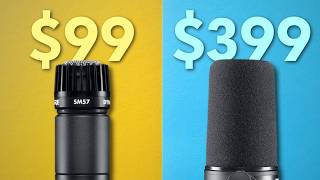
Dynamic mics like the Shure SM57 and SM7B offer excellent sound rejection from the back, ideal for noisy environments. They also have a bass presence feature, adding a booming quality to voices, popular for YouTube and podcasts.
Condenser mics are more sensitive and pick up fine detail, making them great for quiet, treated rooms. They require more careful handling due to fragility.
Recommendations: For recording artists in untreated rooms, use a dynamic mic; for treated rooms, use a condenser. YouTubers should consider a lapel mic with a receiver or a desk dynamic mic. Podcasters are advised to buy a Shure SM7B.
A polar pattern is a graph showing where the microphone is most sensitive. Common patterns include cardioid, omnidirectional, and figure-8. This information is typically listed in product descriptions.
The final step emphasizes saving up for a quality microphone that will serve your creative purposes long-term. The host links to favorite dynamic and condenser mics at various price points.
To connect a microphone to a computer, an audio interface is required. The host mentions having a separate video on this topic.
Choosing the right microphone involves understanding the differences between dynamic and condenser types, matching the mic to your specific use case, and knowing polar patterns. Ultimately, investing in a quality microphone is crucial for capturing your creativity effectively.
Mentioned in this Video
Tutorial Checklist
Study Flashcards (7)
What are the three main types of microphones mentioned?
easy
Click to reveal answer
What are the three main types of microphones mentioned?
Dynamic, condenser, and ribbon (skipped).
00:42
What is the main difference between dynamic and condenser microphones?
medium
Click to reveal answer
What is the main difference between dynamic and condenser microphones?
Dynamic mics have a coil that moves with sound pressure; condenser mics have a small membrane stretched across a plate.
01:07
Why are dynamic mics preferred for noisy environments?
easy
Click to reveal answer
Why are dynamic mics preferred for noisy environments?
They have excellent sound rejection from the back, reducing background noise.
01:36
What is a polar pattern?
easy
Click to reveal answer
What is a polar pattern?
A graph showing where the microphone is most sensitive to sound.
03:15
What is the recommended microphone for podcasters?
easy
Click to reveal answer
What is the recommended microphone for podcasters?
Shure SM7B.
03:15
What is the bass presence feature in dynamic mics?
medium
Click to reveal answer
What is the bass presence feature in dynamic mics?
The closer you get to the microphone, the more bass is present, giving a booming voice presence.
01:49
What is the final step in choosing a microphone?
medium
Click to reveal answer
What is the final step in choosing a microphone?
Invest in a quality microphone that serves your creative purposes, even if it means saving up.
03:58
💡 Key Takeaways
Dynamic Mics for Noisy Environments
Practical advice for beginners: dynamic mics reject background noise, making them ideal for untreated rooms.
01:36Use-Case-Based Recommendations
Provides clear, actionable guidance for different user types (artists, YouTubers, podcasters).
02:32Polar Patterns Explained
Demystifies a technical concept that is crucial for proper mic placement.
03:15Invest in Quality
Emphasizes long-term value over short-term savings, a key principle for creators.
03:58Full Transcript
[00:02] actually know the difference between all of these microphones? If you're just getting into audio, whether it be for podcast recording, content creation, or music production, you need an affordable and reliable microphone. Because without
[00:16] good audio, you are screwed. My name is Sam Wymer and I'm a certified audio engineer with real recording studio experience and I'm here today to help you better understand your microphone needs. In today's video, I'm going to
[00:29] cover everything you need to know about microphones in just four simple steps. Now, each step is equally important, so make sure you stick around for the entire video. And I'll link any product I talk about in today's video in the
[00:42] description down below. So, let's take a look at understanding step one. So, there are three main types of microphones: dynamic, condenser, and
[00:54] purposes, we're going to skip over ribbon mics. Every microphone you saw at the beginning of this video was either a condenser or a dynamic mic. Now, dynamic and condenser microphones actually
[01:07] operate differently. They have different mechanisms built on the inside. So, naturally, they're used for different scenarios. Dynamic mics have a coil on the inside that moves based on changing sound pressure, while condenser mics
[01:20] have a small membrane stretched across the plate. But what's the main difference between the two mechanisms? Well, dynamic mics are super reliable and rugged. Microphones like the SH SM57 and the SH SM7B are great examples and
[01:36] are incredible options. These microphones have incredible sound rejection from the back, which gives you an advantage if you're recording in a noisy environment. They also have a bass presence feature, which means the closer
[01:49] you get to the microphone, the more bass will be present. This is why so many people opt to use this microphone for YouTube or podcast applications because it gives your voice that kind of booming presence. Now, condenser microphones
[02:03] tend to be a lot more sensitive than dynamic mics. They are really good for picking up a lot of fine detail, which is great if you have a nice recording environment. They also tend to be a little bit more fragile, so you kind of
[02:17] have to handle these guys with a little more care. Okay, so now you know the main difference between dynamic and condenser mics. Let's move on to step condenser mics. Let's move on to step two.
[02:32] microphone for? Are you making YouTube videos, recording songs from your bedroom, or are you the guy in the friend group that keeps saying we should friend group that keeps saying we should start a podcast?
[02:47] guidelines are going to work for everybody, but here are my general recommendations. Recording artist, if you're making beats in your bedroom or any room without soundproofing, get a dynamic mic. If you feel good about your
[03:00] sound treatment, then go for a condenser. YouTubers, get either a lapel mic with a receiver that can attach to your camera or a dynamic mic that can stay at your desk for local recording. and podcasters, just buy a Sure SM7B.
[03:15] You won't have to replace the mic. It's exactly what you're looking for. Just [Music] Now, every microphone also has what is called a polar pattern. A polar pattern is simply just a graph showing where the
[03:31] microphone is more sensitive. Here are some of the most common patterns. The outline areas show where the sound will be picked up when recording. So, it's polar pattern your microphone has so you're using it to the full extent of
[03:45] its capabilities. And this is always going to be listed either on the Amazon product description or if you go to the supplers's website directly, you can find it listed there as well. Okay. Now, the first three steps were super
[03:58] the first three steps were super important, but they are useless without important, but they are useless without step four.
[04:11] in yourself and in your future. It's a device that's close to magic and can capture your creativity to last a lifetime. My point is get a microphone of quality. Save up and get what you truly want and what you know is going to
[04:26] serve your creative purposes best. In the description down below, I'm going to link to all my favorite dynamic and condenser mics at different price points to hopefully make your life a little bit easier. Now, one final and very
[04:39] important thing is you're going to need an audio interface to plug this microphone into your computer, which luckily I have a video on audio interfaces right here. Leave a like or comment down below if you found this
[04:51] video helpful, and until next time, peace.