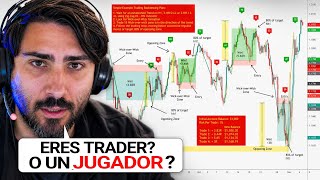

Why You're Gambling, Not Trading
43sDirectly challenges viewers' trading habits with a bold claim, prompting immediate engagement and debate.
▶ Play Clip"Delivers a solid argument for backtesting, but the title's dramatic tone oversells the 'you're playing' angle; still, content is substantive."
This video argues that backtesting is essential for successful trading, challenging traders who rely on improvisation and emotion. The presenter outlines five key reasons why backtesting is crucial, from automating decision-making to understanding risk and optimizing strategies, and promotes Forex Tester Online as a tool for this purpose.
The video opens with a strong assertion that traders must backtest their strategies to avoid failure. The presenter challenges viewers to argue against this point in the comments.
All traders eventually realize there is no secret strategy or magic indicator. Success comes from truly understanding and researching one's own strategy, not just copying others.
The first key point: backtesting helps automate decision-making. Real-time trading is often emotional and irrational, but backtesting exposes you to patterns repeatedly until your brain recognizes them automatically, like driving a car.
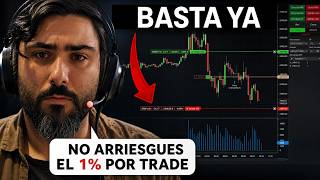
The second point: backtesting reveals your strategy's maximum drawdown and consecutive losing streaks. Without this, you don't know how much to risk per trade, and a typical 1% risk rule is nonsense because it depends on market volatility and your strategy's historical losses.
The third point: no strategy works in all market conditions. Backtesting lets you test your strategy across different historical environments (e.g., COVID, 2008 crash) to know when it works and when to adapt your risk or stop trading.
The fourth point: backtesting provides data to quantify your trading psychology. Instead of blaming psychological issues, you can analyze metrics like average monthly trades, drawdown, and profit factor to identify problems like overtrading or FOMO.
The fifth point: backtesting helps you find the best exit points and optimize your strategy. Without it, you're improvising, and what seems logical may not be profitable. Small changes in stop loss or take profit can make a big difference.
Backtesting is not just for finding strategies; it's for automating processes, knowing yourself, and optimizing. Professionals work hard outside the market, then execute with confidence. You don't need another indicator or course; you need to backtest your own strategy.
Backtesting is a non-negotiable practice for serious traders. It transforms trading from a game of chance into a professional, data-driven discipline, enabling you to automate decisions, understand risk, adapt to market conditions, and optimize performance.
What is the main mistake traders make according to the video?
They think they are being rational when making real-time trading decisions, but emotions take over.
02:01
Why is backtesting compared to learning to drive?
Because both require repeated exposure to patterns until they become automatic, like recognizing traffic signs and gear changes.
03:44
What is the typical risk per trade rule that the presenter calls nonsense?
Risking 1% per trade regardless of market conditions or strategy.
05:31
What does backtesting reveal about a strategy's drawdown?
It shows the maximum number of consecutive losing trades and the maximum drawdown, helping you set appropriate risk levels.
06:09
Why is it a lie that a strategy works in all market conditions?
Because no strategy works in all regimes; backtesting lets you test across different historical environments to know when it works.
07:53
What data helps identify overtrading?
Metrics like average monthly trades, average drawdown, and profit factor; for a scalper, going from 50 to 55 trades may be normal, but for a day trader, going from 1 to 6 is overtrading.
15:12
What is the 'sweet spot' in trading strategy optimization?
Knowing the best exit points (take profit and stop loss) for your strategy, which backtesting can reveal.
16:45
No Secret Strategies
Challenges the common belief in magic indicators, emphasizing that understanding and researching your own strategy is key.
00:28Know Your Drawdown
Highlights a critical risk management metric that most traders ignore, directly impacting survival.
05:17Adapt to Market Regimes
Stresses that no strategy works everywhere, and backtesting across historical crises is essential for long-term survival.
07:40Quantify Your Psychology
Reframes psychological trading issues as data problems, offering a practical way to diagnose and fix them.
14:07Backtesting is Training
Summarizes the core message: backtesting is the training ground that makes real trading effortless and profitable.
18:42[00:02] doubt, why from now on you have to do backtesting. I'm going assure you that from now on, if you don't do backtesting, you'll trader for not having made the
[00:16] strategies and your trades, as I'm going to explain in this video. And if not, I challenge you to tell me in the comments after watching the video why I'm wrong. trading looks for the same thing: the secret strategy, the magic indicator, the
[00:28] But then, as the years go by, all traders realize that there is nothing secret, no magic ingredient. What makes the successful in the long run and one who isn't is that the successful trader truly understands
[00:42] their strategies. They don't just use other people's strategies simply because that , but because they are able to take that strategy, learn it, put it through a process of research where they
[00:55] winning strategy and that, therefore, they can invest their money in it, can risk their n't fail because they have a bad strategy, but because they never truly understand the strategy they use, and this is where backtesting comes in. And
[01:08] honestly, I understand that it's very tedious, that it's very tiresome, that the placing orders and seeing how you make money, how you lose it. I understand that. I 'm a trader too, I know how it feels. Hey, what you experience in the market
[01:21] down, we all feel it, but the problem is that if you don't go through the analyzing whether you really have an advantage in the market, what you're doing is playing a game. You're not trying to make a profession out of this. So yes,
[01:35] trading is a lot of fun, but for it to be fun, without risk or at least with go through a slightly lazier, slightly more arduous process, which is backtesting your strategy, so we're going to look at those five points that I
[01:49] demonstrate to you, to convince you that, start backtesting right away. The first point is that, as you have seen, back testing creates automation. The main mistake you
[02:01] watching this are making it too, because we've all made it and I've that they think that when they're taking trades in the market, making market decisions, they're being rational, but it's not true. When
[02:13] work the same. You can be the smartest, most astute, most world, but when you see your money at stake going up and down at levels you
[02:25] brain won't listen to you. When you have 7 or 10 consecutive losses, you're not going to act the same way. When you see that a trade is moving faster than you expected because there is a lot of volatility, you're not going to act the same way.
[02:39] and you don't know whether to cut your profit or break even, or whether it's better to take moment arrives, emotions will appear, and when emotions appear, most traders who make real-time decisions thinking they are
[02:54] destroying their account. Because you can be doing your job well for a long time, but all it takes is one crazy day, one day of making accumulated mistakes to ruin all the work you've done for years.
[03:06] If you improvise in the market, don't expect to see results in the future. It's impossible. And back testing does just the opposite. It forces you to be exposed to hundreds or thousands of patterns before trading. Examples of your
[03:19] and over again and are exactly the same until your brain stops seeing them as something unconnected and starts to see You start to see information that at first glance seems neutral to any
[03:31] human being, but there you are seeing signs, you are seeing flashes of help you make decisions. And that is achieved through training, through constantly exposed to these patterns until it recognizes them as something repeatable. It's
[03:44] exactly the same as driving. At first, when you're driving, you think about every single move. It's super difficult to keep in mind the gear change, the pedals, the traffic, the car next to you and the rearview mirror. It's impossible to
[03:56] do that at the beginning because there are so many stimuli that combining them all and taking action automatically and efficiently at that stimuli to control at the same time. Now imagine that as soon as you
[04:10] racetrack and tell you to drive in normal traffic. Without knowing everything repetitive patterns, well, in circulation it's something absurd that I'm watching this would do. But here, for whatever reason in trading, you consider it
[04:24] okay to use your money, which is like a huge vehicle that can to start driving through the markets without first learning which gear to shift for each moment, what the traffic signs are,
[04:37] how to use the pedals, the basics for driving, well here in beginning you think about each move and it's hard to identify the pattern, but recognizable and repeatable and it's easier. It's like a kind of
[04:49] trained intuition. It's not based on hunches, it's not based on emotion, it's not based on are because you know how to identify the market in real time, it's based on improvise, you don't need to guess, you don't need to know what the price is going to do
[05:03] past studies, that if you repeat that movement pattern over time, it will simple. And believe me, that greatly reduces fear, anxiety, when you operate. Now try to defend that. Argue that training a
[05:17] behavioral pattern or an automatic system in the markets is not necessary. Defend it for me. me to be able to make a living from trading. And I'm going to say something that probably goes social media. The typical thing is to risk 1% per trade in general,
[05:31] regardless of what kind of trader you are. That's nonsense because everything depends moment of market volatility, it depends on the market regime that exists. It's not the same to have a market that moves, for example, 600
[05:43] points a day in futures as one that moves 100 or 150. Depending on the the type of trader you are—whether you're a capital manager, a scalper, or a trader—it depends on many things to know what kind of risk to use. And the
[05:55] risk to use, do you know what it is? Knowing your drawdown. And the worst part is that I know thousands of traders I've worked with, that a very small percentage real dropdown is, their technical drawdown, the maximum number of consecutive
[06:09] losing trades they've had in their history. People trade in the markets without knowing how many losses their strategy can withstand. And if you don't know take to avoid losing all your capital? It's impossible. Your strategy
[06:21] loses 10 trades in a row in its history, 20, 50, 100. What is the strategy can withstand? Because if you have your strategy, even if it's a winning one, and it loses 40 times in a row in a historic losing streak because it happens,
[06:34] example, constantly, you go long, long, long because that's how your system works. If that happens and you risk 1% or 2% per trade, you end up losing either half or 100% of your capital. If you don't know that, you don't know
[06:47] on each of the trades? They do it because some guy on the internet trade every time. That's why backtesting is important because, as you can see on the screen, if you know that data, you have a number, you know that if you risk x
[07:00] less during the last 10 years or 15 years or 5 years, your capital only drops data that is obviously fluctuating, there is always a bigger dropdown to point of no return, a place where you say, "Enough, if I get to this point, it
[07:13] the probability is going against me or I am making mistakes." It's a point of reflection, a point that helps you reflect, to think about whether what is happening is normal or not. If you don't have
[07:26] . You don't know when your drawdown is normal and when it's not. And if not, I drawdown, how do you know what a healthy drawdown is for your strategy? At wrong? Tell me about it. The third
[07:40] is knowing how much more and how much less you have to risk in your made by every trader who doesn't backtest is thinking that their strategy market conditions. It works
[07:53] sideways trends, in high volatility, and in low volatility. That's a lie. There is no all market regimes. No strategy always works. And since you need to know in which environments your strategy is most effective, has
[08:07] virtues, and in which it does not. And backtesting allows you to discover exactly that, because you can backtest your strategy in an environment markets started falling nonstop and had enormous volatility, and then go back
[08:20] where volatility was lower and it was sideways and test it then too. If you only trade in real time, in your lifetime as a trader, you scenarios. No, you won't have time because either the market will kick you out before then
[08:35] should, or you'll give up because in the end it won't be worth it. Since last 1, 2, 3, or 5 years that you have been trading, you have not been able to see all market environments, backtesting allows you to apply your
[08:49] rules, your strategy in all the historical environments that have already occurred. works and what you have to do when they happen again, because they are cyclical, you will know that you have to adapt your risk, that there are times when
[09:01] make fewer trades, others when it is better to stop making trades. That kind of strategy, when to stop, when to risk more, when to risk less—is what makes the difference to surviving in the long term. Doing
[09:14] real-time operations means absolutely nothing. You may have already earned as much as the following year, if there's a market regime that you haven't checked for because it can happen, it's going to destroy your account because backtesting
[09:27] allows you to know if your strategy survives in all you are a trader who doesn't do backtesting, how do you know if your strategy survives experienced different market regimes like everyone else, like the Covid crisis,
[09:40] the 2008 crisis, the yen crisis, have you been through all Very few people in the markets have done that, so please use backtesting. Traders, before we continue with the video, let me
[09:52] the best tool in the world for backtesting. Something that has career as a trader to achieve results, I assure you. And I'm Tester Online, as you can see here on screen, is a platform, a
[10:05] backtesting software, okay? Its sole function is to try to replicate, as the real market, the platform you use to trade Forex, CFDs, and crypto CFDs. Index CFDs, everything you
[10:17] trade, everyone who trades Forex and CFDs at Forex Ester online can backtest your strategies in the most similar way to real life. The best thing about allows you to import historical data from a huge number of assets—seriously, thousands
[10:30] of assets—and you can import data from 20 or 30 years in the past so that you can select the times, the time period you want to backtest, and little by little, candle by candle, as you see here on the screen, you can test how
[10:43] you don't see what's happening, what has already happened in the market, like most of you do, who already know what's going on. Here, Forex Tester directly loads the historical data you want and, candle by candle, it tests your strategy,
[10:56] trying to make it as similar as possible to what you would do in the real market. screen, directly, just like you would with your real trading account. This generates a trading history in which you have set your stop loss, your take profit with
[11:08] recorded in a journal, a history like a trading terminal where entries, see where you made them, at what time, how much risk you lost, in other words, a full-fledged trading platform. You can use any
[11:23] the indicators available on the market are there. You can even upload your own. You can go to different time periods to test, as we mentioned in market regimes, such as the COVID period, the 2008 crash, or whatever crisis.
[11:37] moments in history to see if your strategy works, to different Asian session, the New York session. You can move around the market to make your possible to real-world trading. That's a super intuitive platform where
[11:52] history. You open them and while you're operating, without thinking about anything else, you that generates an analytics report, as you can see here, a kind of strategy, where you can see how many tests you've done, how long you've
[12:07] your strengths and weaknesses are, you can see what the best best to exit at take profit and stop loss, what your win rate is, what your reward ratio is—all the information that is necessary, as we said in the video,
[12:22] your strategy is a winner. Here it summarizes everything for you in a few pages, as you can see, can also export that directly to Excel and work on it. As you can see, what I data and then run it through my
[12:37] to sort it, to graph it, to do a kind of visual backtest so that I can better understand my data. And simply download it and from there you do your work. This way you don't have to
[12:49] down what you do at the market every day, but it does this interested in doing professional backtesting, if you want to use a truly serious platform , I'll leave a link below in the description of this video,
[13:01] account with Forex Exter online with a discount that is displayed here in a very plans offered by Forex Ester online. But also, to encourage you to testing and understand the power of back testing, I'm going to raffle off two
[13:14] annual Forester online accounts. They are worth more than €100, they are good accounts and I am free of charge. OK? To participate in the draw, all you have to do is to go to their online Forex channel in Spanish that you are seeing here on
[13:26] screen. Subscribe to the channel, that 's the first thing, go to their latest video liked, that's the second thing to do on that video, and put a positive comment of support towards Forexer online. If you do those three things, among all the
[13:39] the people who have subscribed and liked it , on June 27th talking about trading strategies, Forex Tester, platforms, etc. We'll have a relaxed chat with everyone who comes, and right there I'll look at the
[13:52] randomly select two of them to give away two So if you want to participate and win those two accounts, head over to their giveaways. So take advantage of both the discount and the giveaway, and we'll see you in
[14:07] Point four has more to do with and that is the importance of data to quantify your trading at a psychological level. What always fascinates me in
[14:20] help, most of them telling me that they have psychological problems, which is why they don't scratch the surface and look at their strategies, their data, and analyze them, I realize that most of them simply haven't done proper
[14:33] backtesting; they don't have the data to know if they're suffering from something psychological or markets. But again, since they've told you that psychology is what's important and that if you're not a good trader it means you're bad, you have bad
[14:45] anger, and frustration badly, since they've told you that, because it's the easiest thing for them to tell you, right? Like, you don't manage your emotions well, that's it. So you don't simply be that your strategy isn't winning. But since you don't know, since you've
[14:57] for 6 months or a year and suddenly the following year you start blame psychology instead of doing backtesting, checking work the same, looking at your data to find out, uh, what your average
[15:12] monthly trades are, what your average drop is, what your average positive excursion is, what your average negative excursion is, uh, what your profit factor is. There is very important data about your performance as a trader that people don't know and that
[15:24] helps you know if you fall into FOMO, if you fall into overtrading, if you fall into paralysis. For example, as you can see here on screen, if I want to know at what point my falling into overtrading, I need data on what my overtrading threshold is
[15:38] you can see here on the screen, which I've taken directly from a backtest, how am I going overtrading? Because for a scalper, for example, to commit to making five trades, for 50 trades a day and one day makes 55 trades. Those five trades difference
[15:52] are about trading. Actually, uh, it depends, because if a scalper does it and trader who makes one trade a day makes six trades, which is five, then the surplus is different. As you can see, for a scalper going from 50 to 55 trades, it might not be
[16:05] but for a day trader or a swing trader going from one trade a day to six trades, that is, the number is the same, but the impact is different. For n't have that information, you don't know, I repeat, how do you know about your psychological problem? You do
[16:19] because it's the easiest thing to say, your psychological problem instead of analyzing your data and verifying if it really is. And again, I invite you to tell me, "No, it's that I, regardless of knowing that
[16:31] say that I have it about trading." Repeat it, I'll repeat it, explain to me how you do it and let's see the debate that's going on. And finally, the sweet spot for me in any trading strategy is knowing if what you're doing is really the
[16:45] best you can do. How do you know that when you enter the market and have a take profit at one point and a stop at another, that's the best place to place those orders? How do you know? It is one of the most undervalued points, that of
[16:57] perhaps they have found a good entry timing, but they destroy their strategies early, let stops run or set them too tight, uh, they put a because statistically that does not make sense. How do you know that your outlet is
[17:11] How do you know it's the best one to put there? You have no information technical area you have to respect, but you don't know the facts. backtesting, what the best exit points are for your strategy, both in terms of
[17:26] best to set a break-even point, whether it's even better to set one or not, if you don't have that information, what you're doing is improvising. You're taking doing something that makes sense when, statistically, in the long run, it
[17:38] might not make any sense at all. And that's precisely the problem: loss at a certain point because someone has told them to put it there because it's best place technically, or they've been told to let their profit run 4 to 1 because they've been
[17:51] told that the strategy is based on a 4 to 1 ratio . But how do you know that a 2 isn't better than a 1? How do you know that it's not better to have a 2 with a 45% win rate than a 4 with a 15% win rate? You don't know that, you don't have that information, and because you do
[18:04] strategy that you think is a winner when in reality it either isn't or isn't as winning as it should be, just because you did n't do a backtesting process. That's not opinions, it's not faith, it's not beliefs, it's basically not doing any
[18:17] in trading, what is logical is not the same as what is profitable. You might think you're turns out that it's not the most profitable thing you backtesting, because with this optimization process, you'll see that
[18:29] perhaps small changes in your profit margin or stop loss can make a profitable. Therefore, to conclude the video, if I had to summarize this video testing is not useful, as people think, for finding strategies, it is useful for
[18:42] automated processes so you don't have to improvise. It helps you get to know yourself as a trader, FOMO inflection point of over- trading is. Very valuable information. before they know their numbers because they're lazy. But professionals do just
[18:56] the opposite. First you work hard outside of graphics, with the screens still, stopped, that's where you train, it's your training zone and then you execute in real life . You in real decisions, in real decisions that you have already made
[19:08] previously outside. When you trust the numbers, that's when the money really comes in, and that's when making money seems easy because you've already done the work another indicator, you don't need another course, you don't need another strategy. What you
[19:21] need is to backtest yours. Back, enjoyed this video, and I hope it convinced you in these 15-20 minutes why back testing is so important. Believe me, I'm willing to debate
[19:34] with you in the comments and I'll do my best to Whether you are discretionary, quantitative, algorithmic, manual, or anything else, you must back-testing process, however minimal, to make
[19:47] risk letting yourself be carried away by emotions, by fear, by anger, by frustration, and ultimately reducing your chances of success considerably. Hey, I'll leave the link in the description below, as I said, a
[20:00] online, which is the platform I use. The best platform you today is Forex Tester online. So take advantage of it. Remember that on live to give away two free annual
[20:15] two people who comment on their YouTube channel's latest video ( Spanish, which I've linked on screen and in the description). Go there, subscribed), leave a positive comment on their latest video to support them, like
[20:28] the video, and I'll raffle off the two accounts among all the comments I see during the take advantage of it and start real. That's all for now, I'm signing off, enjoy your meal, and see you in the next video.
⚡ Saved you 0h 20m reading this? Transcribe any YouTube video for free — no signup needed.