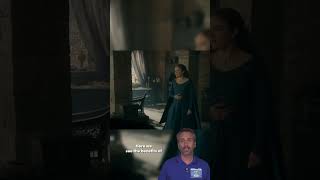

Rhaenyra's Mercy Backfires: The Deception Revealed
45sThe dramatic irony of Rhaenyra's kindness leading to a major betrayal creates intense emotional engagement, perfect for a cliffhanger-style clip.
▶ Play Clip"The title asks a question the video only partially answers, focusing more on scene analysis than a direct verdict."
This video analyzes a pivotal scene from House of the Dragon where Rhaenyra Targaryen confronts Alicent Hightower, exploring the moral complexities of mercy, deception, and rulership. It highlights Rhaenyra's desire to be a kind ruler and the consequences of Alicent's betrayal.
Rhaenyra wants to be a kind and loved ruler, distributing food to the people, rather than making terrible decisions for power.
Rhaenyra learns that Alicent has a son named Daeron, which is part of a larger deception involving the Hightower army.
Rhaenyra banishes Alicent's son to the Wall, a less extreme sentence than execution but still a harsh fate for her only remaining hope.
Rhaenyra's merciful decision to allow Alicent to see her son leads to the revelation of the deception, showing the benefits of mercy.
The deception puts the real Daeron in danger, and Alicent's fear is justified as the Hightower army approaches the Iron Throne.
The video concludes that Rhaenyra's mercy is unlikely to be repeated, implying severe consequences for the Greens.
The video argues that Rhaenyra's actions are justified given the deception, but her mercy is a one-time offer that will not be extended again.
What does Rhaenyra want out of being a ruler?
To be kind and loved, distributing food to the people.
00:01
What deception does Rhaenyra discover?
Alicent has a son named Daeron, and the Hightower army is approaching.
00:15
What is Rhaenyra's punishment for Alicent's son?
Banishment to the Wall.
00:28
How does Rhaenyra's mercy benefit her?
It allows her to discover the deception.
00:42
What is the likely outcome of Rhaenyra's mercy?
It is unlikely to be repeated, implying severe consequences.
01:10
Rhaenyra's Ideal of Rulership
Establishes the central moral conflict between kindness and power.
00:01Alicent's Deception
Reveals the plot twist that drives the scene's tension.
00:15Mercy Leads to Discovery
Demonstrates a key narrative consequence of Rhaenyra's choice.
00:42[00:01] she's learning the bitter truth about being a ruler. There's a rare moment of distributes food to the people. This is what Rhaenyra wants out of being a ruler, to be kind and to be loved. She wants to feel like herself and not have
[00:15] to make terrible decisions for the sake of holding power. When she was young, Rhaenyra was known as the realm's delight, and now she gets to feel that chambers, where Rhaenyra lets her know that she has Daeron and is being
[00:28] This has always been the less extreme sentence than execution in Westeros, but wouldn't be happy. It's still banishing her son, the only son she has any hope left for, to the wall, to the north to be a soldier for the rest of his life.
[00:42] chance to really know her child. Here we see the benefits of being a merciful ruler. Rhaenyra allows Alicent to see her son, and it's only because of that that she finds out about the deception. The music becomes jarring once again as
[00:55] was right to be fearful since she has been tricked, and now the Hightower army Iron Throne with them. Alicent looks afraid, and she has a right to be. The deception has put the real Daeron in even more danger. He's still a part of
[01:10] on him, it's unlikely that she'll be this merciful twice.




⚡ Saved you 0h 01m reading this? Transcribe any YouTube video for free — no signup needed.