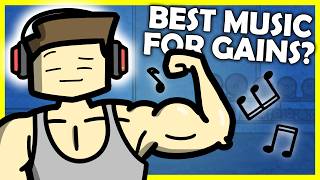

Music Boosts Your Workout?
45sOpens with a surprising claim that music can improve fitness gains, hooking viewers who want to optimize their workouts.
▶ Play Clip"The title is slightly exaggerated but the video delivers solid science on how music affects gains."
This video explores how music can enhance exercise performance by examining the psychological, physiological, and psychophysical effects of different types of music. It highlights the benefits of high-tempo music, particularly around 120 beats per minute, and provides practical advice for optimizing workout playlists.
Music has an instrumental role in exercise performance across multiple activities, intensities, and populations.
Music imposes psychological, physiological, and psychophysical effects, including brain wave synchronization with the beat and elevation of catecholamines like adrenaline.
Some studies show greater peak power output when music is paired with caffeine, similar to caffeine's benefits.
Music can distract from physical stressors, lowering RPE scores and making exercise feel less exhausting.
Listening to your own Spotify playlists is likely best due to personal preference.
High-tempo music shows almost twice the effect size compared to low-tempo music in studies.
Humans naturally prefer music around 120 beats per minute, which aligns with resting heart rate and movement patterns.
Low-tempo music has a soothing effect useful for lower-intensity exercises or rest periods.
Choosing high-tempo music, especially around 120 BPM, is likely best for gym gains, while low-tempo music can aid recovery. Personal preference also plays a key role.
What physiological substances does music elevate that are similar to caffeine's effects?
Catecholamines like adrenaline.
01:06
How does music affect RPE scores during exercise?
Music lowers RPE scores, making exercise feel less exhausting.
01:19
What tempo is considered the sweet spot for exercise music?
Around 120 beats per minute.
02:55
What is the effect size difference between high-tempo and low-tempo music?
High-tempo music shows almost twice the effect size.
02:11
When is low-tempo music more beneficial than high-tempo?
During lower-intensity exercises or rest periods.
03:23
Music's Multifaceted Effects
Explains the psychological, physiological, and psychophysical mechanisms behind music's impact on exercise.
00:26Music and Caffeine Synergy
Highlights a surprising synergistic effect between music and caffeine for peak power output.
01:06120 BPM Sweet Spot
Reveals the natural human preference for 120 BPM, linking it to heart rate and movement.
02:55[00:00] that we listen to the right kind of music. So, in this video, we’re gonna learn how and what kind of music can best improve our fitness gains. We’ve now known for a very long time
[00:14] that music can have an… instrumental role in exercise performance across multiple types of activities, intensities, and populations. And what’s even more fascinating is the way it all works. Obviously, music doesn’t
[00:26] work in the same way as your supplements or lifting belts. It’s primarily as far as I know, cannot be ingested or strapped onto your body. But, the cool thing is that we humans have a naturally strong connection
[00:40] to the auditory stimuli of music, imposing psychological, physiological, and even psychophysical effects, some of which impacts our exercise performance. One has to do with the tendency for our brain waves
[00:52] to synchronize with the beat of the music we listen to, which might prime our body during physical activity. Music can also elevate levels of the primary substances driving our sympathetic nervous system
[01:06] known as catecholamines, like adrenaline. This is very similar to the mechanisms benefits of caffeine. In fact, some studies showed greater peak power output performance when listening to music was paired with taking caffeine.
[01:19] Music might also distract us from the physical stressors of exercise, allowing us to exert ourselves a bit harder and, as reflected by lower RPE scores in many studies, music might even make exercise feel a bit
[01:32] less exhausting. And, of course, music can improve our mood and motivation, which might help us be more willing to stick to our gym goals. Overall, it’s abundantly clear that music can be very beneficial
[01:44] to our fitness gains. However, not all types of music are created equal. Now, because of the complex and subjective nature of music, science to pinpoint the precise music that would be most effective. But,
[01:58] there are two factors that consistently show greater benefits. Not too surprising, but it is probably best to listen
[02:11] to your own Spotify playlists when you’re training. That’ll be better However, when you are choosing your own songs, you should also keep in mind the second factor we’ve seen in the research,
[02:24] And, that is listening to higher-tempo music. In the studies covering this, compared to slower, low-tempo music, high-tempo music has shown, on average, almost twice the effect size.
[02:39] One is perhaps that high tempo music is generally higher energy and more stimulating, which confers more sympathetic arousal strongly Another potential and perhaps more interesting reason has to do
[02:55] with the specific high-tempo of 120 beats per minute. Through some fascinating phenomenon, humans REALLY like music this pace, from our resting heart rate to our movement patterns. In fact,
[03:10] the most common tempo of most popular music, especially dance music, is 120 beats per minute. So, if you want to get the most out of music, high-tempo is the best way to go. That said, low-tempo music
[03:23] has shown to confer more of a soothing effect, which can actually be useful during lower-intensity exercises or during rest periods. But, especially if you lift weights, then it makes sense why higher-tempo music
[03:39] is generally better. So, in other words, choosing high-tempo music, will probably be best for your gym gains.
[03:51] Personally, listening to music at the gym is already a win for tuning out all the clanking and chatty people around me. Now, if only I can do something high-tempo thumbs up and share it with your music-loving friends.
[04:09] Subscribe for more and let me know what

⚡ Saved you 0h 04m reading this? Transcribe any YouTube video for free — no signup needed.