
33 Raptor Engines Lit! Starship's Most Extreme Flight
40sHigh-stakes engine ignition and record aerodynamic pressure create a gripping, high-energy opening.
▶ Play Clip"Title hypes the event but the content delivers real milestones, though it's a live commentary with some fluff."
SpaceX's Starship Flight 13 achieved a major milestone with a successful soft splashdown of the Super Heavy booster and the Starship upper stage, marking a significant step toward reusability. The flight also deployed Starlink V3 satellites and tested heat shield imaging capabilities, showcasing rapid iteration in spaceflight technology.
Starship Flight 13 lifts off from Starbase with all 33 Raptor engines on the Super Heavy booster burning. Aerodynamic pressure is higher than previous flights.
The booster shuts down all but five engines (MECO) and the ship's six engines ignite while still attached, performing a directional flip to separate the stages.
The booster successfully completes the boost back burn, a key objective that was not achieved on the last flight, sending it back toward the landing site.
The booster uses its three grid fins to guide through the atmosphere, performs a 13-engine landing burn, and achieves a soft splashdown in the ocean offshore from Starbase.
Starship deploys Starlink V3 satellites using a PEZ dispenser. Each V3 offers 1 terabit per second downlink capacity, and a single launch delivers 20 times the capacity of a Falcon 9 V2 launch.
Starship transmits data at about 240 megabits per second via Starlink, enabling real-time telemetry and high-definition video, a significant improvement over older systems.
Starship performs a relight and begins atmospheric reentry, testing the heat shield under high dynamic pressure. Cameras on deployed satellites attempt to image the heat shield.
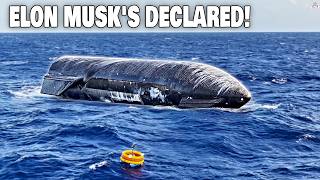
Starship executes a flip maneuver and lands softly in the Indian Ocean, marking the softest splashdown ever achieved. The vehicle remains intact and afloat.
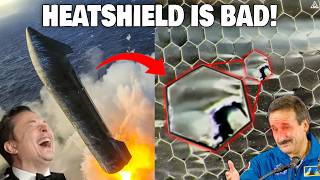
Close-up views show the heat shield is largely intact, with only a few missing tiles out of 18,000. Recovery teams move in with drones, and Starship continues to transmit data via Starlink.
Flight 13 demonstrates SpaceX's rapid progress toward fully reusable launch vehicles, with successful booster recovery, Starlink deployment, and a soft splashdown that paves the way for future orbital missions.
How many Raptor engines are on the Super Heavy booster?
33 engines.
01:17
What is the purpose of the hot staging maneuver?
To separate the ship from the booster by igniting the ship's engines while still attached, performing a directional flip.
01:30
What was a key objective on Flight 13 that was not achieved on the last flight?
The boost back burn.
03:14
How many engines are used for the booster's landing burn?
13 engines.
06:00
What is the downlink capacity of each Starlink V3 satellite?
1 terabit per second.
07:27
How much more capacity does a Starship launch of V3 satellites deliver compared to a Falcon 9 V2 launch?
20 times the capacity.
07:41
What data rate does Starship achieve via Starlink?
About 240 megabits per second.
08:50
How many heat shield tiles does Starship have?
18,000 tiles.
14:29
What was the outcome of the booster splashdown?
Soft splashdown offshore from Starbase.
06:39
What was the outcome of the Starship splashdown?
Soft splashdown in the Indian Ocean, with the vehicle intact and afloat.
12:16
Boost Back Burn Success
Achieving the boost back burn was a key objective missed on the previous flight, showing iterative progress.
03:14Starlink V3 Capacity
Each V3 satellite offers 1 Tbps downlink, and a single launch delivers 20x the capacity of Falcon 9 V2, highlighting the leap in capability.
07:27High Data Rate via Starlink
240 Mbps telemetry from Starship is unprecedented, enabling real-time monitoring and rapid iteration.
08:50Soft Splashdown Achieved
The softest splashdown ever for Starship, with the vehicle intact, is a major milestone toward reusability.
12:16Intact Heat Shield
Despite higher dynamic pressure, the heat shield remained largely intact, validating design changes.
14:29[00:03] hell of a flight for Starship. While it is floating in the water,
[00:34] Booster after chamber pressure's nominal.
[00:46] Raptor engines lit on the Super Heavy booster arcing away from us here at booster arcing away from us here at Starbase.
[01:01] aerodynamic pressure, which again, for this flight, is going to be higher than it has been on any of our previous Starship flights.
[01:17] >> aerodynamic pressure over a minute now into flight. into flight. Still seeing 33 out of 33 Raptor engines lit and burning. Our next major moment's going to be
[01:30] coming up in just a little over a minute from now, when we're going to get to hot staging. We're going to shut down all but five of those engines on the booster. It's our version of MECO, most engines cut off,
[01:45] and then we're going to ignite the six engines on the ship uh to while it is still attached to do that separation. As a reminder, we try to do a directional flip, so
[01:57] hopefully going to be sending that booster towards the bottom of the frame. For the booster itself, it's like doing a flip up, that'll go towards the bottom of your frame. We do that by lighting the engines in a slightly staggered
[02:11] the engines in a slightly staggered sequence.
[02:39] six ignite. >> startup.
[02:53] burn. It looks like we lit all 33 initially. Now we're down to 13. We're seeing six out of six Raptors lit on the ship.
[03:14] looks like we were able to get through the boost back burn this time around. That was one of the key objectives we didn't have on the last flight. >> And we've got six engines lit on the ship.
[03:31] two burns that the booster is going to be doing to kind of send it back towards Uh it's going to be landing a couple of miles offshore from Starbase, hopefully. way down to do a landing burn, >> Ship baby bird is nominal.
[03:45] >> those 13 center engines. They're going to ignite. That's what's going to really bleed off all that velocity that it's built up and it'll eventually hopefully transition to five engines to kind of fine-tune its path end and then all the
[03:59] way down to three for the remaining bit. to go until we get there. So, booster's going to coast for a little bit.
[04:11] Ship still seeing six out of six Raptor engines lit. 4 minutes into the flight, ship's got about 4 minutes left. Getting some killer views. Kate, Nate, how was the view from out
[04:23] from down there? >> Uh it was incredible. I mean, it just shot off the pad and seeing all the crowd now running back inside to take amazing. >> Yeah, one of these days I'm going to
[04:36] learn to not stare at the engines cuz now I have a bright blob in my vision. Uh now speaking of vision, we could see uh both stages there on your screen. Starship second stage is still firing its engines. You can follow along with
[04:51] that with the gooey down on the bottom right-hand side of your uh screen. Still following the planned flight path as well. Beautiful views of planet Earth as well. Beautiful views of planet Earth there behind the ship.
[05:08] a live shot off the booster right now and onboard camera. You can see the plume from Starbase where it just lifted off 5 minutes ago. off 5 minutes ago. >> trajectory.
[05:21] >> I kind of want to run back outside and wave. >> Right. Now again, this booster is not planning to come back to the tower or to launch site for this particular launch. We are
[05:33] going to be planning to do an ocean splashdown just off the coast of Starbase. So, hoping to still get some amazing views of that. >> Pretty awesome to see the Raptor engines there on the left-hand side of your
[05:45] screen. We can actually see the plume there uh of those center Raptors, those uh those are the sea level ones, uh as well as the vacuum Raptors are the three on the larger ones on the outer radius.
[06:00] >> Now, just like on tower catches, we are going to be doing a 13-engine landing burn to slow the booster down. Hopefully, we can get a live camera of the booster right now as we're going into that phase.
[06:12] Awesome shot. You can see it there. So, right now the booster is using their three hypersonic grid fins to guide itself through the atmosphere toward its landing site. You can see we're only 5 km above the sea right here.
[06:25] km above the sea right here. >> Landing burn startup. >> Just heard the callout for landing burn startup for the booster.
[06:39] wild here. >> Animation. Heavy. Congratulations to all the teams here at Starbase and at our SpaceX team.
[06:53] >> I'll give you some updates if we hear otherwise. You can see our first Starlink V3 getting deployed out of Starship.
[07:15] >> Yeah, the crowd is definitely hyped about this. You can see these Starlink about this. You can see these Starlink V3s continuing to pop out with uh deployment assisted by the PEZ dispenser. Now, this version of Starship
[07:27] is built to deploy up to 60 of these more advanced Starlink version 3 more advanced Starlink version 3 satellites. Each V3 is designed to offer 1 terabit per second of downlink capacity. Now, let's put that into
[07:41] Falcon 9 terms real quick. A Starship launch with V3 satellites will launch 20 times the capacity into the constellation as a single launch of V2 satellites on Falcon 9. Just incredible. >> And anybody that follows Starship, you
[07:58] know that the views that we're being treated to right now, the views we get during those reentries, that's made possible by Starlink. It's given us just this unprecedented look into Starship as it's flying
[08:11] through space, hurtling through the atmosphere. Um it's powering the dozens of cameras we have on board. It's giving us real-time data on every system that's telemetered on board that vehicle in real-time.
[08:25] We use the exact same constellation to power all of our cameras that we have Ocean. Um so, really powerful technology for
[08:37] just connecting you no matter where the heck you are on the planet, off the planet. Um so, thank you Starlink for letting me watch this stuff as we fly through space. It's pretty awesome. Uh we get
[08:50] about 240 megabits per second of data rate off Starship, which everybody in the spaceflight community knows that's pretty insane uh when you're usually dealing with single digits
[09:02] uh on some of the older systems. So, gives you a lot of insight, gives you a lot of ability to just rapidly iterate, know what the heck happened uh when things go wrong. But, looks like we're seeing some more
[09:14] satellites get out the door. Uh we do have cameras on some of them. Uh the last couple that are going to go out are going to try and do the heat shield imaging that we attempted last flight. We don't have that camera view
[09:29] flight. We don't have that camera view that we got on flight 12 where you Starship. Those aren't on the V3 satellites. Uh but, we are going to on the last couple that go out
[09:41] cameras that are going to be looking back at Starship, turn on some flashlights. And this is a test of a capability that we're really going to want uh when we start doing orbital flights to just add
[09:53] that extra layer of safety, that extra layer of reliability where we're going to be able to image Starship's heat shield after it's gone through ascent, after it's been in space, before reenters. So, we're going to try to test
[10:07] uh uh get some imagery of Starship's heat shield. Three more to go and 18. These ones might be coming out of There,
[10:22] These ones might be coming out of There, starting to see motion.
[10:43] Hawthorne, California location. >> Followed by atmospheric reentry, where the heat shield will be put to test and eventually our splashdown. >> We see a relight there on your screen. >> Wow.
[11:03] Relight shut down. The burn has ended. Congrats to the team on this milestone. I mean, it's it's crazy to see how we can maneuver in space and just another
[11:15] icing on the cake for today's mission. Right, so reentry, it's a critical phase of flight and we need information on how the ship's systems before. That black that blanket of plasma distorts communication frequencies, so
[11:29] have control of the vehicle. You can actually see one view. >> Three Raptors, the three in the middle to light up, do a flip.
[11:48] Did our flip down to two. Starship descending into the Indian Ocean. Down to one.
[12:16] That is the softest splashdown we have ever had with the Starship there in the Indian Ocean. >> It's bound to be an exciting day for our recovery team. I mean, that huge milestone to even get to soft
[12:28] splashdown, much less have the vehicle stay afloat. Yeah, I will >> The teams are super hyped here. That's a crowd here at Starbase Texas.
[12:42] Everyone's super excited. We never really get to see Starship floating so serenely in the Indian Ocean, so we're >> So, congratulations to everyone at the team at Starbase, for Starlink, everyone here and around the company who have
[12:57] contributed to the Starship program as we make progress again towards a multi-planetary future. So, thank you everyone for tuning in. >> That you rewind the clock. Wow, look at that view of the Starship heat shield
[13:10] tiles. You can really see how the atmospheric re-entry, um, the how it disperses the heat around the edge of the vehicle. I don't think we've seen quite that close before.
[13:23] >> We had tried in the past to do these splashdowns as softly as possible. We experimented with rolls, and now we have one intact. So, the recovery team is moving in with their drones, and that We are still getting views from
[13:37] Starship. It is sending these via Starlink from the other side of the Starlink from the other side of the world while it is floating in the water after flying through space. Like, this is just completely surreal right now. Uh
[13:50] this is just a mountain of data that we're going to get back. This is going to be so critical for refining the heat shield, everything else. And the really good news is all of these views that we're
[14:04] seeing, you're looking at a pretty intact-looking heat shield, which, as a reminder, we were flying at a significantly higher dynamic pressure, so putting way more stress on this vehicle on the way uphill. And it's
[14:17] sitting there in the water, and I mean, look at it. So, I'm I'm a little bit over the moon on this. I know a lot of our team is just
[14:29] fascinated in the control room behind me. I mean, everybody is psyched. computers looking at these close-ups that we're getting of these heat shield tiles. 18,000 of them. I mean, you can probably
[14:41] count the ones that are missing right now on one hand. Like, this is just absolutely incredible. And the fact that like the cameras on board the ship are still sending back video is just a little bit surreal. So,
[14:55] uh wow. Lucky number 13. Uh hell of a flight for Starship. Get it all the way there in the water. Uh really great day for for version three. So,
[15:09] So, Oof. As as Kate and Nate said, we're going to keep releasing more of this. Stay tuned. We've got some really the stuff from some of the onboards that we caught so
[15:22] some of the onboards that we caught so keep following us on X at SpaceX. Whole the flight that's going to be coming out soon. Uh look at Starship in the Indian Ocean. That's fantastic. Uh we'll see you all
[15:37] back here for the next flight test of Starship version 3. Starship version 3. With that, we'll say goodbye.

⚡ Saved you 0h 15m reading this? Transcribe any YouTube video for free — no signup needed.