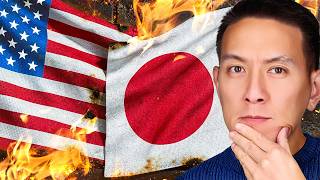

Japan's Debt Crisis Could Crash the US Dollar
45sThe opening hook directly ties a seemingly distant Japanese bond yield to the viewer's mortgage and 401k, creating immediate personal stakes.
▶ Play Clip"Delivers a solid, detailed analysis of Japan's debt crisis and its global implications, though the title slightly overstates the direct impact on the dollar."
This video explains how Japan's massive government debt, accumulated over decades of deflation and near-zero interest rates, is now creating a global financial risk. As Japan's bond yields rise, the unwinding of the yen carry trade could push US Treasury yields higher, impacting mortgages, stocks, and the dollar. The video outlines three potential scenarios for Japan's debt crisis and its implications for the global economy.
Japan's 30-year Treasury bond yield reached its highest level in two decades, and the 10-year yield also rose. This matters because Japan holds over $1.2 trillion in US Treasuries, so its bond market movements affect US markets.
Japan's debt-to-GDP ratio is between 220% and 260%, the highest of any developed nation. This means Japan owes more than double its annual economic output.
Japan's debt problem stems from a massive asset bubble in the 1990s, followed by deflation. Deflation led to a spiral where consumers delayed purchases, causing economic stagnation for 15 years.
To combat deflation, the Japanese government and Bank of Japan used quantitative easing and yield curve control, keeping interest rates near zero and buying the majority of government bonds.
The Bank of Japan owns 50% of all government bonds and 90% of the 10-year bond market, artificially keeping yields low and debt servicing costs near zero.
Inflation is starting to appear in Japan, with everyday items like onigiri costing about 10% more than a year ago. This forces the Bank of Japan to consider raising rates, which would increase debt servicing costs.
Japan faces a dilemma: raise rates to fight inflation but increase debt servicing costs (now $230 billion/year, 25% of budget), or keep rates low and risk a currency crisis.
Japanese institutions borrowed yen at near-zero rates to invest in higher-yielding US assets, earning a spread. With Japanese yields rising, this trade is becoming less profitable, leading to unwinding.
As the carry trade unwinds, investors sell US Treasuries, pushing US yields higher. This could increase mortgage rates and hurt US stock valuations.
Japan's aging population and declining birth rate (fewest births since 1899) reduce the workforce, tax revenue, and GDP growth, worsening the debt-to-GDP ratio.
Every major economy is in debt, competing for bond buyers. If Japan's institutions stop buying US Treasuries, it removes a major buyer, exacerbating the US debt problem.
Scenario 1: Soft landing with gradual rate hikes. Scenario 2: Carry trade unwinds rapidly, causing market turmoil. Scenario 3: Full fiscal crisis with hyperinflation.
Japan's debt crisis is a ticking time bomb that could impact global markets, especially the US dollar and Treasury yields. The most likely outcome is a slow grind, but the era of cheap borrowing is ending, and higher rates will affect mortgages and stock valuations worldwide.
What is Japan's debt-to-GDP ratio?
Between 220% and 260%, the highest of any developed nation.
00:29
Why did Japan keep interest rates near zero?
To combat deflation and manage the cost of servicing its massive debt.
01:39
What is yield curve control?
A policy where the central bank buys bonds to keep yields artificially low.
03:48
What percentage of the 10-year bond market does the Bank of Japan own?
90%.
04:01
What is the yen carry trade?
Borrowing yen at near-zero rates to invest in higher-yielding US assets.
06:30
How much does Japan hold in US Treasuries?
Between $1.1 and $1.2 trillion.
08:19
What is the impact of a 1% increase in mortgage rates on a $400,000 home?
Adds roughly $250 more per month and over $90,000 in extra interest over 30 years.
08:44
What is Japan's projected population by 2100?
Around 75 million, down from 128 million in 2010.
10:03
What are the three scenarios for Japan's debt crisis?
Soft landing, carry trade unwinding rapidly, and full fiscal crisis with hyperinflation.
11:34
Japan's Debt-to-GDP Ratio
Highlights the extreme level of Japan's debt compared to other developed nations.
00:29Bank of Japan Owns 90% of 10-Year Bonds
Shows the extent of central bank intervention in the bond market.
04:01Yen Carry Trade Mechanics
Explains a key mechanism linking Japanese and US markets.
06:16Impact on US Mortgages
Quantifies the direct effect on American households.
08:44Three Scenarios
Provides a framework for understanding potential outcomes.
11:34[00:01] mortgage, your 401k, and the US dollar because Japan's 30-year Treasury bond yield just hit its highest level in the past two decades and the 10-year bond That might sound like a story that doesn't matter too much to you at all at
[00:16] home, but when Japan holds over 1.2 trillion dollars worth of US Treasuries, it matters a lot because when their bond market moves, ours moves as well. To first understand how Japan became the most indebted country in the modern
[00:29] world this debt problem could cause a global chain reaction that hits your wallet. Japan's debt to GDP ratio is somewhere between 220 and 260% depending highest of any developed nation out
[00:43] around 125% and economists generally start to get higher. That's because if your debt to GDP ratio is over 100%, that means you owe more money in a single year than you can actually produce. Think of it this
[00:58] way, if you make $100,000 and you owe $90,000 in a single year, then your debt to your income is around 90%, so your debt to GDP ratio there in that case would be 90%. If you owe 125k while you make 100k per year, then your debt to
[01:12] GDP ratio is 125%, which is the same ratio as the United States. And in Japan, using their debt to GDP ratio, well, if you make $100,000, that means every single year you're owing between 220 and 260,000. That's a lot of debt
[01:27] that you have to service in terms of interest. Now, that's usually a huge problem, but for 30 years Japan managed this problem with no problems because their interest rates were close to zero. Now, having interest rates close to zero
[01:39] or even negative is highly unusual, but why did Japan do this? It's because of the deflation that was occurring in Japan from the 1990s to the early 2010s. had one of the biggest asset bubbles in history. Stocks doubled, real estate
[01:54] nearly tripled, and it's all due to the fact that it was fueled by cheap money grounds of the Imperial Palace were valued higher than the entirety of all was a really crazy bubble, but what happens when a crazy bubble like that
[02:08] pops? Well, in Japan, what happened was deflation occurred. Deflation's a inflation, so in an inflationary environment, you expect costs of goods to go up in the future, so therefore your purchasing power of your money has
[02:21] less value in the future. Deflation means that things will cost less money in the future. That's the opposite of an inflation problem. So, if things cost less in the future, then there's more of an advantage to me holding onto my money
[02:33] machines, if the prices of those are going to go down in the future, I might just hold off and not buy them in right now because I would just rather pay a little bit less, maybe in a week or two. But therein lies the problem. If people
[02:46] aren't buying things right now, then other businesses aren't able to sell things. If businesses can't sell their items because consumers are basically waiting for prices to go down, then the shop owner isn't being paid either. When
[02:58] that happens, it causes a huge deflationary spiral and this could last government steps in. Essentially, what happened was that this deflation lasted about 15 years and then the government had to step in and they had to start
[03:10] order to kind of stimulate the economy. And I'm slightly abridging this, but that's essentially how the debt to GDP ratio in Japan got to where the level it is at right now. So, Japan has two separate institutions and this is where
[03:23] opinion. So, first they have the government which borrows money by issuing bonds and then you have the Bank of Japan, which is the central bank. like how Congress will spend the money and the Federal Reserve will control the
[03:35] monetary policy. To keep the cost of their debt manageable, the Bank of Japan kept interest rates close to zero, but then they still didn't really solve had to do was they had to launch what's called quantitative easing. Not only did
[03:48] they print massive amounts of money, they kept their interest rates at zero also introduced something called yield curve control, which is where they Now, these stats are crazy. So, the Bank
[04:01] of Japan now owns 50% of all government bonds. For the 10-year bond in particular, they own 90% of the entire bond market. That means the Central Bank of Japan here is essentially the owner of the entire bond market. When you have
[04:13] your central bank buying the majority of bonds, that pushes bonds prices up artificially and then yields come down. So, even though Japan owes 8.6 trillion dollars, the cost to service that debt is virtually zero because the Central
[04:26] keeping their rates near zero. This all tends to work in a deflationary inflation arrives? So, I was talking to a friend at lunch yesterday who lives in Japan and he has actually started to notice inflation starting to occur in
[04:40] Japan. He said that when he goes to places like Lawson's, the things that he used to buy even just a year ago are slightly more expensive, about 10% more. So, for example, if an onigiri, which is a rice ball, used to cost him about 120
[04:53] yen, maybe these days it's closer to 135 or 140. Now, this doesn't seem like a because you've been experiencing inflation for quite a bit now, but in Japan's current interest rates sit at around 3%, which is not a really good
[05:10] really afford to keep rates at zero if something about it. In the United States, the Federal Reserve increased inflation and the Bank of Japan, they
[05:22] had this idea instead to reduce their purchases of bonds and by reducing their naturally go up. Now, the problem with higher interest rates is that the cost of servicing debt is now 230 billion dollars a year and that's 25% of Japan's
[05:36] overall budget. According to Reuters, while tax revenues are expected to keep rising, they will not be enough to pay for a steady increase in spending as a rapidly aging population and rising long-term interest rates push up social
[05:48] welfare and debt servicing costs. So, the trap they're facing is the following. Number one, you either raise rates to fight inflation, but then the debt servicing costs too much, or you just leave the rates artificially low,
[06:00] collapse in value and then you have a currency crisis instead. Now, if this wouldn't care that much, but it's not just a Japan problem and here's why. As actually become more attractive to Japanese institutional investors. For
[06:16] years, when interest rates were close to zeros, Japanese institutions like banks, funds, they would actually borrow money from the Bank of Japan for a virtually zero interest rate. And this created an opportunity for what's called the yen
[06:30] carry trade. Japanese institutions or other institutions would borrow money from the Bank of Japan for a near virtual zero interest rate. They would would take those US dollars and invest them in US Treasuries or things like US
[06:44] stocks. And the idea was pretty simple. If you could borrow money at 0%, but you can earn a yield of 5% in the US markets or in the US Treasuries, then why wouldn't you do that? And this arbitrage play works as long as the math remains
[06:57] seeing the Japanese 10-year bond yield sit at around 2.1 to 2.2% and the Japanese 30-year yield sits at around 3.33%. However, that reached almost 4% earlier last month. Because of this, the
[07:11] difference you make between borrowing in Japan and then buying US Treasuries or here's an example. Let's pretend a Japanese pension fund borrows 1 billion dollars worth of yen at 0.1% and then they buy US Treasuries that are yielding
[07:25] 4.5%. That's a 4.4% spread. That means they're essentially earning 44 million dollars a year in profit just by using this arbitrage play. But now you can't borrow at 0.1% anymore. You have to pay 2.1% for the 10-year and the 3.3% for
[07:40] the 30-year, as well as you have fees, currency conversion costs, and currency two shrank quite a bit and now the free money is essentially gone and so if you were an institutional investor in Japan, why would you take on this currency risk
[07:53] bonds? And this is what's happening now. This is called the unwind risk. That's when investors who borrowed yen to buy higher costs and so what do they do?
[08:05] and just invest in Japan instead. In order to reduce risk, you have these off their assets, they're converting their dollars back to yen, and then they're paying down their debts. This does create a huge amount of selling
[08:19] pressure downwards on US Treasuries. Japan is the largest foreign holder of US government debt, holding between 1.1 to 1.2 trillion dollars worth of US Treasuries. If they sell these Treasuries, that pushes US bond yields
[08:32] higher and in America, if you have higher Treasury yields, that means a lot that if you're trying to buy a new house, things are going to get more expensive, especially with your mortgage. So, even a 1% increase on
[08:44] mortgage rates on a $400,000 home, that adds roughly $250 more per month to your monthly payment. Over 30 years, it's over $90,000 in extra interest. Number two, when interest rates rise, that could actually hurt US stock valuations.
[08:58] way that investors value stocks, that actually changes quite a bit. A lot of companies in the US are valued based on a discounted cash flow model. They basically take future earnings and then they discount them to the present using
[09:11] rates go up, future earnings are actually worth less today in the discounted cash flow model. So, even though a stock or a company is doing see their stock prices drop. And also, when interest rates rise, that doesn't
[09:24] really help the US government either because the debt to GDP ratio in the US is still 125%. The cost of servicing American debt will go up if interest rates go up as well and that means less tax revenue for
[09:36] things like infrastructure, defense, or programs that actually help people. Now, everything I described so far today would be pretty bad on its own already, but Japan is facing two factors that make their situation even more dire.
[09:48] Factor number one is population collapse. Japan has an aging population. Japan, those between the ages of 15 to 64 make up about 59% of the total population. That's actually well below the global average and Japan's
[10:03] population is also declining. So in 2010 they had around 128 million people, but today that's less than 122 million. By the year 2100 projections actually have their population at around 75 million. And you can actually see it here. I know
[10:17] but when I'm going through Tokyo throughout the past week or so, I do notice a large elderly population. Last year Japan recorded fewer than 687,000 births and that's actually the fewest it's been since they started tracking it
[10:32] back in 1899. And so this aging population actually makes the debt worse because if you think about it, there are fewer workers, which means that there is less tax revenue coming in. Fewer workers means less GDP growth, which
[10:44] means that the debt to GDP ratio actually gets worse even if the debt remains flat. The second factor is that almost every country is in debt right now. So Japan is not the only country dealing with a debt problem. The US is
[10:57] at 125% as we talked about. The UK, France, and Italy, they're all running massive deficits right now. I would even say there's more government debt in the entire world right now than at any point in history. So if Japan were the only
[11:09] think that would be one thing. You think that the global market could probably absorb some of that. But every major economy is competing for bond buyers at the same time. The US needs buyers, Europe needs buyers, and Japan needs
[11:22] buyers, and there's only so many bond buyers to go around. If Japanese institutions continue to step away from buying bonds of the US government, then that is a huge buyer that is leaving the bond market in the United States. So
[11:34] you've got a debt crisis, an inflation problem, an aging population problem, debt issue. All right, so where does this all go? I think there are three it doesn't really go anywhere that quickly. Japan will slowly raise their
[11:49] rates, the markets will adjust gradually, and the world will adapt. This is known as a soft landing and I think this is the most probable outcome only because Japan has been managing this problem for the past 30 years. The
[12:01] Bank of Japan is smart and hopefully they move quite slowly. They're able to normalize their inflation rates and also service their debts and basically scenario that I could see happening is that the carry trade has negative
[12:13] consequences. So if Japanese yields spike faster than expected, like let's spike faster than expected, like let's say they go to 4 to 4.5 or even 5%, then happening where institutions are selling off their US Treasuries at a very rapid
[12:26] pace. When this happens, you're going to get selling, which will trigger more reaction that I talked about earlier in this video. We actually saw a small preview of this in April of 2025 when Japanese investors dumped over 20
[12:39] billion dollars in foreign bonds in a matter of weeks causing the stock market to dip. This could especially happen if there are some geopolitical shocks to escalate in Taiwan or today I was reading the news and I thought that
[12:51] there was an air strike over in Iran and Iran was retaliating as well. If there's a sudden move in the yen that forces investors to sell off assets quickly, The third scenario is a full fiscal crisis. This is when the debt becomes
[13:05] Japan has to start printing more money, and then you get some sort of hyperinflation scenario like you might see in countries like Venezuela. scenario that ends up happening is scenario one. That's the slow grind,
[13:18] slow soft landing. Either way, if it plays out fast or if it plays out slow, difference. They're going to feel it through higher rates, more expensive housing, and perhaps a dollar that doesn't go as far as it used to. The era
[13:32] of cheap American borrowing subsidized by foreign investors is coming to an end attention to. I'll be keeping an eye on the situation and keeping you guys videos like this. I am not in my usual desk setup. I am out in the wild in
[13:46] Japan and Japan's a great place. So if you ever come out here, make sure to check it out. All right, with that being said, I am going to get out of here and catch you in the next one. If you want to check out my next video, I'll leave
[13:59] it right here and all right, thank you for being here. Peace.




⚡ Saved you 0h 14m reading this? Transcribe any YouTube video for free — no signup needed.