
AI Summary
This video explains the fundamental workings of blockchain technology, covering its decentralized nature, the role of nodes and miners, and the consensus mechanisms that ensure security and reliability.
Chapters
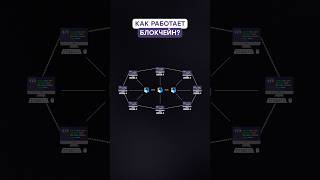
Blockchain is not located in one place and is not controlled by anyone; it exists in digital form on thousands of peer-to-peer network computers.
Each computer on the network stores a complete copy of the blockchain; these are called nodes. More nodes mean a more reliable system, as attacking a few nodes won't alter the data.
Miners process cryptocurrency transactions, verify correctness (digital signatures, sender balance), and form candidate blocks.
To add a block, miners solve a complex cryptographic problem (e.g., finding a hash with specific conditions). Once solved, the block is published and verified by other nodes.
Proof of Stake (PoS) avoids time-consuming calculations; validators stake coins and are randomly selected to create blocks, with higher stakes increasing chances, which can increase inequality.
Blockchain's decentralized structure and consensus mechanisms like Proof of Work and Proof of Stake ensure data integrity and security, though each method has trade-offs.
Study Flashcards (4)
What is a node in a blockchain network?
easy
Click to reveal answer
What is a node in a blockchain network?
A computer that stores a complete copy of the blockchain.
00:13
What is the role of miners in blockchain?
medium
Click to reveal answer
What is the role of miners in blockchain?
They process transactions, verify correctness, and form candidate blocks.
00:39
How does Proof of Work secure the blockchain?
medium
Click to reveal answer
How does Proof of Work secure the blockchain?
Miners solve a complex cryptographic problem to create a valid hash, and other nodes verify the block.
01:04
What is a potential drawback of Proof of Stake?
medium
Click to reveal answer
What is a potential drawback of Proof of Stake?
Validators with more staked coins have a higher chance of being chosen, increasing inequality.
01:44
💡 Key Takeaways
Decentralization and Security
Explains why blockchain is resistant to attacks compared to centralized systems.
00:13Proof of Work Mechanism
Describes the core consensus algorithm that ensures trust without a central authority.
01:04Proof of Stake Trade-offs
Highlights the inequality issue in PoS, a key consideration for blockchain design.
01:31Full Transcript
[00:01] located in any one place and is not controlled by anyone in particular. digital form and simultaneously on thousands of special peer-to-peer network. Every computer connected to this network
[00:13] stores a complete copy of the blockchain. Such computers are called nodes. The more blockchain exist, and therefore the more reliable the systems. This is an important difference from attackers gain access to a bank server, they can change
[00:26] falsify transactions. In the case of blockchain, even an attack on several nodes will not produce results. Thousands of other copies will retain the correct information. For more than 50% of the network nodes would need to confirm the same false version of the data, which is almost
[00:39] member of the blockchain network by installing a special user agreement; this is not necessary. Typically, those who join the network want to become miners, participants Miners are the ones who process cryptocurrency transactions and maintain
[00:52] sends a transaction, it goes into Pool, a repository of unconfirmed , checking the correctness of transactions, digital signatures, the sender's balance, and so on, and forming a candidate block from them. For this block to be
[01:04] valid hash, solve a complex cryptographic problem, that is, certain conditions, for example, starting with a specified number of hash, it publishes the block to the network. Other nodes check it. If the block
[01:17] add it to their copy of the blockchain. This is how the chain is formed. For reward and fees for the included transactions. This mechanism is called Today, there are also alternative methods of consensus. The most popular
[01:31] need to perform time-consuming calculations. Instead, they stake, freeze randomly selects one of the validators to create the next block. that the more coins a staked validator has, the higher their chance of being
[01:44] chosen, which increases inequality between participants. M.