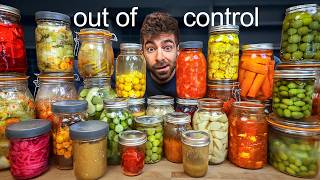

I Started Fermenting in a Brooklyn Apartment
45sRelatable origin story with a transformation hook, drawing viewers into the world of fermentation.
▶ Play Clip"Title 'My Descent Into Fermentation Madness' implies chaos, but the video is a calm, organized tour of a well-oiled fermentation system—the madness is charming, not chaotic."
The video is a tour of a home fermentation setup, showcasing various projects like soy sauce, kimchi, and miso. The creator shares lessons learned from years of practice, including common mistakes and the philosophy behind fermentation.
The creator started fermenting in a small apartment, using available spaces like under tables and closets. This evolved into a large, dedicated setup over a decade.
A four-day-old soy sauce brew is shown. The creator emphasizes the need to stir regularly to prevent unwanted microbial growth. The process involves koji mold, soybeans, wheat, and brine, fermenting for 6-12 months.
Past failures with soy sauce were due to using containers with too much air, leading to kahm yeast. The current project uses a jar with minimal headspace to avoid this issue.
The kitchen corner houses a batch of garden kimchi and a more traditional version using Korean pepper flakes. The garden kimchi is a favorite, and detailed recipes are in the cookbook.
A ginger bug serves as a natural starter for probiotic drinks. The creator makes an orange and tamarind flavored drink, which has a champagne-like fizz and is a refreshing alcohol substitute.
Various pickles are kept on set for visual appeal and practical use. Unusual items like nance fruit are being experimented with, turning them into vinegar or preserving them in sugar. Fermented mustard seeds are highlighted as an easy project.
The basement storage room keeps vegetables cool (around 60°F). It houses staple crops like onions, garlic, potatoes, and squash, aiming for self-sufficiency. There are also shelves of aging beer and sake.
After two years, a barley koji soybean miso is revealed. It has a layer of mold on top, which is scraped off to reveal a deep umami paste. The creator notes the flavor is saltier and more complex than store-bought versions.
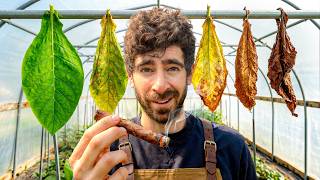
The seed starting room also houses a mushroom tent with oyster mushrooms and a humidor filled with aging tobacco leaves and rolled cigars. The tobacco is fermented to change its flavor.
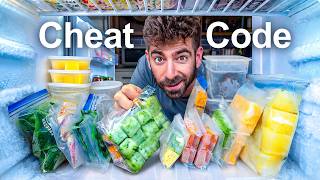
A vacuum sealer is used for freezing blanched vegetables, like zucchini and squash, which are less suitable for fermenting. Tomato sauce is also frozen in large quantities.
The fermentation fridge holds a variety of items, including pickled red onions, sauerkraut, and a two-year-old miso that has been refrigerated, resulting in a sweeter and milder flavor. This setup is inspired by Korean kimchi refrigerators.
The main reason for all these projects is the release of the cookbook 'Foolproof Fermentation' and a companion mini-course. The creator aims to make fermentation accessible and less intimidating for beginners.
What is essential during the first few days of soy sauce brewing?
Stir it daily to prevent unwanted yeast or bacteria buildup.
00:56
What are the basic steps to make soy sauce?
Cook soybeans, toast wheat, mix with koji spores, add saltwater brine, and ferment over time.
01:24
What mistake caused the creator to fail at soy sauce twice?
Using containers with too much air, leading to kahm yeast buildup.
01:38
What is a ginger bug?
A drink starter containing yeast and bacteria used to ferment other drinks.
03:12
Why are miso containers weighed down with water bags?
To prevent air pockets where mold can grow during fermentation.
09:28
What is the purpose of a kimchi refrigerator?
In Korea, families have dedicated kimchi refrigerators to store their kimchi.
12:43
Soy Sauce Brewing Process
Provides a clear, step-by-step explanation of a complex fermentation project.
01:24Common Failure Point
Highlights a specific pitfall (excess air) and potential solution, offering practical advice.
01:38Weighing Down Miso
Teaches a critical principle for preventing mold growth in miso fermentation.
09:28Fermentation as Relationship
Offers a philosophical perspective on fermentation, framing it as a collaboration with microbes.
14:06[00:01] fermentation and preserving my own food a little over a decade ago. And I started with just some simple projects in my Brooklyn apartment, which I was storing like under tables and [music] in closets, any room I had. And 10 years
[00:14] later, I feel like this is the year we cracked the code and really took it to a just turn the cameras around and give you a full tour of every bubbling croc and wild project we've got going on. Hopefully, you'll learn a few tips along
[00:28] the way. and I will certainly [music] let you in on all of the mistakes that I have made. We're going to start the tour with something very exciting. I just need to get a stirring stick because over here, look at this. Can anyone
[00:41] guess what this is? [laughter] A big vat of soy sauce or soy sauce that I just started brewing about 4 days ago. And it's amazing how active it is. Check this out. And in the first few days of soy sauce brewing, you just want to make
[00:56] sure you stir it because you don't want any unwanted yeast or bacteria buildup. a little taste, you know, something's already happening with cooji. You've seen many videos in the past on that. This uses the cooji
[01:11] mold, but in a different way than your traditional cooji rice for, say, miso making uses it. You actually first cook soybeans, and then you toast a bunch of wheat. You mix those things together, sprinkle on the cooji spores. Then you
[01:24] together. Then you make a saltwater brine and mix everything up. And then over time, the cooji fermentss those starches in the soybeans and the wheat, and it brings out those sugars and those amino acids for that rich umami sauce.
[01:38] And I've actually failed at soy sauce twice because I fermented in these huge problem was there was way too much air in those. So, I had this big layer of cam yeast build both times, and once it build, it kind of just took over and
[01:51] leaving very little oxygen and fermenting in a different style jar. But this right here is a one-year project potentially. I mean, anywhere from 6 And I'm filming a video, of course, so this is my longest term project right
[02:07] now. And then up here, I think the only other stuff going on, well, we've got this whole little kitchen fermentation corner. We just harvested a huge batch of Nappa cabbage. Really great harvest this season. And it's the time for
[02:20] kimchi. We make a lot of different styles of kimchi. We're always experimenting. This is a little bit more traditional with the goujaru Korean pepper flakes, which is why it's red. But I think in here, this is my
[02:32] favorite, which is just a garden kimchi using all garden ingredients. Both recipes are in detail in the cookbook. Let's actually check the uh the bubble >> you can see all these nice little air pockets that have formed. This has been
[02:45] look at this. I do want to just give it a taste. You're going to get a lot of taste testing on this tour. Perfect. I just realized this is like very similar to a garden tour just for fermentation. That's how deep we've gone. Few other
[02:58] things to note. This is just a dosa batter that's fermenting. I'm working on an Indian video right now. So lentils and mangal just about 2 days of fermentation. Over here we've got a gingerbug which is basically a drink
[03:12] starter. Like there's a ton of yeast and bacteria naturally built in here that we then use to ferment other drinks. So we add say some orange and tamarind in this case more lemon and ginger and you have these incredible refreshing probiotic
[03:27] rich drinks. Let's give it a taste. Let's try this orange and tamarind one. Oh yeah, the fizz. That's perfect. Let's give it a try. be a nice little drink I can take through the tour. That's nice. Very light, super
[03:42] refreshing. Pretty dry. Kind of has some champagney vibes. That's a great alcohol replacement. Although there might be a tiny hint of alcohol in there, but that is just like a refreshing cocktail. All right, so up here, this is not the main
[03:54] preservation area, but we do keep a flow of pickles up here because we see them Plus, they look nice on set. Different styles. classic garlic, some bread and butter. Always trying to switch up some of the flavors, the way we cut them to
[04:08] of daicron radish, so we've been making a lot of pickles out of those. Very interesting here. If you saw the short video on trying tropical fruits, >> this is the nance fruit. It was very strange. It was sweet and had some
[04:21] caramel tones, but then it had like funkiness to it, like a cheesy vibe. >> So, this was the one fruit we did not want to eat raw. So, we've just been trying different ways to preserve it and ferment. We're turning it into a vinegar
[04:35] here. And this is just like a slow sugar preservation. Also, mustard seeds, fermented mustard seeds. Probably the easiest thing you could ever ferment. brine and let it go. And then you grind
[04:48] mustard. Always have some of that on >> And then we have some vanilla extract just brewing away. I think I'm going to grind this up soon and try to make like a vanilla paste. If anyone has any tips
[05:01] on that, feel free to write in. Dried chamomile that we grew for tea and elderberry syrup. First good elderberry harvest in the garden. This stuff is gold. My whole family's been consuming this all season long with the goal of
[05:13] helping us during sixth season in school, which is just crazy. And so far, we've been, I think, better than the last year. Cross the fingers on that one. So, I'll take this. I think we're done with floor one. Going to head down
[05:26] to the basement where things get a lot crazier. Fermentation dungeon. You know before, but I grew tobacco this year again for homemade cigars, which I'll show you in a bit. And basically, I just ferment it in a towel. So, this is a
[05:41] fermentation process, it's ultimately going to totally change the flavor of these leaves. I'm pretty sure that most tobacco leaves are fermented. I know like traditional Cuban cigars, they ferment the tobacco leaves and I've had
[05:56] doing a lot of different experimentation with tobacco and I am doing a long video on that. So, more to come soon. All right, fermentation room. This is the main preservation room. It's nice and cool in the basement. So, all of our
[06:09] vegetable storage works really well in here. Plus, other preserved products just love a cooler temperature, closer to, I would say, 60° FHE right now. grow enough garlic. This is actually some seed garlic we're going to plant
[06:23] right now in November. One of the best times to plant it here on Long Island. Had a great onion harvest this season. Sweet onions, red and white potatoes, and squash. Now, what these are are staple storage crops. You can never have
[06:36] enough onions, garlic, potatoes, actually squash. Last year, I probably grew too much. Next year, we're trying to store a lot more carrots and beets. like your own little supermarket. You can just come down here, grab what you
[06:49] need, throw together a stoop or stir fry or a curry, whatever it is. So, as I get storing them, I'm trying to [music] get fully self-sufficient over the years. fully self-sufficient over the years. Now, down here, this is all beer that is
[07:02] bottled and [music] just kind of sitting here aging. Sake as well. It'd be fun to taste some of this sake. I haven't tasted it in so long. So, maybe you caught my sake video. I made a bunch of bottles. You can see the thicker
[07:14] sediment falls to the bottom there. And then if we shake it up, we just have cloudy sake, which is what I prefer. That's actually very active. That's pretty cool. See that? And technically, this should get better as it ages. And
[07:28] now. See if we get a little pop. Oh, yeah. Little pop. So now we'll have some carbonation in this, too, which is nice. Oo. Oh, it smells great. M Yeah, I think
[07:41] that is better. Sake is so good. Homemade sake. Got to be getting a process of any alcohol just kind of takes out the roughness. It smooths all of those edges and you have less bite to the alcohol. So, it just makes it a
[07:55] little bit more of an enjoyable drink to sip on. Now, over here, this is our actual canned section. It's jarred, but this is long-term storage. So, again, just more pickles. These are pretty cool. Cuc melons, actually. These right
[08:08] here, when pickled or fermented, they almost taste like a caper berry. So, they're so easy to grow. Again, different flavors, different cuts. Tomato sauce. I wish we had like six times the amount. Can never have enough
[08:21] tomato sauce for the winter, but good stash here. We've got some green tomato jam. This is very exciting. So, this is the first jam that I made for my garden. the first jam that I made for my garden. This is white peach. Now, it wasn't the
[08:34] to date. I had some squirrel damage, some bug damage. I had to harvest them a little bit early, so they weren't as ripe as I wanted them to, but you know, you add sweetness and it's still an incredible product. So, this to me, it's
[08:47] like a sign of what's to come in the future. I have so many fruit trees. Hopefully, I'll be making a lot of preserved fruit products moving forward. All of these long-term shelf products are covered in detail in the book, which
[08:59] is very exciting. Moving on to Oh, what do we have here? Just look at this freaking date. This is my favorite thing about Misa. Coming up on 2 years now, a 2-year barley cooji soybean miso. We're going to see what's in here. All right.
[09:15] So, what's going down in here might shock a lot of people. It is a little stinky [laughter] for good reason. You'll see why. So, I'm going to remove these water bags. These just help weigh down. You always weigh
[09:28] down miso so you don't get those air pockets for mold to grow as it ferments. And then I have this top. Wo. again. 2-year-old miso. Look at this. Okay, I have this top little plastic here. Oh my god. See if we can get in there. So,
[09:42] god. See if we can get in there. So, what you have over here is just mold. A layer of mold. Different color mold. This spot right here has no mold because that was the most recent area I excavated. And you can see the mold like
[09:54] heals off. It's kind of gross. Oh, that is disgusting. Disgusting to reveal basically gold underneath. Now, most misos don't do this. This is because I haven't checked in on this in a while. I >> have to say do not try this at home. But
[10:09] [music] Actually, incredible miso paste >> that has been aging for 2 years. This is a barley miso. So, I grew koji on barley see it's nice and golden and dark. So, what I'll do is I'll clear all that mold
[10:25] just to get it out of there. And then underneath you just have this umami bomb. Let's give it a taste. Again, this is for the more experienced fermenttors that are willing to do some crazier things.
[10:38] different [music] that tastes than a classic store-bought miso. Super salty, but the umami is so deep and so rich. And it has I think a lot of homemade miso has a cheesy element to it. Tastes [music] like a really good aed cheese,
[10:52] umami notes. Oh [music] my god. So, what I'll do is I'll I will clean everything keep letting it ferment because I [music] don't need that much miso and just see how long I can push it. I don't think I've ever tasted a three-year
[11:06] miso. So, that's coming soon. All right, so moving on to this room right here, which is the seed starting room. No seeds starting right now because that season is pretty much passed. We've got the mushroom tent here. Let's check out
[11:19] to have some mushrooms flowing. These are some oysters coming in very nicely. They'll be ready to harvest quite soon. And then down here we have some of the regular oysters. We just harvested a bunch. All of these spots had mushrooms
[11:33] growing. We'll harvest those as well. And this is the humidor where I keep all the aging tobacco. So you can see I just have leaves right here. These Oh wow. have leaves right here. These Oh wow. Oh, they smell so good. They're aging. I
[11:48] will turn these into cigars. And then actual cigars that I rolled. These have been aging for a year now. Just developing that flavor in the humidor. Very cool. All right. I think we only have one more thing to hit on this tour.
[12:01] Two more things, actually. We've got the freezer. We just got a much better vacuum sealer. So, we are vacuum sealing a lot of like blanched veggies, which is very exciting. Zucchini isn't going to ferment great cuz it's so soft. Having
[12:16] something like this in the middle of winter is amazing. and squash just ready to go for soups or stir fries. We also freeze a lot of tomato sauce as well. freeze a lot of tomato sauce as well. Ton of tomato sauce. And then finally,
[12:28] Ton of tomato sauce. And then finally, one more spot, the fermentation fridge. recent video of mine saying that in Korea, families have kimchi refrigerators just for their kimchi. And I thought that was funny cuz that's kind
[12:43] living in Korea, I wouldn't be crazy. This would be completely normal. Over here, we've got a ton of pickled red onions from the garden, pickled radish, fermented and pickled beets. These are garlic scapes, fermented chilies. These
[12:59] about, fermented. And then over here, we've got white and red sauerkraut. You can never have enough sauerkraut. This is a miso. Look at the color of this. The crazy thing is this is from 2 years ago, but it's been in the refrigerator,
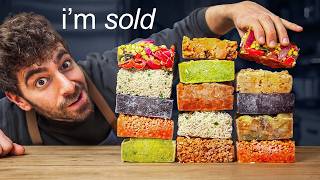
[13:12] sweeter, a little bit more mild. This is a big fermented garden kimchi. More traditional radish kimchi, green beans, a bunch of that daicon radish, some turmeric flavored cauliflower, that's why it's yellow, pickled carrots from
[13:27] the garden, and then these are mushroom blocks ready to go. Now, the main reason we're so dialed in over here with all of these crazy projects, is because over the last year, we have been writing a fermentation cookbook, and it is
[13:40] officially launching this week. It's called Foolproof Fermentation. It also comes along with a fermentation fundamentals miniourse which is very exciting. And the main goal of this book in these videos was to really take the
[13:53] intimidation out of fermentation because everything you've seen on this tour, I can tell you for a fact the first time I went into each of those projects, I was nervous. I was intimidated. I was scared because fermentation is not cooking.
[14:06] It's building a relationship with microbiology which is kind of like knowledge. And what I found is other fermentation cookbooks were a little bit overwhelming and there's so much contradictory information on the
[14:18] internet. So we really spent the last year just recipe testing and experimenting and trying to tune in on just the essential information that you need to really jumpstart you into the fermentation world because it's
[14:32] should have a general understanding of and should have some fermented foods in to understand the health benefits of consuming fermented foods, but a lot of know where to start. And then as a companion to the book, we took the four
[14:47] most requested fermentation projects from all of you and we put them into a fundamentals video miniourse where it's Carly and I fermenting a little bit more interested in this book and this miniourse, it's officially launched and
[14:59] it's actually on sale this week for Black Friday. If you get in early, you troubleshooting guide. So you'll have some time to go through the book. You any questions, you can actually submit them to us directly and we'll be
[15:12] answering them directly in a video in the course. So, click the link below if you're interested and hopefully hopefully my goal is that you will catch the fermentation bug just like I have. All of these crazy projects, I do this
[15:26] because not only is it good for my health and I get this amazing food all year round, it's so fun. It keeps me excited. It keeps me motivated. There's checking in on all of these different projects that I have fermenting or
[15:40] aging. This is more than a hobby for me. It's really a lifestyle. And once you cash that fermentation bug, I think it sticks with you for life.

⚡ Saved you 0h 15m reading this? Transcribe any YouTube video for free — no signup needed.