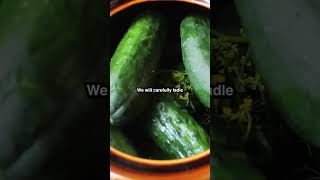

The Perfect Brine Ratio for Crispy Pickles
43sThe simple 1:1 ratio of salt to water is a practical tip that home cooks crave, making it highly shareable.
▶ Play Clip"The title is a perfect match for the content — a concise, practical guide that delivers exactly what it promises."
This video provides a straightforward, step-by-step guide to making homemade dill pickles through lacto-fermentation. The creator demonstrates the essential ingredients, the preparation of a basic brine, and the proper method for fermenting cucumbers to achieve a crisp, flavorful result.
The key ingredients for making dill pickles are pickling cucumbers, dill, and salt. The salt is a crucial component for the fermentation process.
The base brine is made with 1 tablespoon of kosher salt per cup of water. This ratio is fundamental for successful lacto-fermentation.
To enhance flavor, the brine includes traditional pickling spices: whole coriander seeds, black peppercorns, 3-4 bay leaves, and a couple of whole cloves.
The jar is packed by layering dill at the bottom, then cucumbers, followed by more dill on top. The prepared brine is then poured over the contents.
After filling the jar, it's important to shake and tap it to ensure the cucumbers are fully submerged in the brine. A small bowl is placed on top to keep them submerged and prevent air contact.
The jar should be kept in a location with a consistent temperature between 65 and 75 degrees Fahrenheit. The pickles should ferment for about one week.
After fermentation, the pickles should be transferred to the refrigerator. They can be enjoyed for months when stored properly.
Making homemade dill pickles is a simple process that involves preparing a salt brine, packing cucumbers with dill and spices, and allowing them to ferment for a week. The final product can be stored in the refrigerator for months, providing a delicious and rewarding result.
What is the basic brine ratio for making dill pickles?
1 tablespoon of kosher salt per cup of water.
00:14
What are the traditional spices added to the pickling brine?
Whole coriander seeds, black peppercorns, 3-4 bay leaves, and a couple of whole cloves.
00:26
What is the ideal temperature range for fermenting pickles?
Between 65 and 75 degrees Fahrenheit.
01:05
How long should the pickles ferment before being refrigerated?
About one week.
01:17
Why is it important to keep the cucumbers submerged during fermentation?
To prevent contact with air, which can lead to spoilage or unwanted mold growth.
01:05
Simple Brine Ratio
Provides a clear, easy-to-remember formula (1 tbsp salt per cup of water) that is the foundation of the recipe.
00:14Spice Blend for Flavor
Lists specific spices that add complexity and authenticity to the pickles, making the recipe more than just basic.
00:26Optimal Fermentation Temperature
Gives a precise temperature range (65-75°F) that is critical for successful lacto-fermentation, a key principle for beginners.
01:05[00:02] Итак, для начала нам понадобятся огурцы для засолки. Нам также понадобится укроп, а также ключевой ингредиент — соль. Для приготовления базового рассола нам понадобится 1 столовая ложка кошерной соли на стакан воды. Итак,
[00:14] воды, в которую также упомянутую выше кошерную соль. Также нам понадобится добавить традиционные специи для засолки, целые семена кориандра, черный перец горошком и три-четыре лавровых
[00:26] положу туда пару целых гвоздиков . Перемешайте это. В идеале, брожение следует проводить при температуре около 75°. И этот рассол был готов к использованию. И как только рассол загустеет, мы будем готовы начать процесс лактоферментации.
[00:38] . Начнем с того, что положим на дно немного укропа , затем огурцы, потом еще немного укропа, а аккуратно разольем и/или выльем рассол. И мы хотим заполнить его
[00:52] непременно стоит хорошенько потрясти этот горшок, как говорится, " встряхни" и " постукивай". В процессе брожения наших солений важно следить за тем, чтобы они оставались под небольшую мисочку и ставлю её прямо сверху вот так . А затем мы просто добавим
[01:05] должно предотвратить контакт огурцов с воздухом. Затем перенесем в место, где будет поддерживаться постоянная температура, скажем, от 65 до 75 градусов. Поставим туда емкость и дадим
[01:17] ей бродить около недели. Последний официальный шаг — переложить холодильник. И, конечно же, вам захочется полить их рассолом. А into the fridge, where we can enjoy these for months to come.




⚡ Saved you 0h 01m reading this? Transcribe any YouTube video for free — no signup needed.