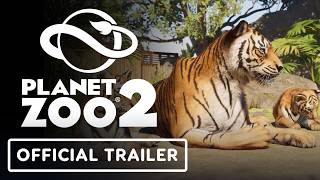

Rewilding a Sumatran Rainforest
44sConservation and rewilding are trending topics that evoke emotional engagement and curiosity.
▶ Play Clip"The title promises a deeper look at wildlife reserves, and the video delivers a decent overview, though it's essentially a gameplay tutorial with some fluff."
This video showcases the process of establishing and managing a wildlife reserve in the game Planet Zoo, focusing on the steps involved in creating ecosystems, releasing animals, and building research infrastructure. It highlights the importance of biodiversity and accreditation in the game's conservation efforts.
Key work in reserves includes animal reintroduction, land rewilding, and conservation research.
The first step is removing debris from the area to mark out the first ecosystem, starting with a forest swamp.
Before releasing animals, a research outpost must be established using pre-built blueprints or custom designs.
Animals native to the area, like Dilla the Sumatran tiger, are introduced first. To release an animal, create a release group by selecting the species and group type (e.g., solitary male).
Expand operations by placing observation platforms, camera traps, and acoustic monitors to track animals in the reserve.
Improving reserve biodiversity boosts your accreditation rating, unlocking new opportunities. Example: releasing Asian elephants into the reserve.
There are many areas worldwide needing attention, and the goal is to improve them all with player help.
The video demonstrates the core mechanics of building and managing a wildlife reserve in Planet Zoo, emphasizing the importance of ecosystem setup, animal release, and research infrastructure for conservation success.
What are the three key activities in wildlife reserves mentioned?
Animal reintroduction, land rewilding, and conservation research.
00:16
What is the first step in establishing a new ecosystem in a reserve?
Removing debris from the area.
00:30
What must be set up before releasing animals into a reserve?
A research outpost.
01:00
How do you release an animal into a reserve?
Create a release group by selecting the species and group type (e.g., solitary male).
01:28
What tools are used to monitor animals in the reserve?
Observation platforms, camera traps, and acoustic monitors.
02:17
What is the benefit of improving biodiversity in a reserve?
It boosts your accreditation rating, unlocking new opportunities.
02:36
Core Reserve Activities
Clearly defines the main conservation actions in the game.
00:16Release Group Mechanics
Explains a key gameplay mechanic for animal management.
01:28Accreditation System
Shows how biodiversity directly impacts progression.
02:36[00:01] Welcome back, zookeepers. Today, we're heading beyond the zoo gates and into the wild. We'll be taking a deeper look at wildlife reserves and the work Fenn does to help them thrive.
[00:16] Some of our most important work happens inside wildlife reserves. The reintroduction of animals, the rewilding of land, and research for conservation, which brings me to one of our latest projects.
[00:30] This Sumatran rainforest. There's been some recent devastation, but we're here to help. First things first, let's remove all the debris so that we can mark out the first ecosystem.
[00:45] Every wildlife reserve is made up of multiple ecosystems. We're starting with the forest swamp, which requires unique flora and terrain, just like all our other ecosystems.
[01:00] Now we've established the forest swamp, we'll need to set up our research outpost before we can release any animals. You can place down one of our pre-built blueprints or design your own. Now let's welcome some animals to the reserve.
[01:15] You might remember Dilla and some of her family and friends. Being native to Sumatra, we thought they'd be the perfect first arrivals. While they settle in, we'll need to start populating some of the other ecosystems here.
[01:28] So let me show you how. Next stop, our Indonesian zoo. Currently home to our male Sumatran tiger, Malik, and his cubs, Duma and Batara.
[01:40] As the cubs are starting to grow up, Malik will love the additional space the wildlife reserve can offer. To release him we need to create a release group Start by picking your species and the type of group you want to release We releasing a solitary male so we just need Malik to meet the group requirements
[02:01] Now we can send him to his new home. I love this part. Now, let's expand our base of operations by building out a research network.
[02:17] You can place observation platforms using our handy blueprints or feel free to construct your own. Finally, place a number of camera traps and acoustic monitors to keep a close eye and ear on the animals inside the reserve.
[02:36] Alongside the work in your zoos, improving the biodiversity of wildlife reserves helps to build your accreditation rating, which can unlock exciting new opportunities. Speaking of exciting, we've just released a group of Asian elephants into the reserve.
[02:54] Let's use the research vehicle to go find them. Oh look, here they are. They're so beautiful.
[03:09] Let's stop and take a photo. Every animal here will find their place. Predator, forager, and everything in between.
[03:24] There are plenty of areas across the globe that need our attention. And here at Fenn, we hope to change every single one for the better. And we can't wait to have your help.
[03:45] you




⚡ Saved you 0h 03m reading this? Transcribe any YouTube video for free — no signup needed.