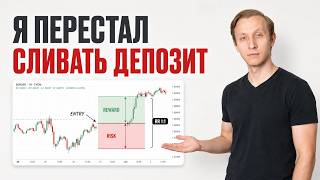

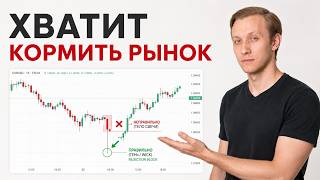
Why 1:1 Risk-Reward Is NOT for Newbies
44sChallenges the common assumption that 1:1 is a newbie mistake, offering a contrarian perspective that intrigues traders.
▶ Play Clip"Delivers on the promise with solid reasoning and practical advice, though some self-promotion and repetition pad the runtime."
The video argues that a 1:1 risk-to-reward ratio is the most effective strategy for beginner traders, contrary to popular belief. The creator shares personal experience of losing money with high ratios and explains the mathematical, psychological, and data-driven benefits of 1:1, including a step-by-step plan for implementation.
The creator lost money for a year chasing high risk-to-reward ratios (1:5, 1:10) shown by YouTubers, leading to unrealistic goals and stop-outs despite correct direction.
With 1:1, you only need a 51% win rate to be profitable. In contrast, 1:3 requires only 25% wins to break even, but typical win rates for 1:3 are 30-40%, which is psychologically challenging.
Winning triggers chemical changes in the brain (testosterone, dopamine) that boost confidence and motivation, creating a self-reinforcing cycle. Losing streaks do the opposite, making journaling difficult.
With a 50% win rate, there's a 50-55% chance of experiencing six or more losses in a row. With a 30% win rate, there's an 82% chance of nine consecutive losses, which most traders can't survive psychologically.
High risk-to-reward ratios lead to high variance (wild balance swings), while low ratios (like 1:1) provide stable growth. Consistency is key, and high variance can kill it.
1:1 allows more trades (15-20 per month vs 5-10), generating more data to analyze. This helps identify patterns, such as which sessions or pairs yield higher win rates, leading to faster improvement.
The creator uses 1:1 or 1:1.5, often closing half the position at 1:1 and moving stop to breakeven, letting the other half run for 1:2 or 1:3. This ensures profit and reduces risk.
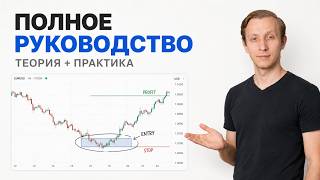
Steps: 1) Choose any strategy, 2) Take 50-100 trades with 1:1, 3) If win rate >50%, continue; if <50%, add confirmation or flip the strategy, 4) Journal every trade and analyze weekly, 5) Optimize by removing what doesn't work.
The 1:1 risk-to-reward ratio is a powerful foundation for beginner traders, offering mathematical profitability, psychological stability, and rapid data collection. By focusing on consistency and discipline, traders can build a profitable system and grow from there.
What win rate is needed to be profitable with a 1:1 risk-to-reward ratio?
51%
02:48
What is the typical win rate for a 1:3 risk-to-reward strategy?
30-40%
03:01
What is the 'winner effect'?
Winning triggers chemical changes in the brain (testosterone, dopamine) that boost confidence and motivation, creating a self-reinforcing cycle.
03:45
With a 50% win rate, what is the probability of experiencing six or more losses in a row?
50-55%
04:51
With a 30% win rate, what is the chance of nine consecutive losses?
82%
05:18
What is variance in trading?
The spread between the best and worst possible results of your trading system.
05:33
How many trades per month does the creator take with 1:1?
15-20 trades per month.
06:26
What is the first step in the implementation plan?
Choose any trading strategy.
08:41
What should you do if your win rate is below 50%?
Add a confirmation filter or flip the strategy (buy when it says sell and vice versa).
09:10
51% Win Rate is Enough
This simple math shows that 1:1 is profitable with a barely above-random win rate, making it accessible to beginners.
02:48Winner Effect Explained
Explains the biological basis for why winning builds confidence, which is crucial for trading psychology.
03:45Variance and Consistency
Highlights the trade-off between high reward and stability, emphasizing the importance of consistency in trading.
05:33More Trades, More Data
Shows how 1:1 accelerates learning by generating more data points, enabling faster strategy optimization.
06:26Flip the Strategy
A counterintuitive but logical tip: if your win rate is below 50%, inverting the signals can turn a losing strategy into a winning one.
09:10[00:02] and I stopped losing my deposit after a year of losses and thousands of dollars lost. Today we will talk about one to one risk profit. And yes, I know what you're thinking. One: One is 100% newbie. And normal traders take 1:1:5 or
[00:16] 1:children. I thought so too. That's why I was without money for so long. I am 24 years old. I have been living in Dubai for the last 4 years . And over the past few years I have made [music] I still use one-to-one risk-to-reward trades to this day
[00:31] . Today [music] I'm going to explain why this might be the best decision for you, especially if you're just starting out in trading. [music] By the way, I have a
[00:43] Telegram channel and a free trading community. There I share setups, conduct light trading, and personally help each participant. [music] I recommend joining, the link will be in the description.
[01:03] reward ratio a trap for most beginning traders? Second, we'll talk about math and why one-to- one actually works. Thirdly, psychology. Why [music] with one to one you will trade better? And
[01:15] fourth, how to collect data and improve your trading. And the one in practice. [music] I'm not here to sell you the dream of quick money. I'm here to tell you what really works and
[01:28] what will help you improve your trading. So, [music] part one. High risk profit trap. I'll tell you how it happened for me. When I started, I YouTube and saw traders showing trades [music] 1:5, 1 k:
[01:42] de. There were big wins, a beautiful life. I ran after this. I entered the trade and set a take profit. He was far, far away. And I waited, [music] waited and waited. And what happened? How do you think? The price was going in my direction. I'm already in the plus at the
[01:56] level of one:one, then two:one. I'm sitting here thinking, that's it, now it will be 1:5 and I'll earn some decent money. And what happened? The market turned around, rolled back to my entry, and then got knocked out of the stop. This was repeated month after month. I was
[02:10] right about the direction, I was right about the entry point there, but I was losing money because my goals [music] were unrealistic. And here's what's even worse. I didn't receive any data. I took maybe five trades a week, sometimes less
[02:22] because I would sit [music] and wait for the perfect high ratio setups. And it turns out that I wasn't learning, I wasn't improving, I was just stuck in one place. And now I think that if I had started one to one from the very first day, everything
[02:34] would have been different [music]: more deals, more information, and I would have quickly understood what works and what doesn’t, I would have become profitable much earlier. Part two - mathematics. Now let's count. With a ratio of one: Oh, you only need a 51%
[02:48] win rate to be in the black. [music] 51 wins and 49 losses. And you're already making money. Now let's compare it to 1:t. To break even with 1:t, you only need 25% wins. Sounds easy, right? Win one deal
[03:01] reality, for most experienced traders, 1:3 pinray is somewhere around 30-40%. And that will be enough profit. But here's what no one talks about. This is a psychological price. When you aim for one [music] to three, you
[03:16] constantly see trades coming your way and reversing. This one to two, you think a little more , but bam, and it stops. start to doubt everything. With one to one. You hit your take profits
[03:31] trades a lot more often, and your confidence grows. And confidence in trading is already half the success. Especially when you're just starting out and need some practice. Part three of psychology. Now I'll tell you something interesting.
[03:45] phenomenon called the winner effect. Scientists have noticed that more likely [music] to win the next one. And do you think this works with people too? When you win, there are
[03:59] real chemical changes happening in your brain. Testosterone increases, dopamine increases, confidence, concentration and motivation grow. That is, how your hormones. It sounds strange, but it's reality. And this is the most [music]
[04:12] amplifying cycle. Wins lead to more wins, and losing streaks do the opposite. It's becoming increasingly difficult to win. This is precisely why many people don’t keep a journal. If you say, "No discipline," or
[04:24] just your nervous [music] system working against you. Keeping a journal after a series of losses is almost impossible. I've how difficult it is. Motivation was zero, confidence was destroyed, and there was
[04:37] only one reason. I was aiming [music] at too high a risk to reward ratio. Part four, loss series. Let's now move on to some hard calculations. Get ready. With a 50% win rate, you [music] have about a 50-55% chance of going through six or more
[04:51] losses in a row. Do it for 50 [music]. Every second time you take 50 trades, there will be a series of six losses. [music] If you take one trade a day, that's a whole week of losses. And now let's answer yourself honestly. If you
[05:04] decide that [music] there's something wrong with the strategy . You'll want to change it, right? And most will say: "Yes." But this is simply the reality of any trading system. Such series will be ongoing. Now imagine that you have a 30% win rate.
[05:18] [music] This is a typical winrade for a one-to-three strategy. And at 30%, you have an 82% chance of going through nine [music] losses in a row. Nine losses survive this and continue trading according to plan? Honestly, I couldn't, especially at the
[05:33] start, and most people can't. By the way, there is such a concept as dispersion. It's the spread between the best and worst possible results [music] of your system. High risk to reward ratio means high variance. Your
[05:46] balance graph is jumping up, [music] down like crazy, and low ratio means you get stable growth and your [music's] goal is consistency, high variance will kill it. You choose
[05:59] how stable your results will be. And I wish I had understood this when I started. Part five. Let's talk about data. This is very important. what works for you, you have some strategy, you may have even
[06:12] tested it, but you don't really understand it . You don't know under what conditions it works best, in what sessions, on what currency pairs you need the data and you need it quickly. With one to one you take more deals. [music]
[06:26] More deals, more information. More information, you understand what's what faster . Let me tell you how it happened for me. When I went one-on-one, I started taking 15-20 [music] deals a month. instead of five, ten, that is, twice as
[06:39] after 2 months I had about [music] 30-40 transactions to analyze. And I strategy works better during the London session, it works better when there is high volume. On one pair I had a 65% win rate, on another only 45%. I had
[06:55] n't seen this before because I didn't have enough data. There were too few trades due to the pursuit of a high risk reward ratio. Well, how can you apply this now? First, analyze your trades every week [music] both
[07:08] wins and losses. Second, look for patterns where your win ray is higher, in which sessions, on which [music] pairs. Third, adapt, remove what doesn't work, focus on what does. We're not talking about guessing, we're talking about
[07:21] building a system based on real data. Let me now tell you how I personally trade, I’ll show you how I use one to one. Now I don't take every deal I see. I am quite selective. I'm waiting for
[07:33] my conditions to be met, for something to work based on my data. When I go into a trade, most of the time I'm looking at one: Oh, [music] sometimes one to one and a half. conservative approach in this regard. Now I have two options. First
[07:46] option: I close the entire position, take the profit, and move on. If you are not sure that the movement will continue. And the second option. I close half of the position, move the stop to breakeven and let the other half go further. For example, one to two or
[08:00] one to three. What does this give? I am guaranteed to make money. And if the second half closes in breakeven, I’m already in the black thanks to the first half. In this case, trading is practically risk-free. And this is possible
[08:12] only because one to one was and is. strong momentum, when there is confirmation by volume, when the market is clearly
[08:27] in a trend. And this approach gives me choice, flexibility and control. [music] Control, as we know, is everything in trading. Now let's talk about how you simple plan on how you can implement it. Step one. Choose
[08:41] any strategy. Whether it's support and resistance levels, supply and demand zones, IT, [music] Smart Money, it doesn't matter, just pick one. Step two. 50 and go ahead, [music], or better yet, 100. See what kind of HP you get. If it's
[08:56] See what kind of HP you get. If it's above 50%, congratulations, you're in profit. Just keep performing. If it's below 50, you have two options. Or confirmation, which will slightly improve your result. Or just flip
[09:10] the strategy. Buy when she says sell, and sell when she says buy. It sounds weird, yeah, and crazy, but if you have 40% win rate, flip that over and you have [music] 60. And step three. Write down everything, every transaction,
[09:24] every result. Analyze every week. Step four. Optimize. Remove what doesn't work. Do more of what works. That's all. This is the path to a profitable system. And it starts precisely with one to one.
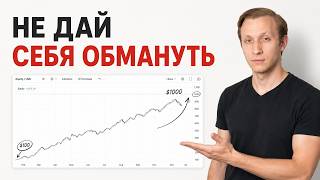
[09:43] YouTube and many other bloggers who are traders show 1:1 $50,000 in one trade. and so on , you have to understand, unsustainable and it is not how real capital is built. I'll try and make
[10:00] the results one to one. You only need a 51% win rate to make money. This is a transactions, more data. You learn faster, have fewer long losing streaks, maintain your sanity and motivation, and your confidence grows. The winner effect
[10:15] works for you. And the most important thing is the foundation. You can grow further from it. And here's what I want to point out. I'm not special. I'm a pretty ordinary guy. I am 24 years old now. I have been trading for 4 years. I made a lot of mistakes too. But one of the best
[10:28] decisions I made was to start one-on-one. It gave me data, it gave me clarity, it gave me confidence. And from this foundation I was able to grow to my current results. Now I also want to remind you that I have a Telegram channel
[10:41] where I write more about trading and a free trading community supported by partner brokers. There I share my setups, conduct live trading, publish educational content, and personally answer questions. And all
[10:55] this is free. Also, if you are interested in more details, you can find them was helpful to you, please subscribe to the channel, leave a comment, and let me know if you'll be trying it out. And remember,
[11:08] the market doesn't give a damn about your dreams. All that matters to him is your performance. Trade correctly, be disciplined, and the results will come. Well, that's all for now, results will come. Well, that's all for now, see you in the next video.
⚡ Saved you 0h 11m reading this? Transcribe any YouTube video for free — no signup needed.