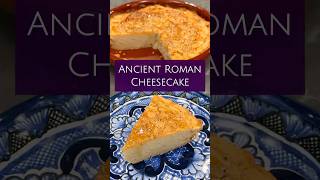

Ancient Roman Cheesecake Recipe
44sA unique historical recipe that viewers can try at home, appealing to foodies and history buffs alike.
▶ Play Clip"The title accurately reflects the content—a historical recipe demonstration—though it could have been more specific about the feast context."
This video explores the ancient Roman dessert Savillum, a cheesecake-like dish from Cato the Elder's 'De Agricultura'. The host demonstrates the recipe and provides historical context about Roman dining customs, from appetizers to the final course.
Savillum is made from soft cheese (ricotta), whole grain or barley flour, eggs, and honey, which is then baked. The recipe originates from Cato the Elder's 'De Agricultura'.
A grand Roman feast included appetizers and aperitifs, such as oysters, mushrooms, snails, and salsa mentum (salted fish). These were followed by spiced wine, vermouth with wormwood, and mulsum (wine mixed with honey).
Guests reclined on couches while small tables were brought in. The gustatio (appetizers) almost always included an egg dish, such as boiled eggs.
The first main course featured stews, porridges, and boiled dishes. Wealthier hosts might serve exotic items like stuffed dormice, flamingo tongue, parrot, peacock, boiled sow's womb, or cow's udder.
The final course included fruits like pomegranates, apples, figs, dates, apricots, nuts, and sweet pastries. Savillum is presented as a fitting dessert for both ancient and modern dinners.
Savillum is described as soft and sweet, with a distinct honey flavor. The full video and recipe are available on YouTube and tastinghistory.com.
Savillum is a simple yet historically rich dessert that connects modern cooks with ancient Roman culinary traditions. The video provides both a practical recipe and a glimpse into the elaborate structure of Roman feasts.
What is Savillum?
An ancient Roman cheesecake-like dessert made from soft cheese, flour, eggs, and honey.
00:01
Which ancient Roman author's work contains the recipe for Savillum?
Cato the Elder's 'De Agricultura'.
00:01
What ingredients are used to make Savillum?
Soft cheese (e.g., ricotta), whole grain or barley flour, eggs, and honey.
00:01
What was the 'gustatio' in a Roman feast?
The appetizer course, which almost always included an egg dish.
00:40
Name three exotic dishes that might be served at a wealthy Roman's main course.
Stuffed dormice, flamingo tongue, parrot, peacock, boiled sow's womb, or cow's udder.
01:05
What did the final course (secunda mensa) typically include?
Fruits like pomegranates, apples, figs, dates, apricots, nuts, and sweet pastries.
01:19
Ancient Recipe Source
Directly links a modern dessert to a primary historical text, offering authentic culinary history.
00:01Roman Feast Structure
Provides a clear, structured overview of a Roman feast, useful for understanding ancient dining culture.
00:13Exotic Roman Dishes
Highlights the extravagance of Roman cuisine, contrasting with modern dining norms.
01:05Savillum as a Modern Dessert
Shows how ancient recipes can be adapted for contemporary cooking, bridging past and present.
01:33[00:01] называемый савиллум. Рецепт взят из труда Катона Старшего «О сельском хозяйстве» (De Agricultura) . Он готовится из мягкого сыра (я использовала рикотту), затем из цельнозерновой или ячменной муки, яйца, а затем из меда, который запекается, а затем
[00:13] . И это именно тот десерт, трапезы в Древнем Риме. Во времена Римской империи грандиозный пир который включал в себя закуски и аперитивы. И обычно их
[00:27] разговаривали. В этот курс могут входить такие вещи, как устрицы, грибы, улитки, а также сальсаментум или рыба, засоленная в рассоле. Затем подавали бы пряное вино, вермут с настоем полыни и мульсум — напиток, приготовленный из
[00:40] смеси виноградного сусла или вина и меда. После этого все садились, или, скорее, откидывались на диванах, пока на небольших столиках подавали остальную еду лучший способ, особенно если вы, как и я, страдаете от изжоги, но, как говорится,
[00:52] расселись, подавали густационо, или закуски. И это почти всегда включало в себя блюдо из яиц. Иногда это что-то такое простое, как вареные киша. Затем последовал первый
[01:05] действительно было первое блюдо. Здесь есть рагу, каши, вареное и А если позволял бюджет, можно было подавать такие блюда, как фаршированная соня, язык фламинго, попугай, павлин, вареная свиная матка или коровье вымя,
[01:19] фирменные блюда древнеримской кухни. Наконец, за . И это будет наряду с такими продуктами, как гранаты и яблоки, инжир, финики, абрикосы, орехи и другие сладкие пирожные. Будь то
[01:33] древнеримский пир или современный званый ужин, этот савилум — прекрасный способ и мягкий, и вы действительно почувствуете сладость и аромат меда. full video on savillum is up on YouTube, and the recipe is at tastinghistory.com.

⚡ Saved you 0h 01m reading this? Transcribe any YouTube video for free — no signup needed.