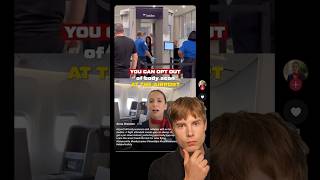

TSA Scanners: Radiation Risk or Not?
45sThe clip opens with a provocative claim about radiation from TSA scanners, sparking curiosity and debate about airport safety.
▶ Play Clip"The title promises a decision on opting out of TSA scans, and the video delivers a clear, evidence-based answer, though it includes a promotional plug for a health test."
The video addresses concerns about radiation exposure from airport body scanners and flights, clarifying that modern scanners use non-ionizing millimeter waves, which are safer than older X-ray scanners. It explains that the actual radiation risk from flying is minimal compared to everyday background radiation, and offers practical tips for mitigating other flight-related health issues.
A flight attendant with 5 years of experience refuses full-body scans due to radiation concerns, citing a lack of long-term studies on repeated exposure.
Old X-ray body scanners have been largely replaced by millimeter-wave scanners, which use non-ionizing radio waves similar to those from cell phones, posing less risk than X-rays.
The atmosphere provides little protection from solar radiation, so radiation exposure increases with altitude during flights.
A single intercontinental flight exposes you to about 1-3% of the annual background radiation you receive on the ground, making it a negligible risk for average travelers.
For the average person flying a few times a year, neither the body scanner nor the flight poses a health risk.
More concern should be given to sleep disruption, jet lag, prolonged sitting, and dehydration rather than scanner radiation.
Recommendations include taking antioxidants (N-acetylcysteine, glycine, melatonin, vitamin C), staying hydrated with electrolytes, using blue-light blocking glasses and sleep masks, and doing exercises like Sulius push-ups to improve circulation.
The video promotes a 3-minute health test that evaluates physical fitness and lifestyle, providing a health percentage score and areas for improvement.
The video concludes that airport body scanners and flight radiation are not significant health risks for average travelers, and suggests focusing on other flight-related health factors. It encourages viewers to take a health assessment for a broader understanding of their well-being.
Modern scanners are safe
Clarifies a common misconception about airport scanner radiation, providing factual reassurance.
00:15Flight radiation is minimal
Quantifies the actual radiation exposure from flying, helping viewers understand the real risk.
00:43Focus on other health issues
Redirects attention to more significant health concerns during flights, offering practical advice.
01:24[00:01] бортпроводницей уже 5 лет, и каждый раз, когда я лечу, я отказываюсь от полного радиацию, и нет ни одного долгосрочного исследования о том, какое воздействие оказывает многократное облучение Следует ли отказаться от прохождения досмотра в аэропорту и попросить сделать ПЭТ-сканирование, чтобы избежать
[00:15] облучения? Скорее всего, нет. Старые рентгеновские сканеры для досмотра тела в значительной степени были заменены. Современные сканеры используют миллиметровые волны, которые представляют собой неионизирующее радиоволны, используемые нашими телефонами, чем на
[00:28] рентгеновские лучи. Как ни парадоксально, но именно землей атмосфера практически не защищает солнечного излучения. Таким образом, чем выше вы находитесь в воздухе, тем сильнее возрастает ваше облучение.
[00:43] во время полета на самолете, намного выше, чем тот, которому вас подвергает количество радиации, получаемой от самолета, очень мало. Один межконтинентальный перелет может подвергнуть вас воздействию примерно 1–3% от того количества радиации, которое вы
[00:57] года. Да, если вы в повседневной жизни ходите по земле на улице, вы также подвергаетесь воздействию радиации. Просто межконтинентальных перелетов в год, что довольно редко, вы не превысите
[01:10] подвергаетесь в обычной жизни. Таким образом, для среднестатистического в год, ни сканер тела, ни сам полет не подвергают его способному нанести вред здоровью. Если вы
[01:24] нарушении сна, смене часовых поясов, длительном сидении и обезвоживании, чем о сканере минимуму вред от полетов, вот несколько вещей, которые вы можете сделать. Во время полета запаситесь антиоксидантами. N-ацетилцистеин, глицин, мелатонин, витамин С. Пейте
[01:38] больше жидкости и воды, желательно с электролитами и минералами. Для минимизации нарушений циркадного ритма используйте очки, блокирующие синий свет, и маску для сна. для улучшения кровообращения и лимфотока, а также выполнять отжимания по методу Сулиуса, сидя
[01:52] кровообращения. Это лишь очень небольшие фрагменты более масштабной картины. Если вы хотите узнать, как на самом деле обстоят дела с вашим здоровьем , пройдите мой 3-минутный тест на определение процента здоровья физическую форму и образ жизни, выдает процентный показатель здоровья и показывает, на чем
[02:06] you should focus on improving first. Click the link below to start now.

⚡ Saved you 0h 02m reading this? Transcribe any YouTube video for free — no signup needed.