
SpaceX's New Starship V3: First Look
45sReveals the complete redesign of the most powerful rocket ever, sparking curiosity and excitement.
▶ Play Clip"The title promises a launch, but the video is a webcast that ends in a scrub; still, it delivers detailed technical content."
SpaceX's Starship Flight 12 (V3) launch webcast covers the first flight of the fully redesigned Starship version 3, featuring Raptor 3 engines, a new launch pad (Pad 2), and numerous upgrades. The webcast details the vehicle's specifications, mission objectives, and the countdown, which ultimately ends in a hold and scrub. It also includes segments on Starlink satellite deployment, space safety, lunar exploration plans, and a call with a future Mars flyby passenger.
Live from Starbase, Texas, 43 minutes before the first flight of Starship version 3. Hosts Kate and Jake Berkowitz (lead propulsion engineer) introduce the webcast.
Starship V3 has undergone significant upgrades, including a new booster, ship, engines, launch pad, avionics, and software, based on lessons from previous 11 flights.
Super Heavy booster has 33 Raptor V3 engines generating 18 million pounds of thrust, making Starship the most powerful rocket ever, with over twice the thrust of Saturn V.
Starship will launch Starlink V3 satellites to increase capacity, and V2 mobile satellites for direct 5G connectivity to phones.
Starship V3 is 407 feet tall, with a fully integrated hot stage adapter, three larger grid fins, redesigned fuel transfer tube, and new Raptor 3 engines without heat shields.
Raptor 3 engines are manufactured in Hawthorne, tested in McGregor, with redesigned ignition, increased thrust (250 tons sea level, 275 tons vacuum), and simplified design for mass production.
Pad 2 is a new launch pad optimized for rapid reusability, with upgraded propellant farm, shorter electromechanical chopsticks, and a bidirectional flame diverter.
Flight 12 carries 20 Starlink simulators and two modified V2 satellites (Dodger Dogs) to test V3 components.
Starlink team is exploring laser-based connectivity around the Moon, potentially providing gigabit connectivity on the lunar surface.
SpaceX emphasizes space safety, tracking 50% of objects below 600 km, and encourages transparency among operators to prevent collisions.
Flight profile includes liftoff, hot stage separation, booster landing burn, ship deploying satellites, and soft splashdown in the Indian Ocean.
Propellant loading started at T-36 minutes, 20% faster than Pad 1. Flight director Ty Huntington is in charge.
Recovery team clears the range and collects imagery of re-entry and splashdown.
SpaceX is building a second tower at LC-39A and a new pad at SLC-37, plus the Gigabay facility for Starship prep.
Bill Riley discusses Artemis program, propellant transfer, and future moon base plans.
Chun Wang will fly on Starship for a lunar flyby and Mars flyby mission.
SpaceX is hiring engineers and technicians at various sites, including Starbase, McGregor, Bastrop, and Redmond.
Countdown reached T-40 seconds, but a hold was called due to an issue with the quick disconnect arm on the tower.
After multiple holds, the launch was scrubbed due to the unresolved issue.
The webcast showcases SpaceX's ambitious plans for Starship V3, but the launch was scrubbed due to a technical issue, highlighting the challenges of testing new hardware.
How many Raptor engines are on the Super Heavy booster?
33
01:30
What is the thrust of the Super Heavy booster?
18 million pounds
01:30
What is the height of Starship V3?
407 feet
05:28
What is the payload capacity of Starship V3 to Earth orbit?
Up to 100 metric tons
07:27
What are the thrust levels of Raptor 3 sea-level and vacuum engines?
250 tons force for sea-level, 275 tons for vacuum
08:48
What is the name of the new launch pad?
Pad 2
11:46
What is the purpose of the 'Dodger Dog' satellites?
Tech demo between V2 and V3 Starlink satellites
14:00
What percentage of objects below 600 km does Stargaze track?
About 50%
18:12
What is the primary objective of the recovery team?
Clear the range and collect imagery
24:29
What caused the launch scrub?
An issue with the quick disconnect arm on the tower
53:29
Most powerful rocket ever
Starship V3 generates 18 million pounds of thrust, doubling Saturn V's power, a key fact for space enthusiasts.
01:30Full redesign of Starship
Every system was redesigned, showing SpaceX's iterative approach to engineering.
05:13Raptor 3 simplified design
Removal of heat shields and integration of components reduces weight and cost, enabling mass production.
08:35Space safety transparency
SpaceX advocates for sharing satellite positions to prevent collisions, a crucial principle for orbital sustainability.
16:25First interplanetary mission passenger
Chun Wang will fly on Starship for a Mars flyby, marking a milestone in commercial space travel.
31:04[00:03] Hello Star people and welcome to Starbase Texas. It's currently 5:46 p.m. Central Time and we are just over 43 minutes away from the first flight of SpaceX's next generation vehicle, Starship version 3.
[00:17] Systems Engineering. >> And I'm Jake Berkowitz, a lead propulsion engineer. And today we're coming to you live from just outside the production floor at Starfactory, where the team's preparing for Starship's 12th
[00:31] >> Yeah, it's been a few months since our last update and in that time the team has been working hard to completely redesign the entire rocket that you see there from the ground up. >> Yeah, that's right, Kate. Starship
[00:44] version 3 has undergone significant upgrades, taking everything we've learned from the previous 11 flights to make a vehicle capable of full and rapid >> This includes everything from a new booster, new ship, new engines to a new
[00:59] launch pad, new avionics, new software, and so much more. All of that hardware is just down the road at pad 2, a little over a mile and a half away from Jake and myself. And in over in our viewing area outside of outside on the lawn,
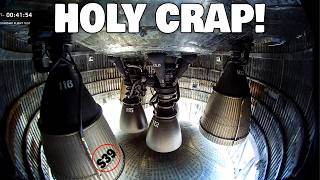
[01:15] Starbase employees are excited and already starting to gather to watch >> Yeah, and right behind us are three generations of Raptor engines, and today will be the first flight of the newest generation, Raptor V3.
[01:30] And the 33 Raptors on Super Heavy booster combine to generate 18 million >> That's a lot. >> It's a lot. And it makes Starship by far the most powerful rocket of all time. And for
[01:44] comparison, we have over twice the thrust of the Saturn V rocket that here, of course, you can see on ship we have another six engines, and three of them feature the larger vacuum optimized nozzles called RVacs.
[01:58] As a of the Raptor team, I can tell you that we're all incredibly excited to put capabilities of our most advanced engine. And we'll get into all the moments. >> Yeah, that excitement is well warranted,
[02:11] Jake. Raptor and Starship V3 are designed to be foundational for the future of the program. They're designed to enable us to send payloads and eventually people all the way to the moon and Mars. Ultimately helping us
[02:25] make life multi-planetary and extending the light of consciousness to the stars. planning to put Starship to work shortly by launching bigger and more powerful
[02:37] Starlink version 3 satellites. These new satellites aim to substantially increase capacity in orbit, strengthen the network, and deliver an improved experience for customers on Earth. Starship will also carry our upcoming V2
[02:52] Starlink mobile satellites, which are expected to provide direct 5G connectivity from space straight to mobile phones worldwide. >> Now, as a reminder for all of you watching at home, what we're doing today
[03:05] is a test. Like we mentioned earlier, we've redesigned the majority of this rocket and its systems. From the outside, for those of you that have tuned in before, it might look pretty familiar, but beneath the surface, it's
[03:17] all new. And the primary objective today is to put it all together in a real live got to launch. >> Yeah, and really it's the data we're flight that's going to bring us closer to making Starship operational and
[03:34] future in space. So, no matter the outcome of today's test flight, excitement is guaranteed. >> Most definitely. And speaking of exciting place. He's stationed just outside of the launch control center a
[03:50] up there, Dan? >> Kate, it it couldn't be going better. We have a blue sky outside. I'm beyond sight. Hello everybody. I'm Dan Huot far too long. Welcome back for another Starship launch. Things are looking
[04:05] good. We are counting down. We moved into our window a little bit, but we are Behind me, you see the flight control team. They're on console looking at the rocket, the pad, the range, the weather, everything as we count down to lift off.
[04:19] load in just a couple of minutes and we are counting down to a lift off at 6:30 are counting down to a lift off at 6:30 p.m. Central Time. The weather is great. We haven't had a blue sky all day. There you can see almost nothing but that. We
[04:33] winds a little bit earlier. That's why we moved into our launch window, but the great news is we are looking go for launch. Also, we're monitoring the range. So, air and sea space out in the Gulf and also in the Indian Ocean on the
[04:46] other side of the world, not tracking any issues there. Now, today's countdown functionally going to look pretty similar to most people. timing for some of those major milestones like when we start loading
[04:58] and the water is flowing, when the engines start up, but otherwise, other than that, all of the hardware brand new. New booster, new ship, new engines, new pad. Let's nerd out. Let's let's dive right into it. So,
[05:13] there it is in the pad. Say hello to Starship version 3. As Kate noted, some of the outside might look familiar, but we've made extensive upgrades across every single system. Start with the big picture because Starship still very very
[05:28] big. Just over 407 ft tall fully stacked, little bit taller than version 2. With that extra stretch, we can carry even more propellant. Uh but big rocket. booster and there are some pretty visible
[05:43] structural changes on the outside. We'll jump in. You've got version three on the left there, version two on the right. At the very top, we've changed from a one-time use hot stage adapter that used to pop off to one that's fully
[05:56] integrated for reusability. And Starship's Raptors are actually going to be igniting directly on top of the booster's fuel tank. The fuel tank pressure itself and then a non-structural layer of steel, it's
[06:08] what's protecting the top of that booster when we do hot stage separation. Moving down a little bit, we went from four grid fins to three. We made them 50% bigger and higher strength. Just a reminder, that's what booster's using to
[06:20] kind of steer itself as it's flying back to for a catch. We're also now going to use those grid fins for lift and catch itself. We zoom in a little bit and you can see new catch points now on those grid fin structures.
[06:36] Moving inside the rocket, we redesigned the fuel transfer tube. This is the really big tube inside the rocket that's moving all of that liquid methane down to the Super Heavy's 33 Raptor engines. It's going to help us flip faster and we
[06:49] can now start up all the engines simultaneously. This thing is big. It's about the size of a Falcon 9 first stage, which gives us the fun realization that we kind of put a rocket inside of our rocket. The very bottom of
[07:03] the booster looks very different. You've got those new Raptor 3 engines that enabled us to delete the bulky heat shields, the engine shrouds that we had in the previous generation. And then all of the propulsion avionics hardware for
[07:15] those are super tightly integrated now and protected by much slimmer shielding. Move on up, second stage. This version of Starship is designed to carry massive
[07:27] orbital payloads. We're talking up to 100 metric tons to Earth orbit, the moon, and Mars. The biggest changes are pretty much all under the hood. We gave the propulsion system a clean sheet redesign, increased the propellant tank
[07:40] volume, and improved our reaction control system our steering while we're on orbit. When we x-ray inside the PEZ dispenser is now supercharged, little bit of turbo, and that's going to allow us to increase the deploy speed for each
[07:53] actually flying the heaviest payload we've ever carried on Starship, but eventually we're going to launch with up to 60 of those Starlink V3 satellites. Just below that, just below the payload bay near and also down in the after part
[08:06] ports that's going to enable us to link up in orbit between two Starships, do propellant transfer. We also modified that main propellants into the vehicle for those future prop transfer missions. So, a lot
[08:20] of upgrades tip to tail on the rocket, but powering everything the Raptor 3.
[08:35] These engines are manufactured in Hawthorne, California, tested at our site up in McGregor. We redesigned their entire ignition system. We bumped up the thrust, so putting out more force, went from 230 to 250 tons force on those sea
[08:48] level engines, 258 all the way up to 275 on the vacuum optimized ones. When you look at all the generations of Raptor lined up, all of those fiddly bits, the everything that you were used to seeing around Raptor 1 and 2, a lot of those
[09:03] have either been deleted, best part is no port, or they're internally engine itself. That'll let us dramatically cut down on the weight of manufacture cuz we are going to be mass producing these things. Now, we make
[09:18] these Raptors in Hawthorne. We got There's our Hawthorne manufacturing their engines fly in space for the very first time. Huge shout out to you guys. getting us some vehicles on the pad today, but
[09:33] best engineering team works here at SpaceX get this rocket to that pad ready to launch. And we've been trying to follow more of it and document some of it. And if you haven't seen it, check out our new docu-series Starship.
[09:54] the pad from scratch. So, it's all kinds of new systems. bring together the pad and vehicle pieces to [music] make sure that they pieces to [music] make sure that they all work.
[10:09] pack load up state. >> We are on 60 seconds on ship because you shake out and just general vehicle performance. that you're in a reasonable position to go fly.
[10:46] give humans access to the solar system and beyond, which is really the goal for >> Plus 20. >> The impact that this rocket is going to have on the world, I don't think most people can really comprehend the changes
[11:00] >> Plus 30, sir. >> This is such a wild ride. The highs are work to get [music] to ultimately launching people, which is going to be >> Plus 40. >> It is not impossible just because it's
[11:14] far beyond what has been done before. We've proved that time and time again.
[11:33] world's best engineering team, and I love this docu-series because it's curtains. >> Yeah, it's The full thing is 25 minutes or five times already. That's how good it is.
[11:46] >> But yeah, so just as the team has been working hard on a brand new rocket, we've also redesigned the ground systems. The brand new Pad 2, they can see on your screen here, is making its big debut today.
[11:59] >> We took everything we learned from operating on Pad 1 to create this totally new launch pad. Pad 2 is optimized for full and rapid reusability. We've upgraded our propellant farm with much more storage
[12:11] and more pumps to enable super fast filling for launch and relaunch. On the tower, we changed to shorter chopsticks, which enable even faster motion to catch. >> Yeah, we also changed the actuators
[12:27] driving those chopsticks from hydraulics to 100% electromechanical, increasing their speed, redundancy, and reliability. completely redesigned, and if I had to describe it in one word, I'd say it's
[12:43] robust. With the extensive concrete and steel cladding, it almost feels like you're looking at a battleship, not a launch pad. But it's also smarter. We've different compartments and repositioned the booster quick disconnects to be out
[12:56] of the vehicle's plume during lift-off. >> Yeah, and perhaps the most obvious change, we've now got a bidirectional flame diverter. We said goodbye to the flame diverter. We said goodbye to the pancake, and a new top deck flame
[13:08] deflector to eliminate metal wearing down, which will help us get to zero refurbishment between launches. In fact, that new flame trench and the new chopsticks are featured here on our new Pad 2 launch shirts.
[13:22] safety and fast turnaround because making life multi-planetary will require launching a lot of Starships. And as the countdown continues, let's
[13:34] change gears for a moment and head over to Tyler Lynquist in Hawthorne to talk about Starlink. How's it going over there, Tyler? >> Hey, Kate and thank you. We're back in Hawthorne and we have a crowd forming
[13:46] outside of Michigan Troll ready to see some Starships fly today. today's flight we're deploying 20 Starlink simulators plus two modified Starlink satellites which our team internally refers to as Dodger Dogs
[14:00] because we stretched that V2 mini satellite propellant tank so that it satellite. You can see it right there. It is just missing some mustard and onions. So, the Dodger Dog serves as a tech demo
[14:14] between the V2 and the V3 Starlink satellites and will act as a platform for testing those V3 components. So, the larger V3 satellites aim to greatly expand the network's capacity. While V3 hardware is designed to support
[14:27] faster Wi-Fi and improved broadband speeds to customers while providing a significant capacity upgrade from the V2 mini. And in addition to delivering future V3 satellites to the Starlink network, we
[14:39] believe Starship will enable us to launch our AI satellites. Terrafactory event in Austin a few months ago, Elon laid out the path to revolutionize cloud computing and AI infrastructure leveraging the unlimited
[14:52] power of the Sun targeting 100 gigawatts to 1 terawatt of AI computing power And from there, we're looking at connectivity beyond our planet, too. connect people on Earth, the Starlink team's exploring using Starlink to
[15:07] enable high-bandwidth connectivity around the Moon. satellites designed to connect to user terminals on the lunar surface, we could relay data back to our Starlink constellation in Earth orbit.
[15:20] So, traditionally, deep space comms have relied on radio frequency transmission. This new design would use lasers to relay data back to Earth, which can massively increase the bandwidth available to future lunar missions.
[15:33] We currently have thousands of lasers operating in our Starlink constellation around Earth. Deploying that technology around the Moon could connect it with hundreds of terabits of capacity. Together, this could provide the
[15:45] connectivity backbone between the Earth and the Moon and enable gigabit connectivity anywhere on the lunar surface, providing data for rovers, habitats, and astronauts, and hopefully some incredible views for us back on
[15:57] So, all of that adds up to a lot of satellites, but the good news is is that there's still plenty of space in space. But, that said, the Starlink team takes space safety extremely seriously, and we work hard to encourage best practices
[16:11] stays open for as many people as possible. space debris in lower Earth orbit right now.
[16:25] activities. >> A lot of people talk about space being really congested, and they show this dust cloud around the Earth of all these points, and it looks like space is super
[16:38] take all the spacecraft that are in orbit, it's equivalent to about three aircraft flying over California [music] at one time. So, space is so much bigger, so many dimensions that are [music] much beyond what we can
[16:51] comprehend. But, even though it's big, there still is [music] a potential that these satellites could collide and could hit each other if we don't proactively >> The orbit of objects follow Kepler's laws of motion, explained by Newton's
[17:04] laws of gravitation, so they orbit the Earth in very predictable trajectories as long as another force doesn't act on them. So, you can reasonably fit millions of satellites into an orbital shell with that math. Obviously, to make
[17:17] tight coordination between all those satellites, and everything has to work really well together. Starlink satellites make something like a thousand collision avoidance maneuvers on a daily basis.
[17:30] We predict that a close approach will occur between another satellite or a We use the thruster of the satellite to make a maneuver and keep away from the trajectory of that object and reduce the probability
[17:43] of collision to effectively zero. Because most of the actual collision risk comes from the [music] surface area of the solar panels, we lower the solar the plane of the close [music] approach to further reduce risk.
[17:58] about a program we call stargaze. looking up into space, measuring the star field. You can imagine 10,000 detecting [music] all the objects in lower Earth orbit. I you effectively
[18:12] happening in the lower Earth orbit environment. So, we began detecting objects [music] and fitting orbits to those objects, and currently we're tracking about 50% of the objects with perigees below 600 km.
[18:28] This project has opened our eyes a bit to the [music] activities that are published. So, we have many examples in Starlink [music] satellite footage where an object came within tens of meters of a
[18:41] Starlink satellite, yet this was not predicted. This is extremely concerning because this incident could have resulted [music] in a collision.
[18:53] leader, we would like to create a community where all industry providers [music] us where their spacecraft are, they track their spacecraft as soon as available to others so we know where
[19:07] everyone is. You know, there's some thought that if I keep my satellite position confidential and I don't share that with anyone, no one will know where my satellite is. I think that's really fictitious. [music]
[19:19] So, we at SpaceX, we've taken the opposite approach. We've published all out, we show where our satellites are, we show where we're maneuvering, [music] and I think we're now showing the industry that there is no competitive
[19:31] [music] We're demonstrating to the outside world what good practices are. We as an industry have a tremendous obligation at state to actually communicate with each other, share best practices, and be good
[19:45] us better as an industry, it'll give us an industry of the future that will help every company [music] help every company [music] to grow and and generate revenue.
[20:00] together as satellite operators and [music] are very transparent in the activities that we are conducting. I think that an irresponsible satellite [music] operator is one who either doesn't know where their spacecraft is
[20:13] or it's going to go or isn't broadcasting [music] that to the world. Space is big, but operators are not always predictable. We want to enable interplanetary exploration. [music] So, ensuring that activities like that
[20:26] can persist for the duration of humanity is is incredibly important. message to operators is to be transparent [music] about what you're doing in space, you know, transparent about where your satellite is and where
[20:39] tools to ensure that that information is accurate all the time.
[20:52] ensure space safety for all operators along the way. Now, let's take a look into the flight profile for today's test. As we've mentioned a few times already, there are numerous redesigns making their debut
[21:05] today across the entire launch vehicle. Uh in light of this, we want to keep our hardware and software. So, we're running a flight profile similar to our last two new variables. >> Yeah, we'll start with liftoff where
[21:19] Super Heavy ignites 33 brand new Raptor 3 engines. We power through ascent ahead of hot stage separation. Booster shuts down all but five sustainer engines. still attached to Super Heavy. We get to see stage separation debuting the
[21:34] integrated hot stage, directional booster flip, engine relight, and boost coasting for a few minutes, the booster today will target a landing burn and coast from Starbase. >> Yeah, ship does a bunch of fun things
[21:47] satellites, two of them Dodger Dogs as we affectionately call them. Uh single everybody's favorite part, lots of fun technicolor colors that will be brought to us by Starlink. And if all of that goes as planned, we will finish with the
[22:03] we'll finish the test with a flip, a landing burn, and a soft splashdown in the Indian Ocean. And actually, in just a few moments, thanks to Starlink, we'll be going live to the Indian Ocean and chatting with the ship recovery team
[22:17] >> I'm so excited for that. That's going [laughter] to be awesome. going to go to Dan for a quick status check. still looking good. Uh we are not tracking any issues technically on the
[22:32] vehicle or on the pad. Range status continues to be good uh both the range out here in the Gulf and out in the Indian Ocean. As you can see, we have started our propellant load. Uh that happened at about 36 minutes before T-0.
[22:47] Uh we're loading about 20% faster on pad 2 than we did on pad 1. Our flight director, Ty Huntington's back in the chair again. He was there for Starship's first flight test and 11 back for V3. He did that a go no-go at about
[23:01] T-1 hour. Uh we do start loading on ship first. That happened at about T-37. Booster follows about 1 minute later starting with its liquid oxygen and then its liquid methane. And then ship fuel is the last one to kick off about T-35.
[23:16] We're going to continue loading all of this propellant on board until about 3 minutes right before launch. 3 minutes 20 on ship, 2 minutes 50 on the booster. Uh so we go pretty much right down to the wire, but uh as of this moment,
[23:29] still looking good. T0 set for 6:30 p.m. Central Time. count down. All right. If you've been following we've been sending these suborbital and they splash down in the Indian Ocean.
[23:44] How the heck do we see some of that? Well, we have our recovery team, our Starship recovery team. And one of their primary jobs is to get those re-entry views and a whole lot more. We're going to take them now. We're joining them out
[23:56] in the Indian Ocean. We've got Sorenson Ice standing by, taking a moment uh from the recovery ops. He might be frozen. Let me know if you can hear me, Soren. How's everything looking out there in the ocean?
[24:12] We're sitting in about 8-ft waves, but it's looking like a clear day. Ready for a ship to come on through. >> All right, man. Uh how many of these What's the recovery team's primary job out there?
[24:29] >> I've done I've done six and now seven seven of these missions. And uh like evolve. And uh like but our primary goal has always been to clear the range. So just like we do over in the Gulf, the same
[24:43] boats out and we make sure there's nothing in the area so the rocket is clear to land. And then once we can guarantee that and have the rocket leave the pad, then we can proceed to imagery collection. So we have like
[25:01] Indian Ocean. I think everyone's familiar. They've got the buoy cams. They've got the drones that are going to be going up. So, we're going to be cutting back to them live once they get
[25:14] They've been doing some practice stuff. We've been able to shoot some of this. So, there you can see Saren getting those buoy boats. So, they're basically out there. They're deploying these boats in the splash down zone.
[25:27] boats, that tells you that we're pretty much nailing our target on that. And then Saren and a couple of our other recovery folks out there going to be flying drones to hopefully get that imagery of Starship coming back. It's
[25:42] It's super critical for us to see just how that heat shield performed after re-entry. And just having them out there remote just in the middle of nowhere plays just a really critical role in just rapid
[25:55] iteration on Starship and a heat shield. So, looking forward to hopefully seeing some views from them a little bit later. Kate and Jake for the latest progress at Cape Canaveral in Florida.
[26:10] >> Thanks, Dad. Now, if we want to get to the moon and then Mars as fast as possible, there's really only one answer. Launch a lot more rockets. >> Yeah, and to do that, we're going to need a few more launch pads and support
[26:23] buildings, which is exactly what we're working on over in Florida. So, originally built for Apollo and then the Space Shuttle, Launch Complex 39A has flown 126 Falcon missions since SpaceX reactivated
[26:36] the pad in 2017. >> Yeah, it's crazy that it's that many. Fun fact, I actually hosted the live webcast for our very first launch at Pad webcast for our very first launch at Pad 39A, and it was so exciting to see that
[26:49] come back [clears throat] to life. It's also exciting to see how today, almost 10 years later, the ongoing construction and development that will bring a second launch tower to launch complex 39A. You can see it ongoing there on your screen.
[27:03] It's designed to expand our capabilities to support Starship launches in the future, while also continuing to support Falcon Heavy missions from the original Apollo, Shuttle, Falcon launch tower. >> Yeah, and we're also building a Starship
[27:17] launch pad at Slick 37. And to support the uptick in future launches, there's Gigabay. A giant assembly and maintenance facility designed to prep Starships ahead of Florida launches. And when complete,
[27:30] this huge structure aims to hold 24 work cells and over 800,000 square feet of That's 24 rockets under one roof. >> That's absolutely crazy. So, SpaceX's future in Florida is quickly taking shape with our very first
[27:46] launches on the horizon. >> Yes, a horizon that aims for regular trips to the moon. Now, staying with the lunar conversation, we're going to head back up to Dan, who has Starship Vice President of Engineering Bill Riley, our
[27:59] favorite webcast visitor, to talk about the moon. webcast again, Bill Riley, VP of Starship Engineering. Thanks for coming, Bill. We just we wanted like a couple of minutes to geek out about the moon.
[28:12] Like, Artemis 2 just flew humans around the moon for the first time in like 50 years, more than 50 years. I personally was wildly caught up in it. I don't know >> Yeah, I found it really inspirational. I think part of being a spacefaring
[28:25] civilization is being out there exploring, and I thought Artemis 2 got and being out farther than we had been before. stuff kind of break through into the mainstream, and like it felt like that
[28:38] that's going to continue happening. We're looking at a higher cadence of obviously going to play a pretty big role in the entire Artemis program, but like what's kind of next on the horizon?
[28:51] is you'll see the landers introduced now. So, it you know, maybe we're orbit rendezvous where the the Starship-based lander could be in proximity to Orion or even more. I think that's really the next step. Prove out
[29:05] those landers close to home in Earth orbit, and then looking ahead going to the moon. >> And we're debuting V3 now, and just some of the stuff that's now on this version of Starship is going to directly enable
[29:19] correct? >> That's right. So, V3 is exciting because designed to introduce all these fundamental foundational features that allow us to go out past the Earth. So, for example, there's many features, but
[29:33] adapters below the payload door that you'll notice on the as-built ship. And then as we look out past V3, there's other configurations of Starship. There is a tanker that takes the propellant to dock with the lander that will land on
[29:48] the moon, and that think of the the on-orbit propellant transfer is sort of like the gas station in the sky. And then that gas station will be the what we call the depot. >> And then the plan now, and the plan's
[30:00] been, but it's really emphasized now, we're not just going for flags and infrastructure on the moon, right? that capacity. So, the first landers will be, you know, a a new set of
[30:13] footprints to kind of start a new generation of explorers. Then we'll build into cargo landers like you see here, maybe bringing down a rover to the surface, some infrastructure might even be staying inside the landers. And then
[30:26] as we look to an even brighter future having a permanent presence in a in a moon base. >> Yeah, I'm I'm ready for the moon base. I I need to go to the moon. That's that's definitely in my It sounds like a hell
[30:38] trip, but and I mean this is like This is the next right? >> Absolutely. It's literally the next planetary body we need to get to. So. >> All right. Well, thank you so much,
[30:52] there as we get ready to launch this rocket. Thanks for nerding out on the moon with me for a couple of minutes. But, we're not done. We got a little bit But, we're not done. We got a little bit more cool news. Stick around. Last year,
[31:04] the From 2 crew made history. They were the first astronauts ever to explore Earth's polar regions from space and Dragon. I got to catch up with that He was visiting one of the remote remote places on the planet, and he had some
[31:18] places on the planet, and he had some exciting news. Where the heck are you right now? >> Thank you for joining me uh
[31:30] to uh Bouvet Island. And this uh uh isolated isolated island in the uh uh isolated isolated island in the uh South Atlantic. Uh it's arguably uh the most remote island in the world. >> It looks super isolated. You're only
[31:44] there with a couple of people. Kind of feels like a space mission to me. So, let's just jump right in. You are going to be on the first interplanetary mission on a Starship. >> So, it's going to be a uh flyby mission
[32:00] uh A lot of people are talking about the uh how uh uh Mars will be like. Uh going to land on Mars. We're going to do CT on Mars.
[32:13] CT on Mars. But, uh let's get it started with uh >> Doing a flyby of Mars, that's I mean that's a heck of a trip, but you're you're kind of you're kind of built for this kind of mission, right? Because
[32:27] You're kind of you spend a long time going out there. You're going to fly by it. It's going to be like just an insane couple of hours, and then it's a big trip back home. How are you kind of built to handle this kind of a journey?
[32:41] >> It's actually myself pilot. I can there at the uh the best view uh our airplane uh all the way uh from the uh takeoff to landing. So, I think I'm going to enjoy the trip.
[32:56] also going to be taking a trip around the moon, right? So, kind of do that Mars. >> Yeah, because uh even though it's a trip I will try a lot of things that never been attempted before.
[33:11] >> How do you kind of see these types of missions in kind of the grand scheme of everything? >> It it's a light the fire. It will ignite the ignite the imagination. And it will build the
[33:24] Uh after we uh come back from Mars, you'll have an opportunity uh to take some real photos of the become a a distant dream. It will become a
[33:39] reality. >> Well, Jun, thanks for calling in from, you know, the other side of the planet. Super cool location, super cool to talk to you. And I mean, exciting. You're you're going to get on Starship, you're
[33:51] going to go around the moon, and then do the first flyby of Mars. It's insanely exciting stuff. >> Yeah, looking forward to that. >> Oh, man. Fireworks indeed. Just incredible to be one of the first humans
[34:06] to become an interplanetary traveler, while also joining Starship's first mission to fly past the moon. >> Yeah, Jun is certainly a one-of-a-kind And it's even more exciting to know everyone can join a future Starship
[34:21] >> Yeah. If what you just heard excites you, challenges you, inspires you, we'd like to hear from you. Come join our team. Be one of the people walking past best rocket launch. Help shape the literal future of
[34:36] humanity. Now, we need the best and the brightest and we need you right now. >> Yeah, and we have tons of openings all across the company where we're looking for talented engineers and technicians at all of our sites, including McGregor,
[34:51] Texas, where we test every single one of these Raptor V3 engines behind us. Bastrop, Texas, where we build and assemble Starlink user terminals. >> Uh we also need help up in Redmond, Washington. That's Starlink's global
[35:05] headquarters where, among other things, we manufacture Starlink satellites. If the place for you. Uh and as you've seen throughout today's show, there is a tremendous amount of activity happening right here at
[35:20] Starbase, Texas. Here and everywhere, it's all part of the incredible opportunity that we have to build the future of humanity. >> Yeah, so if you're interested, visit spacex.com/careers
[35:36] openings. >> Now, I can tell you that the crowd is certainly starting to grow. Uh behind us, you see the launch pad there uh for yourself. Once again, this is the first flight test of Starship
[35:51] version 3. Uh this will be the first time that we are debuting this booster, the ship, the launch pad that you see there. And you can see people walking over my shoulder here as our colleagues are moving in
[36:05] here as our colleagues are moving in masses to go watch this liftoff in uh just over 7 and 1/2 minutes from now. It's uh it's pretty exciting stuff. >> It's pretty exciting and as a reminder, we're only a mile and a half away here.
[36:17] So, we are very close, about as close as you can be, and we're definitely expecting to feel it. >> sorry to interrupt you, Jake. Uh hi. >> [laughter] >> Um hello for those of you that might not
[36:34] >> Why are you guys >> Welcome Nicki. It's so nice to have you >> It's a pleasure to be here. >> Oh my gosh. Um say when they see you here at Starbase? >> They better say all good things.
[36:48] >> But they're going to be excited and they're probably going to want to come themselves next time. >> I mean anybody can come and watch the launches. It's super accessible to the public. So we welcome that.
[37:01] >> Okay Barbs, come on down because this is a lot of fun. I'm excited. Is it about to happen in any minute? >> So you see that number right there in the top left corner? 6 and 1/2 minutes. >> 6 minutes left? Oh my gosh. But this is
[37:17] >> Yeah, it is. >> Is this your first rocket launch that >> Wow. >> How do you feel? >> Very, very excited. Um like actually I'm happy. It's a good day. I
[37:30] >> I just noticed your shirt. You've got the right swag. >> It's it's a great shirt. I have one as well. >> And it's a great name, Starship. >> I mean how did you predict the future?
[37:44] >> [laughter] >> Um but major shout out to Elon. Elon, doing for humanity. >> He's the man, for sure.
[37:56] >> you so much. We want to watch the launch with you. So we'll we'll take this back because this is too loud to take outside. >> Wow, what a moment. Um and with that great timing, we're now at 5 and 1/2
[38:11] minutes. This brings us into terminal count. Dan, man, the anticipation is certainly growing here in the lobby and out on the lawn. What is it like up >> Yeah, we we are ready to go. Uh we are getting into the final phase
[38:25] Uh we are getting into the final phase of our propellant loading. We are almost entirely full on ship on our main. Still doing the header tanks and we're looking well in excess of 90% in the boosters. So, we are looking good.
[38:37] Uh still not tracking any range, any weather issues today. Not tracking any technical problems on the vehicle, on the launch pad. Looking good for lift off in just under 5 minutes. Once we're done with propellant loading on the
[38:51] booster, you have over 11 and 1/2 million pounds of that liquid methane liquid oxygen on those two stages. After that, we have to essentially get the pad ready for launch. We'll do something called pushbacks where all of those
[39:04] lines running underground from the propellant farm up to the vehicle, uh going to push all that propellant back into kind of the bunker area around the prop farm. And just basically get the pad ready. We'll see the vehicles do
[39:19] their final thrust vector control checkouts. So, when we snoop in, we should see the engines do kind of final wiggle checks. Uh that's how we steer the rocket. We're going to do those about T- 100 seconds, so a
[39:31] minute 40. And then, once we pass the T- 40 second gate, if we do need to hold, 40 second gate, if we do need to hold, that is still built in at T- 40 seconds. It's built into the countdown. We can pause if we need anything like those
[39:45] pushbacks to complete, uh if we need anything on the rocket to get ready, we can hold there. We'll only stop if we have an issue. Not currently tracking one. We have one item that might hold us up a little bit, just based off of what
[39:59] we've seen in recent static fires. Uh but, that's typically only been hanging but, that's typically only been hanging out for a couple of extra seconds.
[40:13] And then, once once we pass T- 40 seconds, a A of things will happen in seconds, a A of things will happen in rapid succession.
[40:25] quick disconnect vent gate. That's when we clear all the gas commodity lines that connect the pad to the vehicles. Both the ship and the booster configure their comm systems for flight and are rapidly running leak checks on gas and
[40:40] fluid tanks. The booster goes to internal power and its engines get their final priming for launch while the ship's engines begin their ascent bleed profile and arms the automatic flight safety system.
[40:52] >> Yeah, and once we pass T- 40 seconds, we still have the ability to rapidly recycle the count under certain conditions back to T- 40 seconds and hold there to assess what happened, review the data, and decide if we can
[41:06] proceed again all the way down to T0. We estimate we have around 5 minutes of hold time there. The flame diverter on pad two activates at around T- 17 seconds and it enters what is essentially the point of no
[41:19] return at T- 10 seconds. And there's a chance we could recycle, but the closer we get to T- 10, the lower that chance becomes. >> All right, we are coming up on 2 minutes. We have completed propellant
[41:34] loading on the booster. Just shut down the fuel pump for loading on to the ship, so we're closing all of that out now. 2 minutes to go. One kind of exciting aspect of V3, we're not going to start
[41:48] the engines up in kind of different sets. All 33 of those Raptors going to And you're going to see the booster move off the pad a whole lot quicker.
[42:03] this is the first flight for version three of Starship. The ship, which is the upper part, the the black part there at the top, the booster, which is the part below that, have been completely redesigned as well
[42:18] as the launch pad that you see it sitting at, as well as the engines that power both the ship and the booster. Today's test flight is a massive step forward in our developmental program. >> All right, and we're coming up here on T
[42:33] minus 1 minute. So, let's go to the pad and let the rocket do the talking as V3 and let the rocket do the talking as V3 fully comes alive.
[43:11] >> All right, so we did hit the hold at T minus 40. Again, this is something that is built into the timeline. Not surprising as we are doing this this first flight off of pad two.
[43:25] Sounds like we might already be clear. We held for a second just to make sure that the quick disconnect vents were basically ready for their final basically ready for their final throwbacks.
[43:40] seconds. I think we're about to reset and reset Counting down. First flight of Starship V3. First flight of Starship V3. Psych, back to rapid recycle.
[43:59] hold here for a second. Looks like we're still managing some pressures in the still managing some pressures in the ship quick disconnect.
[44:20] All right, still going to hang out for a couple seconds here at T-40. Again, not not surprising. This is new vehicle, new pad. first time. For now, we are holding.
[44:34] Looking at some pressures in the quick disconnect and hold reset. disconnect and hold reset. And we're rolling.
[44:54] >> Back to raft recycle, so we're going to hold at T-40 again.
[45:07] Hang tight for a second. We'll see what trip this last one. few minutes at T-40 if we need the extra time.
[45:19] onto the vehicle anymore, so the main thing you're kind of keeping an eye on is all of the temperatures inside those propellant tanks.
[46:00] All right, we're continuing to hang out here at T-40.
[46:18] And we're taking a look right now at our diverter. So, that that trip a hold. But, that basically just gives the team the chance to look at it, see if it's something that we need to troubleshoot
[46:33] in data, or if it's something that we can clear this hold. seconds. Starship and Super Heavy fully loaded on the pad. >> Clock is rolling.
[47:15] set up a forward new pad, new rocket, learning new things about this hardware learning new things about this hardware performing in the flight environment.
[47:29] arm that manages the quick disconnect to the manages the quick disconnect to the ship.
[47:45] prolong the anticipation. Team's taking a look.
[47:58] can hang out here. Again, it's not an unlimited time to to pause at T-40. We're keeping an eye on the propellant temperatures inside the So, we've got Are we about 3 minutes or so left of
[48:11] Are we about 3 minutes or so left of hold time? tripped on that that arm for the quick disconnect on the tower.
[48:57] Continuing to hold. Got a couple minutes to try and clear this issue.
[49:32] Still holding T-40. Still troubleshooting this issue. Probably got about a minute or a minute and a half left of hold time.
[50:22] >> Flight control team confirms still working through the issue. Still have a short amount of hold time still remaining.
[51:55] here at T minus 40. While we do that, the team's looking at again looking at temperatures of the propellant inside those tanks. We kind of check that against simulations that we've run in the past. There's some
[52:09] margin in those. We're still holding. No decision yet.
[52:57] hold. Standing by to see what trip does this Standing by to see what trip does this time.
[53:29] not going to be able to clear this issue in time today. So we are going to be standing down from a launch.
⚡ Saved you 0h 54m reading this? Transcribe any YouTube video for free — no signup needed.