

Why SpaceX Destacked Flight 13
45sThe unexpected destacking and rollback after a launch scrub is a dramatic development that piques curiosity about what went wrong.
▶ Play Clip"The title promises a detailed analysis of the repair process, and the video delivers a thorough breakdown, though it includes some promotional content and speculation."
SpaceX's Flight 13 Starship launch was aborted at T-minus zero due to four Raptor engines failing to ignite, prompting a full rollback of both stages for extensive repairs. The company is investigating the root cause, likely focusing on shared propellant plumbing and ignition systems, with a new launch window set for July 20-25. Meanwhile, NASA is accelerating Artemis III preparations, with hardware integration progressing for a mid-2027 launch.
SpaceX destacked the vehicle and rolled back both stages to the production site for a more extensive repair campaign than a simple engine swap.
Elon Musk stated that some engines failed to ignite, triggering the automatic launch abort, and mentioned two Raptors would be replaced.
Navigation warnings and SpaceX's Flight 13 webpage indicate a primary launch date of July 20th, with alternates through July 25th.
Both stages were returned to the launch site, and the ship QD arm retracted, signaling preparation for destacking.
S-40 was rolled back for protection from coastal humidity, salt, and weather, and to safely house its real Starlink satellites.
Engineers will inspect all engines around the affected area, potentially replacing more than the two mentioned by Musk.
The failure of four neighboring engines suggests a shared component issue, possibly in propellant plumbing or the ignition system.
All parts of affected engines, including turbo pumps, injectors, and cooling systems, will be inspected to ensure reliability.
Raptor 3's welded design simplifies manufacturing but makes repairs harder, requiring cutting and replacing larger assemblies.
The water deluge system's late activation is under review, while the automated abort system is credited for preventing a serious incident.
The author predicts a launch closer to July 22nd, giving engineers more time while keeping the campaign moving.
NASA is preparing for a mid-2027 launch, with SLS core stage integration, booster stacking, and Orion heat shield installation underway.
Mission teams have begun monthly launch simulations covering propellant loading and terminal count procedures.
SpaceX is prioritizing reliability over speed, conducting a thorough investigation into the engine failure before the next launch attempt. The success of Artemis III depends on the coordinated progress of multiple partners, making the next year critical for spaceflight.
What triggered the automatic launch abort for Flight 13?
Four neighboring Raptor engines failed to ignite.
01:20
What is the new primary launch date for Flight 13?
July 20th, with alternates through July 25th.
01:49
Why was the ship rolled back to Megabay?
For protection from the coastal environment and to safely house its real Starlink satellites.
03:30
What is a key challenge in repairing Raptor 3 engines?
The welded design requires cutting and replacing larger assemblies instead of removing individual sections.
07:14
What is the target launch date for Artemis III?
Mid-2027.
09:44
What component of Orion was recently upgraded?
The heat shield, incorporating lessons from Artemis I.
11:12
Shared Component Failure
The failure of four neighboring engines points to a shared component issue, not independent failures, guiding the investigation.
05:03Raptor 3 Design Tradeoff
The welded design improves reliability but complicates repairs, highlighting the engineering tradeoff.
07:14Abort System Success
The automated abort system worked as intended, preventing a more serious incident.
08:37Artemis I Lessons Applied
The upgraded heat shield directly addresses a known issue from Artemis I, showing iterative improvement.
11:12[00:00] What looked like a simple engine replacement has turned into something much bigger.
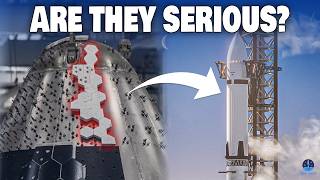
[00:12] Flight 13 isn't just swapping out a couple of Raptors anymore. SpaceX has already destacked the vehicle, rolled back both stages to the production site, and begun what appears to be a much more extensive repair campaign.
[00:27] Instead, they're focused on understanding exactly what went wrong before attempting another launch. So how will SpaceX fix the problem? And when can Flight 13 finally get off the ground?
[00:39] Let's find out on today's episode of Great SpaceX. Like many of you, I watched Flight 13 reach T-minus zero only to end in an automatic launch of Borg after what had been an exceptionally smooth countdown.
[00:52] It was disappointing, but moments like these are also part of developing the world's largest and most powerful rocket, where every unexpected issue becomes another opportunity to improve the system.
[01:04] We'll be following every development, so if you haven't subscribed yet, now's a great time to join our community. You'll be among the first to receive updates on SpaceX, Starship, and the aerospace industry. As you know, Elon Musk quickly explained what happened after the scrub.
[01:20] Some of the engines failed to ignite, triggering the automatic launch abort. He later added that two Raptors would be removed and replaced, while suggesting another launch attempt could happen early the following week.
[01:32] So how are those plans progressing? Although SpaceX hasn't officially announced a new launch date, flight notices have already given us a strong clue. Navigation warnings issued for the Indian Ocean now point to a launch opportunity late on July 20th, local time.
[01:49] which also corresponds to July 20th in Texas. SpaceX has also updated its Flight 13 webpage to list the 20th as the primary launch date, while alternate launch opportunities remain available from the 21st through the 25th.
[02:06] In other words, SpaceX now has a full launch window running from Monday through Saturday. That flexibility is important because it suggests engineers are expecting more than a simple engine swap.
[02:18] There are likely additional inspections, repairs, and verification work that could easily take several days. In fact, work began almost immediately after the launch attempt was called off.
[02:30] Both the ship and booster transport spans returned to the launch site while the chopsticks continued supporting S-40, strongly suggesting that a D-Stack was coming. Just over eight hours after the scrub, at around 2 a.m. on the 17th, the ship QD arm retracted, one of the clearest signs yet that SpaceX was preparing to separate the two stages.
[02:53] Shortly afterward, row closures were announced for the route from the launch pad back to the production site. Around 3 a S was carefully lifted off V and once separated the ship immediately began its trip back to Megabay Only a few hours later another series of road closures was announced This time it was B turn
[03:14] At roughly 10.30 a.m., the booster was lifted off the OLM, and later that afternoon, it rolled back to Megabay 1 aboard a transport stand. Just like that, Flight 13 had officially transitioned from a launch campaign into a repair campaign.
[03:30] For S-40, the rollback was probably more about protection than repairs. Leaving a spacecraft sitting outside on the launch pad for several days simply isn't ideal because it cannot remain there unsupported,
[03:44] and the coastal environment exposes it to humidity, salt, and constantly changing weather conditions. There's another important reason as well. S-40 is carrying real Starlink satellites,
[03:56] So moving the vehicle back indoors provides a much safer environment, while engineers focus on repairing the booster. The real attention, however, is on B-20. Although Musk specifically mentioned replacing two engines, it's entirely possible the work extends beyond that,
[04:15] because engineers will almost certainly inspect every reactor surrounding the affected area before approving another launch. Personally, I also wouldn't be surprised if SpaceX decides to replace additional engines should any concerns appear during inspection,
[04:31] particularly if some of those engines were previously associated with B-19's interrupted testing campaign. At this stage, reliability is far more important than saving a few days. It's better to accept a slight delay than risk another scrub, or worse, an in-flight failure.
[04:48] But replacing engines is only the visible part of the process. The more important work is happening behind the scenes. Before any new hardware is installed, SpaceX first needs to identify exactly what caused four neighboring engines to fail ignition simultaneously.
[05:03] One area likely receiving close attention is the propellant plumbing feeding those individual engines. The failure pattern wasn't random. Four neighboring engines in the middle ring experienced the same problem, suggesting engineers may be investigating components shared by that section rather than four completely independent engine failures.
[05:23] If that's the case, reinforcing or replacing those lines could become part of the repair effort. Another major area of interest is the ignition system itself. If propellant reached the engines correctly, but ignition never occurred, the igniters naturally become one of the leading suspects.
[05:41] This isn't the first time Raptor igniters have been discussed following a launch anomaly. After previous incidents, SpaceX introduced several improvements intended to make the ignition process more reliable.
[05:54] If engineers discover another weakness, they may once again revise the design by replacing individual components or introducing additional redundancy to ensure ignition even if one element underperforms.
[06:06] Whatever the solution ends up being SpaceX will want complete confidence that the problem won return during the next countdown Beyond those systems every part of the affected engines will undergo careful inspection That includes the turbo pumps injectors combustion chambers
[06:24] cooling systems, sensors, and associated plumbing. Even if none of those components caused the scrub, this is the ideal opportunity to verify the health of every critical system before another launch
[06:36] attempt. Remember, SpaceX is aiming for much more than simply getting Flight 13 into the air. The company also wants a successful booster landing because a clean recovery would restore confidence after previous landing issues and provide another major step toward routinely catching Super Heavy with the Mechazilla arms.
[06:54] Every successful booster recovery brings SpaceX closer to the rapid reusability that sits at the heart of the Starship program. Repairing Raptor 3 also comes with its own challenges. Unlike earlier versions, Raptor 3 was redesigned with far fewer bolts and flanges, with many external connections now permanently welded.
[07:14] That simplifies manufacturing while improving reliability and reducing potential leak points. The tradeoff, however, is that repairs become more difficult because technicians may need to cut and replace larger assemblies instead of simply removing individual sections.
[07:29] It's another reminder of why SpaceX places so much emphasis on ensuring engine reliability before launch rather than after it. The inspection won't stop with the engines either.
[07:41] Engineers are also likely reviewing other parts of the booster, including the propellant tanks, COPVs, transfer lines, and avionics, since many of these systems have contributed to delays or anomalies during previous Starship campaigns.
[07:54] Whenever a major scrub occurs, it's standard practice to verify that no secondary issues were created during the aborted countdown. The launch pad itself also deserves attention. Some observers noted that the water deluge system appeared to activate unusually late during the aborted launch attempt.
[08:12] Whether that's normal timing or something requiring adjustment remains unclear, but it's another item engineers will almost certainly verify before Flight 13 returns to the launch pad.
[08:25] The automated abort system, however, deserves plenty of credit. It performed exactly as intended, terminating the launch the instant the computers detected an unsafe condition before the rocket ever left the ground.
[08:37] That quick decision may have prevented a much more serious incident. Several SpaceX employees, including Shanna Diaz and Jesse Anderson, praised the team's preparation and expressed confidence that the issue can be resolved quickly.
[08:52] That's encouraging to hear. Still, there's a tremendous amount of work to accomplish in only a few days. If everything proceeds smoothly, Starship could return to the launch pad by Sunday. If additional testing becomes necessary, the launch could easily slip several more days,
[09:09] which is exactly why the current launch window extends through July 25th. Personally, I think July 20th feels a little optimistic. My prediction would be closer to the 22nd giving engineers a bit more breathing room while still keeping the launch campaign moving at an impressive pace What do you think Leave your launch prediction in the comment section down below
[09:32] Now, let's shift our attention to another major milestone. While SpaceX works to get Flight 13 back on schedule, NASA continues accelerating preparations for Artemis III.
[09:44] With a target launch in the middle of 2027, there's now less than a year remaining, meaning every contractor involved, including NASA, SpaceX, and Blue Origin, is working against the same clock.
[09:57] According to a NASA update released on the 13th, the agency is now full steam ahead. Across Kennedy Space Center, hardware for the SLS is steadily coming together.
[10:09] The SLS core stage arrived at the VAB at the end of April and was connected to its engine section the following month. Two of the rocket's four RS-25 engines have already been delivered, while the remaining pair will arrive before final engine installation begins.
[10:25] NASA will then continue integrating the vehicle with the mobile launch platform while preparing for launch operations testing. Engineers have also received a temporary weather cover that will protect the core stage when it's transported to the launch pad.
[10:39] Progress is also being made on the solid rocket boosters. The lower segments of both boosters recently arrived at Kennedy Space Center and have already been mounted onto the mobile launch platform, while the upper booster segments are undergoing inspections before final stacking.
[10:55] Inside the Neil Armstrong Operations and Checkout Building, Orion is reaching another important milestone. Engineers have completed installation of the spacecraft's upgraded heat shield, which incorporates lessons learned from Artemis I, where unexpected heat shield wear was observed during reentry.
[11:12] Orion's European-built service module has also completed acoustic testing, and both major spacecraft elements are now being prepared for final integration before heading to the VAB.
[11:24] NASA isn't only preparing hardware. Mission teams have also begun conducting monthly launch simulations covering propellant loading, terminal count procedures, and launch day operations, so that everyone is fully prepared long before Artemis III arrives at the pad.
[11:38] According to NASA, these simulations will continue regularly throughout the coming year. Overall, Artemis III preparation appears to be gaining momentum. NASA continues moving its own hardware steadily toward launch,
[11:50] while waiting for SpaceX's Starship and Blue Origin's Blue Moon lander to complete their own milestones. In many ways, that's what makes Artemis III so fascinating. Success depends on multiple companies and agencies reaching the finish line together,
[12:04] meaning a delay for one partner creates pressure for everyone else. That's why every Starship test flight, every SLS milestone, and every Orion update matters. The next year will be one of the busiest periods in modern spaceflight.
[12:19] Let's see how quickly these teams can overcome today's challenges and work together to make humanity's return to the moon a reality. And that brings us to the end of today's episode. Thank you so much for tuning in. As always, this has been Kevin from GreatSpaceX, and until next time, keep looking up.


⚡ Saved you 0h 12m reading this? Transcribe any YouTube video for free — no signup needed.