
Starship V3: The Next Giant Leap
57sHigh anticipation for the first launch of Starship version 3, a major milestone in space exploration.
▶ Play Clip"Title screams 'Disaster' and 'Failure' but the video is a balanced technical breakdown; oversells drama."
The video discusses the upcoming Starship Flight 12, the first launch of the Starship V3, and its implications for SpaceX's progress toward orbital refueling and lunar missions. It also covers NASA's Artemis program overhaul, including the decision to delay the Artemis 3 lunar landing to reduce risk, and the impact on SpaceX's roadmap.
Flight 12 is the first launch of Starship version 3, a major step forward for SpaceX. It will likely not attempt a tower catch; instead, Ship 39 will perform a controlled ocean landing.
Musk stated that SpaceX will only try to catch the ship with the tower after two perfect soft landings in the ocean, to ensure low risk of breakup over land.
Flight 12 is expected to reach a record altitude of ~350 km, based on FCC filings, creating a hotter reentry environment to test the heat shield and flaps.
SpaceX plans to deploy up to 10 mass simulators that act as short-duration active spacecraft, testing Starlink optical intersatellite links and payload deployment mechanisms.
Ship 39 will attempt a vacuum relight of Raptor 3 engines at T+37 minutes, a critical test for deorbit burns and future refueling missions.
Raptor 3 features simplified design with methane regenerative cooling, fewer external joints, and is expected to be 2-4 times more cost-efficient than Merlin, producing ~280 tons of thrust each.
Booster 19 will have integrated hot staging ring, three larger grid fins, and will perform a controlled splashdown, not a tower catch.
Flight 12 will be the first from Pad 2, featuring upgraded hold-down clamps, water-cooled deluge system, and Mechazilla with shorter chopstick arms.
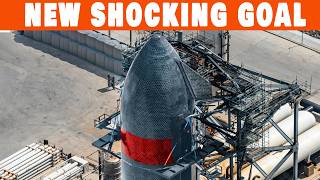
Ship 39 has rolled out to Massey for testing, featuring an upgraded heat shield with metal pin attachments instead of adhesive, and a smoother nose cone.
A new truss structure at Massey will perform a full squeeze test on Ship 39 using chopstick simulators to validate structural integrity for future catches.
Predicted launch date is around March 21, 2026, but could slip to late March or April due to regulatory and testing milestones.
An FCC STA allows operation of up to 10 mass simulators at 350 km altitude, valid from April 7 to June 6, 2026, suggesting possible launch delay to April.
Private investors are pressuring for reliability ahead of a potential IPO in mid-2026, with valuation targets near $1.5 trillion, making delays strategic.
SpaceX removed the left chopstick stabilizer arm from Mechazilla for maintenance, indicating possible wear from previous tests.
NASA announced Artemis 3 will no longer land on the moon; instead, it will dock Orion with a human landing system in low Earth orbit, similar to Apollo 9.
Launch cadence, risk concentration, and SLS production bottlenecks led to the decision. NASA aims for launches every 10 months.
Supporters see it as a disciplined approach; critics worry about geopolitical implications and China's progress.
Artemis 4 targets early 2028 for lunar landing, with Artemis 5 possibly before end of 2028, providing two landing attempts in 2028.
SpaceX must prove rendezvous and docking with Orion, and ECLSS functionality, though orbital refueling may not be required for Artemis 3.
Isaacman aims to flip contractor-to-civil servant ratio from 75% contractors to 75% civil servants, reducing overhead and rebuilding in-house skills.
SpaceX must focus on perfecting ship catch, orbital refueling, and preparing for 2027 low Earth orbit demonstration with Orion.
Ship 39 has probe and drogue adapters for cryogenic propellant transfer, enabling ship-to-ship refueling.
Peak solar activity could cause radiation-induced errors in electronics, potentially delaying orbital refueling to 2027.
SpaceX must execute rendezvous and docking with Orion, test ECLSS, and ramp up V3 production to one vehicle per week.
Future lunar missions will use in-situ resource utilization to produce concrete, propellant, and habitats from lunar regolith.
The video emphasizes that Starship Flight 12 is a critical test for SpaceX's V3 hardware, with a likely delay to April due to regulatory and safety considerations. NASA's Artemis overhaul prioritizes risk reduction and sustainable cadence, setting the stage for lunar landings in 2028.
What is the expected altitude for Starship Flight 12?
Around 350 km, based on FCC filings.
02:58
What is the condition for SpaceX to attempt a ship catch with the tower?
After two perfect soft landings in the ocean with low risk of breakup over land.
01:36
What is the purpose of the mass simulators on Flight 12?
To test payload deployment mechanisms and Starlink optical intersatellite links.
04:11
What is the thrust of a single Raptor 3 engine?
Approximately 280 tons of thrust.
06:41
What is the total thrust of Super Heavy with 33 Raptor 3 engines?
More than 9,200 tons of thrust.
06:56
What is the main change in the heat shield attachment on Ship 39?
Most tiles are now secured with metal pins instead of adhesive.
13:50
What is the purpose of the truss structure at Massey?
To perform a full squeeze test on Ship 39 using chopstick simulators to validate structural integrity.
18:13
What is the validity period of the FCC STA for mass simulators?
From April 7, 2026 to June 6, 2026.
26:05
What is the new plan for Artemis 3?
To dock Orion with a human landing system in low Earth orbit instead of landing on the moon.
36:08
What is NASA's target for launch cadence?
One mission every 10 months.
37:48
What is the target ratio of civil servants to contractors at NASA?
75% civil servants and 25% contractors.
45:39
What is the estimated number of tanker flights needed to fuel Starship HLS?
Five to six tanker launches.
48:27
What is the risk of solar storms during orbital refueling?
Radiation-induced errors could cause valve malfunctions, leading to propellant venting or mission failure.
53:40
Musk's Ship Catch Criteria
Defines the safety threshold for attempting a ship catch, showing SpaceX's cautious approach.
01:36Raptor 3 Design Philosophy
Explains the simplified engine design that improves reliability and mass production.
05:48Heat Shield Pin Attachment
Highlights a key engineering change to prevent tile loss during reentry.
13:50Artemis 3 Redesign
Major shift in NASA's lunar strategy to reduce risk and improve sustainability.
36:08NASA Core Competencies
Isaacman's directive to rebuild in-house expertise could reshape NASA's workforce.
45:39[00:01] might miss Starship flight 12 because it's happening this very month. And this isn't just another test. This is the first launch of Starship version 3, a major step forward for SpaceX and the clearest sign yet that the program is
[00:15] entering a new phase of maturity. More importantly, it could mark the beginning of humanity's next chapter beyond Earth. So naturally, everyone is asking the same questions. What exactly is SpaceX planning for this flight? How far are
[00:29] how spectacular could this mission become? Let's break down everything in today's episode of Alpha Tech. Looking back at the first 11 Starship flights, one thing stands out. SpaceX improves the vehicle every time. When something
[00:44] goes wrong, it's analyzed, redesigned, and addressed before the next launch. That's why when a ship or booster explodes, SpaceX doesn't call it a failure. They call it data. Valuable flight data that feeds directly into the
[00:57] next version. Some critics disagree. They point to NASA's space launch system and say, "Look, it flew successfully on its first launch." But that comparison isn't fair. SLS relies heavily on hardware derived from the Saturn 5 and
[01:12] Space Shuttle era systems that were already proven decades ago. Starship started from scratch. No rocket in history has ever been this large, carried this much payload, or aimed at something this ambitious making humanity
[01:24] a permanent multi-planet species. So after 11 flights, the real question is simple. How well will Starship perform next? And what exactly will SpaceX attempt this time? Instead of letting
[01:36] rumors spiral, Elon Musk addressed it directly. On X, while sharing an update about ship 39 heading to Massy, he wrote, "Should note that SpaceX will only try to catch the ship with the tower after two perfect soft landings in
[01:50] the ocean. The risk of the ship breaking up over land needs to be very low. So what does that tell us about Starship flight 12? The first thing we can say with confidence is this. Flight 12 almost certainly will not attempt a
[02:04] tower catch. Instead, Ship 39 is expected to perform a controlled ocean landing, a soft splashdown similar to previous Block 2 flights. For some fans, that might feel a bit underwhelming. A lot of people were hoping to witness
[02:18] that jaw-dropping moment, maybe even more dramatic than when Super Heavy was caught by the tower arms at Starbase. But in reality, this has been telegraphed for months. Back in late August, Elon Musk said clearly that
[02:31] Starship catch would likely happen around flights 13 to 15, depending on how well the V3 missions perform. That tells you something important. The road map for the next year of Starship development is not improvised.
[02:45] It's deliberate, calculated, and tightly sequenced. And even without a tower catch, flight 12 could still be one of the most exciting tests yet. Rather than risking a landing attempt back at Starbase ship, 39 is expected to fly a
[02:58] trajectory reaching a record altitude of around 350 km. This comes from an FCC filing authorizing deployments of a Starlink mass simulator payload with an Starlink mass simulator payload with an apogee of roughly 350 km. If achieved,
[03:13] that would mark a new altitude record for Starship. Previous flights typically peaked around 150 km on suborbital profiles. This time, it's significantly higher, designed to create a much hotter and more demanding reentry environment.
[03:28] During that phase, all eyes will be on the next-generation heat shield and the upgraded flaps of the V3 variant. The key question is simple. Can they withstand true orbital velocities and the extreme thermal and aerodynamic
[03:42] loads that come with them? If Ship 39 survives, re-entry executes its flip ocean surface, it would count as the first of the two perfect landings Musk says are required before any tower catch attempt, and that would be a major step
[03:57] forward. But, hold on. I got carried away talking about the landing and skipped something just as important. While Ship 39 is coasting through space at roughly 22 times the speed of sound, about 28,000 km/h,
[04:11] one of its primary objectives will unfold. According to filings submitted to the FCC, SpaceX plans to deploy up to 10 mass simulators instead of actual Starlink version 3 satellites. Now, don't let the word simulator fool you.
[04:26] This is not a boring placeholder mission. These mass simulators are expected to behave like short-duration active spacecraft. They will establish with the existing Starlink constellation, as well as ground
[04:39] stations testing the performance of the high-bandwidth optical intersatellite links. In other words, this is a live systems validation in orbit. There are even indications that these units may carry what has been described as a space
[04:52] station capability, potentially allowing external cameras to be mounted. If that happens, we could see Starship from angles we have never witnessed before captured directly from space. And that's not all. Ship 39 is also set to conduct
[05:05] a mission-critical experiment for future orbital operations. A vacuum relight of the Raptor 3 engines. This would mark the first time Raptor 3 flies on an actual mission. Demonstrating that these engines can reliably restart after the
[05:20] coast phase is absolutely essential. Without that capability, you cannot perform precise deorbit burns, and you certainly cannot support future in-orbit refueling missions. SpaceX is expected to attempt this engine relight at around
[05:34] T plus 37 minutes, shortly after completing the deployment of the dummy Starlink payloads. If they pull it off, it would be a major technical milestone, and one that moves Starship much closer to true orbital maturity. Speaking of
[05:48] Raptor 3, this engine is really the heart of the entire upgrade. Its design has been simplified to an almost shocking degree. SpaceX stripped away the bulky external shielding and the maze of plumbing that defined earlier
[06:01] versions. Instead of hiding pipes behind covers, they moved to a methane regenerative cooling system that runs through tiny internal channels carved directly into the metal walls. The result is an engine that looks raw and
[06:14] unified, almost bare, yet incredibly powerful and clean. These changes are not just cosmetic. Fewer external joints mean fewer potential failure points. At the same time, the simplified architecture makes it far easier for
[06:28] robots and automated welders to mass produce engines every single day, much like the way Tesla builds cars at scale. In terms of performance, Raptor 3 is expected to be two to four times more cost-efficient than the Merlin engine
[06:41] when measured per ton of thrust. Each engine produces roughly 280 tons of thrust. Multiply that by 33 engines on the Super Heavy booster, and you are looking at more than 9,200 tons of total thrust. That is nearly three times the
[06:56] output of the legendary Saturn V. Let's just hope Booster 19's sheer power does just hope Booster 19's sheer power does not end up tearing apart OLM pad 2 on its very first real outing. Now, in flight 12, Super Heavy will also attempt
[07:10] several important upgrades of its own. First is the hot staging process. This time the separation ring is integrated directly into the top of the booster. Unlike earlier versions, it will not detach and fall into the ocean, which
[07:23] means no more sending recovery ships out to retrieve a discarded ring. Hot staging is expected around T plus 2 minutes and 37 seconds after liftoff. Guidance and control are evolving as well. For the first time, Super Heavy
[07:36] will fly with just three grid fins instead of four. These new fins are about 50% larger than the previous design. They are mounted lower on the booster and structurally reinforced to withstand greater aerodynamic loads.
[07:50] rocket execute its flip maneuver and fine-tune its return trajectory with precision. It is a calculated risk by SpaceX reducing dry mass while during the most intense atmospheric phases of flight. The biggest question,
[08:05] of course, is whether Booster 19 will return to the launch tower for a catch. The last time we saw that attempt was back on flight eight. Unfortunately, that is not the plan this time. SpaceX is prioritizing safety and data
[08:18] collection for the upcoming Block 3 evolution. Just like Ship 39, Booster 19 is expected to perform a controlled splashdown. What we really want to see is simple, no explosion on impact. A clean touchdown on the water followed by
[08:33] the booster sinking intact to the ocean floor. If that happens, SpaceX can send recovery ships to retrieve hardware and inspect critical components like the Raptor 3 engines, the flaps, and the heat shield. As for the software data,
[08:46] there is no black box like you would find on an airliner. All telemetry is streamed in real-time and transmitted continuously back to Earth through ground stations tracking ships and eventually through the Starlink network
[08:58] itself. And there's even more to talk about because this will also be the very first real flight from launch pad two, also known as pad B. It sits not far from Starship's legendary pad one, but it represents a major step forward in
[09:12] infrastructure. Pad two was built with significant upgrades to improve durability, safety, and rapid reusability. It's orbital launch mount features a massive rectangular structure with a central exhaust opening. It's
[09:26] equipped with 20 quick-release hold-down clamps and retractable booster quick disconnects that handle propellant transfer power and data connections. The flame trench is protected by a powerful water-cooled deluge system. Full deluge
[09:40] tests have already been completed, successfully proving the system can shield the pad from the immense force of 33 Raptor 3 engines firing at once. Towering above it all is Mechazilla, officially OLIT3,
[09:55] standing about 144.5 m tall. Its chopstick arms are roughly 10 m shorter than those on pad 1 designed for faster and more precise booster catches in the future, if and when that plan moves forward. The ship
[10:08] quick disconnect arm has also been upgraded now, featuring a multi-port chill down vent system to safely vent liquid oxygen during propellant conditioning. At T-minus 4 minutes, the engine chill sequence begins. Cryogenic
[10:22] propellant starts flowing to thermally condition the engines, preparing them for ignition. Shortly after that, the 20 hold-down arms retract. From that moment on, the full weight of the rocket rests on the mount purely under its own mass,
[10:35] no longer mechanically locked in place. At T-minus 25 seconds, the detonation suppression system activates. A dense curtain of water floods the area to reduce acoustic shock and pressure waves as ignition approaches. Then, at T-minus
[10:50] 10 seconds, the main deluge system, often nicknamed the giant shower, unleashes a massive surge of water from beneath the mount. That water absorbs the brutal heat and sound energy generated by the Raptor exhaust plume.
[11:03] At T0, the rocket rises and climbs into the fading sunset over South Texas. But even after liftoff, pad 2 has one final move. The deluge system runs again, flushing out any remaining water and nitrogen from the tanks. It's not just a
[11:17] cleanup sequence. It looks almost ceremonial, like a water salute marking a successful mission. And in just a few short weeks, Starship flight 12 will take to the skies. Are you excited if you can make the trip to Texas and
[11:29] witness this historic moment in person? You might be watching the very beginning of a vehicle that could one day help secure humanity's future. This isn't just another test flight. It's a bold step toward making life multi-planetary.
[11:42] With upgrades to heat shield, Raptor engines, and catch mechanisms, flight 12 could finally nail the full Starship return and booster catch we've all been waiting for. Imagine standing there as the sky lights up, engines roaring,
[11:56] eyes. Drop a ghost SpaceX in the comments to show your support. And as always, thanks for watching. The first Starship V3 has left the build site to begin pre-launch testing. That single line from SpaceX
[12:11] instantly lit up the space community. After months of sitting quietly inside Mega Bay 2, the first Starship V3 has finally rolled out to Massy, and it wasn't just a simple announcement. The post came with several stunning images
[12:25] of this massive vehicle, more than 50 m tall, sitting atop the giant SPMT transporter out in the open. The visuals were absolutely striking. Now it's standing at Massy getting ready for its second cryogenic test. Just days
[12:40] earlier, on the night of February 28th, SpaceX completed a full cryo test, and by all indications it went smoothly with no visible anomalies. That's a very encouraging sign. It suggests flight 12 could be lining up for a major success.
[12:55] Looking back at those striking images of Ship 39, the photos reveal several obvious upgrades that practically jump off the screen. First up, the heat shield. It looks far more robust than previous versions, deep black, glossy,
[13:10] almost reflective under the light. And yes, it's clearly been upgraded. Elon Musk has even said, "I am highly confident that the V3 design will achieve full reusability." If that's the goal, then the thermal protection
[13:23] system, the TPS, is the single most critical piece of the puzzle. Just take a closer look at the aft section. SpaceX has refined it by switching to standard tiles instead of smaller, highly specialized ones. That reduces the
[13:37] number of unique tile types and simplifies installation. But, interestingly, the aft flaps use more specific reinforced tiles built to handle higher loads and more intense heating in that area. The most striking
[13:50] change though is how those tiles are attached. Most of them are now secured with metal pins instead of adhesive. Glue was a major issue in the past. It led to tile losses on earlier Starship flights and even on the space shuttle.
[14:03] Now, only the very tip of the nose cone and a few small areas still rely on adhesive. And once SpaceX gathers more data from upcoming tests, they may transition everything over to pin mounting. On ship 39, the overall heat
[14:18] shield has been widely described by the community as incredibly clean. It looks more complete, more uniform than any of the previous V2 ships. But, if you zoom in, there are still a few small areas missing tiles. Nothing major, just minor
[14:33] gaps. For example, one spot on the forward flaps is missing a single tile. It's the kind of detail that would drive anyone with OCD absolutely crazy. Still, overall, the vehicle looks very well finished. There are also signs that
[14:47] SpaceX is continuing to use the crunch wrap layer beneath the tiles. That material helps seal tiny gaps and prevent plasma intrusion during re-entry. In some areas, there may also be an additional ablative backup layer,
[15:00] adding another line of defense if temperatures spike beyond expectations. Now, shift your focus up to the nose cone of ship 39, the first major section that truly represents Starship version 3. It looks remarkably smooth and
[15:14] consistent, covered with black hexagonal heat shield tiles across the upper portion. The result is a much more seamless thermal barrier compared to earlier versions. In the transition areas, you can still see small patches
[15:27] of polished stainless steel peaking through, which actually highlight how streamlined the design has become. One noticeable change is the forward flap cameras. The flap cams appear to have been removed or relocated. They are no
[15:40] longer mounted in the same exposed configuration as before. The same goes for the Starlink antennas, which seem to have been repositioned and integrated more discreetly. Likely better shielded from heat and debris. In close-up
[15:53] images, you can spot the Starlink door on top of the nose cone, along with a black oval that marks the forward hatch leading into the payload bay. On the far right side of the vehicle, the docking hardware stands out. This includes the
[16:06] probe and drogue cones, one of four guide cones that help direct the probe into the central locking point. That alignment is critical for fuel transfer in orbit, especially for future orbital refueling missions that support Artemis.
[16:20] More specifically, this system allows two Starships to approach each other in space, dock together, and then safely transfer cryogenic propellants such as liquid oxygen and liquid methane. Ship 39 carries the passive drogue side of
[16:35] the system, mounted on the payload bay section of the nose cone. The tanker variants, on the other hand, will be equipped with the active probe, the extended mechanism that physically inserts into the drogue to complete the
[16:47] connection. But, that's not all. Additional ablative material is also being installed. For now, it only covers the bottom portion of the nose cone and is not fully complete. Eventually, it will taper and blend into the main heat
[17:00] shield, similar to what we saw on Ship 30, providing stronger protection in the transition zones where thermal loads can be especially complex. Now, take a look at the belly of the vehicle. Around the aft section, you can clearly see a dense
[17:14] network of exposed wiring, cables, and raceways. None of the covers have been installed yet. The whole area looks busy, almost messy at first glance, with small hard lines and electrical and data lines running along the surface. It
[17:28] looks incredibly complex. But, this is not random. These are the updated raceways for version 3. There are two main raceways, one on the methane side, and one on the oxygen side. They were already attached earlier inside Megabay.
[17:43] At this rollout stage, however, the protective covers are intentionally left adjustment much easier during the cryogenic testing campaign at Massey. Once testing is complete, SpaceX will install the covers. That will seal
[17:57] everything up, reduce aerodynamic drag, and protect the systems during re-entry. In the end, the aft section will look much cleaner, moving one step closer to a fully reusable, flight-ready design. And there's one more detail that really
[18:13] matters. This is the first time Ship 39 has been positioned next to the new truss structure, essentially integrated alongside that stand as part of the version 3 test campaign. According to multiple sources, this truss was
[18:26] purpose-built to test both the forward and aft flaps on Ship 39. It works in combination with chopstick simulators, which replicate the catching arms on the tower, to perform what's being described as a full squeeze test of the vehicle.
[18:40] controlled compressive loads to simulate the forces Starship will experience when it's caught by the tower in the future. This is a completely new test approach. It's applied to the entire ship, not just isolated sections. It may also be
[18:55] tied to the new drive systems, motors, and linkage mechanisms optimized for block 3 flaps. The goal is simple, but critical. Validate structural integrity before attempting a real tower catch. And now,
[19:09] just moments after rollout, Ship 39 has already received its first hug from the trust rig. And by hug, we're not talking metaphorically. SpaceX has actually attached the chopstick simulators around V3 SN1, which is Ship 39, and the
[19:26] vehicle is now positioned inside the rig ready for a full squeeze test. As for propellant loading, the truss itself is not the structure that directly fuels the vehicle for flight. That role still belongs to the tank farm and the
[19:38] dedicated quick disconnect system. However, the truss is integrated into the broader Massey test infrastructure. It supports cryogenic proof testing and practice propellant loading operations. For example, SpaceX can use the new
[19:52] methane tank farm to run full load simulations. That allows them to validate autogenous pressurization, fluid connections, and the vehicle's structural response under cryogenic pressure conditions. If you look
[20:05] closely, you'll also notice stairs, ladders, and access platforms built into the truss. These catwalks allow technicians to safely climb up, perform inspections, and install hardware with direct access to critical sections of
[20:19] the ship. Taken together, this truss marks a major milestone for the Massey site. It effectively turns the facility into a comprehensive Block 3 test hub, covering cryogenic testing, flap validation, catch preparation, and
[20:35] future refueling readiness. And with Ship 39 now fully integrated into this setup, it is closer to flight 12 than ever before. If I had to put a date on it, I'm leaning toward March 21st. But that's just my call.
[20:50] Drop your launch prediction in the comments below. But of course, any prediction needs to be grounded in real milestones. Once Ship 39 wraps up its testing campaign at Massey's, including cryogenic proof testing and flap
[21:05] validation on the new truss structure with chopstick simulators applying compressive loads, it will roll back to the production site, Mega Bay 2 at Starbase. There, SpaceX engineers will install six upgraded Raptor 3 engines.
[21:20] After engine integration is complete, Ship 39 will return to Massey's for a static fire test. All six Raptors will ignite simultaneously for a few seconds, confirming stable engine performance, no excessive vibration, no leaks, and
[21:36] proper thrust vector control. If the campaign stays on schedule, that static campaign stays on schedule, that static fire could happen around mid-March 2026. Running in parallel, Booster 19 has already completed its own cryogenic
[21:49] proof test. It is now being outfitted with 33 Raptor 3 engines inside Mega Bay 1, along with grid fins and other final preparations. Booster 19 is expected to conduct its own static fire at Pad 2 in early to
[22:04] mid-March 2026, both to commission the pad and to validate full thrust capability. If both stages pass static fire, inspections, and show no major anomalies, SpaceX will move to stacking. Booster 19 will be
[22:19] rolled out to the primary launch position at Pad 2. Then, the launch tower's chopsticks will lift Ship 39 and carefully place it on top of the booster. After stacking, teams will complete final connections, electrical
[22:32] umbilicals, propellant lines, and data interfaces, forming the full integrated stack. If everything goes smoothly, no technical setbacks, favorable weather, and regulatory approval in place, Flight 12, the first fully integrated Block 3
[22:48] 12, the first fully integrated Block 3 mission with Ship 39 and Booster 19, could indeed target March 21st as predicted. But, realistically, a late March window may be more likely. Now, here's something important that directly
[23:01] affects that timeline. Elon Musk has just confirmed on X that SpaceX will not attempt to catch the ship, the upper stage of Starship, with the tower's chopsticks until they achieve two perfect soft landings in the ocean
[23:15] without an explosion. He made it very clear. Should note that SpaceX will only try to catch the ship with the tower after two perfect soft landings in the ocean. The risk of the ship breaking up over land needs to be very low. What
[23:28] that tells us is simple. Flight 12 and likely flight 13 will not include a ship catch attempt. It's been more than 4 months since Starship flight 11 came to an end, a mission that left us with mixed emotions, excitement, tension
[23:42] relief, and that familiar rush that only a Starship launch can deliver. And with each passing week, the anticipation for flight 12 keeps building. This isn't just another test. It will be the first Starship flight after SpaceX rolled out
[23:55] dozens of major upgrades to the vehicle. Hardware refinements, system improvements, changes aimed directly at performance and reliability. Naturally, expectations are higher this time. We're not just hoping to see it fly, we're
[24:08] hoping to see it succeed. At the same time, there's another layer to this growing impatience. We want it to happen soon because in the world of rapid iteration, delays can sometimes signal hesitation. And no one wants to see
[24:21] SpaceX lose momentum on what may be the most ambitious launch vehicle ever developed. But, just as the anticipation was reaching its peak, a new detail from the FCC suddenly caught the Starship community off guard. On the FCC's
[24:35] website, a special temporary authority request filed by SpaceX appeared. This STA grants temporary approval to launch and operate up to 10 so-called experimental space stations mounted on mass simulators during suborbital
[24:50] Starship Super Heavy test flights. In practical terms, this authorization allows those simulators to reach a peak altitude of around 350 km. That's suborbital, meaning they won't enter a stable orbit. While in flight, they can
[25:05] communicate with the existing Starlink network and ground stations using Starlink's familiar frequency bands. The system supports modulation up to 64 QAM with transmit power ranging from 1.1 W to 37.15
[25:21] to 37.15 W using directional antennas and test hardware manufactured by SpaceX. After deployment, the simulators are expected to reenter and fully burn up within roughly 90 minutes. So, what's the real
[25:35] objective here? It's to validate Starship's payload deployment mechanism, a critical milestone if the vehicle is going to release large satellites like a Starlink 5-3 accurately and safely in the future. This is a necessary
[25:48] technical step before Starship can truly become the heavy-lift workhorse SpaceX envisions, delivering massive batches of next-generation Starlink satellites in a single mission. Now, here's the part that raised eyebrows. The STA is valid
[26:05] from April 7th, 2026 through June 6th, 2026. It begins in early April and runs for 2 months covering multiple suborbital test opportunities. So, what does that timeline really tell us?
[26:19] First, the fact that this STA is valid for only 2 months is a strong signal. SpaceX is almost certainly planning at least one test flight within that window. The FCC does not issue open-ended approvals just in case. A
[26:32] special temporary authority is exactly what the name implies, temporary, targeted, and usually tied to specific experimental operations that need regulatory clearance. SpaceX filed this request in late February 2026.
[26:46] If they went through the process to secure it, they are not going to to it question. Is this authorization meant for Starship flight 12? No one can say with absolute certainty. In the purpose of operation
[27:01] section, SpaceX clearly states to launch and operate space stations on mass simulators for upcoming Starship Super Heavy test flights. Notice the wording, upcoming test flights plural. There is no mention of flight 12 and no specific
[27:15] mission number attached. That opens up two realistic scenarios. Scenario one, flight 12 still flies in March exactly as Elon Musk stated on X on February as Elon Musk stated on X on February 21st, 2026 when he posted Starship flies
[27:29] again next month. It would be unusual for such a public statement from the CEO to directly contradict internal launch planning. In this case, the STA could be intended for later missions such as flight 13. The April to June window
[27:43] would still allow SpaceX to conduct additional suborbital tests after flight 12. Under this scenario, March remains technically viable. Scenario two, the STA is designed to be integrated directly into flight 12 and this
[27:58] actually makes technical sense. Flight 12 is widely expected to debut significant new hardware. Testing active deployment simulators complete with communications would be a logical step to gather real-world data on the payload
[28:12] deployment mechanism. Several well-known commentators on X have already speculated that if this STA applies to flight 12, then April becomes the likely target. The no earlier than April 7th, 2026
[28:26] start date aligns perfectly with the authorization window. And if SpaceX intends to operate active RF hardware rather than passive dummy payloads, they must wait until the STA is in effect to remain compliant with spectrum
[28:40] regulations. History also matters here. Previous Starship flights have experienced 1 to 2-month delays due to FAA environmental reviews and FCC communications approvals. Flight 11, for example, slipped from an expected Q3
[28:55] example, slipped from an expected Q3 window to October 2025. Taking all that into account, the probability of a delay into April looks significant. Some betting markets and community consensus place it in the 50 to 70% range. Elon
[29:09] Musk is known for optimistic timelines. Regulatory filings with the FCC and FAA, on the other hand, are hard documentation. They tend to reflect operational reality. If Flight 12 incorporates this deployment test, the
[29:23] earliest practical launch date would be early April, possibly later. If additional ground testing or weather constraints come into play. There are also external factors to consider. Ship 39 has not yet rolled out to Massey's
[29:37] site for cryogenic testing, leading some to wonder whether it has fallen behind schedule. Morgan Wyatt Khan, a former SpaceX emp- -loyee who worked with the Starship team, suggested that cumulative minor issues in the Block 2
[29:50] configuration have made the company more cautious about rushing a Version 3 debut. Instead of pushing for speed, they appear to be tightening reliability margins to avoid repeating earlier setbacks. And then there is the
[30:02] financial dimension. Private investors are reportedly applying pressure ahead of a potential IPO in mid-2026, around June or July, with valuation targets near $1.5 trillion and plans to raise roughly 50
[30:17] billion. Flight 12 would be the first major public showcase of Version 3 hardware, including Raptor 3 engines, stretched propellant tanks, and improved catch systems. A failure, whether a vehicle loss, explosion, or failure to
[30:30] meet deployment objectives could undermine investor confidence and weaken valuation ahead of a public offering. In that context, a deliberate delay makes strategic sense. SpaceX may be prioritizing reliability over speed,
[30:44] accepting a slip in schedule to ensure that ship 39 performs exactly as intended. So, after breaking all of that down, what do you think will Starship flight 12 lift off in March? Or, are we realistically looking at an April launch
[30:58] instead? Drop your prediction in the comments below. Let's see who calls it right. And speaking of ship 39, the upper stage assigned to flight 12, the community just got hit with another twist that raised even more questions
[31:11] about the timeline. SpaceX recently scheduled a road closure from the production site to Massey's test site from 11:00 p.m. on February 24th to 3:00 from 11:00 p.m. on February 24th to 3:00 a.m. on February 25th. Naturally,
[31:25] everyone jumped to the same conclusion. Finally, ship 39 is rolling out to Massey for cryogenic testing or maybe even a static fire. It has been sitting at the production site for quite a while, and Massey is where ships go for
[31:38] cryo proof and propellant loading tests. But, once again, SpaceX did the unexpected. Instead of rolling out the full ship 39, they transported several massive cylindrical structures nearly as large as the ship itself. Long metallic
[31:52] sections, likely stainless steel, similar to Starship's 304L structure, coated with a protective silver finish, and hauled on heavy trailers. Speculation quickly followed. Many believe these could be test
[32:06] articles for the new flap actuator system, the mechanism that controls Starship's aerodynamic flaps during reentry. That theory lines up with the recent setup of a dedicated ship flap actuator test structure at Massey.
[32:19] Whatever these components turn out to be, one thing is clear. SpaceX appears to be prioritizing testing of supporting hardware and ground infrastructure before committing to rolling out the full ship 39. One day earlier, on the
[32:32] morning of February 24th, something unusual happened at launch pad two. SpaceX completely removed the left chopstick stabilizer arm from Mechazilla's chopsticks. This is the large triangular structure mounted near
[32:45] the lower section of the main chopstick arm. What makes it more interesting is the timing. On the afternoon of February 23rd, the chopsticks performed a short upward movement test. Shortly after that, crews climbed up and worked on
[32:57] both stabilizers left and right using lift platforms. So, the obvious question is did that test reveal something that needed attention? First, what exactly is a stabilizer arm and why does it matter? These are the triangular stabilizing
[33:12] structures attached beneath each of the main chopstick arms on Mechazilla. Their primary role is to dampen vibrations and improve stability when the chopsticks move, lift, lower stack, or catch a booster or ship. During stacking
[33:26] operations such as placing booster 19 and ship 39 onto the launch mount or during a booster catch like the successful one on flight five, these stabilizers help manage inertia from the massive moving arms. Without proper
[33:40] damping, the chopsticks could slam shut with excessive force potentially damaging the vehicle or causing structural dents. They function like mechanical dampers assisting with alignment and absorbing loads especially
[33:52] at the moment when the booster's catch pins make contact with the chopsticks. That contact event transfers significant force into the tower. So, precise alignment and controlled motion are critical to prevent excessive stress on
[34:05] the vehicle. On pad two, which is the upgraded configuration intended for version three hardware, the stabilizers are longer and can swing outward further. This modification helps avoid interference with the aft flaps of the
[34:18] ship during catch operations. So, what does removing one of them tell us? This strongly suggests maintenance inspection or a targeted upgrade. It does not necessarily mean a major failure, but it does indicate that
[34:31] SpaceX saw something worth addressing carefully. The crew's immediate inspection after the chopstick movement test points to possible wear and tear from previous stacking trials or catch rehearsals. They may be checking hinge
[34:43] assemblies, actuators, hydraulic or electric drive components, or alignment tolerances to ensure smooth operation for the more demanding version 3 catch sequence. Is this a repair or a full replacement? Most likely a focused
[34:57] repair or incremental upgrade. Only the left stabilizer was removed and pad 2 is newer than pad 1. That suggests modular servicing rather than a full redesign. Right now, media outlets and space channels are flooded with headlines
[35:11] channels are flooded with headlines about NASA, about Artemis 3, about a major redesign of the mission architecture, about the future of SLS and the vehicles meant to carry astronauts back beyond low Earth orbit.
[35:23] event, the Artemis update press conference held on February 27th at Kennedy Space Center in Florida. And this was not just another routine briefing. The atmosphere was tense. Just a few days earlier, on February 25th,
[35:38] 2026, NASA's Aerospace Safety Advisory Panel released a scathing report calling the original Artemis 3 plan high risk and urging a rebalance. Meanwhile, the Artemis 2 SLS rocket had rolled back to
[35:53] the VAB that same day over helium flow issues, piling on the pressure from inside and out. So, NASA Administrator Jared Isaacman used that moment to comprehensive course correction, one designed to stabilize the program and
[36:08] restore confidence. The most significant change, Artemis 3 will no longer be a mission that sends two astronauts to land on the moon using SpaceX's Starship attempting a high-risk landing at the lunar South Pole while key technologies
[36:24] are still maturing, NASA is pivoting to a different objective. The new plan focuses on docking Orion with a human landing system, either SpaceX's Starship HLS or Blue Origin's lander in low Earth orbit. In other words, Artemis 3 begins
[36:40] to resemble Apollo 9. Back in 1969, Apollo 9 did not go to the moon. It rehearsed rendezvous and docking procedures, tested the lunar module, and validated critical systems in space before committing to a lunar landing. Of
[36:56] course, a decision of this magnitude does not come out of nowhere. The first and most immediate reason Isaacman highlighted is launch cadence. He was blunt about it. Flying an ultra-complex vehicle like the Space Launch System
[37:08] once every 3 years or even longer is not a sustainable model. The gap between Artemis 1 in 2022 and Artemis 2, now pushed beyond early 2026, has already
[37:20] stretched past 3 years. And despite that time, recurring issues such as helium pressurization concerns and hydrogen leaks have continued to surface. When missions are spaced that far apart, operational proficiency starts to fade.
[37:35] Teams lose their edge. As Isaacman put it, they lose muscle memory. In human spaceflight, that is not just a performance issue, it is a safety issue. That is why he said, Well, we're going to endeavor to get our launches inside
[37:48] of a year, specifically down to potentially 10 months. The goal is to establish a consistent operational rhythm, one that is safer, more reliable, and sustainable over the long term. The second factor is risk
[38:00] concentration. In its February 2026 report, NASA's Independent Aerospace Safety Advisory Panel warned that the original Artemis 3 architecture attempted to bundle too many unproven milestones into a single mission. It
[38:14] called for large-scale orbital refueling with Starship, the first docking between Orion and a human landing systems in lunar orbit, and the first crude landing of Starship HLS on the moon, all within one flight campaign. At one point, NASA
[38:29] leadership believed that making that leap in a single step was achievable, but deeper technical analysis made it clear that stacking that many first-time demonstrations together drove the overall risk to an unacceptable level.
[38:42] And finally, there is the production bottleneck surrounding SLS itself. The long mission gaps are not only about operations. They are also a consequence of how slowly these rockets can be built. To address this, NASA is pausing
[38:56] the transition to the more complex Block 1B configuration, which would introduce the new exploration upper stage, and instead continuing with a near Block 1 configuration for upcoming missions. By avoiding additional complexity and
[39:10] costly upgrades, the agency hopes to streamline manufacturing, reduce overall costs, increase launch tempo, and concentrate resources where they will have the greatest impact. Of course, canceling the crude lunar landing for
[39:23] Artemis 3 has split opinion into two very different camps. The first camp is strongly supportive. This is the dominant view led by NASA leadership, and echoed by many respected aerospace analysts. Even major industry partners
[39:38] such as SpaceX, Blue Origin, and Boeing have publicly backed the change. For example, SpaceX recently published a statement saying, "SpaceX shares the same goal as NASA of returning to the moon with a permanent presence as
[39:51] expeditiously and safely as possible." That message alone signals alignment at the highest level. From their perspective, the revised mission profile offers something valuable. It creates a controlled environment in lower Earth
[40:03] orbit to stress test critical systems before committing to a lunar landing. That means refining docking procedures, validating integration with the human landing system, and putting the new xEVA spacesuits through real operational use
[40:17] in space. Running those demonstrations in Earth orbit before attempting a viewed as a more disciplined and technically responsible path forward, but there is a second camp driven by disappointment and geopolitical concern.
[40:31] Even though many critics acknowledge that the technical reasoning is sound, a segment of the public and several political observers feel let down. They were hoping to see a revival of the Apollo spirit. They wanted to watch
[40:43] American astronauts descend to the lunar surface again and demonstrate how far the nation's space program has progressed. To them, scaling Artemis 3 back to an Earth orbit mission feels symbolic. It feels like a delay, a step
[40:57] away from the bold promise of a lunar return. And in the context of an intensifying space race, some worry that this pause could allow China to move ahead, secure the next historic milestone on the moon, and challenge
[41:10] America's leadership in deep space exploration. But, don't worry. You've heard the phrase take one step back to move two steps forward. That's exactly what NASA is doing right now. The plan to put humans back on the moon is only
[41:23] slipping by a few months, maybe up to a year, compared to the previous timeline. Instead of Artemis 3 handling the first landing, that honor now shifts to landing, that honor now shifts to Artemis 4 targeting early 2028 as the
[41:36] moment the modern era of lunar exploration truly begins. And here's the trade-off. The odds of success go up significantly. Artemis 3 now flying in 2027 adds an extra layer of safety testing before anyone attempts to touch
[41:50] down. It's a strategic buffer, not a retreat. If everything stays on schedule, Artemis 5 could follow before the end of 2028. As Isaac Man said, And then Artemis 4 and Artemis 5 uh will we will we will endeavor to have
[42:06] two opportunities in 2028 to attempt a landing. That lines up with the cadence he has emphasized roughly one mission every 10 months. A steady rhythm, sustainable, repeatable. And there's a subtle message buried in all of this.
[42:20] Two landing attempts within the same year is NASA's built-in insurance policy. If the first mission runs into trouble, there's still a second window before the year closes. Momentum stays alive. Pressure stays on. Because in the
[42:33] background, the space race with China isn't slowing down. For SpaceX, this shift around Artemis 3 definitely has ripple effects. They're not just a supporting player here. They're one of the critical links in the entire mission
[42:45] chain. Under the updated Artemis 3 plan, SpaceX will need to prove it can rendezvous and dock with Orion and make sure the environmental control and life support system, the ECLSS, works flawlessly while astronauts
[42:59] transfer between the two spacecraft. That crew handoff is not a small detail. It's a major systems validation in real flight conditions. Some of the more advanced capabilities like on orbit cryogenic propellant transfer may not be
[43:13] strictly required for Artemis 3, but long-term the technology is absolutely essential if Starship is going to support sustained lunar missions. So, even if it's not mandatory on day one, it remains a critical milestone on the
[43:28] road back to the moon. And of course, when we talk about SpaceX, we also have to talk about Blue Origin. Their Blue Moon lander plays a parallel role in this architecture. Right now, the Mark 1 test article of Blue Moon is sitting
[43:41] inside a simulation chamber at Johnson Space Center, where engineers are putting its systems through rigorous testing. By keeping Artemis 3 in Earth opportunity. They can validate communications between Blue Moon and
[43:55] Orion and test integration with the new xEVA space suits all in microgravity. And they can do it without the added risk of operating at the moon's South Pole. In other words, Artemis 3 becomes a direct proving ground for both
[44:09] companies. NASA is clearly setting the stage for two back-to-back lunar landings in 2028. Instead of forcing either contractor to rush everything for a 2027 touchdown, NASA is giving them time to rehearse in
[44:23] Earth orbit. The goal is simple. When 2028 arrives, both lander providers are possible level of reliability. Everything we've talked about so far mostly lives on the outside. Schedules, hardware, mission profiles. But the
[44:39] deeper issue, the one that really matters, is internal leadership. On February 6th, 2026, NASA administrator Jared Isaacman rolled out a directive called Restoring NASA's Core Competencies. The message was
[44:54] clear. NASA needs to rebuild its in-house strength. After just 50 days in office, following center visits, town halls, and thousands of employee comments, Isaacman came to a stark conclusion. Nearly 75% of NASA's
[45:09] workforce is now made up of external contractors. Many of them operate through multiple layers of management. Over time, that structure has eroded critical technical skills inside the agency, especially in engineering,
[45:23] mission operations, manufacturing, and repair. The result has been familiar, persistent program delays, and roughly 1.4 billion dollars a year in excess overhead. Isaacman wants to flip that ratio. His target is 75% civil servants
[45:39] ratio. His target is 75% civil servants and only 25% contractors. The goal is for NASA to lead the world again in core domains, like launch operations at Kennedy Space Center and mission control at Johnson Space Center in Houston.
[45:52] Instead of simply overseeing industry partners from a distance, NASA's internal teams would work side by side with them. The execution plan moves fast. Within 30 days, each division must evaluate which critical roles can be
[46:06] converted to civil service. Within 60 days, they must present a detailed roadmap that includes accelerated hiring, renegotiated contracts, and clear cost projections. And all of this ties directly into the Artemis overhaul.
[46:21] ties directly into the Artemis overhaul. Adding a dedicated mission test in 2027, accelerating lunar landings in 2028, replacing leadership within the space operations mission directorate and the commercial crew program. As we all know,
[46:35] NASA's administrator, Jared Isaacman, recently made it official. The United States will not be landing astronauts back on the moon in 2027. That announcement came as part of a major overhaul of the Artemis program revealed
[46:48] on February 27th, 2026. The goal, in their words, is to get back to basics and reduce risk as much as possible. And the reason is straightforward. A direct crude lunar landing is incredibly complex. Some of the most critical
[47:02] systems have not yet been fully validated in real mission conditions. between Orion launched on space launch system and commercial landers like Starship HLS from SpaceX or Blue Moon from Blue Origin.
[47:18] from Blue Origin. Docking procedures, the new xEVA Docking procedures, the new xEVA spacesuits life support communications Because of this delay, SpaceX now has to rethink much of its roadmap. It's early
[47:33] rethink much of its roadmap. It's early February 2026. That means roughly 20 months until the first crude landing window in 2028. The clock is ticking, and even before that, there's no breathing room. NASA only postponed the
[47:46] lunar landing itself. The HLS still has to fly an uncrewed demonstration mission in 2027. And that mission depends on one breakthrough capability, orbital refueling. Think of it like filling up your car, except you are not at a gas
[48:00] station on Earth. You are doing it in orbit. Under the current architecture, one version of Starship will serve as an orbital fuel depot. After that, a series of Starship tankers will launch and transfer propellant into this depot. If
[48:13] those tankers are built on the upcoming Starship version three configuration, each flight could deliver roughly 200 metric tons of propellant to orbit. To fully fuel Starship HLS for a lunar mission, you are looking at about five
[48:27] to six tanker launches. Once the propellant is transferred, HLS would dock with the orbital depot, load up, and then depart for the moon. But, the 2027 mission will not head to lunar orbit. It will stay in low Earth orbit.
[48:41] The objective is to prove the system works. After refueling HLS, SpaceX will conduct a docking demonstration with Orion to collect critical interface data. If Jared Isaacman had not restructured the Artemis program,
[48:55] lunar orbit and attempted its first docking with Orion during an actual crewed mission. That is a huge leap, high risk, extremely bold. So, in that sense, the delay is reasonable. The big question now is this: How will SpaceX
[49:11] prepare for that 2027 low Earth orbit demonstration? First, their most immediate focus is perfecting the catch of the Starship upper stage known simply as ship using the giant Mechazilla tower at Starbase. SpaceX has already mastered
[49:26] catching the Super Heavy booster. We've seen precise returns, rapid turnaround, and an increasingly confident recovery profile. But, applying the same technique to ship is a different challenge. Reentry heating is far more
[49:38] intense and orbital energy management leaves much less room for error. Even Elon Musk has said on X that they will not attempt to catch ship right away. The plan calls for at least two controlled splashdowns in the ocean with
[49:51] a very low risk of explosion to gather real data on structural durability and Raptor engine performance under re-entry conditions. That is why the upcoming flight 12 and the planned flight 13 are expected to focus on safe splashdowns in
[50:05] the Indian Ocean. Ship will feature upgrades such as thicker heat shield tiles and improved attitude control to manage peak loads of around 5 to 6 Gs. could mark the first real attempt to catch ship with Mechazilla. The tower's
[50:20] radar and sensor suite are being refined to measure distance within less than 1 m and control closing speeds below 10 m/s. Catching ship is not just a technical milestone. It directly supports the upcoming orbital demonstration,
[50:34] especially the tanker version of Starship. These tankers are not just for satellite launches. They are the backbone of a fully reusable in-space refueling architecture. As an orbital fuel carrier, a tanker must be safely
[50:47] caught, returned to the mega bay for inspection, and refurbished if needed. That includes replacing hexagonal heat shield tiles and servicing cryogenic propulsion components before flying again. This is critical because a fully
[51:00] loaded orbital depot requires five to six tanker flights, but not necessarily five or six separate vehicles. Rapid reuse can dramatically reduce cost and increase cadence. With Starship version 3 expected to deliver more than 200
[51:14] metric tons of propellant per launch, the total number of flights could shrink the total number of flights could shrink from 10 to 15 down to just five or six. Compared to earlier systems like Falcon 9, Starship represents a step change.
[51:27] Full reusability at this scale could solve the kind of logistics bottlenecks that once limited heavy lift programs like Space Launch System, and it opens the door to deeper missions including Mars. Only after Starship is
[51:39] successfully caught will SpaceX move forward with its first true orbital refueling test. At the current launch cadence roughly one flight every 6 to 8 weeks. Based on recent missions and production upgrades at Boca Chica, that
[51:53] demonstration could take place around mid to late summer this year. So, what's the evidence? Take a close look at ship 39. You'll notice two symmetrical circular structures protruding from its body.
[52:05] Those are probe and drogue style docking and refueling adapters. One acts as the probe, the active insertion mechanism. The other functions as the drogue, the receiving port equipped with seals and valves to secure the connection and
[52:18] control propellant flow. This system enables ship-to-ship cryogenic transfer of liquid oxygen and liquid methane in microgravity. Once connected, the receiving vehicle, whether another tanker or Starship HLS, allows
[52:33] propellant transfer using pressure differentials from ullage pressurization or with pump assistance if required. But, here's the complication. The window when SpaceX plans to demonstrate orbital refueling may run straight into
[52:46] something no one can control, solar storms. We are entering the peak phase of intense solar activity, a period that began in mid-2025 and is expected to last through mid-2026. During this phase, the sun can unleash
[53:00] powerful solar flares, the most energetic explosions it is capable of producing. These events release massive bursts of radiation, especially in the form of x-rays. For spacecraft systems, that is not just background noise. High
[53:14] energy radiation can trigger single event upsets or even latch-ups inside on-board electronics. That means temporary glitches or, in worst cases, permanent damage to critical hardware. Docking control computers, cryogenic
[53:28] valve controllers, propellant level sensors, all of them rely on delicate semiconductor components. Now, imagine this happening during an orbital propellant transfer. If a radiation-induced error causes a valve
[53:40] to stick open, propellant could vent into space. That could lead to pressure loss, mission failure, or in extreme scenarios, a fire risk if methane and liquid oxygen mix improperly. SpaceX designs its cryogenic systems with
[53:55] multiple safety layers, but radiation is an unpredictable variable. This is also why some experts have recommended that NASA consider pushing Artemis 2 to late NASA consider pushing Artemis 2 to late 2026 for maximum safety.
[54:08] and head toward the moon, they move beyond Earth's magnetic field, the natural shield that protects us from charged particles. Out there in deep space, the four astronauts aboard Orion would be far more exposed to radiation
[54:22] storms. A severe solar event is not just a technical issue. It is a direct threat to human health and survival. Because of that, orbital propellant transfer with Starship is very likely slipping to 2027 as well. And that's concerning because
[54:37] 2027 is shaping up to be the busiest year SpaceX has ever faced. The first core objective, as we mentioned earlier, is to execute a full rendezvous and docking between Starship HLS and NASA's Orion spacecraft. Most likely uncrewed,
[54:53] fully autonomous. No astronauts on board, everything controlled by software and flight computers. And this test only happens if orbital refueling works. If that refueling demo takes place in January, SpaceX would still need roughly
[55:07] half a year of additional flights to refine operations and build confidence. After all, docking two vehicles moving at around 28,000 km/h in orbit is anything but simple. Realistically, that could push the docking system test to
[55:21] November or even December. SpaceX has to prove that the docking mechanism performs flawlessly in microgravity, allowing astronauts to safely transfer between Orion and Starship HLS. Then comes the second critical mission in
[55:35] 2027. When astronauts step inside Starship HLS for the first time in space, SpaceX's environmental control and life support system, the ECLSS,
[55:47] will face its most demanding real-world trial yet. It must maintain cabin pressure at around 14.7 lb per square inch, keep temperatures stable between 18 and 24° C, and hold oxygen concentration near 21%
[56:03] during a docking phase that could last for weeks. That is not a lab simulation. That is operational reality. And finally, 2027 will almost certainly be the year SpaceX pushes hard on Starship 5 V3 production. The two gigabay
[56:19] facilities currently under construction are expected to come online, enabling a production cadence measured in one vehicle per week, not one every one to three months. Over time, that rate could climb even higher, potentially
[56:32] approaching daily output. More vehicles mean more flights. More flights mean more data, more operational experience, and the confidence to attempt increasingly complex missions. That progression is essential if
[56:44] Starship is going to land humans on the moon in 2028. In many ways, 2027 will be a very public final exam for SpaceX. They have to demonstrate that Starship V3 is ready, that the life support systems are fully mature, and most
[56:59] importantly, that they can work in seamless coordination with NASA to pave the way for a historic lunar landing at the beginning of 2028. about astronauts stepping onto the surface and repeating the kind of
[57:13] fieldwork we saw during Apollo. This time, the goal goes much further. It's about laying the groundwork for real infrastructure where in situ resource utilization, or ISRU, becomes the backbone of a sustained
[57:26] human presence on the moon. Instead of hauling thousands of tons of construction material from Earth at astronomical cost, engineers are looking at what's already there. Lunar regolith subsurface water ice near the poles,
[57:39] even trace volatiles, all of it becomes potential feedstock. The idea is simple in principle, but revolutionary in execution. Use local materials to produce concrete, propellant, structural components, even radiation shielding.
[57:54] One of the most promising concepts involves turning regolith into lunar concrete. That could mean mixing it with binders such as sulfur or polymers initially brought from Earth, then gradually transitioning to fully ISRU
[58:07] derived materials. Another approach uses high-energy lasers or solar concentrators to center the regolith, directly enabling large-scale 3D directly enabling large-scale 3D printing of habitats.

⚡ Saved you 0h 58m reading this? Transcribe any YouTube video for free — no signup needed.