
Wall Street Is a Clown Show
47sControversial rant about congressmen reading scripts from donors, appealing to anti-establishment sentiment.
▶ Play Clip"Title accurately reflects the deepening selloff, though the video is more of a live commentary than a structured analysis."
The video provides a real-time analysis of a severe stock market selloff, focusing on the impact of AMD's decline, the broader tech and software rout, and the underlying pressures from private credit and AI spending fatigue. The host, Kevin, offers his bearish thesis on the market, highlighting key indicators like AMD's price action and the ADP jobs report, while also discussing the implications for investors.
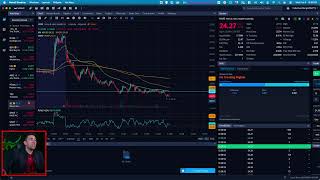
Kevin's thesis for the day was that the market direction would depend on AMD's open, not Nvidia's momentum. AMD opened down 9% and fell further to 15.6%, indicating institutions are selling the dip, which is a bad omen for the entire tech stack.
The software selloff is worsening, with Palantir declining 11.3%. Kevin notes that memory stocks like SanDisk are at risk of reversal, as memory is one of the last components of the AI cycle, suggesting a bad omen for memory over the coming weeks to months.
The AI and private credit squeeze is spilling over to other names like Robinhood and SoFi. Kevin warns that a broader stock market selloff risks company executives conducting layoffs to boost EPS, which could induce a recession.
The ADP report for January showed only 22,000 job gains versus an expected 48,000, indicating a dramatic slowdown in job creation. The largest pain is in business services and professional sectors, exactly where AI fear is concentrated.
Amazon is reportedly demanding OpenAI customize and develop its own AI products in exchange for investment. Kevin interprets this as a red flag, suggesting OpenAI is desperate for capital and that the AI hype may be overblown.
Banks are trying to offload tens of billions of dollars in Oracle data center loans to private credit and insurance companies. Kevin sees this as a red flag, comparing it to 2008, as private credit is already under pressure.
Kevin criticizes Wall Street advisors for always selling a bullish story because they benefit from assets under management. He warns that this could breathe life into a bubble that is meant to die.
Kevin notes that AMD losing the $200 level would be a sign that institutions are giving up, which is bearish for Nvidia and the entire market. He hopes for a recovery but acknowledges the selloff is intense.
The video concludes with Kevin buying a small dip in a software stock he believes is oversold, but he remains cautious overall, advising viewers to be careful with their investments and to consider raising cash. He emphasizes that the market is experiencing a significant rotation and that opportunities exist for those who are patient.
What was Kevin's key indicator for market direction at the open?
AMD's performance at the open.
02:11
What did the ADP report show for January job gains?
22,000 job gains, well below the expected 48,000.
11:37
Why does Kevin see Amazon's demands on OpenAI as a red flag?
Because if OpenAI were in high demand, Amazon wouldn't be able to make such demands, indicating OpenAI is desperate for capital.
15:10
What is the significance of AMD losing the $200 level?
It signals that institutions are giving up, which is bearish for Nvidia and the broader market.
01:28:03
According to Kevin, why do Wall Street advisors always sell a bullish story?
Because they benefit from assets under management; a cautious advisor makes no money.
01:08:02
AMD as Market Bellwether
Kevin identifies AMD's open as the key indicator for the entire market's direction, demonstrating a practical trading thesis.
02:11ADP Report Miss
The ADP report showed a dramatic slowdown in job creation, reinforcing concerns about the economy's capacity for layoffs.
11:37Amazon-OpenAI Deal as Red Flag
Kevin interprets Amazon's demands as a sign of OpenAI's desperation, challenging the narrative of insatiable AI demand.
15:10Wall Street's Bullish Bias
Kevin explains the structural incentive for advisors to always be bullish, a critical principle for retail investors.
01:08:02AMD $200 Level Critical
The $200 level for AMD is identified as a key support that, if broken, signals institutional capitulation.
01:28:03[00:03] liberation day, the day that President Trump announced tariffs. >> That you recall >> Well, well, we got good old nonsense drama talking going on. There Scott Besson testifying. Who cares? It's
[00:18] honestly, it's a bunch of crap. It's the same thing every time. These these congressmen and women, they go in there and they read scripts from the industry. you know, they're they're basically uh funding groups and they go in there and
[00:33] they read scripts based on the funding groups that donate money to them and uh groups that donate money to them and uh yeah, it's a stupid clown show. I I can't stand it. Uh they call me jaded, but uh yeah, I think it's a waste of
[00:47] time, honestly. Uh in the meantime uh this morning in the uh alpha report uh we uh we talked about uh the um uh AMD uh and we
[00:59] also touched on uh oops somebody says there was a little oopsy dupy on uh on me just make sure here I want to cuz I vision is for today. Give me a second here. DJT,
[01:15] that was his announcement on Truth Social. >> And in so doing, Truth Social. Okay. Yeah. One person's like, "Oh, you're not live on YouTube." I should be
[01:30] live on YouTube. All right. Anyway, we're good. All is good. Okay. So, yeah. I mean, here was here was the playbyplay this morning. And I just I give this to you because I I you know I recognize not everybody is a member of the uh alpha
[01:43] membership uh that you can get over at meet.com. Uh but I want to give it to you just so you can kind of see what things I'm looking for. Uh and you know it's after the fact uh now for for those of you not in it but I always think hey
[01:56] if I can provide value and try to teach uh why not? So my my thesis this morning was the tell of the direction of the market today would be almost entirely dependent not on the momentum that we're seeing at Nphase which is good that's
[02:11] great momentum for Nphase it has its own ups and downs uh but instead what would happen at open uh on AMD and unfortunately AMD was down uh 9% at open
[02:24] unfortunately AMD was down uh 9% at open it is now down 15.6% 6%. Uh and to me the uh indicator to watch uh at open this morning was if AMD goes down that
[02:37] means institutions are not buying the dip. If anything they're selling and it is really bad for the entire stack. It's a bad omen and it means the cues are a bad omen and it means the cues are going down. We were at 617 this morning.
[02:52] We're almost lineto line from pre-market 617 now almost down to 607. In addition to that, you're seeing the software selloff deepen with an 11.3% selloff deepen with an 11.3% decline on Palunteer. uh which that then
[03:07] decline on Palunteer. uh which that then also uh uh reported this morning that uh also uh uh reported this morning that uh you had this risk of a reversal in SanDisk uh just because this whole stack is going right and and really the way to
[03:21] look at the stack is memory is and I'm not trying to bag on memory and these companies are making money handover fist but memory is one of the last components uh of the artificial intelligence cycle and Unfortunately,
[03:37] that that means there's probably a bad omen coming for memory over the next uh omen coming for memory over the next uh you know, few weeks to to months. Uh and so I've been advocating for trailing stops on memory. Uh that's not to be
[03:50] bearish on the underlying industries. Uh and certainly we're seeing a broad sell-off uh not just in um you know, SanDisk today, but also this continuation of a selloff in in software stocks. Look at for example uh Service
[04:03] Looks like it recovered a little bit from the pain this morning. Got all the way down to about 104. It actually recovered about 4% there. Somebody went in and bought the dip. Let's go look at uh Salesforce. Salesforce also look at
[04:16] continuation of the software selloff. You had a little bit of a recovery here. You had a little bit of a recovery here. Uh let's get uh into it as well in here. Right around 10:00. So about 30 minutes after the open. little bit of a reversal
[04:29] on software with the exception of Palanteer, but really the play today was Palanteer, but really the play today was watching AMD uh and then uh projecting the Q's direction after uh AMD. We're now right at 607, which is, you know,
[04:42] now right at 607, which is, you know, not ideal. We are uh really seeing the weight of the artificial intelligence and private credit squeeze spilling over
[04:54] to to a lot of different names. uh you're not only seeing it spill over the sort of private credit liquidity crunch, but as a result of that, you're seeing which is then hitting companies like Robin Hood. Uh and because Robin Hood's
[05:09] going down, now SoFi seems to be going down, it's a little bit messy. Now something we we mentioned as well uh regularly and we talk about this is that when you have a broader stock market sellown you you risk company executives
[05:23] saying well I guess that means we need to conduct layoffs. So uh that's not ideal. SpaceX uh really needs to hurry up and
[05:35] IPO uh and who knows maybe we'll be through this this drama by the time through this this drama by the time SpaceX IPOs. But uh I mean look at this. I mean Robin Hood is is coming up on a 50% decline in value. Uh Nvidia is still
[05:49] sitting in its sideways range. PayPal won't stop bleeding. Uh Tesla, you know, won't stop bleeding. Uh Tesla, you know, peaked out around 500 bucks uh on uh uh you know this this robo taxi uh excitement around Christmas. But look at
[06:03] these hardware stocks. Here's just can't get back. You're up. You're down 16% today. Uh so you've now retraced about 40% over here. Uh corewave also can't make it to new all-time highs. Not a surprise to me that this one's trending
[06:18] back to our support line at zero. We've got all five over here. Uh I think this one's it's my opinion. I could be wrong, but my belief is that this company is a scam. Uh a micro uh strategy unfortunately has also just hit its uh
[06:33] all-time low over here. Uh, well, I should say not all-time low, but its lowest level since um all-time low over the last year is the more appropriate way to put it. You basically fully U-turned all of the enthusiasm for it.
[06:46] Uh, and you're now sitting at 2024 pricing. Uh, and uh, unfortunately, the next stop on our line chart is 39, which would bring you to about the lows that you saw at the beginning of 2024. So within that one year time span over here
[07:02] uh actually about 9 months you actually saw it rise from about 39 to that 120 fullport U-turn over here. Pretty depressing for the market overall. Apple
[07:16] though for those uh concentrated into Apple doing doing quite decently here. uh people kind of seeing Apple as insulated from ironically all of the art artificial intelligence spending that people so long bagged on them for. Uh
[07:30] quite remarkable. Now uh you know another thing uh to to Now uh you know another thing uh to to keep in mind is a lot of these these uh stock selloffs are being driven by this belief that oh you know software is all
[07:46] going to get replaced or creativity is all going to get replaced by artificial intelligence. That's quite a bullish outlook for artificial intelligence that I I heavily disagree with. I talked about this a little bit this morning uh
[07:59] just briefly in the uh course member live, but I it was really just as a way to sort of explain or or or teach. It's this isn't meant to be a pitch. Uh but what we're seeing with artificial intelligence is we think there is a
[08:14] plateau and we think that a lot of people are waiting because they think what's the point of developing our own machine learning technology? What's the point if artificial intelligence is going to go to artificial general
[08:27] intelligence? And based on what we're seeing, we don't think AGI is coming, not anytime soon. We think what we have are really good tools of AI and and so we can use those AI to create features and functions that haven't previously
[08:42] existed by training our own machine learning. So the reason I you know I I because I believe that a lot of this selloff in software is overdone. The sell-offs in software, Bloom Energy is still actually holding up. Uh when you
[08:57] get these sell-offs in software, you you risk leading to layoffs. Uh which is the worst case scenario because we don't have the we don't have room for layoffs. with the SEC, remember, yes, we do have a fund raise open for uh Reinvest. It
[09:14] a fund raise open for uh Reinvest. It does close on February 6th. Uh and uh can always click the offering circular button here takes you right to it. Or if you click invest, you could also click the offering circular right here. It
[09:27] conversion. Real estate backed invest with credit card. AC wires no fees. Investment round closes Friday. Okay, we already know all that. So, um let's go take a look here at uh the ADP report this morning.
[09:44] Uh let's go. ADP ADP ADP ADP ADP ADP ADP. Oh, Cody, the course live. Oh, okay.
[09:57] peek there. And then what we're going to do is we're going to grab the um what's it called? We're going to grab this ADP report and see what's going on there. But let me see if I made a little whoopsy doopsies.
[10:13] just for a moment here while I figure this out. Time is expired. I recognize insurance subcommittee, Mr. Clever of Missouri. You're recognized for five >> Thank you, Mr. Chairman. Um,
[10:27] unfortunately, uh, this is um, an embarrassing kind of a hearing. I I've been on this committee 20 21 years. We've had all kinds of conflict. In fact, I was in here when
[10:43] >> I don't really care. I don't want to hear this. Uh, okay. Good. So, um, somebody here says BTC is no dou nos diving. Yikes. Yeah, you know, it's,
[10:55] uh, and somebody else says not. So, what Oh, it is it with the technology today. Should be streaming on X. It says, uh, we've got that indicated up. Let me try we've got that indicated up. Let me try here. Ah, yeah, there we go. Thank you
[11:09] for that. I appreciate that. All right. Very well. So, uh, all those little technical glitches have now been solved. Now, we should be live on X and, uh, YouTube, everything's fine. Okay, perfect. So, let's go ahead and look at
[11:25] the press release here on the ADP report. Unfortunately, the ADP report report. Unfortunately, the ADP report was not great. Uh, this is the ADP was not great. Uh, this is the ADP report for January. Uh the data trend
[11:37] has been that we were looking for about a 48,000 job gain. Uh unfortunately what we got this morning was actually 22,000.
[11:49] Uh which wasn't great. Uh so we saw a little bit of a slower than expected rate here. It's still positive, but it reiterates to us how little room or capacity we have for layoffs. you know, massive decline in private jobs in 2025.
[12:06] Private employers adding about 400,000 jobs, down from 771. We've seen a continuous and dramatic slowdown in job creation uh and wage slowdown in job creation uh and wage growth has been stable.
[12:21] Now uh where we could see uh you know most of these are plus or minus zero but where we see the largest pain is actually right here in business services and professional which is exactly uh where the AI fear is. All right. This
[12:38] is exactly where the artificial intelligence um fear is. And what's offsetting it is mostly healthcare. Uh healthcare and education added the largest right here at 74,000. So if it wasn't for these sort of more lagging
[12:54] industries, uh we'd really have a problem. Uh you could see here. Yeah. Uh let's see here. These were the regions, education, health services. So they was hoping that they'd break those out,
[13:08] health was stand out. Yeah. No, they don't. Okay. Uh, and then it's pretty broad base, though. Uh, you know, you've got 17,000 jobs in the Northeast, minus 11 over here, - 10 over here, 25 over here. So, it's not like one region is
[13:23] really seeing the big swing. Although, I will say the South Atlantic number is negative 76,000. That's pretty aggressive. uh and uh interestingly it you know small establishments added zero is actually the largest of companies
[13:38] that had a net negative result on payroll. So that could be Amazon for example who is an ADP customer. So not ideal. This this did add a little bit of weight to the downside for um
[13:55] the downside for um uh the broader market unfortunately. So, uh, if we take a peek at, uh, let's see here, where are the Q's sitting today? Q's still down about 1.24. Look at that perfect bounce there at 607. It's
[14:08] actually positive, uh, to see that, uh, bounce right here. Getting a little bit of a recovery over here on SanDisk as well. Oracle, yeah, still leaking unfortunately. How's Disney doing? Disney's trying to recover a little bit.
[14:24] Look at that. Coming up from about 103 after its earnings. Okay, let's go see what is actually news out there. So, out there. So, let's find out.
[14:41] discusses getting special access to OpenAI tech as Amazon weighs an equity discussing a commercial agreement that could require OpenAI to dedicate its own researchers to developing Amazon products. Oh, wow. That's actually very
[14:56] interesting because what it what it sort of indicates of indicates uh is that in order to get money, these companies are becoming more demanding, right? Uh if if everybody so desperately
[15:10] wanted to get in on artificial intelligence, then you wouldn't really have the right to make demands. So, I actually see that as somewhat of a uh red flag on that OpenA fund raise. So, OpenAI fund raise
[15:29] red flag. Let's write it down. uh OpenAI Let's write it down. uh OpenAI or uh Amazon Amazon possibly requiring uh OpenAI help customize and develop
[15:45] help customize and develop Amazon's own AI products in exchange for an investment. Uh again, this let's write that down.
[15:57] let's write that down. um if people were uh climbing over each other for access to OpenAI shares at this valuation, Amazon would not be able to make these
[16:13] Amazon would not be able to make these demands. what else here? Amazon could customize its voice assistant features. We're focused on a strong partnership. This is more like a contract than an investment,
[16:29] more like a contract than an investment, right? Uh sounds like an um a you know sort of a contractor relationship, you know, work agreement. Sounds more like that than it sounds like anything else. That's clear. Not
[16:43] clear how much of a discount Amazon would get from OpenAI. Discussion show the length of Open AI may go to raise capital. Yeah, exactly. Shows the length that OpenAI will go to raise capital. That's bearish.
[17:00] potentially uh contributions of more than $60 billion in a new funding round. Okay. Such a deal also help Amazon's efforts to offer consumers of business
[17:13] AI software that stands out in a crowded market, right? market, right? Or not. Okay, let's see here. here. Amazon employees have faced restrictions on customizing models from Anthropic.
[17:26] Mhm. Meanwhile, Amazon's efforts to create its own AI haven't lived up to expectations. Pending this mega deal shows the two companies are interesting increasingly mirroring the kind of circular arrangement Microsoft and
[17:39] OpenAI forged at the start of the AI boom. Uh, OpenAI is renting AI servers from AWS. Bigger rental agreement than with AWS. Bigger rental agreement than with Microsoft.
[18:00] Anthropics had restrictions blahy blahy really matters. I think where the most interesting there is, you know, like it's kind of like I mean, you know, just just for comparison sakes, I mean, we're
[18:15] not anywhere in in their money raise levels, but like I I look at this and and I think, okay, you know, just for, you know, my my little startup, uh I look at this and go, you know, I'm not I'm not having to offer people like, oh,
[18:27] I'm not having to offer people like, oh, hey, if you invest in in House Hack, product, right? I've done that for nobody. And so, you know, we raised $15.1 million in 90 days for, you know, you know, a little little real estate
[18:41] startup, uh, you know, through YouTube, which which I think is really incredible. But like, you know, if I had to start going, "Hey, hey, yeah, uh in exchange for that, you know, we'll uh we'll we'll buy all your
[18:54] we'll give you a contract relationship where you could develop stuff for us or, you know, whatever or I'll buy your home from you or whatever that um then all of a sudden it sort of like it suggests, okay, well, isn't that then than then
[19:07] okay, well, isn't that then than then weaker in terms of uh you know, an investment mode?" Uh that's my take. Um, anyway, ah, going right back down to 607 there. That bounce didn't last. Look at that. Almost down 16% now on AMD. Yikes.
[19:23] Uh, so anyway, I I thought that was that was that's an interesting piece. interview with Michael Sailor?" What's up, Max? Um, no. I I don't really have interview with me. Let's just put it that way. Um,
[19:39] I would ask questions that that nobody's asked before and they would be quite uncomfortable and so I don't think it would go anywhere. Uh, so I'll probably get kicked out or killed. Why big tech
[19:52] Well, yeah, it's the big circle, right? I mean, I love the image right here, which they probably did with AI anyway. But Nvidia can invest around 30, Amazon down for 20, Microsoft looking at 10, Soft Bank will bring in money. colleague
[20:07] reported all of this, you know. Okay. Interesting. Current uh fund raise rumors. Okay. So, Okay. So, Amazon 20 bill, Nvidia
[20:20] 30 bill and uh SoftBank 30 bill, Microsoft 10 bill. uh this this could slow
[20:34] uh this this could slow you know these these are public uh so if you know these these are public uh so if they get punished by investors these they get punished by investors these commitments could slow uh absent other
[20:46] commitments could slow uh absent other justifications like Amazon's justifications like Amazon's uh you know justification above about oh well hey you know they're going to they're going to do special stuff for us
[20:58] they're going to do special stuff for us so companies by your schedule about the numbers. More concerning reasons.
[21:12] skepticism from markets about its cash burn, future profitability. OpenAI has buildup by leveraging its balance sheets. Uh, investors have signal there's no limit to how much they'll lend to pay bills for the future, right?
[21:27] blah blah blah blah. I mean that all of this works until it doesn't. And the way sell off in Microsoft stock, for example. And a sell off in Microsoft
[21:39] example. And a sell off in Microsoft is more investments into OpenAI. I mean, they're they're up 1% today, which is nice, but look at this. We're at 408. I mean from peak we've destroyed at
[21:56] Microsoft uh 415 uh 415 divided by 553 just destroyed 25% of value over here. Somebody says Google an arm cooked after
[22:09] the bell day. Oh no the the foreshadowing the $2 foreshadowing.
[22:23] Q's right at 607. All right, let's keep going here. See, so we saw this China's response blah blah blah. AWS data centers in
[22:40] space are a long way off. Oh well, yeah, I totally agree with that. Venture capital in the Epstein files. This is interesting.
[22:56] talk about that. This, this, and this. All right, let's see what we have here. So, Nvidia's application to sell the H200 is still awaiting final approval from the government nearly 2 months
[23:10] after Trump uh approved the sale. Ah, that's interesting. Jensen brokered the deal. Ah, that's still on ice. Nvidia to China deal on ice. Uh,
[23:25] Uh, still waiting for H200 export license. still waiting for H200 export license. It's been 2 months since Trump approved it, but it needs formal approval. Well,
[23:39] that's useful to know. All these deals on ICE. Not great. Okay. What is this entertainment decline they're talking about? Uh Disney's parks chief. Disney named parks chief. Oh, the parks chief
[23:56] is taking over. Yeah, I didn't know what position he had before. Disney's appointment reflects the fact that it is now primarily a parks company. You might not realize that from the Hollywood obsessed news coverage of
[24:10] Disney, but its financial performance proves it. ships, and consumer products generated $10 billion in operating income, while the entertainment and sports generated
[24:22] the entertainment and sports generated 7.6 billion. Wow. Yeah, no kidding. I Disney that, you know, Disney takes the profitable, high margin, pricing power, parks and cruises, and merchandise revenue and blows it on making, you
[24:37] know, streaming content. Uh, that's been the uh the sort of joke. steadily as it opened new parks and expanded its cruise ship business around
[24:52] the world. And they they I mean they have great quality honestly. I mean they have the pricing power. Uh over the past decade ESPN and the cable channels have declined. Well that makes
[25:04] sense. Replaced by streaming, right? Disney's now making decent money in streaming, but nowhere near enough to offset the loss in TV. Wow. offset the loss in TV. Wow. Wow.
[25:21] left. The company's revelation that the HP CEO would suddenly succeed. Alex puts the spotlight on the latter hiring and why Shman longtime CEO to blah. Okay. Yeah, whatever. All right. These companies are lost for direction.
[25:37] All right, AWS on space data centers. The biggest pro, one of the biggest problems, by the way, is cooling. And uh somebody asked me, they're like, Kevin, what do you mean cooling? Like, isn't it cold in space?
[25:49] cold in space? Excuse me. Excuse me. Uh it can actually be very cold or very hot in space. So, uh you know, cooling cooling in space isn't as intuitive as we think. We think when we
[26:02] fly, it gets colder as we go up. But the problem in space uh there's there's so much radiation uh and and obviously you know variations based on where you're orbiting uh it could get very hot uh and and very cold. The problem with cooling
[26:16] in space though is you don't have air flow. So you can't like use fans to cool GPUs. You have to cool them with with a liquid. Well, that's not that easy either because you need a liquid that has to sustain
[26:30] at, you know, negative 140° which is very cold and positive 140° which is very hot. Uh, and then it still has to be a functional product. So, a lot of uh uh people use a uh in space like you know space station uses I believe it's
[26:46] know space station uses I believe it's like an ammonia based um you know solution that's exceptionally toxic to humans. Like if you go service an ammonia line and you get some of it on you and you take a whiff of it, it
[27:01] could kill you uh like instantly. It it's it's very very bad and noxious the stuff that's used for space cooling. And you know, I I I don't think we're as close as people think just on a cooling basis alone. So cooling is a substantial
[27:18] issue uh for space data centers. I I do think that think that uh hold on. I think Lauren's calling me. uh hold on. I think Lauren's calling me. Uh oh.
[27:41] All right. So, space data centers uh to me I think you know this this is this is just my opinion uh and I've said it in my space opinion uh and I've said it in my space data center video uh in my uh space data
[27:54] data center video uh in my uh space data center video which I think I have that I center video which I think I have that I think I called it the space X uh SpaceX data centers meet Kevin. Let me see if I can link that video. Oh yeah yeah yeah.
[28:07] Okay, there it is. I posted it a month ago in my space data center video.
[28:23] uh, I I talked about how speculative, uh, data centers in space are and the challenges, uh, including the physics of cooling in space, uh, how hard it is,
[28:36] right? Uh, so I'm curious to see what the AWS staff suggests. The AWS staff.
[28:55] Okay. Uh, okay.
[29:28] Okay. So, uh Okay. So, uh Okay. Uh
[29:42] existing technology is pretty far from making space data centers possible. AWS making space data centers possible. AWS uh current tech far from making space data centers possible. And this sort of align so far with what we we've studied.
[29:59] Uh, I don't know if you've seen a rack of servers recently. They're heavy. Uh, we have not built a permanent structure in space on the moon or anywhere like that. I know Elon's going to launch a million satellites. There
[30:13] are not enough rockets to launch a million satellites yet. Uh, that's also million satellites yet. Uh, that's also kind of a good point. Uh, so yeah. No, no. Nvidia chips using normal
[30:27] yeah. No, no. Nvidia chips using normal water on Earth is different than space. You know, in space you you have substantially larger temperature extremes. You know, if you would just your water lines would just freeze uh in
[30:41] the cold of night. It just doesn't work. So like trying to apply physically trying to apply uh a technology that works here on land to data centers in space is is is Uh I mean that
[30:56] space is is is Uh I mean that here let me um I'm going to make a very let's do this. Uh it was a 34minute sort let's do this. Uh it was a 34minute sort of deep dive analysis into this. Uh,
[31:08] of deep dive analysis into this. Uh, let's I'm just going to change the title here to just something blunt. We're going to call it SpaceX and blunt. We're going to call it SpaceX and data um
[31:22] data um SpaceX data centers in space. Uh
[31:35] scam or 10x. SpaceX data centers in space. Stata centers. One word or two. space. Stata centers. One word or two. How's everybody writing it these days? Two words. Good. All right. Let's see what else they say. Earlier this week,
[31:49] they'd be merging with XAI, blah blah blah. We know that. Bezos, who also in last fall, data centers in space could be built within the next 20 10 to 20 years. See, I actually think that's a reasonable time frame. That's a very
[32:03] reasonable time frame. I think that's very reasonable. I think that's very reasonable. Yeah. All right. Good. So, now let's see here. What else do we have?
[32:22] about that. All right. Good news is, you know, there's plenty of room in the United States even to build data centers, which I'm pretty excited about giant commodities and they're going to actually make the the final products
[32:37] intelligence, I think, will be the companies that provide really good value to people. Uh, obviously that's what we're trying to build with with our house hack AI. uh you know, if we can nationwide cast a net and go, "Hey, here
[32:51] are the best 20 houses to buy across the entire nation, right? That's like instantly that's really valuable." Or the best 1,000 homes to buy, whatever. want. It's quite incredible. And it doesn't require AI to get any better.
[33:06] You know, it AI could stay at this level and it's totally fine. could become a whole another issue.
[33:20] Washington Post lays off onethird of its staff. Is it in Bezos by the post? Washington Post is cutting onethird mass layoffs in a broad strategic reset. Wow.
[33:33] layoffs in a broad strategic reset. Wow. Wapo million in 2024. Wow. They're getting smoked.
[33:47] Yeah. The papers owner, Jeff Bezos. Yeah. Yeah. Yeah. Yeah. Deep gutting.
[33:59] rag with little viewpoint diversity. For years, I read op-ed section, you're racist, climate change, Trump is Hitler. Rinse and repeat. I mean, I don't think you should judge the Washington Post on the uh opinion piece uh section. I mean,
[34:15] really any paper, right? Uh I actually find that they tend to get some decent scoops. You know, the fact that they're losing money like that is obviously a actually get some pretty decent exclusive reporting.
[34:29] exclusive reporting. Uh so, let's take a look at this. Why nobody really knows the scale of the US housing crisis. Okay, let's take a look at this. Uh, America faces a housing shortage.
[34:41] Moody says it will take 2 million homes to resolve that shortage, but Goldman put the number at 3 million. Zillow says 4 million. Brookings projects 5 million and McKenzie 8 million. Congressional Republicans insist it's 20 million.
[34:55] There are other economists who contend there's no shortage at all. Uh, there are 146 million homes. Of those 8.1 million are doubled up homes, meaning people share space with non relatives. It's an interesting phrase.
[35:09] Uh this would be like roommates basically. 3.4 million vacant homes available to rent or buy. Well, but that those could be homes in transition. I mean, because that's like 2%. You know, that could just be properties in
[35:23] transition to uh to being rented out. I mean, like when a home is under construction, it's going to be vacant, right? I mean, we just bought 12 and construction and they're vacant, you know, and then we rent them out and then
[35:37] weren't able to live in them before. So, you know, that's that's providing you know, that's that's providing housing. Uh, let's see here.
[35:49] how many consumers have developed striking out because of the cost? May seem counterintuitive. Blah blah blah. What constitutes healthy vacant levels? Bureau. What is this? Vacancy rate tumbled after the housing move ended.
[36:03] Fine. Housing costs are prohibitive. People live with their families more, data because if people aren't forming actually figure out how many more homes that you need? Point is,
[36:19] you know, cities are really bad at at delivering more housing. And that actually makes housing such a good investment because they like politicians investment because they like politicians really suck at enabling housing. They
[36:33] think what you should do is have rent control which then reduces housing uh building. They think that you should build affordable housing units. Well, that then also reduces construction. So as usual, the government, you know,
[36:47] generates this real backwards math for um um uh and backwards incentive structure for you know uh housing and housing affordability.
[37:06] plans to install Christopher Columbus statue outside the White House. Okay. whatever. Let's get back to financial stuff.
[37:20] stuff. US shoots down Iranian drone outside uh uh or outside the just outside of the airspace of a US aircraft carrier. Really? Look at this. This is a Washington Post piece. US forces shot
[37:33] down an Iranian drone approaching the aircraft carrier US Abraham Lincoln in the Arabian Sea. Wow. The incident occurred about 500 miles from Iran's southern coast. Somebody says, "Kevin, go check out
[37:48] Apploven. What's going on with Apploven?" Oh, wow. Q's 60397. AMD now down 16.7. Well, like we said in the alpha this morning, if AMD drops even in the first minute, it's a red flag for the Q's. And oh my gosh, it was
[38:03] it a red flag for the Q's. Also, SanDisk, this trailing stops are going to start triggering. Just accelerate the down for people. Wow. SoFi down 6%. What's going on with Apploven?
[38:21] Wow. Off a cliff, huh? It's almost down half. That's remarkable. Okay, what do we have here? So, this was a Shaw 139. Oh, they've used this to go, you know, bomb uh Israel or try to.
[38:37] Actually, I think I have, if I go into my search feature, I might actually have my search feature, I might actually have a picture of it here. Do I? No. A Oh.
[38:51] Oh. Oh. Ah, here we go. 136 131s. This was a 139. How interesting. because these are the drones that Iran, you know, likely manufactures in uh
[39:06] uh or for export to Russia. See, Russia is working towards manufacturing a variant of the Iranian drone which calls which is called the Guarant 2 to supplement its dwindling stockpile. This is the 136, but they shot down a 139.
[39:22] is the 136, but they shot down a 139. It's very interesting. shiad drones assembled in both Russia and Iran.
[39:34] Look at this. I I wrote this I wrote about this back January 2024. They actually got a lot of data in here. Like quite useful. All right. What else? way, if you ever want to look at me Kevin app.
[39:53] approached the carrier despite personnel using unspecified deescalatory measures. Yeah, how do you tell a drone to stand down?
[40:09] That's cool. An F-35. That's awesome, man. I want to fly an That's awesome, man. I want to fly an F-35. That' be sick. But I will not. All right, what else do we have here?
[40:22] Russia spy spacecraft have intercepted key European satellites. That's not key European satellites. That's not good. Reading the runes on war
[40:36] ICE agents rather from Minneapolis Nova Nordisk Nova Nordisk uh Disney blah blah blah. Banks seek out new buyers for Oracle data center lows. Here we go.
[40:52] Here we go. That's what I want to see. Look at this.
[41:04] right here. Oracle. Oracle bank loans and financial times.
[41:18] Let's see what we got. Banks are tapping investors such as insurance companies of private credit as they try to find buyers for tens of billions of dollars of loans tied to Oracle data centers. Exactly. This this
[41:31] is why exactly why I keep saying that the whole private credit slowdown isn't idiosyncratic. It affects everything. So, you know, banks going to private
[41:45] So, you know, banks going to private credit to bail out uh Oracle data center credit to bail out uh Oracle data center loans
[41:58] me uh this is a red flag uh private credit is is a red flag uh private credit is already seeing money run for the exits uh on fears of fraud AI software exposure uh and uh poor
[42:16] AI software exposure uh and uh poor performance relying on private credit to uh buy out bank loans for data centers uh is um a bad omen in my opinion. Okay.
[42:35] At least 56 billion dollars worth of debt have been given investment grade ratings. Right. Right. a project, finance loans for construction of toll roads airports
[42:50] themselves, massive deal size of recent data center projects have overwhelmed this source of demand, leaving tech giants key to keen to find new sources of capital. Right? We basically tapped every single finance bank possible. But
[43:05] there are only so many banks. Banks will have to offload that risk if they want to keep lending. Wow. Yeah. I mean, they're bluntly saying it. Uh, you know, they're they're bluntly telling you
[43:22] out of money. Uh, which is bad because that affects the entire cycle, right? You know, if if if not Oh, okay. the founder of uh First Brands just plead not guilty to um
[43:39] fraud that just came through the wire. First Brands uh CEO just pled First Brands uh CEO just pled pled not guilty to fraud. Yeah, we'll see about that. Okay. Uh so
[44:00] institutional. Right. So they slapped an investment grade label on it. Slapped investment grade rating. Well, that's okay. rating on it to open up pension funds.
[44:17] Okay, that this sounds like 2008 all over again. 2000, you know, the the over again. 2000, you know, the the books on 2008 are writing themselves. 2007, 2008. Uh let's see here.
[44:37] Mexico consulting on how price floors could be included in agreements on trade. US Mexico announced plan to develop coordinated trade policies.
[44:54] understanding to boost critical mineral supply blah blah blah blah blah. Okay. I work as an engineer at a major auto company. We are cutting production and
[45:08] shifts. Manufacturing has been rough, especially autos, you know, with with especially autos, you know, with with how high rates have uh, you know, been. Uh, it has uh it has definitely been been rough. Oh crap. Hold on. I got to
[45:22] make a quick call. I totally forgot that I booked this for this time." Well, good thing I noticed it right now. Uh, actually make sure I actually get the phone call. Oh, I think they're going to call me.
[45:35] Okay, cool. It hasn't come in yet. Uh, well, when it does, we'll just listen to some TV. Uh, and then we'll comment on it. But Uh, and then we'll comment on it. But anyway, I got to be alert for that.
[45:51] for debt comes amid a rapid increase of debt issuance by big tech companies. half of the largest 10 buyers in the US investment grade bond market set to be so-called hyperscalers by 2030.
[46:06] Investor concerns have been growing about Oracle's aggressive commitments. Ratings on data center loans cover Oracle's leases on $ 38 billion of data centers. We're talking about So, it's a total of $56 billion in this article
[46:21] total of $56 billion in this article referenced uh in this article. could just delay this like 30 minutes because they haven't called yet anyway.
[46:55] end. Okay, perfect. See if I can buy myself a few minutes. Uh oh, that's good news. Uh
[47:20] Okay, cool. Good. All right, so let's go back to where we were. investors rating down data center leases, right? Blue Owl credit rating.
[47:34] today because I mean obviously everything's dumping hard today. Well, percent. Wow, the Q's are almost down 2% again, huh? Oh, trying to get back to again, huh? Oh, trying to get back to 607 here. Sand is still down 11%. But
[47:47] let's look at Blue Owl. See if I go Blue Owl. Blue Owl Technology. This is their fun. They're actually up today. That's interesting. Uh they've been coming down quite a bit. And then you could really
[47:59] see that pain right here on Blue Owl. Boy, they've gotten hos. And then if I Boy, they've gotten hos. And then if I go to Blue Owl
[48:16] Wait, Blue Owl Tech. Which one's which? No, this is another fund as well. They just have so many. That's a BDC, Business Development Corporation. Blue Business Development Corporation. Blue Owl
[48:32] There we go. This is the company. This is the private credit lender. You know, they've come down from 2555 down to under $12 now. So, more than have uh their BDC is has fallen off a cliff and so has Blue. These are the companies
[48:47] that they like they can't get rid of these loans anymore. So, they can't get "All right, well, let's slap an institutional rating and let's sell it institutional rating and let's sell it to pensioners." Which honestly is like
[48:59] scary. Wait, where did where did they say? Oh, thought I saw them say pension up here. Investment grade ratings allow banks to attract a broader I thought they said pension.
[49:14] I thought they said pension. No, maybe they didn't. I guess not. I swear I saw it, but oh well. Uh, okay.
[49:26] It opens up a new pool of institutional money that previously saw these assets as too risky. Right. Right. So slap a better rating on it to try to keep the better rating on it to try to keep the Ponzi going. I'm telling you the 2007
[49:38] books right themselves. Software company Monday raised separate $25 billion. We saw that. We saw that credit rating has been extremely rare. While receiving a been extremely rare in the data center space, it's now becoming common. Right.
[49:53] girls. Everybody gets a rating. You get a rating. You get a rating. You get a rating. Crazy. Uh, almost all large data center deals are trying to get a credit rating now.
[50:06] against Oracle's long-term lease commitments, which are priced at 2 and a half over Sofur. It's actually not that terrible of a spread. Borrowing costs
[50:18] for newer Oracle link data center projects have widened 3 to four and a half. levels are closer to junk ratings, right? Yes, I agree. Pricing uh the pricing of debt has not yet been sold on to
[50:32] investors. Some investors are hesitating about whether to purchase the two syndicated loans in anticipation of higher returns. Right? So, they think that they're going to get better yields if they just wait.
[50:48] to AI. So they're trying to offer higher uh interest rates. JP Morgan and MUFG which are leading the finance data center project declined to comment. Of course they did. Ah it's like yeah we are
[51:01] trying to offload the bag man. The banks are trying to get out. Banks colluding with a Yeah. Yeah. Yeah. What a line. Look at that. Banks colluding with Look at that. Banks colluding with rating agencies. Sounds like 2007 all
[51:14] rating agencies. Sounds like 2007 all over again. No kidding. Recommend. That was a good one. In summary, the debt is so large the banking system that. It's ultimately but to do more. They can't do more. Basically, it's
[51:28] negative margin and competitors that are overtaking. Yet, the bank is somehow investment grade or the rate the debt is somehow investment grade. Right. Right. That's that's the scam. Uh,
[51:43] okay. Let me call him. Frank, um, we like this part was just for fun, but yesterday, just for fun, we
[51:56] took we said, you know, here's a list of all the S&P 500 companies and loaded them into, um, chat GPT and um, Claude just to see how the two would differ and say, should this be an AI beneficiary or hurt by AI? And then the second question
[52:09] we asked was, does Claude code benefit or hurt? No, there was a lot of self uh self-conlicted self-interest on the claude responses on this on the cloud claude responses on this on the cloud code part, but there was so much um
[52:21] conflicting ambiguity even on the chat GPT and Claude side of it that it was interesting to me that there was not consensus. Now, we've been doing work on completely. And Liz, where I where I also disagree a little bit is you're
[52:35] right. There's tremendous multiple compression, but we still think there's of them. So if you look at a data dog for interest, for example, data dog seems like it should be a beneficiary from all of this. It has had multiple
[52:49] compression. It still trades at like 300 times earnings. Um or you take what is it like Palunteer is still at 100 and change times earnings. Um who else was I that's really compelling, but it's at 99 times earnings. So even with multi
[53:02] multiple compression there is not the margin of safety broadly out there I think to justify the pain and the ambiguity that AI and quad code has introduced in this space but again the research process is not going to be
[53:16] short with these so you start it today I'm with you completely that there's >> I would just rather you know go on individual stocks on that to you are you possibly names to buy are you writing off this sector completely how are you
[53:30] it's having on the broader market. Yeah, I mean for me Frank it almost feels like a protracted deepseek moment that we had last year where you know headlines are yesterday was kind of this anthropic news on on what what innovations are
[53:46] happening in legal maybe you don't need uh counsel in certain respects to review contracts we'll see u but for me software to Jenny's point it still is expensive right so it's still eight times sales of you know the software
[53:59] discriminate in terms of what names you're looking at um also to Liz's point I think it can go longer right I mean a lot of these a lot of these stories so it is for me potentially inching into the story but I think the main point for
[54:12] me as I look at the traditional SAS model there could be some harmony with AI agents and the traditional SAS model where these these two um technologies could work together in a productive way so yes there will be winners and losers
[54:29] um but you just have to continue to pay attention I wouldn't be selling here. in going forward. >> All right. Uh, I want to move on to the back quite a bit today. You can see they're down more than 16%. Uh, the
[54:42] Lisa Sue came on our air, talked a lot the back half of the year, possibly being a big boost to the company. Joe, report? Do you think this is simply an overreaction? maybe fueled by some of
[54:56] the weakness in software that seems to be pushing this down or is it just the fact that it just wasn't good enough? I >> I don't think I I need to respond with a a dramatic lengthy answer defending it. It's it's fatigue. I mean, that's what
[55:10] it is. It's fatigue. It's pulling back. It's had a significant move since April. It's pulling back into the critical support of moving averages. It's going to remain in the ETF for us. It's been a strong position and I think it depends
[55:25] on where you've entered AMD. If you have a degree of runway where you entered into this in the second quarter or third quarter of 2025, you have more room to play with where your exit ultimately may may be. But unfortunately, if you were
[55:41] late in this in the fourth quarter or at some point more recently, you might be staring at what is an unprofitable trade. And you just have to manage the risks surrounding that. and understand ultimately that there is going to be
[55:55] exhaustion surrounding what has been such a compelling strong tailwind for markets over the last several years. That powerful force dissipates at some dissipates and I think this is a reflection of it. It needed to exceed
[56:10] and it did. All right. >> By the way, Wolf out with a note saying they would use tech weakness to buy AI related semis. basically saying looking that uh chips are unfairly being punished. Do you agree with that take
[56:23] when it comes to the chip space problem? >> Um I think in certain instances that that applies. One name that that might work towards is Texas Instruments. Texas Instruments, which we added to the portfolio recently. That's that's a
[56:38] little bit of an AI story, but that's more about a recovery in autos. That's more about a recovery in its core business, which is analog chips. And again, this isn't a stock that has rode along with the tailwinds of the
[56:52] semiconductor industry over the last several years. This is a stock that's had a very strong rally up 40% from November. Why? Because it's seen the say, okay, it's an improvement of the economy. Pick whatever reason you might
[57:06] cite for that, but it's industrial automation. It's improvement in the auto that's really where the strength is coming from here. >> All right, Jason, you own Qualcomm. actually reporting later today with the
[57:18] idea of fatigue in the market right now impacting AMD by you know by a lot looking at this upcoming earnings report and just this company in general earnings up about one and three/4ers of 1%. Yeah. So, they they had a downgrade
[57:32] a couple weeks ago by Missou and it was really kind of this story that I've we've heard a lot about Qualcomm with kind of um Apple uh moving away from their business and obviously that they you know $28 billion handset business uh
[57:47] for for Qualcomm and that and 8 billion of that is Apple, right? So, so that is a significant story. But I think the other thing for me is what has started to materially grow is IoT and and the auto business. And again, we probably
[58:01] than they have over the last couple of quarters, even though they're growing at almost a 30% clip. We're going to need to we need to really see those numbers continue to spike to potentially offset what that loss might look like for
[58:14] overblown. I think that's going to take some more time. But, you know, listen, Qualcomm has definitely underperformed uh the market and underperformed the semis sector. So, um I'm going to we're going to need to see some catalyst there
[58:28] >> We're looking at the broader chip space, Liz. Uh outside of memory where there's today from one of CEO saying there's going to be a shortage till 2028 basically. Um how do you view the other areas of the chip space? Cyclical
[58:40] one example. Of course, Nvidia is another one. How are you viewing this the cycle to take some money off the table or do you ride out this volatility? >> Well, so first of all, to Joe's point of
[58:52] think that's happening in the AI trade broadly. I don't think that's just even happening in the chip space. And the rotation that we've all been talking hoping for. The money has to come from somewhere. And a lot of the money has
[59:07] come from the stocks that took us to the point of highs in, you know, the big 10 names in the index, highs in all of those AI darlings. Well, now we're into other places. I think that's part of why we see the Dow as the only major
[59:22] index that's up today. Traditionally, I would look at the chip space versus software and say it's a cyclicality signal. Right now, we're seeing software having underperformed semiconductors by 20%. Right? And and Jonathan Kinsky has
[59:36] pointed this out just recently. There's such a widespread between the performance of semis and software right now that at some point there's got to be some mean reversion just from a technical standpoint. Now that might
[59:48] mean that semiconductors have to come down or it might mean that software has to bounce. Maybe a little bit of both. I think semiconductors broadly speaking in the AI trade will continue to be an okay place to be. But if you're trading these
[1:00:01] names and not investing in these names, this is probably not the right time to >> Totally agree with what you said. The AI fatigue is not just isolated to semiconductors. But I also think it's interesting because if if you're sitting
[1:00:13] market from a macro perspective and you're the bear and you look at what has unfolded in the market, the correction in crypto, the correction in precious metals, the significant precipitous uncll decline rather in software,
[1:00:26] technology kind of rolling over, momentum rolling over right now. But guess what? The S&P 500 is still in a pretty good place. And that really is this really has not damaged the prevailing bull trend that's in place
[1:00:39] >> I think we're about one and a half percent away from a new all-time high. could even happen today. Unlikely but it could even happen today. >> It's the rotation is so dramatic this year. And you know where my focus is.
[1:00:51] It's always kind of more value old economy. And you look at the Schwab high yield dividend index for ETF for example. The ticker SCHD. It's up 13% for the year. That's wild. Well, people are looking for safety, but it's
[1:01:05] >> like the dram the the dramaticness of this rotation is to me quite powerful past the first quarter. I'm enjoying it >> I think it's reflected in the elevated volatility 19. If you're a hedge fund,
[1:01:20] this is great environment for you right now. You're you're doing well. big earnings reports coming up later. Liz, I'm just going to turn back over to you. Um Amazon and Alphabet report this week. two of the Mag 7, two
[1:01:33] about fatigue. Could this possibly with all the drama we're talking about just reports from both of those, good growth in the cloud business and for Amazon the retail business. >> I think the story right now, first of
[1:01:47] all, the hyperscalers that have reported already have announced increased capex. year. I think it's in the high 30s%. That's the expectation. So, that train has not slowed down. We're continuing to spend. We're continuing to be optimistic
[1:02:01] about how that spend might produce revenue going forward. I think the story will be and has already become a lot of these companies that are established, they have established customer bases before AI, before this whole story. Is
[1:02:15] that established customer base going to be as lucrative for AI as we go ahead? And part of it is cloud revenue has to maintain its growth. It has to at least maintain its strength. And depending on what the company is, I don't talk about
[1:02:29] where they found their their customer base and how sturdy that customer base is, is there growth going on outside of some of these stories of the moment? And last week, with some companies that weren't seeing as good cloud growth as
[1:02:45] as we expected. So, I think that ends up being the real lynch pin in this. But to your question, will both of those calm all of these either or either? I I don't think so. I because I think I don't think it has to do with hearing bad
[1:02:59] results out of the hyperscalers or good results out of the hyperscalers. Does think that's what this software selloff is about. I think just generally speaking, investors are looking for other places to find opportunity. And
[1:03:12] valuations. And when you get skittish opportunity, any excuse to say, "Oh, there it is. There's the big reason." And then you see some of the selling beuette selling. And I think that's what
[1:03:25] >> Jason, coming over to you very quickly. You own Alphabet and Amazon. Are there confidence in? One that you're more worried about? And obviously they've obviously traded better over the last several months. I
[1:03:38] think as it relates to Amazon and thinking about AWS, clearly to Liz's point, we're expecting a reaceleration. I mean 21% is expected. I think they probably need to show 22 to 23% uh for
[1:03:50] the stock to continue to run. Ops margins close to 12%. Um and they've again with that announcement of 16,000 layoffs, you know, about a week ago. But again, the the the big story here is is
[1:04:02] the capex as well, about $35 billion this quarter. You know, the the market is asking for a return on capex. I mean, that's obviously the story that's of different story. I mean, fully integrated, traded very well all of last
[1:04:18] year. You know, Gemini 3.0 was a hit. So, I just continue to watch that and and be hopeful as as we as we move forward through the year. Um, and Google year-over-year. So, I I continue to like both of these names. I want to bring one
[1:04:32] Halftime committee member Bill Baroo. He's actually trimming his holdings when earnings. He joins us right now. Bill, talk us through this trade. What's your thought ahead of earnings? >> Yeah, this started uh last week with a
[1:04:47] little bit and then more yesterday. Um, Alphabet and Amazon were both about a 7% holding in our main portfolios and about a 14 and 15% holding in our concentrated
[1:04:59] portfolios. So, this trim, you know, we brought it down to 5 and a half% each and about 9 to 10% each in the concentrated. And really, it's it's less on a conviction here and more about risk management. Um, you know, we feel about
[1:05:11] they're going through some rotations. we're going to get these earnings and we want to have the ability to be flexible through the earnings report. Uh but as well what the indices turn out to do here in the next couple of weeks. Um
[1:05:24] with that said, I mean I I think there's definitely some some potential know, they're everybody on the desk has already pointed to it. Capex, there's they're moving more into the energy space. What kind of capex is going to
[1:05:37] going to be a surprise? Uh cloud and AI search revenues, they've been a tailwind. Is it enough to offset it? Um and then and then Amazon I mean we saw the reaceleration AWS last quarter. Are we going to continue to see that and is
[1:05:50] the bar already set to be very high? So again these aren't conviction where where we're trimming them down because we dislike the name but it's getting into a more manageable space for us and give us flexibility. Um you know whether
[1:06:02] we want to buy these names more after after the report or the weeks after or definitely some other places too. >> All right. Um a bunch of analyst notes about both these companies always uh in particular William Blair saying 2026
[1:06:15] sets up favorably for Amazon. So you say you're looking for a re-entry point. Are you worried that you're selling? I know you're not trimming everything, but have to buy at a much higher level that these these reports could actually be
[1:06:27] they think they're one of the best AI plays as the optionality stemming from the technology extends beyond its service to other companies driving efficiency and competitive position. >> You know, I don't disagree with them. I
[1:06:39] largest holdings. I think out of five and a half% waiting in our main portfolios, uh it's still a very large holding and are concentrated, you know, holding. You know, again, I think this is more about the the risk management
[1:06:52] move in general. Um you know, if I look out, I do see a lot of headwinds around April and our plan coming into the year was we thought the the equity markets year. You're seeing it in some pockets, but not all pockets. And um you know
[1:07:07] >> hey sorry about that. Uh yeah anyway I hope hope you enjoyed that segment there on uh on this. I I don't think you know one of the things that drives me nuts uh and you know I like the guests that CNBC has uh or have that they get on here
[1:07:21] often but one of the problems that you have is man it seems like the days the market goes down you get these people coming out going oh yeah you know we're trimming exposure and they kind of just like reiterate everything right. Sorry,
[1:07:34] I had that phone call there. Uh, but they reiterate this doom loop, unless you get Tom Lee up, which is honestly it's so interesting and it's something for you to know. I think if there's a lesson for you to learn or know just for
[1:07:47] the rest of your life, uh, and they're rescheduling the BLS labor report for the 11th. If there's one lesson to know kind of for the the rest of your investment career is these people will always sell you the bullish story
[1:08:02] because that's how investor investment these these adviserss make money. Imagine you call a financial adviser and you're like, "Hey man, I want to move my financial advisory firm or whatever." And then the adviser's like, "No, man.
[1:08:16] better off staying in cash, you you know, and then you call the other guy million bucks, you know, and they're like, "Oh, great. We'll put you into going to get you the latest and greatest exposure, investment grade debt, this,
[1:08:29] that, or whatever." They place you, the banker gets their fees. So, so the guy who maybe told you the right thing to be cautious to, to, you know, hold on, don't invest right now, raise cash, that guy makes zero money off of you. The guy
[1:08:43] going straight up." up. You know, the Tom Lee strategy, that guy makes all the money. So, the whole industry is designed to tell you it can never be bad. And now, I hope it's not going to be bad because I don't want to go into a
[1:08:59] deep dark recession. But keep this in mind, if we go into a deep recession, if we go into uh, you know, a the AI bubble put this together for course members this morning, just sort of like a little
[1:09:13] you. Anyway, I go, "Here's how this works with CEOs, right? The stock market works with CEOs, right? The stock market uh goes down. The CEO is not happy. The stockbased compensation is at risk or they might get fired." So, the CEO
[1:09:28] starts complaining about the market going down. So, they're like, "Well, we got to get EPS up." Well, how are they going to get EPS up if if you know revenue slowing down? Well, we're going to fire people. So, you fire people and
[1:09:42] there you go. Uh and then you get your EPS up. But that's how you also induce the very recession that you're trying to avoid is as you fire people to to limit your earnings per share exposure. And it's it's wild. So, you know, in my
[1:09:56] it's it's wild. So, you know, in my opinion, this is um this is really a opinion, this is um this is really a how should I put it?
[1:10:11] uh the you know Wall Street adviserss and talking heads always to the upside because they benefit from aum problem with that is are we just breathing life into a bubble that's meant to die you know I don't know this right here makes
[1:10:27] Oracle logo over here I want to see what this is uh Oracle yeah so you know This putting these investment grade credit ratings on Oracle debt, which it's
[1:10:42] because the banks are trying to offload that debt. You know, that's that's a red flag. Banks are like, we need to get rid of this. Now, I understand banks also benefit from making a loan and then selling off the loan, right? This is
[1:10:55] make another loan, but they also don't want the they don't want to hold the bag. And so that's why when you look at these private credit funds, they looks we're just here recently because some of
[1:11:08] private credit funds have been selling off. So private credit is like who's investing in Blue Owl right now? Like who's throwing more money into Blue Owl to go finance meta data centers, right? I don't know. Sussy sussy baka, you
[1:11:23] know? So uh you could train a parrot to say byebye and make the bird look like a genius. Yeah. I mean, and in fairness, genius. Yeah. I mean, and in fairness, the market does go up uh over the long
[1:11:36] term, right? Like over the long term, yes, the market goes up. So, like, you know, I look at and I go, "Hey, look, we've raised a lot of cash, you know, no company or whatever. very very conservative, tiny little bit of stock
[1:11:50] exposure and and you know I've got a list of my 10 favorite 11 favorite stocks that I really like but I'm also fully aware that you know the money that we invest or you invest or whatever in the market right now you know close to
[1:12:04] alltime highs it could get halded you know so you kind of got to be careful uh me show my bare bull scale and let's get to that Oracle article so if we go to my bare bull scale uh but it is why house hack is just sitting on cash right now
[1:12:17] too quite quite so you know we want to be prepared but look at this you know uh I lowered uh after we got wash this was a really big moment here wash was the
[1:12:29] a really big moment here wash was the worst case scenario after we got wash uh my opinion uh is that we actually we lost a big chunk on the bareb scale here uh and this is now accelerated by weaker than expected ADP numbers which both of
[1:12:44] these numbers the ADP numbers or or whatever. You know, weekly jobs have been at a 30k 32k basis. Some numbers were coming in at a 48k estimate. You know, everybody's expecting a beat, we get a miss. That's only slightly
[1:12:57] bearish. We're still in that midpoint range, but boy, wash is just problematic because War should make you demand more risk premium for being in the market. you should be demanding higher returns for investing right now because Kevin
[1:13:10] Walsh isn't going to print his way out of a out of a recession uh based on his history. Maybe he's a changed man. Maybe he's going to give us a different uh response to what he's historically done. But I generally believe that you should
[1:13:26] trust people when they give you uh when they tell you who they are. You know, when somebody tells you who they are, believe them. Uh and so hold on a sec. Give me a moment.
[1:13:40] >> The HIV portfolio, uh the quarter was good. Shares up just about 7%. What do just the fact that there's a new CEO taking the helm of this company? tiny bit nervous because the previous CEO, Emma Almsley, was the only one who
[1:13:54] actually delivered consistent earnings um or consistent expected earnings and and met earnings in the last several years. Um, but here's the bottom line, and this goes back to Liz's almost like opening comment, which is when she
[1:14:06] be going in stock, she said, you said you wanted to look for companies with >> And all of these companies like beyond just GSK in our portfolio, but Regeneron in our portfolio, Fizer, Bristol Myers, um, they all are minting cash. So
[1:14:21] Bristol Myers for example has 12 billion of free cash fl. of free cash fl. >> So let's pop in over here. Uh so Oracle here uh let's see here
[1:14:36] uh let's see let's see here it's funny how perception change in September Oracle raised its estimate of next year's capex by 10 billion that was in September and the stock rose by more than a third in a
[1:14:48] the stock rose by more than a third in a day. On Wednesday, Larry Ellison boosted the forecast by 15 billion and the stock slumped 13%. slumped 13%. Uh it's like a little sun dial. Uh let's
[1:15:01] case, Ellison strategy remains essentially the same. Oracle was on essentially the same. Oracle was on course for 280 280 sorry on course for $280 billion of capex over the next 5 years according to BNB Parabus.
[1:15:16] Facebook owner Meta Platforms have collectively uh committed to 523 billion of revenue. But there's a growing lag between the cash out and cash in.
[1:15:29] Uh Wednesday's bump to 2026 spending plan wasn't accompanied by a corresponding increase in revenue. $80 billion plus fall in Oracle's market cap shows investors aren't thrilled about this delayed gratification.
[1:15:47] racing to hone in and sell their AI services may not need all that compute after all. Blah blah blah. lobby. This is all old news. The size of the debt uh what is this second? The size of the debt may not end up as cumbersome as
[1:15:59] fear. Analysts estimate Oracle will end up with 150 billion of net borrowings up from roughly 100 billion today. But its business is growing too. If all that goes to plan, Oracle's net debt would be about 1.5 times IBIDA compared to uh
[1:16:13] three times now. That's their net debt. Not all data center investment would be on Oracle's dime. Some customers might bring their own chips, but they've been just suggest this on Wednesday. They've been saying for a while that, oh yeah,
[1:16:26] a bring your own chips model. I think that's cuz they're out of freaking money. Uh I don't think that's a bullish thing. I I I I see that as like, wow, investments, which I don't really want to hold the chips either. Um I I get a
[1:16:43] plenty of software companies that I think are a steal that have massive pricing power. Uh like into it right now is a one peg. It's insane. Like I've been waiting for this company to get cheap. Uh and look at this. Like I'm
[1:16:59] just waiting for a potential RSI reversal here cuz look at this. We are so oversold on into it. You're at you're at 18 right now. Uh, but you've been at 18 over here as well. So, I'm waiting for a little bit of an RSI reversal and
[1:17:14] then I want to buy uh the dip over here on into it. This is a one peg and this company has regularly been like a four peg. So, it's, you know, it's it's really compressed its valuation which is fan freakingastic for a company with
[1:17:28] massive pricing power. Uh, and so it this does create opportunities, right? So like while it's understandable to be concerned like there are opportunities mean it's less of a joke it's it's also kind of true uh you know our company is
[1:17:43] raising money assuming our artificial intelligence is worth zero this isn't a solicitation for you to invest remember always read the offering circular uh you get 5% plus all upside you can invest with credit card a wires no fees uh
[1:17:56] we've raised $15.1 million in the 90 days ending Jan 20th which is awesome of this, but the point of me bringing up this reinvest AI thing is what I think is so remarkable is uh you know this this to me like our company has zero
[1:18:12] valuation on AI. So it's like you know the real estate company has its investing in the AI is already you know has zero valuation because we're raising on a valuation we did before we had AI our own models. These are our own
[1:18:26] models. This is not like some some rapper. These are our own models that we train. Uh, and it's really cool because I think that like it doesn't matter how creates opportunity because it gives upside to the surviving companies that
[1:18:40] aren't heavily indebted. The worst case scenario right now is that you have a company with a lot of debt that gets smoked. Uh, like I was actually looking at Super Micro this morning. They don't have that much debt. You know, if you go
[1:18:53] look at uh the debt over at Super Micro, uh their payables did explode, but they've got essentially the cash and accounts receivables to cover their debt. Uh and then of course they've got some convertible debt here. The bigger
[1:19:07] problem with a company like Super Micro is their gross profit margin almost haved. Like how does your gross profit go from 11.8% to just 6.3? That's insane. So you have this massive compression over here. We did a big
[1:19:21] analysis on NPhphase as well this morning uh in the alpha membership which meet kevin.com and then you get all of our fundamental analysis and you could you know go in the stock tab of the app and look at historical analysis. Uh but
[1:19:36] uh wow Oracle now down another 6%. What's really remarkable there here is this company is now look at this. Uh you're at 144 divided by 344.
[1:19:48] You're now down almost 60% on Oracle stock. Let's grab Oracle really quick. Oracle investor relations. Let's just go look at their debt exposure because this look at their debt exposure because this is uh this is quite the sellown uh on
[1:20:01] is uh this is quite the sellown uh on the stock and uh you know raising money more money I in this environment. I don't think there's much of a capacity for it, but let's go grab the December 11th. So, this is going to be the um
[1:20:14] 11th. So, this is going to be the um 1211 2025. This is the Oracle 10Q earnings statement. Uh we won't, you know, it's pretty boring to look at there for very long. I always try to keep it pretty simple when I'm on a live
[1:20:30] stream. Uh let's take a look here. So, I've got cash of $19.2 billion, right? So, that's my cash right now. What bills do I have to pay? Uh we're going to add back in deferreds right here. Right? So you always add back in those deferreds.
[1:20:44] know, that's when those become uh refundable basically, right? And that refundable basically, right? And that becomes a problem. So uh I have $27 becomes a problem. So uh I have $27 billion of debt and I have 19 uh.2
[1:21:03] that that's not so much the concern because they're raising money now. They're issuing $20 billion of shares. They're raising money. So, what do we have over here? Current payable. Look, these are the long-term debts. Okay?
[1:21:16] I've got a hundred billion of debt over here. I've got 11 billion over here. about those. And I've got another $9 billion of debt over here. So, I've got about $120 billion of non lease debt. This is a lot of debt. I mean, you want
[1:21:30] to see a debt statement. Watch this. If I go down to the debt statement where they show you like their outstanding debt, it's pages long. Like I don't I before. I had to find the damn thing. Uh oh, it might be in the 10K. I don't know
[1:21:45] where where they list their outstanding debts. H it's probably in the annual report where they they list their outstanding debts. It's like a chapter book. Uh and I mean it doesn't matter like it's it's all related to those net
[1:21:58] total numbers that I just showed you. I just think it's interesting when you it's like, "Oh, wow." Yeah, that is cool to see. But you could see all of their maturities
[1:22:12] uh for all their debt. You could do this with Micro Strategy as well. And and this chapter book. Look at this. Notes payable, bro. Imagine like going to your CPA and being like your CPA is like, "Yo, uh, go ahead and list your debts,
[1:22:25] please." And then you have to list all of these debts out. Look at this. This is crazy. I mean, like, some of them are long-term, right? Which is nice, and these because you're doing these 20 30 year notes, but I mean, this is insane.
[1:22:41] Uh, and they're just adding to it, right? It's kind of wild. Uh, so, you people have. And and now when the banks want to offload to private credit and private credit's like, we don't have any
[1:22:55] surprise. You know, the market now on Oracle is down 6%. We've got Palanteer dropping even more, down 14% now. AMD $200. Holy smokes. Pretty sure that's
[1:23:07] morning. Uh, let's see here. Where is it? Where is it? Where is it? I just I like looking just so I could see uh what what I said compared to what happened because it it
[1:23:23] compared to what happened because it it just helps everybody learn, too. Uh so okay where was it? Oh yeah yeah yeah here it is. Okay so I wrote this morning uh oh this was yesterday. Yesterday
[1:23:40] Palanteer selling off would be a warning Tesla back to 414. That's exactly what happened. Uh ADP well worse than expected. Worst claims blah blah blah. Where is the part? What do we need today? Oh here we go. Uh, if AMD falls
[1:23:54] even more and loses $200, something is quite wrong. Institutions have flipped. Watch for an AMD selloff at the open because that brings down the cues.
[1:24:07] Wild. Uh, okay. And then where's where's crypto right now? Look at this. This is crazy. We're now sitting at this is the one minute chart. It looks like
[1:24:19] this has really accelerated within the last it's been about the last 3 hours. So since market open since market open well market open was 9:30 right here. This was market open. We went from 746 to now 72. We're about to lose 72. We're
[1:24:36] going to be in the 60 soon. Let's see what CoinGlass has on liquidations. Coinlass liquidations. But yeah. Anyway, if you want to join the um Meet Kevin membership, remember that's at meetke.com. And the real estate AAI
[1:24:49] People keep asking me like why what's Reinvest? It's it's what we're going to brand house hack to over the long term. It's the same company. Okay, so 24hour It's the same company. Okay, so 24hour wreckage here. I've got $359 billion in
[1:25:04] Bitcoin, 324 in Ethereum. How is Ethereum doing? Is Ethereum still above 2K? because poor Tom Lee is just getting killed right now. Uh we've got
[1:25:23] What a shocker, huh? Holy smokes. 2100. What's Tom Lee's cost basis these days? I think he's he's got to be down like 50%. Oh man. Um Tom Lee. Let's see here.
[1:25:41] You know, he blocked me cuz I'm too blunt about him, but uh that's okay. So, this is what people are saying on X right now that this is his P&L right
[1:25:53] right now that this is his P&L right now. So, total invested $16 billion and uh down currently about 7.1 probably more today because this was yesterday. more today because this was yesterday. So, it's probably even worse right now.
[1:26:07] Holy smokes. I mean, I I don't really care about Tom Lee. I feel more bad for the people that, you know, blindly follow Tom Lee into these investments. You know, like I I I like to try to be really rational with investments. You
[1:26:23] an example. Like I actually think Netflix is a fantastic company, but uh I've been saying that this downtrend is showing no signs of stopping. We just broke into the oversold territory, but we could actually extend way lower than
[1:26:38] that. I mean, if you look at 2022, RSI got down to 17, right? Uh and if you worst. You go back in history, those are some of the lowest relative strengths on the weekly basis. I like using the weekly basis.
[1:26:52] A and um you know I think that uh Netflix is a really good long-term buy, and I've been saying this, if you buy it now, it's probably going to go down more, you know, but Tom Lee is not going to tell you that. Uh and that's I think
[1:27:08] the part that's missing is you don't have advisors who are willing to tell you, listen, we could go into a 10-year recession. Donald Trump is going to look recession. Donald Trump is going to look like a clown. You could lose your job.
[1:27:21] Don't get wiped out in this down cycle, right? Invest what you're willing not to look at for 10 years. You know, then you get Tom Lee. Ethereum's going to 7,000 get Tom Lee. Ethereum's going to 7,000 in January. Come on, man. That's like
[1:27:36] you should be sued for that. It's It's crazy. I Whatever. Whatever. So, uh anyway, Q's are now down. Uh we're about to lose 600. 595, I think, is our next stop. Yeah, 595 is our next stop. Uh we'll probably get a recovery
[1:27:51] here at some point. Usually, you know, when we get sell-offs like midday, we usually end up recovering like you get to like this peak selloff, peak margin calls, and then you get some kind of recovery. So, you know, it would seem
[1:28:03] odd for this to continue to nose dive like this. That would be an AMD losing 200 would be really bad. And it's losing 200 right now. I hope it doesn't close under 200 because that's a sign that institutions are giving up. Uh which
[1:28:17] institutions are giving up. Uh which which is not good. Uh, not good. So, um, 200 AMD is is really the only thing that's held Nvidia up. In my opinion, Nvidia has been rangebound uh because uh or you know AMD had its pop but then got
[1:28:32] stuck. That's been sort of my thesis. I kind of look at these things in pairs. Sometimes I can't articulate that logic as well as maybe I should, but that's my headsp space that that AMD dropping 200 is is is bearish for this range for
[1:28:45] Nvidia as well. But again, I I hope that we could just bottom out here and recover and uh and recover into the close of the day. Like if I was a day trader, I I would be potentially uh looking for, you know, 5 minutes of
[1:29:01] uh looking for, you know, 5 minutes of uptrend. I get five minutes of uptrend, some call options towards the end of the day. Hope we get some kind of recovery. Uh holding 607 would be great. I don't know if we're going to get it. I mean,
[1:29:13] this is this is a an intense wash out right now that's happening. Uh, if I go jump into let's see what the doomers have for us. Uh, let's see here.
[1:29:33] bond market? You know, because the bond market also snuffs some of this out. The bond market generally gives you its heads up via the yield curve. heads up via the yield curve. Ah yeah yeah yeah. So remember 125 is
[1:29:47] you're in a recession right? So, we have been trending towards this and and a lot of people, you know, I get it. They they've they've been frustrated uh by my comments that you should be cautious. That caution in fairness started a
[1:30:02] little early. You know, I got cautious around September, a h probably August, July, right around here, right around the yield curve going across zero. So, that was a little early, a little
[1:30:16] cautious over here. And so I admit this was early. Uh but you know it's not uncommon for me to come early with these these thoughts. Uh and then concern, but we've seen this sort of just gradual rising here on the 102
[1:30:33] yield curve. It's really not until 125 that you're in a recession, but by then it's too late. You know, you can't sell at 125. Uh and I'm not going to sell any Like I've already done that. I I sold Nvidia between probably average was like
[1:30:48] 195 is when I sold Nvidia. I told everybody in the alpha report I would I would send out alerts when I sell Nvidia and I sold some at like 205. I sold some at 195, some at 185, you know, whatever. It was kind of spread out in that range
[1:31:01] cuz I was selling a little bit at a time. Uh but but that's when I started also becoming that was just that was in like October. I started becoming bearish on hardware because I do think that cycle is unfortunately topping out
[1:31:13] because the debt is starting to get constrained and we're seeing that now if you jump over to these Bloomberg pieces or sorry uh the um uh this you know the banks trying to get new people for loans over here on on hardware not great you
[1:31:30] know this this is red flag so that's why I was sending sending these alerts like I think you know the big stretch is over for it and we're getting to late cycle and hardware. Uh, and getting tapped out on financing is just adding insult to
[1:31:43] injury right now. Uh, again, why you know, and and I I say it not to pitch, but I like and I realize I I probably went debtree, me personally, debtree went debtree, me personally, debtree around October of this year, you know,
[1:31:57] right around here. And then uh the company itself hasn't taken on any bank debt. But the reason we haven't is because I've been so uncertain about, soft landing and I'm still sitting at like a 5.3 on the uh bear bull scale. Uh
[1:32:13] again, that's that's not arguing, oh, we're definitely going into the toilet. You know, I do think some of this software selloff is overdone. Uh and I Like I do think there are going to be some glorious opportunities to buy
[1:32:25] software cheap but unfortunately you know sometimes markets as we like to say than you can remain solvent. So you have to be careful yoloing into debt for some of these. Again I maintain that this is ridiculous opportunity on on in it. But
[1:32:40] you know things could get worse. I mean if I go to the week chart on this we're in oversold oversold on into it has not happened since the summer of 2022 on the week chart. So these these sell downs are quite remarkable. Let's go to
[1:32:54] Salesforce. Salesforce Salesforce has been at these levels before. What about Snowflake? Snowflake has been at these levels before. How about Palanteer? See, Palanteer is not even oversold yet on the week chart. Palanteer is down 13%
[1:33:09] right now. And we're sitting on a relative strength index at 39. You know, 30 is is your threshold for oversold. Uh we're actually building another this is sort of a side project that we have. We're building uh an an AI sort of
[1:33:25] version of the alpha report not to integrate with the alpha report to be a integrate with the alpha report to be a separate thing but basically uh you know a tool that you could utilize to find these reversals uh more easily and to
[1:33:37] notifications when the reversals happen on the weekly RSIs. The weekly RSIs are like I feel like my bread and butter for those reversals. But uh but yeah. Uh okay, cool. Let's let's keep going to look at um uh what we have
[1:33:55] from Oracle again. This was uh let's see Oracle. We saw that. Okay. What do we you got Russian drop. European European security officials believe two Russian communications of at least a dozen satellites over the the continent. Uh
[1:34:10] okay. Okay. So, it's intercepting the comms, not exactly the actual um what's it called? Um you know, satellites. So, it's not like they're they're attacking the actual satellites. They're just trying to potentially put
[1:34:24] themselves in the way and the capture the data. I But I'm surprised though because this data should be encrypted. So, if they're sending non- encrypted data, well then anybody can intercept it, right?
[1:34:36] it, right? So, uh I wonder if these low do do uh do low earth satellites uh encrypt data? Uh low earth satellites frequently encrypt data. However, encryption is not
[1:34:51] universal. Are you kidding me? Oh my gosh. Look at this. 50% of satellite data, including some government and military traffic, has
[1:35:03] been found unencrypted, leaving them vulnerable to interception. Come on, dude. That's like that's like the dumbest thing I've ever heard, dude. That's so dumb. Why would you not encrypt government and military
[1:35:17] satellite data and then anybody with a radio can listen to it? That seems dumb. I mean, I have I have multiple radios on my desk. Like, here's a Well, you can't it. I have this uh I have an encrypted radio right here. Can you see it?
[1:35:38] an encrypted radio right here hardwired on my desk. And, you know, good luck on my desk. And, you know, good luck listening to that. Uh, so ain't going to happen. Um, like you know, if I can encrypt, the government certainly should
[1:35:54] encrypt, the government certainly should be able to. Oh, I think it's hilarious. be able to. Oh, I think it's hilarious. Uh, okay. So, let's try the journal.
[1:36:06] the journal. So, that was Russia. This is stupid. Uh, what is this? Oh, yeah. Here we go. Let's go look at this. We've got somebody writes Nari. Nike is up. Is
[1:36:18] that true? Let me see here. Tesla under 400. What we got here? So, Nike. Yeah, Nike has been on its its frustrating downtrend here. Invest in communications kidding. What do you like, Cloudflare or what? How's Cloudflare doing? Let's try
[1:36:34] net gov is lazy. There's a video of a YouTube guy intercepting data. Wow. Send that over. Uh, that camera quality is that this camera I actually do like it a lot. This is a uh I think this is a one one two
[1:36:49] focal. I I don't use this angle a lot honestly. Uh this is 1.2. So that's how you get the you know the crazy bokeh in the background. And you know we're what are we streaming at
[1:37:04] right now? I think we're I mean I'm pretty sure I'm bottlenecked at 4K but that's okay. Uh sorry 4K. I'm bottlenecked at 1080. But anyway, uh, so, okay, we're getting a little bit of a
[1:37:17] recovery here on the cues. No, that's one candlestick. Let me go to unaveraged for a moment. Two candlesticks. Two candlesticks on averaged. All right, we'll watch it. But, uh, let's keep going here. Or we'll come back to it,
[1:37:31] rather. What's this? Reading the runes on WS. Kevin W going to be an inflation on WS. Kevin W going to be an inflation hawk or Donald Trump's poodle. Poodles. Russia is watching you. Yeah. Yeah, maybe. Uh, yeah. I don't care where
[1:37:47] maybe. Uh, yeah. I don't care where you're from. You know, it's um just you're from. You know, it's um just gonna add value to the world. Okay. Oh, cool. We just got another after uh Matterport done. That's cool. I
[1:38:01] after uh Matterport done. That's cool. I always find that very exciting. Uh these uh what's it called? Um 3D scans. So cool. 3D scans. So cool. Uh, okay. So,
[1:38:16] Uh, okay. So, let's see here. He's more of a interesting. I didn't know that. Is a Japanese lens after all. Okay. So, but
[1:38:30] his recent statements on inflation outlook uh suggest the latter, right? he's going to try to come in there and just dump rates.
[1:38:43] he's very much the hard money central banker. was still struggling with the recessionary aftermath. He already credibility. Uh-huh. He made four main points. First,
[1:39:00] monetary polic or applies only to monetary policy, not regulatory policy. Second, the Fed as a first responder must resist the temptation to be the ultimate rescuer. Yeah, that's that's good and bad, right?
[1:39:13] Uh, so the Federal Reserve won't print money like always and uh and and frankly
[1:39:30] um you know distort the reality of how an economic cycle should go. However, it's bad because if you have somebody like this who ends up burning the
[1:39:43] um what's it called? Uh the entire economy into depression. Then you ask yourself, well, what's the lesser of two evils, right? Somebody's asking about bond yields. Uh well, let's look at the two-year really quickly if we're seeing
[1:39:57] any flight to safety. So, two-year is really going to be a proxy for rate really going to be a proxy for rate cuts. basis points, and the 10-year is flat. Wow, that's interesting. More people
[1:40:13] fleeing into the 2-year. Uh people often flee into the 2-year uh as a safety tool. So, you look at the 10-year as concerns over long-term inflation and budget deficits, and the 2-year as concerns over near-term policy. So ADP
[1:40:29] comes in weak, the 2-year goes down because they think the Fed might be more likely to cut rates on weak jobs data. 10-year stays high because they're worried about inflation. That's just sort of like the bond market analysis.
[1:40:41] But as those two things diverge, right, as the 2-year gets bought under fears that rate cuts are coming and the 10ear stays high because of inflation, there's further that spreads, the more likely you're in a recession or going into a
[1:40:57] recession because obviously in a recession rates are going to come down, but that's going to lead to more debt. So that's how you get that divergence. usually what happens is you get that divergence. That's how you get the 102
[1:41:10] yield spread. But both of the yields go down. And that's why, you know, some them in the past, too. It's just hard to time. Uh, you make a recessionary bet on like TLT, for example, because TLT, you
[1:41:24] know, when and if the economy goes into recession, the 10-year also gets bought get bought. The two just gets bought a little more. Uh, problem is, you know, with Donald Trump's inflationary policies, TLT has been a horribly
[1:41:37] performing asset. uh uh or I mean it's mostly sideways. So it depends on how you were exposed to it. But the reason it's been so stuck is because this is convinced that inflation is going to be solved. Uh and so it's just it just
[1:41:49] You know, you look at what happened during COVID TLT exploded because of recessionary money printing and this this actual flight to safety. That's kind of interesting. Uh Q's now actively recovering, which is good. So we've got
[1:42:04] more recovery here. This is on the average. I now have six green candlesticks. This is positive for uh potentially getting a rebound back to 607 by the end of the day. It's not unusual. You get those liquidations, you
[1:42:17] get the panic during the morning and then things kind of recover a little bit towards the end of the day. The broader trend unfortunately right now is still somewhat down which isn't great. But anyway, I've got Bitcoin
[1:42:30] anyway, I've got Bitcoin uh let's see here. Bitcoin at uh 721 is where we just had a little one minute chart double bottom. Cloudflare is also at the discount you're getting on Cloudflare right now. Let's go look at
[1:42:44] the uh valuation of Cloudflare because this is a great company that I don't think is going anywhere. I love Cloudflare and shout out to anybody associated with Cloudflare, but uh their valuation has been very high and it's
[1:42:59] been hard to justify buying them. I can't get my iPad to turn on. It's fine. I'll I'll Oh, did I do it? This iPad's so bugged out. Oh, there we go. Okay, good. It's like turning Siri on and everything. All right. Okay. Okay. So,
[1:43:14] if I go to net, uh, yeah, it was a five peg, right? So, here's some of my notes on it. Uh, I wrote the following on Cloudflare. Wall
[1:43:26] rate over the next four years. That's a five peg. They're heading towards the you're going to get some dilution way in case they have to pay off that debt. Uh I'm not bearish, but the market
[1:43:42] debt. Uh I'm not bearish, but the market is going to punish uh uh you know, see, look at this. Uh if there's a market hiccup in early 2026, they have to pay cash for the convertibles. The market might punish
[1:43:56] that. They'll still have cash available, but I'll watch for a discount. Momentum is too hot. This was at the end of the year. Valuation sucks. pricing power is
[1:44:08] good and the balance sheet is great. And so now if you look over here, you actually see the stock is trading down uh quite a chunk here. Now you're at currently trading for 163 divided by 260. You're trading down about 38% from
[1:44:24] highs. Uh what I showed you just now, by the way, that's the uh stock tab that all the uh alpha course members have access to. So you could kind of just like pick on the side. Hey, I want to see Kevin's
[1:44:37] stock on the side. You know, none of this is like AI driven. This is just me the tickers and stuff and you can kind of pick and see the historical stuff that I've said about a stock or whatever. Uh oh, that's those are a lot
[1:44:52] of windows. Let me close some of these windows. A mess, huh? Uh so um let's see here. Then we've got uh let's close this. Close this. I don't
[1:45:05] anyway. Okay. Okay. So, now let's see what the doomers have. So, now let's see what the doomers have. So, Doom Bugger. We'll actually look in
[1:45:20] doomers. Let me see what they're saying in the background. So in the background it says the dollar's bounce looks durable as capitulation fades. Stock selloff worsens on report of plans for
[1:45:33] Iran talks collapsing uh per Axios. Oh, and then is this just a rotation or something more profound?
[1:45:45] Yeah. Well, that's why AMD going under 200 is a problem. Software meltdown is a big drag for the leverage loan market. Private credit. Yeah. Uh, CLLOs's, Private credit. Yeah. Uh, CLLOs's, private credit, Arcane Investments, all
[1:46:00] that. Somebody says 617 on the cues tomorrow. I have a couple calls. Uh, I mean, yeah, that's it's hard to say, you know. I don't I don't like to make my predictions right before market open. I found that
[1:46:16] market open. I found that my This is just my personal finding of of my own trading. I find that my trading is much more on point at the beginning of the day right here in this moment uh rather than during the
[1:46:30] middle of the day. Mostly because like I think the psychology is that a lot of are looking for trades during the middle of the day. So there's there's you know less momentum that compounds during the middle of the day. So it's hard to
[1:46:43] initiate trades in the middle of the day. Okay. Uh what was I going to look at? Oh, Axios. Yeah, Axios. Oh, Axios. Yeah, Axios. Axios,
[1:46:58] plans for Iran nuclear talks are collapsing. Well, that's not great. collapsing. Well, that's not great. Okay, hold on a second. We've got um we've got some crypto scammer that subscribed to the channel and uh
[1:47:12] apparently is now spamming crypto trash. So, that you know what that means? We are going to have to go to turning off poverty chat. Uh, blame the crypto scammer. Poverty chat's going away. It was nice. It was
[1:47:27] nice chatting with y'all. All right. It's all right. You can blame the fraudsters. Yeah, it's got to be a sad life when you have to steal from people to make a living. All right. So, plans for Iran nuclear
[1:47:42] talks are collapsing. The US told Iran on Wednesday that it will not agree uh to Thran's demands to change the location and format of planned talks. Why does it matter where the talks are? The standoff could block the diplomatic
[1:47:56] military action. US and Iran had agreed to meet in Istanbul, but Iranians said on Tuesday that they wanted to move the talks to Oman and
[1:48:09] hold them in a bilateral format. US officials considered the request to officials considered the request to change but decided to reject it. change but decided to reject it. Okay.
[1:48:23] We told them it is this or nothing and they said okay then nothing. Uhoh. See people dig in their heels in negotiations and it just gets dirty really fast, you know. Oh, here's somebody actually talking about
[1:48:36] opportunities in software. Let me listen for the model. But when you look at they're not seat based prices, they're consumption based prices. So as people are using more data and touching more data, their revenue is going to grow. Uh
[1:48:49] big advantages in this new world. So >> what about IoT? >> So IoT is a slightly different story. They are in the market of doing >> fleet management, telematics, uh those sort of things. But what their real
[1:49:03] these businesses that need their technical help. When you think of where Agentic Technology is happening and where it's going, it's not going to be impacting the people that are running a fleet of petroleum trucks or that are
[1:49:16] doing asset management for tagging of generators in the field. IoT Samsara has building AI functionality into their core product so that they can go to predictive maintenance or safety training and things like that. And that
[1:49:30] actually for them is going to allow them to upsell and cross-ell into this than we would have thought of before. >> I want to ask you, I don't know if you and broadly or you can be specific, whatever you want. What about the likes
[1:49:43] in the room, you know, down on a 5-year basis and centering DAO and yet if you look into next year, it looks like it's still going to have 9% revenue growth similar to last year, 33 34% operating margin perhaps. And this stock has been
[1:49:57] the multiple down 20 points. >> Yeah, exactly. So, the application space in general is at the focus of this storm as people begin to wonder about, you know, what's the value of a systems of record uh company and how much can this
[1:50:12] >> We think it's really important first of all for investors to >> be positioned correctly across that entire space and not be making a massive applications because it is so uncertain right now. Do you think in other words
[1:50:25] that a company like Salesforce, you know, specifically in this instance, but what I would just say is is that the bare narrative is is that the long-term annuity value of an applications company
[1:50:37] might be not as big as we thought it was. was. >> So basically the risk premia goes up and he he has a point he has this point of saying like be careful being too
[1:50:49] uh and and having too much. I think that's fair, you know, like I think opportunity. You know what? F it. Let's buy the dip right now. I'm going to buy the dip right now. Uh let's go.
[1:51:05] we're going to go for What am I going to do? What am I going to do? What am I do? What am I going to do? What am I going to do? Go buy the dip over here.
[1:51:19] Bye. Just a little bit. I buy like 20 grand. Just a little bit. I buy like 20 grand. How's that sound? H 22,000 bucks. Fine. Works for me. Bye.
[1:51:33] Bye. All right. Perfect. I'll send uh what I bought in our uh little alerts thingy. Uh just went through. All right. Let me send that and then let's listen in again for
[1:51:46] some of the semi in the chip space. You've got KLA, you've got AMAT. Um are anything going on here you about this infrastructure buildup, even more comfortable than we are about the
[1:52:00] application space, frankly. >> You know, every time we talk with the CFOs and the CEOs of the big frontier model companies, their commitment to spending on this buildout only goes up. So, the backdrop there is it's almost
[1:52:12] isn't a question about, you know, is this getting replaced? It's a question going to happen. What we're looking for there then is where are their key capacity constraints. One of them right now is in the actual buildout of of
[1:52:26] benefits semicap greatly. You know across memory uh and in terms of you know the logic chips that are happening. move through 26 and into 27 you're going to see an acceleration of equipment
[1:52:39] buildouts uh into the clean rooms are getting built. So that sets up a really >> And then when you think about the core microprocessor companies, again, we >> Musk wants dirty rooms. >> When you look at AMD's rumor is there
[1:52:52] China revenue and there was some concerns about this year's growth of the either one of those is a durable question from our mind. So if you have a long horizon and you understand kind of what you think the opportunity is, we
[1:53:05] >> All right, Brooke, it's been great to have you. Really appreciate your time like Door Dash, you know, Meta Texas Instruments. So you're kind of up and down in terms of size, but um I guess my quick final question as the broad one
[1:53:19] for the market is in a year when so far the dividend stocks are leading the way, the ISM outperforming, maybe that's part of this broadening trend. >> How does it feel being in the highly concentrated tech space? Do you think
[1:53:31] this is just a necessary shakeout? >> So you know, first of all, within tech, money in lots of different stocks that like we like, you know, Texas Instruments is not an AI play. Texas Instruments is being driven by the
[1:53:44] spending. Uh they're doing a really interesting acquisition today. Like there's lots of reasons where you can find great opportunities around AI, but investors need to remember like AI is the thing. This is the biggest trend
[1:53:57] It's going to impact massive parts of the economy and you need to be front >> Kind of fun unless you're in a name down, you know, 20% in the week. Uh, Brooke, really appreciate time. Brooke
[1:54:10] another name that's been hit hard by these new AI tools is Legal Zoom. The shares are off 17% since Monday after Anthropic announced its entry into the legal tech space yesterday. But the CEO tells us the new technology is actually
[1:54:24] a massive accelerant for his company and for Main Street. And he says this will effectively expand the market. Joining us now is Legal Zoom CEO Jeff Styel. Welcome. >> Thank you, Kelly. Appreciate it. What
[1:54:36] was going through your mind yesterday? >> I I mean the you know the the usual thoughts when when your stock drops for you know for no good reason especially when our company frankly is a beneficiary and excited about
[1:54:51] >> dude legal zoom. Oh, come on, dude. Of course, you're going to drop from AI >> involved and engage particularly in our space because it means we can do more to automate the technology that we know will be automated and displaced and then
[1:55:06] focus on the human in a loop aspect that we've been building out over the last couple of years that we think will be the driver for us in the long run. >> Tell me about Harvey. As I understand it, there are actually enough of legal,
[1:55:21] >> you call them AI tools in the space that are experiencing some adoption. So, what's the differentiation between these new models that are going to get so much think you're in? >> Sure. And and it really is a very
[1:55:35] different position between what Harvey does and frankly what anthropic this legal term today. Uh, somebody here, uh, Taylor Taylor donates $5 to say, "I'm having a hard time reconcile how investors reconciling how investors
[1:55:49] can say SAS is dead because of AI, but the AI trade is a bubble. Seems like the truth is in the middle." It's actually really interesting that you say that. Uh, I'll show you something that I wrote in our alpha commentary this morning.
[1:56:04] Uh, and I'll just show a part. I I'm not trying to give away everything that I the morning, but look what I wrote this morning. literally in the alpha market commentary. Both cannot be true. AI kills all software. AI hardware is a
[1:56:18] kills all software. AI hardware is a bubble. Both cannot be true. So yeah, you know, that's uh that's that's interesting to me. Uh
[1:56:33] so anyway, all right, good. So let's see here. Then we have let's go to Oh, look at that crypto rebound right here. Look at that.
[1:56:47] Allan says, "I bought the dip yesterday. Same price you just bought." Oh, let's go. Uh so uh look at this. Yeah. So you've got Bitcoin 73 returning uh off the bottom. The cues are still
[1:57:02] struggling to hold up honestly. You've got Nvidia struggling. got Nvidia struggling. struggle bus over here. Wow. Uh Disney. Uh AMD. Oh, you recovered 200 there for a moment. Wow. Uh that's good. That's
[1:57:19] really important. What about Tesla? How's Tesla holding up? Tesla. Oh, wow. Went to 399 there for a moment, huh? Some people got to buy with a three in the front. That's cool. That's cool. Did I buy Tesla? No, I didn't buy Tesla.
[1:57:36] All right. So, uh, let's see here. Oh, Chinese readout from their talk with Trump. Uh, what is this? China must safeguard its own sovereignty. We will never allow Taiwan
[1:57:50] to be separated. The US must handle the issue of arm sales to Taiwan with issue of arm sales to Taiwan with prudence. like, we want to work with you. We're going to say things are good, but you
[1:58:05] guys got to be careful sending weapons to Taiwan. Interesting. Interesting. Okay.
[1:58:21] What else? Uh, okay. So, now somebody writes here, "I got a cease and desist from Binance. I really want to credible researchers, but I can't risk the legal battle. Notice to cease and
[1:58:34] This letter serves as a formal demand to immediately cease and desist from disseminating false inflammatory statements regarding Binance. On February 3rd, you posted on X that Binance is insolvent, responsible for
[1:58:46] 1010 and the situation is far worse than the FTX collapse. These claims are demonstrabably false, malicious, and uh constitute liable. Okay. So, slander
[1:58:58] basically permanently delete post to content retraction. See all future disparagement. Wow. Looks like the truth is unfolding and the truth is coming out. Binance is
[1:59:11] insolvent and they're solely responsible for 1010. The effect it's having on the market is catastrophic. The news, if the news I just received is real, we are totally screwed. But I mean, no, like it doesn't look
[1:59:24] like he's provided any insights. I hate to feel like this guy, but people making six figures just for streaming. CZ scam pumping up hyperlquid competitor or or CZ scam. Multiple airdrops coming. People are saying we're just getting
[1:59:37] started. ETH at 4,500 sold back at 250. Yeah, that was that's kind of up there, huh? In terms of the numbers. What do I think about Symbotic or anything? You know, I haven't looked at Symbotic. I I should do that. Going live tonight to
[1:59:50] sources. Well, it looks like they wanted to uh stop that live stream, huh? to uh stop that live stream, huh? And quickly send a cease and desist.
[2:00:09] go back to Yeah, we're still on that uptrend here. Tesla's still on that uptrend. The Q's are trying, but boy, what a struggle to get this to move. Look at Snowflake down another 7%. It's shocking. Okay, let's go to the Iran
[2:00:24] shocking. Okay, let's go to the Iran deal again here. my spreadsheet and went a little bit more extreme. So, I've been talking about this. When did I make this? I made a Bitcoin losses spreadsheet. I made
[2:00:38] this in early December. So, this is from early December. I made a Bitcoin losses spreadsheet and we estimated that the current value at $85,000 how much these companies would have to indicate in
[2:00:51] losses. So I suppose what we could do is we could now update this for you know a we could now update this for you know a FE 4 update and we could go in here and uh where's the math? Oh, do I not have this as a formula?
[2:01:06] calculated this on a different sheet and copied it over. Oh, that's a bummer. All magnify. Well, but you have to really base off what the loss is from Jan 1, right? So, what you have to do is
[2:01:22] you have to look at what the Jan 1 value is of Bitcoin because they report the loss quarterly, right? So, if I go to Jan 1,
[2:01:37] let's see here. Janu well December 31st December 31st closing price was 87964 price was 87964 87964 87964 87964 So Jan 1 value 87964
[2:02:00] Okay so Jan one value Jan one value come on gen one value I think this computer is starting to die just seizes up.
[2:02:12] Okay, now we're going to go. Where's Steve to tell me I need a Mac or Adele rather? So, the Jan one value, we're going to go multiply the outstanding Bitcoin. Although, they've bought more. So, this
[2:02:26] Although, they've bought more. So, this is a little dated. Oh, I guess I could just put this here. That's fine. That would work. Okay, that's the Jan one value. And then the Feb 4 value at 70. I'll be generous.
[2:02:42] the Feb 4 value at 70. I'll be generous. I'll call it $73,000, right? Uh would be this times 73. And then this would be the loss And then this would be the loss approximate loss since Jan 1 through Feb
[2:02:56] approximate loss since Jan 1 through Feb 4. This is going to be a formula 4. This is going to be a formula of this minus this equals. of this minus this equals. There we go. And now I should be able to
[2:03:09] just take all of these and copy paste down. Look at that. Here and copy paste down. Look at that. Here we go. Fact check really quick. we go. Fact check really quick. Uh we've got 53,000
[2:03:24] time 87964 is 46. Yeah. Okay. Perfect. Good. The values dropped quite a bit. So these are Strategy is going to have to report $10 billion in losses if it stays at these
[2:03:37] prices, right? That's another $10 billion of losses. If I go to Coinbase, they've got another $217 billion of losses. Tesla has another $172 million in losses just from crypto. Uh, you know, if it stays this way, you know,
[2:03:52] I've got GameStop over here at 70 million bucks and their last income was pro like boosted up. that was their Q3 income that was boosted up by uh by Bitcoin gains, you know, now you've got
[2:04:05] the opposite. So, so yeah, I mean, who knows? Maybe Michael Bur subscribes to the channel. Uh cuz, you know, we've been talking about that for for a little bit. So, uh anyway. Yeah. Okay. Somebody,
[2:04:20] what's this? Do you think we're in the bottoms? And when do you think you buy heavy? you know, I mean, the time to really buy buy heavy is when you're in a recession, right? But then nobody has money. So,
[2:04:36] foregone conclusion that we're going to go into a recession. So, I, you know, I bought a little bit of the dip. I mean, you saw I bought $22,000 or whatever of a dip uh just now. You know, to me, I think that's that's, you know, just a
[2:04:49] conservative little nibble uh on on a stock that, you know, I'm confident isn't going to get eradicated from AI. Uh and I think there's a great Uh and I think there's a great opportunity in. But but anyway, um could
[2:05:02] be wrong. Sim, let's take a look at SIM. Wow. Sim's down seven. You know, SIM really has had a lot of trouble staying above 64. That's been the challenge for Symbotic is it it just it can't stay
[2:05:14] Symbotic is it it just it can't stay above 64. Uh and uh you know Walmart is above 64. Uh and uh you know Walmart is a big um purchaser of their product. Uh and Walmart is just I mean this is in like almost like the flight to safety
[2:05:27] incredible. But the valuation of Target relative to sorry of Walmart relative to Target is just insane. Insane regarding Tesla. I'll watch my Tesla video. Based performed in the past, it's probably going to go down until October,
[2:05:44] maybe April at the soonest. Not looking at it again until the 54 to 47K range. "What about the Scotas and tariff ruling?" Well, I mean, that's actually bullish for the stock market in the long term, you know, that we that we are
[2:05:58] likely to lose the AIPA tariffs. uh however that will create uncertainty in the short term, hence this this potential, you know, Q1 drama that's that's occurring right now. I mean, this is quite painful for for a lot of uh a
[2:06:10] lot of people. Uh you know, you're going to see a an eradication of of just capital basically. Uh you know, it it's one of the reasons why uh I I really like right now uh how like looking at the real estate we have. you know, we've
[2:06:25] got what almost $70 million of of real estate that we've, you know, renovated uh and turned into beautiful homes and and so that's why I like, you know, I actually think real estate is is is is a perfect uh tool to have exposure for to
[2:06:40] just sort of minimize that u you know, what's it called? Um volatility in the stock market. You know, real estate hasn't moved uh to the downside like stocks have just recently removed. Uh what is this? Uh
[2:06:57] Red Fin. Let's go to Let's go to the data center. Redfin data center. Download housing market data. Let's just look here. So let's go to like I don't know. Let's go look at Austin, Texas. See if they've recovered.
[2:07:13] So Austin, Texas median sales prices coming in comparison. See Austin's somewhat stabilized, which is actually a good sign. You know, Austin really topped out in 2022, which they don't even show 2022 anymore, but you can see
[2:07:28] it's certainly lower than it was in 2023, but you're you're starting to to converge over here in Austin. So, Austin is finding a bottom, which is great. See how San Francisco is doing. San Francisco is at highs. Uh, so San
[2:07:44] Francisco is at highs. Uh, so San Francisco's up. How San Diego San Diego is up. Uh oh, here's the green. I should be looking on this side. I'm looking at the end of last year. They're up, but the green is up as well. Uh let's try
[2:07:57] Miami. Miami, Florida. Miami is a little lower. Uh uh nope, sorry. There's 2026. Miami is up as well. So, you know, real estate relatively stable right now. And I mean, this is not a real estate cycle uh or or
[2:08:11] you know, cyclical crash for real estate. This is a uh this is an AI problem. And real estate, you know, had its cycle in 2008. We're we're nowhere near, in my opinion, a a a debt bubble in real estate. If anything, equity
[2:08:25] positions in real estate are very very resilient. You know, somebody left me a you know, you said take out HELOCs at the same time as you said don't take on debt." I think people misunderstood when I said that. I'd like to just clarify. I
[2:08:39] think it's a good idea to open a heliloc and don't use the debt because then you have it as available. So if you go into a recession, then you have the piggy a recession, then you have the piggy bank ready to go, you know. Uh so yeah,
[2:08:53] that's fun. How many properties house? You know, we're coming up on 100 doors, which is kind of cool. Uh so we'll have to do something special when we hit 100, might build our way to 100, honestly, because uh I don't like buying outside
[2:09:06] of Q3, Q4, but we've got a lot of development in the pipeline. uh just what we're developing. We'll probably add um eight plus maybe
[2:09:20] um eight plus maybe four or five over there. Uh plus maybe three, we'll probably add about 16 units, you know, over the next uh year units, you know, over the next uh year to two years. Uh that's just in build uh
[2:09:32] we're also creating housing, right? That's why I always think house is so buy fixer uppers, we buy and and place tenants after we fix them up, right? We also develop real estate, but in addition to developing real estate, not
[2:09:45] just ADUs or new apartment buildings or um land. We have a little bit of land as well, pretty diversified. Um, you know, then we're also doing software. So, I I I I'm personally just very excited about it all. Look at this. You are getting
[2:10:00] this this turn up right here. Hopefully, we could keep going up towards 607. It really started around 1250 right here. Looks like we maxed out on on sellers and we're slowly getting some of that that buy the dip.
[2:10:15] Uh which is quite exciting. Uh just for you know the SEC that's watching remember there's risk with every investment. Read the offering circular before investing. 5% yield is paid through conversion. you get paid
[2:10:29] monthly, whatever. It's really we're paying out mostly just our rents. Uh, okay. Tom Lee is responsible for billions in pleb losses in Bitcoin and
[2:10:41] ETH, but is a genius in bull markets when all ships rise the tide. Funst strat do better. Am I still blocked? Hey, you know, this is honestly an Hey, you know, this is honestly an honor.
[2:10:58] This is kind of an honor to me. Like I feel like this is like a badge right here, you know, this and Champ Champs back. yeah, it's interesting for the all-in people. I'm I I feel like part of me
[2:11:13] what? I'll make a poll. Tell Tell me if this is a good or a bad idea. We'll we'll do a little poll. Uh, so I want to do like tearown videos on the All-In podcast videos because lately I feel like
[2:11:27] they've gotten a little politicized. Uh, and uh, so I was thinking about doing tearown videos on on the All-In Pod videos and um, what's actually kind of funny about that is I'm blocked by two of them. I am followed by one of
[2:11:44] two of them. I am followed by one of them and I'm not followed or blocked by the fourth one. I got blocked by Chamoth for asking why he paperhanded Virgin Galactic after pumping it. Uh which, you know, to me
[2:11:57] looked like a pump and dump. And then JC says he wants to slice me to pieces because I on his real estate startup that he invested in. He wasn't very happy about that. Should I do tear down videos on allin podcast? Yes. No.
[2:12:16] All right. All right. I'm running the poll. Well, we'll we'll see what uh what what you all think about that. Anyway, so I think it's comedy. All right. So, now
[2:12:36] banks here abroad worked for decades to get inflation down to levels with price stability. We should not risk those hard one gains. This is true for price one gains. This is true for price stability. Uh-huh. Uh-huh.
[2:12:49] appears to be the same as 2010. Yeah, I agree. He does seem like that. Oh, hold agree. He does seem like that. Oh, hold on a sec.
[2:13:27] >> Okay. One sec. >> Long-term revenue streams for the likes of Salesforce and so on. So, >> this move, Erin, though, is is a investors who are jumping out of these names right now?
[2:13:41] maybe keep it a little bit more philosophical. So, um, uh, I I'd say there's sort of two separate categories of of the conversation right now. The first is is what happens when AI coding allows you to develop, you know,
[2:13:57] software at a at a hundth of the cost that that you do today. um and what some of these systems and do people go and code their own technology for a lot of these use cases. I I think for that it it somewhat misunderstands this idea
[2:14:11] their resources and their time and their energy. And so, uh, a company wanting to take on, uh, the average company wanting to take on its own project to manage its own ERP system or its own CRM system and take on all of the risk, the liability,
[2:14:26] the complexity of doing so, even if the cost of developing the software has gone down by quite a bit. Um, I'm less sort of sympathetic to that that argument and >> think that makes a lot of sense. I mean, you gave the example of Ford recently.
[2:14:39] And I want you to continue the thought, but I I think both of us who sit inside >> they don't just goof off with software. These are their most vital, >> most important business processes that they have their maybe their entire
[2:14:53] company to understand how they work and they have to be airtight. And I I just I people who are a little more sophistic I just don't understand how they're going to replace those workflows with something haphazard.
[2:15:05] >> Yeah. Correct. and and um you know I think from from my perview and many many peers perviews I mean we we've lived in a world of of things like open source as an example there's been open source CRM and ERP systems for decades and most
[2:15:17] companies don't run their entire sort of businesses on those because they don't manage those systems themselves. They they would rather rely on a vendor that's seen that problem set 10,000 times or 100,000 times and they built an
[2:15:30] ecosystem and they have a a set of partners that help you with that. So I hundred times more software getting built, I think that uh it's actually a positive boon because what will happen is the software vendors that have access
[2:15:43] to customers and that that are currently managing data or workflows, they're functionality for their customers. So I think it's going to cause, you know, any existing vendor that you have within your technology stack to both have to
[2:15:56] ultimately deliver more and more value for you. Um, and I think that's going to and using IT systems because you're going to get more and more value from features. So, I think you're going to have more software, you're going to have
[2:16:11] more personalization of that. Uh, that's the the sort of first part of the argument. The second though I think is much more exciting which is in a world of 10 or 100 or a thousand times more agents using technology than people do.
[2:16:24] I think the value of who has access to the right data, the workflows that agents are involved in, the guard rails of protecting information and making off of the right data. I think the value of these systems of record that are
[2:16:38] involved in critical mission critical workflows, I think the value of those going to need access to all of that information if you want to go and and drive any real automation in your organization. Um there's an interesting
[2:16:51] Atlassian shared I think on the last earnings call which is the customers that they have that are using AI coding agents are growing faster than those that aren't. And so just think about that intuitively for a second. it it
[2:17:05] go deploy a h 100red times more coding agents than engineers you have in your track of what they're working on or what they're doing or the tickets that they of that system of record and the workflow goes up as a result of that.
[2:17:21] cognitive dissonance if you're inside of software is we're actually seeing the use cases for agents actually explode and then ultimately make these platforms one side comment Brooke made an important one is that models like
[2:17:34] Snowflake and like don't charge per seat and so if that was a concern like you said maybe there's more seats anyway. Quickly Erin with this broader move that we're seeing in kind of tech and and and a little bit of this panic.
[2:17:46] Um I mean is there any word of caution you'd add about what is ultimately driving it? Does it does it feel to you like something that's based on Yeah. Claude comes out. We just spoke to the legal Zoom CEO. you know, they unleash a
[2:17:59] plugin for this and a plugin for that. And um it just a lot of these industry better than us. Some of these smaller software companies that might not be so vital where there they live. Maybe they live in the private world. I don't know.
[2:18:13] the pain is felt. >> Um I you know I think AI is is causing every software company to have to stay on its toes. uh it it is certainly forcing every every you know incumbent uh to make sure that they are doing more
[2:18:26] incredible thing for the market and for IT buyers. Uh but again, you know, from Salesforce's purview, from workdays or service nows, in a world of of, you
[2:18:38] know, again, agents running around working across all of your data sets in your business systems, the ability to ensure that those agents only are they're involved in workflows that are deterministic, that can sort of stay on
[2:18:51] ability to make sure that agents have access to the right context. In our world, that means enterprise content. uh that actually is going to be even more important for agents to be doing the useful work within our organizations.
[2:19:03] Co-work and we're incredibly excited because Box has an MCP connector that which means if you want to go and ask Claude Co-work to do, you know, some data analysis for you or generate a PowerPoint presentation, it's able to
[2:19:18] access all of the data in box to be able to go do that work. And so the ability to then control what does cloud have access to uh what people is it able to work with what data is it able to generate uh those become the really
[2:19:30] important elements of the future of being able to deploy AI agents. So uh workflow mode or a network effect within be very important attributes. Um but you know I think the the conversation is
[2:19:42] having conver >> Sorry about that. I got HVAC problem and I just had to help them really quick. Okay, that's done. So, uh, in the same time and the guy's talking about whether you have a data flow, a data
[2:19:59] mode or workflow mode. I actually think there are a lot of software companies that have massive workflow modes. So, I totally agree with that. A workflow mode would be kind of like, as an example, I'm just going to think of one. Let's
[2:20:11] say you have like a lot of people use um, you know, what's what's that? What's that mail app called? I hate it. But it's um Oh, what's the email app on got all your crap set up in there. There's there's like a barrier to leave
[2:20:25] that, right? Or here's a better example. You use QuickBooks to run payroll for your employees. Everybody knows that setting up payroll is a giant pain in the double ass. It's and and now, you know, AI can help enhance some of how we
[2:20:42] do. And we really want to go set all that up again. Like you're already integrated in a flow at a company. It's like, are you gonna use QuadBot to go screw it up? No. Because they're going to pay the taxes for you. They're going
[2:20:54] to do the withholdings for you. They'll deal with your tax letters for you. They deal with all that crap for you. That's a moat. You know, another Outlook. Gosh, yeah. Outcooked. Okay, I like that. That's a good one. Outcooked. uh but um
[2:21:10] uh you know that's that's where I think you know we have also a data moat in in how I do wedge deals right like I don't think people can take sort of the Kevin brain and just replicate this because the way we identify deals nationwide you
[2:21:25] remember in 2023 and 2024 we flew like 500 hours that year exploring the deal model everywhere in the country like those were foundations that we were intelligence that we think creates this moat that companies in in real estate
[2:21:42] moat that companies in in real estate can't compete with. Uh so but anyway, analogy is just to say that I think that person on the show there has a point. I agree with that. Uh okay. So this was about war fiscal dominance. So what's
[2:21:57] about war fiscal dominance. So what's persuaded Trump to pick this guy? Uh WH has been conveniently concluded that inflation is no longer a threat. Right. inflation hawk, all of a sudden he's like, "Oh guys, you know, it's actually
[2:22:11] not a problem anymore." Which frankly, uh, you know, the the labor data probably supports more rate cuts. Uh, so
[2:22:24] but and Treasury yields have have remained aggressively high. Uh, so is likely to shift further towards short-term financing. Right. Okay. The
[2:22:38] result might be another financial crisis. Uh-oh. See, look at this. With a more strongly upward sloping US yield curve, the likely outcome would be greater demand from dollar financing at the short end. Right. So, more buying on
[2:22:52] the 2-year and less demand at the long end. Correct. Correct. Yes. Yes. Yes. end. Correct. Correct. Yes. Yes. Yes. Yes. Yes. Uh Wars might be too far too willing to argue for whatever Trump wants.
[2:23:07] Uh at the same time, Treasury will shift towards short-term financing. Uh because rates are high. So that makes sense. But that steepens the yield curve. Given the decline in banks reserves and financial deregulation as
[2:23:20] well, the balance sheet of the financial sector would become more fragile. Right? everybody wanted Trump. Wow. Imagine that. Imagine deregulation causing a crash cuz you deregulated everything and now people go looney for private credit
[2:23:36] and AI and then wow, it's a bubble. The incentive to hold the dollar might fall as short rates decline and fears of inflation jumps jump. The result might be another financial crisis. Correct? Yes. W is a better candidate than many
[2:23:48] of the others, but he is confusing, perhaps confused, and the US would need a Fed chair who would stand up to Trump. To his credit, Powell has proved to be To his credit, Powell has proved to be such a man. Will J. Wow, that's a good
[2:24:02] article. Who wrote this? This was written by the Who's this guy? I don't know who wrote it. This old guy. Not there's anything wrong with being old. Marvin Wolf is a chief economics commentator at the Financial Times.
[2:24:17] Honestly, it was that was a pretty good piece. Uh, I think this is a very level-headed piece and I agree. Let's take a look at some of the comments. Two observations. First, this man much like Martin who cares deeply about his
[2:24:32] standing by leading across West. What is this? This This to me looks like uh an AI written thing. I'm not reading your AI slop. W did not get to where he is by being difficult or disagreeable. Uh, his own family wealth depends on
[2:24:48] father-in-law who is a Trump ally. Doesn't it have to do with the uh is it Estee Lauder? I think it's Estee Lauder. Uh, Kevin W. It's the wife, the wife's
[2:25:01] dad. So, if you go here, uh, yep. Look at that. Look at it. Look at it. Jane Lauder, who is the daughter of Ronald Lauder. Ronald Lauder is the sole heir to Estee
[2:25:18] Ronald Lauder is the sole heir to Estee Lauder companies. Such a grumpy photo. Scary. Uh anyway, uh then
[2:25:40] Uh blah blah blah. Okay, these these comments are now going off of the rails. comments are now going off of the rails. Okay, cool. So, that was the FT. Let's go back to the doomers. See what else they have for us. Okay,
[2:25:55] close this poll in 30 seconds. So, if you want to vote, uh, make sure to go check that vote and then I'm going to close it here. Software short sellers m $24 billion. Well, that's the thing and they have to
[2:26:07] big drop like you get today on Palanteer or whatever, like at some point you want to take profits and so that's why you can sometimes get these rebounds. I sustaining. Yeah, it's still sustaining. See that? Still sustaining up on the
[2:26:21] cues here. Slowly trying to get back up. Boy, oh boy. Uh, but Palanteer still in the toilet. Tesla not as bad as it was before. And Microsoft App, Walt Disney,
[2:26:34] Service Now, blah blah blah blah blah. Okay, so not as bad as we had earlier. Let's go take a look over here. Brutal run software stocks has rattled investors across Wall Street provided a boon to
[2:26:46] those betting against the group. Yeah, $24 billion in paper gains per S3 $24 billion in paper gains per S3 partners. Wow. Uh yeah, that's that's partners. Wow. Uh yeah, that's that's something else. Uh, okay. So,
[2:27:03] essentially unchanged. I don't know if it's unchanged. You know, Tesla and been punishing software stocks for months about AI potentially hurting blah blah blah. I'm just excited we get to
[2:27:18] we did a little extension just to help because there were some people who felt really bad they missed it. We did this house hack, but it's exhausting doing the fundra. So that ends Friday. Two
[2:27:31] the fundra. So that ends Friday. Two more days. Two more days. Kevin, uh short interest in Microsoft has jump up 20% by the year. Gone up 10% for Oracle. This marks a shift from the typical moves short sellers make at this
[2:27:43] point make at this point in a decline. Wait, what? This marks a shift. Short interest has jumped by 20% this year for Microsoft, 10% for Oracle. Historically, software companies behave like a reversal stock with shorts covering on
[2:27:58] reversal stock with shorts covering on the way down. Right now, it's trading momentum dist driven distressed name with shorts increasing into weakness. Oh wow. Well, if the short selling continues to get worse,
[2:28:13] uh the whole selloff is going to get worse. You know, there'll be plenty more buy the dip opportunities. Wow, that's crazy. Tesla avoids the AI panic. This is true.
[2:28:26] Software mogul's fortunes plunge by 62 billion. Will always support a strong dollar. Trump administration. We saw this. We saw this. Uh Musk's AI startup is a payload SpaceX can't afford. Oh, that's hilarious. I love that line. Uh I
[2:28:42] about SpaceX, but yeah, he's already gutted the Consumer Financial Protection Bureau. This is true. Also, uh we did get um court's rule that he has to fund to happen there, but I didn't like that at all.
[2:28:55] at all. >> Both to its flagship coding tools >> worst possible timing to just go to the bathroom really quickly. I'm dying. All to explode. Speaking of which, I'm going to make some more tea.
[2:29:10] >> One of the real exceptions recently has been the storage stocks with this whole idea of a of a shortage. The Microns, the SanDisks of the world are falling out of bed today. SanDisk is down 15%.
[2:29:22] out of bed today. SanDisk is down 15%. $101. Micron's down 12%, $51. So, this sounds like. >> Absolutely. I mean, we've really been seeing uh SanDisk on a record tear. I mean, six straight days of gains to then
[2:29:36] see a reversal today. I mean, this is a stock that's really been putting up some returns this year. So, it's interesting to start to see that pullback, that reversal, not only in SanDisk, but really just a widespread weakness that
[2:29:50] we're seeing really ricocheting across the tech industry more broadly. >> Yeah. All right. Well, let's talk about crypto if we dare. My god. Uh we had a 72 handle on Bitcoin a little while ago. It's off the lows. We're at 73,850,
[2:30:03] It's off the lows. We're at 73,850, still down 3%. Are these tied together? weeks. >> Certainly been a brutal couple of weeks when we take a look at cryptocurrencies. Bitcoin in particular, Bitcoin today
[2:30:15] hitting its lowest level since 2024, but we're really seeing about so many dollars, almost a trillion dollars coming out. Half a trillion dollars we look at cryptocurrencies more broadly. So, this plunge is really just
[2:30:29] already kind of been in the market, but really being underscored right now about whether or not Bitcoin's actually a safe haven, especially when we think about all the geopolitical risks going on in this environment. We've had Michael Bur
[2:30:42] coming out to talk about it, throwing some cold water on the scenario. We also had Treasury Secretary Scott Besson earlier talking during a panel at the House panel today earlier during his testimony saying that Bitcoin won't get
[2:30:55] any help from the Treasury. So, you're certainly seeing a lot of money coming out of this this sector more broadly. >> I heard that exchange with Congressman Thank you so much. Nora Minda is a awfully busy person in New York today
[2:31:09] and we thank you. Of course, one thing that is moving higher is gold, right? Everyone calls Bitcoin digital gold. Well, actual gold is up just a fraction, Well, actual gold is up just a fraction, $5 uh an ounce to 4908. We'll keep tabs
[2:31:22] a lot to talk about late edition of Balance of Power once Alphabet reports after the bell. important happenings as we promised we'd be looking abroad keep tabs on what's happening with Iran because this seems to be the story uh
[2:31:37] that maybe no one's talking about for some reason. We already told you that the carrier strike group had arrived in the region and you've been hearing some saber rattling along with some promise of diplomacy and right now the secretary
[2:31:49] of state Marco Rubio says he's open to upcoming talks with Iran knowing that we have a session planned for Friday and that a location is being worked through. how that works. Take a look at the reporting from Axios. The US just told
[2:32:03] Iran it will not agree to Thrron's demands to change the location and wanted everybody else out of the room. Just do this between Washington and happening. The US and Iran had agreed to meet in Istanbul
[2:32:18] with other Middle Eastern countries participating as observers. We've been Heather Connley about this and she's back with us in studio now. Non-resident senior fellow at the American Enterprise Institute, the AEI, former Deputy
[2:32:32] Assistant Secretary of State for the Bureau of European and Eurasian Affairs, a voice of experience that we have drawn on more than once. And Heather, it's that happening? >> Okay, very interesting. So that's
[2:32:46] Doomberg for you. Let's go look at this from Doomberg. So this is uh from Tom Black, opinion columnist. Uh what does he say here about SpaceX? SpaceX had a he say here about SpaceX? SpaceX had a big, you know, I I I will say as a a a
[2:32:59] SpaceX shareholder in my venture capital fund, you know, we got in to the SpaceX valuation, I think very uh well, decently early. It was like in the 300 mil uh um 300 billions. I mean, I guess that's not like super early. Uh but uh
[2:33:13] you know, now if it's going to IPO at 15, that's still pretty damn good. Um, investment we made into Appronic, uh, you know, that that that is also I think
[2:33:25] which is way higher than the one something we were in before. But anyway, uh, you know, as as essentially an exposed shareholder here to SpaceX, I exposed shareholder here to SpaceX, I personally am bummed about this XAI buy.
[2:33:39] personally am bummed about this XAI buy. I don't like this. But anyway, uh so SpaceX has a big head start on technology which is drastically lower acquisition in I think a video two days ago I talked about how I didn't like
[2:33:52] this. Uh you know just a quick tip by the way if you watch my videos I know the way if you watch my videos I know sometimes they're long. Um, I try to on sometimes they're long. Um, I try to on the long ones put a um, you know, little
[2:34:06] the long ones put a um, you know, little tabby at the bottom and explain, you know, what's going on. So, like if you zoom across, you can kind of see. I don't remember where I said that, but somewhere I was talking about SpaceX.
[2:34:19] Oh, yeah. Here it is. And SpaceX. >> Yeah. Yeah. Yeah. See, so if you go into this, for example, my Doom Loop video, I talk about Nvidia, private credit, explain the doom loop, which I think has
[2:34:33] a really cool graphic to it. Uh, safety stocks, uh, and then SpaceX, you know, the whole SpaceX section is this whole like extra thing in the back right here. like extra thing in the back right here. And, uh, you know, I don't know, maybe
[2:34:47] maybe I should like separate those things, but I don't. Anyway, uh SpaceX prepares for a two space Star Starship rocket to enter commercial service. its leadership position except perhaps a truly bad decision to chain a financial
[2:35:01] anchor around SpaceX's neck. It looks to be the case with XAI. I Yeah. Yeah, I agree. Um Oh, I'm out of tea.
[2:35:16] His cash gulping startup XAI the combination 1.25 25 billion. Ignore the talk about synergies with space. They don't exist right now. SpaceX has been doing fine at revolutionizing the space industry with a Falcon 9 workhorse
[2:35:29] industry with a Falcon 9 workhorse rocket. It enabled Russ Musk rocket. It enabled Russ Musk uh to build a Starlink constellation of low Earth orbit satellites that provide mobile broadband internet for ships,
[2:35:42] planes, recreational videos, roll homes, battlefields, blah blah blah blah blah. battlefields, blah blah blah blah blah. Yes, big fan, by the way, of Starlink and and all that. By the way, my Tesla's in service right now. And uh they're
[2:35:54] Well, they're they're fixing the fact that it leaks, the tunnelout cover, which, you know, that's sad. Uh so they're fixing the leak, but then on top package underneath it. So, that's kind of cool. Uh and then they're fixing some
[2:36:09] other crap. So, got to wait for the dang thing to come back from service. Uh but anyway, uh then I can reinstall my Starlink on the back. That's where I was going with that. All right, so 165 mil missions last year. That's like a launch
[2:36:22] every other day. That's incredible. That was also more than half of global launches. SpaceX is why the US is dominating the space race against China. Oh, that's great. That's very bullish, right? SpaceX makes money charging
[2:36:34] customers by the ton to carry their payloads into space. But most of its launches were for Starlink last year, which is the main reason that SpaceX is profitable, right? Totally makes sense. Customers,
[2:36:47] including United Airlines, blah blah blah. I love it. You know, I I've tried Starlink on planes before, and it's very impressive. Uh I I never did get
[2:36:59] Starlink installed on mine, uh cuz the FAA certifications just took way too phone call from the FAA. Okay, I've already had my share of phone calls. Well, I've had two phone calls from the FA. Um, nothing end ever ended coming
[2:37:13] know, it's kind of like the cops calling you. You I don't want the cops called, you know. Uh, I blame Jack for one of them. He didn't wear his shoulder belt. Can you believe that? I I had a video of us flying and the FAA saw that Jack on
[2:37:28] my video, the FAA saw that Jack wasn't wearing his shoulder belt. It's just the lap belt, which most planes just have the lap belt. It's like, "Oh, he should be wearing a shoulder belt, you know, for takeoff and landing."
[2:37:41] So now I tell I always joke I'm like, "Jack, if you don't wear a seatelt, the "Jack, if you don't wear a seatelt, the FAA is going to call daddy again." Uh, it's crazy, but you know, they're watching. I mean, good for good on them,
[2:37:53] I guess. Um, so funny. Uh, and you should follow me on Instagram to see this kind of stuff. But
[2:38:05] this morning, well, this was last night. I was dropping the mail off in my uh go-kart. Uh, there it is. You could you could watch that on XY yourself, but I I look at what we were watching on the way to school here. Or uh not watching, we
[2:38:20] were playing wheels on the bus. And there they are. morning with the live stream. Had to go drop off the kiddos. But anyway, so uh let's see. Flying Starlink. Okay. SpaceX, which produces own satellites,
[2:38:35] mainly from NASA Defense Department will likely play a key role uh in building out the Golden Dome. Oh, yeah. Okay, that's cool. So, let's see
[2:38:47] here. The reliability. Last year, SpaceX earned a profit of 8 billion according to Reuters. 50% profit margin is huge, especially for rockets. Honestly, that's fantastic, right? So SpaceX just bought up a bunch of
[2:39:03] wireless spectrum to offer directly to phones. SpaceX or Starlight directly to phones, right? Unless Musk raids the company's cash to finance the startup, company's cash to finance the startup, that is. Or or to finance um XAI, right?
[2:39:17] that is. Or or to finance um XAI, right? Uh so props to Jack for getting the FAA called on him. That's epic. Yeah. It's like what 10 10-year-old gets the FAA to call your dad on him? It's a good point. Uh, the spending
[2:39:31] competes with other deep pocketed tech companies and startups to acquire computer chips and build data centers to house them. Uh-huh. We know that SpaceX has some competitors uh like Jeff Bezos, Blue Origins, and I haven't heard of
[2:39:46] this one. Utilat Communications competition. The actual AI product f faces much more competition. That's true. OpenAI, Anthropic, Meta, Microsoft, Alphabet. Too early to pick
[2:40:01] XAI needs cash and Musk is looking at SpaceX as an ATM. This is deja vu all over again for Tesla investors who in 2016 approved Musk's uh purchasing of
[2:40:13] Solar City. That was a smalish $2 billion deal that marked the beginning company into a producer battery pack, solar panels, and humanoid robots. Yeah, packs and solar panels is a great business.
[2:40:27] In the end, Tesla's diversification may prove to be the smart move as Chinese prove to be the smart move as Chinese electric vehicles compete. True, SpaceX doesn't need the diversification, though. It's dominating the market. All
[2:40:40] purchase the special data center satellites that SpaceX builds and the satellites that SpaceX builds and the lowcost uh launch capacity provided by Starship. SpaceX is already seeking approval from the FCC to deploy an
[2:40:54] orbital data center with up to a million satellites. The plan is to position them in the sun-synchronous orbit that would bathe them in sunshine nearly 100% of the time. Right. You sit right on the uh terminator zone is where it's called.
[2:41:07] The terminator zone is this little belt that always has sunshine in the sky. Uh Somebody says, "As a Tesla shareholder, I'm so happy he's tapping the Space X piggy bank instead." I mean, yeah, you're right. He should
[2:41:20] be. Thank goodness it's not Tesla's free cash flow, huh? That's a good one. Uh, hurdle for a big data centers is the cost SpaceX doesn't need XAI to solve this problem. Tesla would have been a better fit for XAI, says this person.
[2:41:35] Humanoid Optimus robot won't work well in factories unless it's agile AI. Yeah. Well, it's going to be a long shot. It's an interesting point. The guy's got a point. He's got a point. What company
[2:41:50] should buy AMC? Meet Kevin run for governor should. You know, when I ran for governor, I actually emailed Adam Aaron and I'm like, "Hey, let me do AMD at the time." I'm like, "Dude, or AMC at the time. I'm like, "Dude, let's
[2:42:04] AMC at the time. I'm like, "Dude, let's uh let's have AMC's in California be the venue for where we do, you know, governor uh you know, rallies." No reply. Like, all right, I get it. Maybe you want to be apolitical, but I thought
[2:42:18] we'd pay. We don't want it for free. We're like totally willing to pay cuz anyway in 2021. It's tough time for the movie theaters. Like, ah, maybe that'll movie theaters. Like, ah, maybe that'll help them out. Nope. It's all right. No
[2:42:33] help them out. Nope. It's all right. No problem. Every no is a little closer to a yes. Uh so
[2:42:45] all right, where are the cues? Hey, look at that. We're finally above uh 2% here. here somewhere. So uh you know, we've been watching a little bit of a recovery here. Tesla now only in the 3s. Nvidia's in threes.
[2:42:59] relaxation here, which is good. Things are settling down a little bit. Netflix are settling down a little bit. Netflix up 1.4. Good. Hopefully things uh keep relaxing a little bit. You know, Meta stable, Google stable, that's going
[2:43:15] bankrupt. That's fine. We expect that. Any other deals out there? Look at him. $24. Holy moly. $5 on Pelaton.
[2:43:29] Holy moly. $5 on Pelaton. Coinbase down 7%. It's down at 167. Holy smokes. Look at that decline from the summer. Look at that decline from the summer. Coinbase 167 divided by 444. Coinbase is
[2:43:42] Coinbase 167 divided by 444. Coinbase is down 62%. Jeez. Oh yeah. some work to do for house hack. So, uh >> kiss him bye-bye.
[2:43:56] y'all being here. Remember, go to meet Kevin.com. You can join the alpha every morning before the market opens up. Uh, and then of course you get the fundamental analysis over at me.com. You want the real estate AI, go to
[2:44:10] before we switch to a monthly model once the valuation AI comes out. You want to invest in house hack, you could do that before Friday at 11:59 p.m. I can finally close that and be done with it. And uh, read the offering circular.
[2:44:24] luck out there. I love you. I bought the dip. I hope you bought the dip, too. dip. I hope you bought the dip, too. Goodbye and stay safe.



⚡ Saved you 2h 44m reading this? Transcribe any YouTube video for free — no signup needed.