
Build Lats Without Weights?
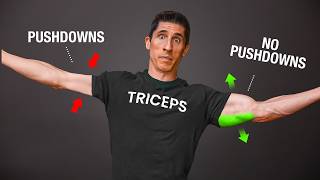
44sShows a unique bodyweight lat exercise, the human pull-over, challenging the common belief that you need weights for back growth.
▶ Play Clip"Title accurately reflects content: 10 effective bodyweight exercises are demonstrated with clear instructions."
This video presents 10 highly effective bodyweight exercises designed to build muscle without equipment. The host demonstrates each exercise with proper form and explains how to create overload using only body weight.
Bodyweight exercises can build muscle if done correctly with the right exercises to create overload.
Using relative motion, drive hands into a fixed surface to engage lats and lift legs, similar to a dragon flag but with less core work.
Single-leg squat that overloads quads and glutes; adding bodyweight in each hand equates to a 2x bodyweight squat.
Provides more shoulder flexion than traditional chin-ups, enhancing bicep contraction. Focus on slow negatives.
Using plates or books to increase range of motion, allowing chest to lower past hands for greater stretch and overload.
On a slick floor, perform a bridge then slide feet to curl, overloading hamstrings and glutes.
Using a doorway, push back of hands against frame to mimic cable face pulls, targeting upper back and rear delts.
Keep shoulder blades set down to avoid shrugging; use one-and-a-half reps for extra time under tension.
Wall-assisted handstand push-up provides heavy closed-chain overhead pressing, building shoulder size.
Lift legs straight or bent, curling pelvis to engage abs; ensure backside visible at top for proper form.
Pull-ups are the ultimate bodyweight exercise; refer to another video for progressing from zero to five pull-ups.
With these 10 bodyweight exercises and proper technique, you can effectively build muscle without any equipment. Focus on form and progressive overload to see results.
What is the human pull over exercise designed to target?
The lats.
00:28
How does the skater squat create overload?
By lifting entire body weight on one leg, and adding bodyweight in each hand equates to a 2x bodyweight squat.
01:38
What makes the behind the neck chin-up effective for biceps?
It provides more shoulder flexion than traditional chin-ups, enhancing bicep contraction.
02:32
How do you perform a deficit push-up?
Place hands on two stacks of books or plates to increase range of motion, lowering chest past hands.
04:04
What is the key to performing a bodyweight dip correctly?
Keep shoulder blades set down and avoid shrugging; depth should not cause shoulder to shrug.
07:45
How can you perform a face pull without cables?
Use a doorway: place back of hands against frame, walk feet through, and push against resistance.
06:36
What is the proper form for a hanging leg raise to target abs?
Curl the pelvis so that your backside is visible at the top of the rep, engaging abs rather than hip flexors.
10:24
What is the benefit of the slick floor bridge curl?
It overloads the posterior chain, specifically hamstrings and glutes, in a simple setup.
05:25
What is the recommended rep range for a challenging bodyweight exercise?
12 to 15 repetitions.
05:11
What is the king of all bodyweight exercises according to the video?
The pull-up.
11:41
Human Pull Over for Lats
Demonstrates a creative bodyweight exercise that effectively isolates the lats using relative motion.
00:28Skater Squat Overload
Explains how a single-leg squat can equate to a 2x bodyweight squat, showing the power of unilateral training.
01:38Behind the Neck Chin-Up for Biceps
Provides a unique bicep exercise that increases shoulder flexion for better contraction.
02:32Deficit Push-Up for Chest
Simple modification increases range of motion, enhancing muscle stretch and overload.
04:04Doorway Face Pull
Ingenious use of a doorway to mimic cable face pulls, targeting rear delts without equipment.
06:36Hanging Leg Raise Form Cue
Key cue to see your backside ensures proper ab engagement, not just hip flexors.
10:24[00:01] weights works. However, that's not to say that lifting with your own body weight doesn't also work. Thank god. I almost Today I'm going to show you that with the right 10 body weight exercises done
[00:15] create that overload and build the muscle that you came here [music] for in And it starts right here with one of my favorite lat building body weight exercises, and it's what we call the human pull over. It actually could be
[00:28] push down. You see, in the straight arm push down, you're getting a great lat isolation exercise that's accomplished by basically adducting that arm down and close to your body. Well, take a look at this exercise, cuz what we're doing is
[00:43] using relative motion. Rather than moving our arms through space like we do moving our body through space in somewhat of a dragon flag looking movement, but with a lot less of the core doing the work. Cuz what I want you
[00:56] to do is push with your hands, drive your hands into the something fixed like move, to allow yourself to engage the lats. And by driving through and powering through the lats, you're going to create the leverage to lift the legs
[01:10] up with far less of the abs doing that work. What does it do? It basically creates that same end position where your elbows ending up adducted closer to your side, which will engage those lats again in a way that can really create
[01:24] growth. Next, we hit the legs. And the idea here exercise that can effectively build your [music] And the answer is yes. We call it the skater squat, and essentially
[01:38] it's just a single leg squat. And we know that we can create overload a lot more effectively if we actually lift our entire body weight on just one leg, The skater squat is one of my favorite variations for that because the arm
[01:51] little bit of the balance out of the equation, and it also gives you equal benefits to the quads and the posterior glutes cuz you're bent forward just a little bit. Even if you had access to
[02:04] your body weight in each hand in addition to this would actually equate to a 2x body weight squat. So, you can see just how powerful it is and how quickly we can escalate or compound the effect on your legs just by going to one
[02:19] do it. Use the mat so it's a little bit more comfortable on your knee every time So, when it comes to building muscle with just your own body weight, you knew brought in a pull-up bar to the equation. However, maybe not for the
[02:32] exercise you were expecting. See, when it came to building my biceps as a kid, one of my favorite ways to do it was with an exercise called the behind the neck chin-up. So, yes, it is a chin-up like you can see here, but done with
[02:44] don't get all upset. We're not hurting our shoulders here because our elbows a behind the neck pull-down where the elbows would be out. Here, your shoulders are very protected, but the positioning with the arms being held
[02:58] this way gives you more shoulder flexion at the end of the exercise than we get from a traditional chin-up. And because we know that shoulder flexion is one of the three components of a good bicep contraction, along with elbow flexion
[03:10] really strong bicep contraction here. And what I like to do as always is focus on slowing down the negative portion so we get that good elongation and stretch and stress on that bicep as it goes down every single repetition. For me,
[03:24] building your biceps with some variation of a chin-up is the way to go, and one I definitely think you should try if you want to see the same results. big biceps, I think I've learned a few things along the way. The good news is
[03:38] chin-up. As a matter of fact, I put together all of my greatest bicep training tips into something I call my bicep training black book, and I want guys, and for all the years you've watched my videos, consider it my thank
[03:51] athlenex.com/blackbook. You can grab your copy completely for free. Again, my thank you to you. Now, let's get back to this video.
[04:04] and no, no need to panic about needing a lot of equipment because this one is done with a plate or, as you can see here, just a stack of books. Because regular push-up and make it more intense. And we can do that easily by
[04:16] creating a deficit setup. That means just taking either two stacks of books or two simple weight plates and performing your push-ups on those. Cuz of motion, so you can lower your chest down through or past your hands to
[04:32] your chest and therefore drive more bodyweight exercise. Couple things that go wrong here is that people create the deficit, but they don't then take advantage of it and actually go all the
[04:44] range of motion you have allows for it, then make sure you touch your chest all the way down on every repetition. And even hang out there for a second or two to enhance that stretch. Also, at the top of the rep, don't short arm it. In
[04:57] extension if you want a good complete chest contraction or as complete as you again, maybe even this variation of the push-up isn't challenging enough for you Doesn't mean the push-up isn't good. It means you need to find a different
[05:11] variation of that. So, find a variation that limits you to 12 to 15 repetitions and that will be a good option for you to start building new muscle. But don't favorite. Back to the legs and this time for one
[05:25] of my favorite posterior chain exercises and this is the slick floor bridge curl. And you just have to create this slick floor environment by removing your shoes does is it really overloads that posterior chain in a really simple setup
[05:38] any wood floor you have in your house. So, what you're trying to accomplish here is a full bridge to start because what we want to do is actually engage the glutes. Here actually promoting hip extension and getting fully [music]
[05:52] extended and the glutes are driving that. From that position when we extend load on the hamstrings and when we come back, now we're getting that hamstring curl action again in a way that's really challenging for most people. You might
[06:05] to 10 before reaching failure and in this case you're doing it in a closed the ground. Yet another benefit for why I like this version, too. And you can do want to. You can do single leg variations. You can do a bicycle
[06:20] forth alternatively with each leg. The bottom line is this exercise overloads really, really simple to set up. Sticking with that posterior chain but forget those scapular muscles and we can't forget the rear delts. And one of
[06:36] is with a face pull. Don't think I'm out of options. I have a doorway. We can do anything if we put our mind to it. This actually is a great way to overload them. What you do is you put the back of your hand up against each side of a
[06:51] doorway. You walk your feet through that door. The more you walk through, the here which is going to create more resistance. At this point what you do is allow yourself to sink into the door to get this good starting position and then
[07:03] you push the back of your hands into the door frame and get that same feel that you get from that face pull with the high elbow position, that bicep flex position or opening of the elbows at 90 degrees. You simply let yourself fall
[07:17] through and again pull up against that resistance. The nice thing about this exercise is it hits all the same muscles that that face pull does with a cable or those, it doesn't mean that you can't still see the benefits. I've talked
[07:31] for building up those upper back muscles and those rear delts and those traps. without anything at all more than just a single doorway. And so from the face pull we move to a full-on push exercise with all hands on deck. We're talking
[07:45] about the bodyweight dip. Now, this is one of the best ways to build your upper body cuz again, we're hitting our chest, our shoulders, and our triceps. But, you have to do it right. And the key here is the positioning of your shoulders at all
[07:57] points in times during the exercise. What happens to most people is as they allow their body to sink down through the bars, they allow the shoulders to the shoulder girdle. That's the big mistake that I want you to avoid.
[08:10] Instead, set the shoulder blades down at the top of the movement. And from there, maintain that throughout. And the depth of the exercise is going to be >> [music] >> If you find that going any lower starts
[08:23] to let your shoulder start to shrug, then don't go that low. Stay right there and come back up. Now, the good news is when I say stay right there, if you can prolong this a little bit longer like we can here in a one and a half dip, well,
[08:35] you're getting an extra half repetition down in that more elongated or stretched position of the chest, which just drive more tension and ultimately more gains at no time you're allowing those shoulder blades to start tipping forward
[08:48] dip. The extra range of motion will do you no favors if it's at the cost of your shoulder health. The dip is great, but only if you do it the right way. Look, now building muscle is hard enough as it is. Doing it with your own body
[09:02] difficult. So, this is the hard part of the video because this is one of those does such a good job of building your shoulders. And we're talking about using a wall and doing a handstand push-up. Now, you can make this a little bit
[09:16] easier depending upon the angle that you take against the wall. If you're a very bit more up against gravity. If you're a little bit more angled, a little bit less work. But again, there's no escaping the fact that any variation
[09:28] about it is that though there is a little bit less range of motion occurring here, it's occurring under heavy load and in a closed-chain manner. In most overhead pressing situations, you're not performing the exercise
[09:41] get through the entire shoulder girdle and into your shoulder blades is much stability here, provided you can actually do the exercise in the first be in the cards. If you want to create a little extra deficit, you could put some
[09:56] little bit more range of motion, but I find that is not necessary to get this it's capable of. Again, not for everyone, but for those looking for a great bodyweight exercise for building big shoulders, you really can't beat
[10:09] most of them are by nature bodyweight exercises. However, most of them do not enough overload. To do that, you'd want to actually allow your legs to become the weight and therefore the bottom-up exercises become your best options. For
[10:24] me, my favorite is the hanging leg raise. Now, lifting your legs straight There's another option here. You can do a bent knee raise. You're still lifting the weight of your lower body through space. That is enough overload to create
[10:37] "Why do I want muscle growth in my abs?" Because if you're at low enough body fat levels, what determines how much your abs pop or how much they're visible is you create here. So, getting muscle growth in the abs is actually a really
[10:52] good thing. And this hanging leg raise does that, but you have to do this right I can tell you here is make sure that see your ass. I know it sounds strange, but like you
[11:04] need to make sure that you're curling from the pelvis and actually engaging the abs and not just simply lifting the legs in space using your hip flexors. you need to target them. So, by curling with the pelvis and making sure
[11:16] whoever's in front of you can see your backside completely visible at the top of every rep, then you know you've done it right. And then again, you know that many repetitions you're limited to, you're actually creating the overload
[11:28] that's missing in 90% of the other ab exercises that you're doing, which right again in the area that you're going to need it if you want them to And as for exercise number 10, it's this one right here, the king of all
[11:41] bodyweight exercises, the pull-up. Now, if you struggle to do them, make sure how to go from zero to five pull-ups in just 22 days, and to avoid the biggest sure you watch that video over there. If you haven't done so guys, remember to
[11:54] notifications and make sure you visit athleanx.com to pick up that free bicep black book. guys, see you in the next video.
⚡ Saved you 0h 12m reading this? Transcribe any YouTube video for free — no signup needed.