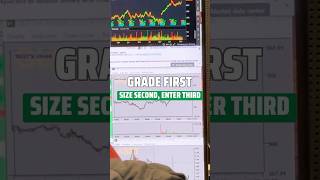

The Backwards Trade Most Traders Make
43sExposes a common emotional trading mistake and offers a clear, counterintuitive solution, sparking curiosity and self-reflection.
▶ Play Clip"The title promises a specific trade type but delivers a general trading principle; solid content but slightly oversells the specificity."
The video explains a critical flaw in how most traders approach trades: they act on emotion first and evaluate the trade afterward. It contrasts this with a professional framework that grades the trade before entering, using three specific questions to assess opportunity quality, setup cleanliness, and confirming variables.
Most traders see a stock moving, feel the urge to enter, and only then ask if it's a good trade. This is described as 'a feeling dressed up as a process,' where the grade is assigned by emotions, which always favor the exciting trade.
Professionals flip the order: they grade first, size second, and then enter. The grading process involves three questions: Did something meaningful happen to create this opportunity? Is the setup clean? Are the confirming variables in your favor?
The grade from the three questions tells the trader how much to risk. This ensures that emotions do not get a vote on position size, which is described as 'the whole game.'
The video mentions a complete breakdown with real trades from the week, with a link provided below for further details.
The core takeaway is that successful trading requires a systematic, emotion-free process where trade evaluation precedes entry, and position sizing is based on a pre-defined grade rather than gut feeling.
What is the 'backwards' approach most traders use?
They see a stock moving, feel the urge to enter, and then ask if it's a good trade—grading after the fact based on emotions.
00:02
What are the three questions in the professional grading process?
1) Did something meaningful happen to create this opportunity? 2) Is the setup clean? 3) Are the confirming variables in your favor?
00:30
What does the grade determine in the professional framework?
The grade tells you how much to risk, i.e., position size.
00:43
Emotions as a False Process
Highlights the core psychological flaw in trading: mistaking emotional reactions for a systematic process.
00:17The Professional Order
Provides a clear, actionable framework that flips the common approach, emphasizing pre-trade evaluation.
00:30[00:02] that they're typically doing it backwards. Here's what the backwards version looks like. You see a stock moving, your brain fires, you feel it. You want in, so you get in, and then you ask, "Is this a good trade?"
[00:17] But it's after the fact. That's not a process, that's a feeling dressed up as a process. The grade already got assigned, it just got assigned by your emotions. And your emotions will always tell you the exciting trade is the A+
[00:30] opportunity. Even when it's a D. The professional version flips that order completely. They grade first, they size second, and then they Three questions. Did something meaningful happen to
[00:43] create this opportunity? Is the setup clean? And are the confirming variables in your favor? You answer those before you look at how much a stock's moving. The grade tells you how much to risk. Then you enter.
[00:57] emotions don't get a vote on position size. That's the whole game. I broke this down completely with real I broke this down completely with real trades from this week. The link below.
⚡ Saved you 0h 01m reading this? Transcribe any YouTube video for free — no signup needed.