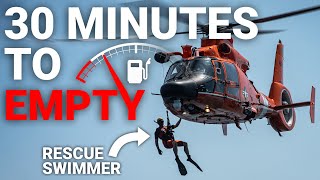

Inside a Coast Guard Rescue Helo
38sOpens with a high-tech, elite military aircraft, instantly grabbing viewers interested in engineering and rescue operations.
▶ Play Clip"Title accurately reflects the deep dive into rescue helicopter engineering; delivers exactly what it promises."
This video explores the MH-65 Dolphin helicopter used by the US Coast Guard, focusing on its engineering, maintenance, and rescue operations. Flight mechanic James Hockenberry provides a detailed walkthrough of the aircraft's components, including the tail rotor, Fenestron, hoist system, and safety features, while host Destin Sandlin explains the physics behind helicopter flight and rescue maneuvers.
James Hockenberry is a flight mechanic who backs up pilots and operates the hoist. He is also a certified flight mechanic responsible for maintenance.
The tail rotor counteracts the torque of the main rotor, controlled by pedals via a shaft. It uses hydraulic actuators to change blade pitch.
The tail shroud is made of Kevlar, carbon fiber, and fiberglass. Many panels can be removed by hand for maintenance.
At speeds above 80 knots, the vertical stabilizer and canted horizontal stabilizers can counteract tail rotor torque, allowing flight even if the tail rotor is lost.
Infrared lights are used for covert operations, such as rotary-wing intercepts, often conducted out of Atlantic City.
The engine operates on suck, squeeze, bang, blow cycle with a free power turbine. The 'flower pot' is an intake component. FADEC (Full Authority Digital Engine Control) manages N1 and N2.
Primary and secondary hydraulic reservoirs feed servos that control the swashplate. The mechanics adjust pitch control rods (PCRs) for track and balance.
The hoist operates at 3,000 PSI hydraulically for up/down and electrically for boom in/out. It has 200 feet of cable and can lift up to 600 pounds.
During hoisting operations, the helicopter burns more fuel due to increased power demand, reducing flight time from 2-2.5 hours to about 30 minutes.
The preferred height off water is 40-50 feet to stay out of ground effect, providing more power. Lower heights are used for dangerous rigging to protect swimmers.
As a survivor is hoisted, the swing amplitude increases due to conservation of angular momentum, which can be dangerous near obstacles.
Helium-filled floats deploy automatically or manually to keep the helicopter afloat for about four minutes before it sinks due to the heavy rotor head.
Corrosion is a major enemy; inspections are done at 7, 14, 30, and 90-day intervals. Swimmers' wet gear accelerates corrosion on frames and stringers.
Cable cutters and a quick splice kit allow emergency repair of the hoist cable. The splice is rated for 600 pounds but limits speed to 50 feet per minute.
Flight mechanics and swimmers share a strong bond; mechanics ensure the aircraft is safe, while swimmers perform rescues. Both rely on each other in dangerous situations.
The MH-65 Dolphin is a highly engineered rescue helicopter with advanced systems for hoisting, stability, and safety. The dedication of the Coast Guard crew, from mechanics to swimmers, ensures effective and safe rescue operations.
What is the primary function of the tail rotor on a helicopter?
To counteract the torque of the main rotor.
01:54
What materials are used in the tail shroud of the MH-65?
Kevlar, carbon fiber, and fiberglass.
03:36
At what speed does the vertical stabilizer become effective in counteracting tail rotor torque?
80 knots or above.
04:58
What does FADEC stand for?
Full Authority Digital Engine Control.
09:20
What is the maximum cable length of the MH-65 hoist?
200 feet.
15:39
How does the hoist cable move in and out?
Electrically.
14:53
What is the typical flight time of an MH-65 during hoisting operations?
About 30 minutes.
17:31
Why does the helicopter burn more fuel during hoisting?
Because it requires more power to maintain a hover.
17:17
What is the preferred hoisting height off the water?
40-50 feet.
19:15
How long do the emergency floats keep the helicopter afloat?
About four minutes.
21:50
What is the quick splice rated for?
600 pounds.
25:59
What is the term for the hoist cable going fully up and jerking?
Two-blocking.
16:06
Vertical Stabilizer Aerodynamics
Explains how the helicopter can fly even without a tail rotor at high speed due to stabilizer design.
04:58Hoist System Details
Provides technical specifications of the rescue hoist, including hydraulic and electric operation.
14:38Pendulum Effect in Hoisting
Demonstrates physics principle (conservation of angular momentum) affecting rescue operations.
19:58Crew Camaraderie
Highlights the deep trust and teamwork between flight mechanics and swimmers.
27:04[00:00] You're smart, you know how this works by now. into the US Coast Guard, and they're amazing. We've talked about their gear like the boat, response boat, medium.
[00:13] And today is an amazing subject. We're going to explore the MH65 Dolphine, an incredible aircraft. Jayhawks at this point, which is a newer platform.
[00:25] aircraft, and we're going to explore everything about how it works. Let's go get smarter every day and let's learn about this amazing aircraft.
[00:38] [J] Amt 1, James Hockenberry. [D] Okay, awesome. Sounds good. [J] So I am basically, they call it a hoist
[00:53] So we back up the pilots, the copilot, and then we also hoist. [D] Are you also a certified flight mechanic? [J] I am, yeah.
[01:07] [J] , consider the pilot owns the bird, we just do the maintenance on it. choice whether we're going to do it or not going to do it. So if we break down or go somewhere, we're the ones that are going to do the
[01:24] And then they're going to be the ultimate [D] All right, so let's start from the top. This is a. We take it all apart.
[01:38] It's more for corrosion, making sure that there's nothing wrong with the aircraft, finding little things that we need to fix prior to them actually breaking. [J] The tail rotor.
[01:54] This actually counteracts the rotorhead turning. basically pushes so that the rotorhead will turn in one direction, and this It's controlled by the pedals upfront through this shaft right here.
[02:11] So what ends up happening is when hydraulics are on, this pushes in and out and makes the blades turn in. originally a civilian aircraft, I know there's two types of hydraulic fluid.
[02:27] What does this use? [J] This uses the military red. [D] I wanted to pause and say, I'm sorry, this is what's happening. Hockenberry is clearly very excited about this helicopter.
[02:42] I'm saying every word I've ever heard Because I've. But at the same time, I'm still trying to learn.
[02:56] We're just going to totally hit my ignorance wall here in a second. Trying to name drop all these words I've heard recently, whatever.
[03:09] What jet fuel do. You use? So we use normal stuff that any aviation fuel is going.
[03:21] What is this called? [J] Yeah, we call that the Dog House. But yeah, it's a transition cowling going from the engines back to the drive shaft. [J] The Fenestron. [D] The Fenestron?
[03:36] [J] Fiberglass. [D] Okay. [J] Kevlar and carbon fiber and fiberglass [D] Carbon? which is most of this right here where the tail shroud is, is actually kevlar.
[03:51] Most of this is kevlar. [D] Oh, wow! We can take everything off by hand. [D] Really?
[04:04] [D] Sir, did you just move the tail rotor by hand up there? [D] Can you... [J] Head's turning.
[04:16] And did I see you move it by putting your [D] Can you do it again, please? [M] Yeah, of course. No problem.
[04:29] That's amazing. Thank you. So it basically runs like... So it's like your bicycle.
[04:44] up with the bicycle until it just keeps pushing it. So it just keeps going until it gets to self-sustaining, and then it just runs and it just free power turbine.
[04:58] [D] Why do you have the vertical? and if you are going a certain speed, which I think it's 80 knots or above,
[05:10] if you're going straight, then your tail is not even needed. lose your tail, you can actually counteract the tail by these. If you look at them from an angle, they're actually tilted like this.
[05:26] [J] So they're basically tilted out. Oh, I see. And so if you look at the Vert stab, too, you can see how it cambers that way. So that way, if you're going straight, it's counteracting the blades on the head.
[05:41] It's actually trying to push you. The other way. [D] It's not called on a helicopter, it's not P factor. I mean, if you look at it, it's just like a blade of a, a fixed wing.
[06:01] So you have its back, which is curved, and its flat face. [D] That's fun. What do we have here? [D] Those are lights?
[06:14] [J] Yeah. These actually are for infrared. That's for when we do our secret squirrel missions. [D] You guys will go blacked out?
[06:28] [D] Really? [J] Yeah, so we do... [D] Drug stuff. [J] Rotary-wing-intercept. So we do it here as well, but it's mostly done in Atlantic City.
[06:41] And if we're doing secret squirrel stuff, we'll turn these on. And then there's a light here which shines on the Coast guard. And then these actually have them on the ends, too, for all of.
[06:55] [J] It is, yeah. [D] HF? And then, of course, everything is like a normal aircraft or helicopter. You got your 66, 30, 88, 40, and everything is designated from the nose up
[07:13] back, like your datum lines, all that stuff is the same exact concept. those are imaginary planes, and you can measure things from those planes. joint or at a firewall or something like that.
[07:28] [J] I mean, I've been on it 17 years, so I would hope so. [D] Retractable landing gear. [J] Yep, retractable landing gear. [D] So this isn't an APU, this is just environmental for.
[07:43] Let's. Be real. [J] It's because it gets so hot here during the summers, so they just use those. They used to hook into the side, but we need to get smaller tubes to hook them in.
[07:55] Conditioning inside. [D] Can we walk up and see the power plant? [D] Sweet. So this is- So we got the suck, squeeze, bang, blow.
[08:07] [J] Accessory drive section, that's the drive shaft goes in through here through flex We call this the flower pot.
[08:21] It's like you said, intake, compression, combustion, free power turbine. them actually exploded back in the day a long time ago.
[08:34] It was just different types of fins, all that stuff. If the free power turbine did excessively go off and nothing stopped it if it
[08:48] exploded, it wouldn't damage the other engine or the blades or anything. [D] So on run up for a helicopter, I hear a [J] Yeah. [D] Where are you measuring that at?
[09:02] So it's just like a normal thermal couple. there, measures the difference in temperatures, and then gives you your We monitor it, but it's like-. [D] It's not part of
[09:20] Okay. So N1, N2, and that's all done by FADEC. So full authority digital engine control unit.
[09:36] [D] Okay, so this is the reservoir for-. [D] Where's the hydraulic reservoir? So primary and secondary, and they're right here.
[09:50] And then they come through here, and you have your servos. [D] So this is your big collective servo. So we as mechanics, we just go right, left, forward, and aft.
[10:07] [D] Right, left, because this is the side that you work on. [J] Well, it's technically because the aircraft, the head turns, and it's like Isaac Newton said, helicopter is not meant to fly.
[10:21] it needs to be biting before and drafting [D] after gyroscopic procession? So technically, this actually hits here.
[10:34] And basically, as the rotors system is turning, if I want to tilt the helicopter this way, I actually give that command in the back.
[10:46] And if you want to learn more about this, I did a whole deep dive series on how helicopters work, of which this video will be a part of. collective to understand gyroscopic procession better.
[11:01] [J] So as it turns, it bites in whatever inputs they put in, it's. [D] Actually-so in your mechanical interaction with this, you say, [J] Correct. [D] So you actually think about that while.
[11:16] [J] So the mechanics also do track and balance. As we do track and balance, we're actually
[11:28] measuring the distance of the track based on what this PCR is doing. So if we do a major...
[11:41] So when we do a major inspection, we actually pull this all off. So this whole head will come off, and then the PCR is readjusted. together, because we may add new swash plate.
[11:58] We may add new Starflex, bushings, rods. We may add something that was new that broke before. So when we do our track and balance,
[12:14] we take everything, and then it takes an input, and the actual machine So we'll adjust the PCRs, we'll add weight, and we'll move our trim tabs.
[12:27] We just bend them. machine actually does it itself and then tells us what we do. We do it on ground, then we do it in a hover, and then we do it in flight.
[12:40] That's it. We're out of hover. [D] That's awesome, man. That's cool. sponsor, and this sponsor has totally changed the game for my buddy's business.
[12:55] Shipstation is a way that you can save money on shipping things. And if you sell things online, you can consolidate all of the places you sell things into one dashboard, and it is an amazing product that saves you money.
[13:09] Jj George makes grill accessories like They've got these really cool torches that people use to light the charcoal. [J] Shipstation has been a game-changer for us, and we use it every day.
[13:27] [J] It allows us to take all of orders from all the different platforms we sell them. And so it brings everything, addresses, products ordered all into one dashboard.
[13:41] We don't have to copy-paste to anything. [D] The cool thing about Shipstation is everything is under one dashboard. streamlined so that you can reduce the amount of labor that goes into shipping
[13:57] Pretty smart rednecks here in Alabama. The way you can do this, if you want to try it, go to shipstation. You can try it. Would you recommend trying it for.
[14:12] If you try. They said people that use it for like a year use it. [D] Okay, shipstation.
[14:25] Thank you very much, John and Roger, for showing me how this thing works. different from any aircraft I've ever been on is this bad boy right here.
[14:38] [J] We call it our hoist. [D] It's not the winch. [D] So does that mean that this is basically a... can we- [J] 3,000 PSI, and then it's electrically operated.
[14:53] hydraulically basically goes up and down by hydraulics. [J] So electrically, it goes in and out, and then hydraulically, it goes up and down. So it's got an electrical boom actuator inside here.
[15:10] [J] He's a flight mech. [D] Flight mech? So you're going to get to do this. and then it'll boom in electrically and boom out electrically.
[15:24] [D] So we have it on-Whatcha you got there? So you can boom in and out. And hydraulically, up and down.
[15:39] The actuator, this whole control panel is what controls the operation of the hoist. It's 200 feet variable. Is that fast? It's pretty fast.
[15:52] [D] You can drop them too fast? You'll feel it when you start doing it, Literally, if we
[16:06] call it two-blocking, which means that we go full up, it'll jerk you up. [D] So when you're flying and you got this [J] It's halfway. [D] It's halfway.
[16:20] Do you mind booming it all the way in so I can see where it tucks in there? [J] Jim, open the hatch so he can see where he's going to stand. [D] And the rotors right there.
[16:36] And then we'll boom it all the way in to hook up the swimmer or device. Bring it in the cab and hook up whatever we need, bring it back up and then...
[16:49] I know, I mean, it's a dumb question. [J] Yeah, don't stick your hands up. [J] Yeah, this hatch is, I mean, it's there
[17:04] But you're standing and hoisting, I wouldn't advise reaching up. So does that change his aerodynamics?
[17:17] We get more bite. We get more bite to hold us, so we're burning fuel faster. So we're burning more fuel than what we normally would just flying around.
[17:31] So our normal flight time is between two hours and two and a half hours. about 30 minutes, because we're just pulling power constantly. [D] But you don't have this boom forward. [J] We keep it boomed out
[17:45] And because you fly more efficiently like that? I don't think it matters much. It doesn't really... I mean, it may save us weight because this
[17:58] Aerodynamically, I don't think it affects forward flight or anything. Catch it all that much. [D] Are you able to drop the hoist now?
[18:10] [D] That's an auxiliary hydraulic unit over there? [J] It's a hydraulic power unit, ground power unit.
[18:22] Not at all. First 10 feet, it goes slow. And if you keep going, there's a switch.
[18:34] [D] How slow? Fifty feet there another saying for that? He just got FMI qualified. [D] Oh, all right.
[18:47] We get to spot out fast it goes right there. [J] Yeah, it's pretty quick.
[18:59] Stainless steel. We have 240 feet of it. [D] What's the preferred height off the water?
[19:15] Is that out of ground effect? So it gives us more power, more fly out. And then it just depends on what the real hoist is.
[19:29] So if you're going... Most of our cases are shrimping boats. So that rigging is really, really dangerous for us to put a swimmer through. So the lower we can be, the better for the swimmer it is.
[19:46] down low, it'll start, and then as he comes up, it'll get worse and worse and [D] Because momentum is conserved. [J] Right.
[19:58] [D] So if it's swinging as the radius of the pendulum gets smaller... So if he starts with a little swing as he [D] Okay, we've got our survivor in the basket here, right?
[20:12] And if we think about our pendulum equation, the period or the length of time between swings on the pendulum is a function of the length of the string. Now, here's a couple of things that Hockenberry told us.
[20:26] Number one, if I have a really small swing right there, by the time I increase it or, I guess, hoist it up, it gets really fast. Increase it, boom.
[20:40] You could hurt the person as you swing them up. that's a function of the pendulum equation. The other thing he said is if you have a low swing, like a really, I don't know,
[20:55] like two feet, let's say, by the time you let it out because of the conservation of And that's a problem if you've got a boat. So pendulum motion, when you have a person
[21:09] And we're actually going to get to see Very interesting. [D] That's a two-person lift. [J] Yep, that's it.
[21:22] And we have another one right there. This one right here. [J] And so these will go off. [D] You punch them with pyro? [J] No, they're helium. [D] Got it.
[21:35] [J] And then the pilot can do it upfront. There's three spots. And then there's like a shot upfront that they can push it to. [D] So you'll do it when you touch down at the water.
[21:50] [J] So they have to do it before because it's not water activated. So if they hit the water and they haven't hit those, then it's going to sink. [J] And it usually will only stay afloat for four minutes.
[22:02] [D] With the floats? [J] With the floats. [J] It's because the head is so heavy that it's going to roll. That's why when we do our training, we simulate we're rolling.
[22:16] [D] Right, got it. [J] The best case scenario would be it stays upright and you can all get out. Which it's happened before, but it's more than likely it's going to roll over.
[22:30] [D] I'll go in after you. [J] Well, so they're doing their inspections, which is cool. So they're basically doing a whole seven,
[22:45] 14, 30, 90-day, and we're doing a corrosion inspection. Most of the stuff, these are frames. We get a lot of corrosion here because the swimmer sits right here.
[22:59] So a lot of the water that when the swimmers, they're wet when they come in. and corrosion is our worst enemy on these aircraft. [J] That is our bread and butter is trying to keep these out from being corroded.
[23:14] [J] Yeah, this is. So if this corrodes, then the plane's done. These are Texas patches. Those are the same thing. [J] Yeah, that's why we call it Texas patch.
[23:29] But if those crack or if they get any We can't fly it until we replace the stringer.
[23:41] This is where we're normally replacing stuff. [J] So this is all the electronics, 1980s. Great stuff.
[23:53] We call them tweets, AETs. I'm an AMT. [J] No, I don't like getting shocked.
[24:06] [D] Okay, so there will be some seat here. [J] There will be a seat. The swimmers, they upgraded their seats So theirs move now too. They used to not.
[24:21] And a lot of guys were having back We can close it now and move it off to the side. Then our seat does the same thing.
[24:36] way to the left or to the right, and it swivels 360 degrees. [J] Copilot and pilot. It's French, so it's opposite. It's opposite of your car.
[24:51] Copilot on the left, pilot on the right. He's the one that makes all the calls. He tells us yes, we're going to do this or no, we're not, or it's too sketchy.
[25:04] But he's the ultimate factor. That door that's normally closed, we don't ever really open it unless we're just
[25:17] doing our engine rents or we need to go out that side or something. It's just an egress hazard, our egress. That's awesome. [J] Yeah, flares.
[25:29] [D] Does this fly? Yeah, this is our cable cutters. And then we have a quick splice.
[25:45] It used to be over there. Quick splice. So if something does happen and say, I bring John in and he scrapes along the
[25:59] edge and he gets a big goug in it, but we're rescuing people, I can cut the cable, I can put this on, and we can still hoist in an emergency procedure. This is 600 pounds rated just. Like that.
[26:11] [J] Correct. So there's a limiting factor on that. You won't have that 50 feet per minute. [J] So if you go all the way up and two-block
[26:24] it like I was talking about before, if you do that, you're probably going to slip this or you're going to damage that hoist or John could. This is like a new end to the cable. [J] Well, it wraps.
[26:38] So this is it, and it literally tells you how to lay the line. I hope to never use this because I know
[26:50] it's going to be bad if we're using this, but we have it in an emergency situation. [J] just because John and I- [D] It weighs nothing. Just because John and I, we went to high school together and everything, I look at
[27:04] it that way like these are my brothers, and I don't want to leave them on scene. I don't want to leave them. I think 99 % of everybody in this aircraft feels the same way that
[27:21] swimmers are part of the family, and they're the ones in the water. because it's going to do more damage and it's going to be a longer night if we're You know what I mean? [D] Do we want them to know that, though?
[27:34] [D] So is there a really interesting camaraderie between the swimmer and the... [J] Correct, yeah. Flightmech. I like to say these guys are my heroes
[27:50] because I can jump out of a helicopter, but I can't jump back into it. [J] Right. So these guys are my heroes. [J] And you see what they're doing.
[28:03] I try and tell people, flight mechs are super cool. helicopter, put it all back together, and then go fly. [J] I admire them a lot.
[28:17] They keep us alive. them out with it, we're a really good team. Well, thanks, man. I'm looking forward to it.
[28:32] All right, the Smarter Every Day Coast Guard series continues. In an upcoming video, I'm going to be the duck, they call it. pontchartrain in New Orleans. It is an amazing.
[28:46] We get to see all this stuff. In action. So if you'd like to consider checking that. Out, you could subscribe to Smarter Every Day if you're into that sort of thing.
[28:59] smartereveryday.com, there's an email list. email you when I upload that video, which is really cool. Smarter Every Day on patreon.com/smartereveryday.
[29:13] I am grateful you helped me make this stuff, and I'm super, super thankful. You're getting smarter every day. Have a good one. Bye.


⚡ Saved you 0h 29m reading this? Transcribe any YouTube video for free — no signup needed.