
Cardio Machines Are Lying to You
55sImmediately shocking claim that all cardio machines overestimate calories, grabbing attention.
▶ Play Clip"The title promises a ranking of best/worst cardio for fat loss; the video delivers exactly that with data and actionable tips."
Gym cardio machines often display inaccurate calorie burns, overestimating by up to 42% due to assumptions like a standard 154-pound user and including resting energy. The video explains how machines calculate calories, why they inflate numbers, and how user form further reduces actual burn. It ranks machines by accuracy and offers practical tips to get better results.
Cardio machines often calculate calorie burn based on a standard 154-pound person using MET (metabolic equivalent). If you weigh less, you burn fewer calories than shown; if you weigh more, you burn more.
Many machines intentionally include resting energy expenditure (REE) in the displayed calorie count, inflating the number by ~100 calories per session to make the machine seem more effective.
Leaning on handles or poor posture can reduce actual calorie burn by up to 50% because less body weight is being moved.
Short, choppy steps reduce range of motion and work done, leading to lower calorie burn compared to full hip extension.
Accuracy ranking: Stationary bike (~7% over), stairmaster (12%), treadmill (13–20%), elliptical (up to 42% over).
A 30-minute elliptical session can overestimate calorie burn by 130 calories daily, leading to ~14 lbs weight gain per year if eaten back.
Air bike, rowing machine, and ski erg burn 20–25 calories per minute and involve upper body, making them more effective alternatives.
Use breathlessness to gauge effort, input body weight if possible, or simply divide the machine's number by half to avoid overeating.
Why do cardio machines overestimate calorie burn?
Cardio machines often overestimate calories burned due to using a standard 154-pound weight and including resting energy expenditure.
2:12
By what percentage can leaning on a machine reduce calorie burn?
Up to 50% less.
3:51
List the four types of cardio machines in order of accuracy, with their typical overestimation percentages.
Stationary bike (~7% overestimate), stairmaster (12%), treadmill (13–20%), elliptical (up to 42%).
5:36
What are three practical ways to make cardio calorie estimates more useful?
Cover the display and use breathlessness as a guide; divide the displayed number by half; use a machine that allows body weight input.
8:33
How much weight gain could result from overestimating 130 calories daily for a year?
14 pounds.
7:15
What does MET stand for, and what does 1 MET represent?
MET stands for Metabolic Equivalent; 1 MET = calories burned sitting still, and higher MET values represent multiples of that baseline.
1:46
What is one intentional trick machines use to inflate calorie numbers?
Including resting energy expenditure (REE)—the calories you'd burn doing nothing—into the total calorie display.
2:46
What is the key message about diet vs. cardio for weight loss?
You can't outrun a bad diet; a single meal can erase an hour of cardio.
0:54
What is the range of inaccuracy for wearable devices in estimating calorie burn?
20% to 96% inaccurate, depending on the device.
9:22
Name three effective alternative cardio machines that engage both upper and lower body.
An air bike, rowing machine, or ski erg.
7:47
Standard Weight Assumption
Reveals that most machines assume a 154-pound user, making results inaccurate for anyone else—a key source of miscalculation.
2:12You Can't Outrun Bad Diet
Emphasizes that dietary control is more important than cardio for weight loss, a foundational principle often overlooked.
0:54Elliptical is 42% Off
Identifies the elliptical as the most inaccurate machine, with massive overestimations that can derail diet planning.
6:39Use Breathlessness as a Gauge
Provides a simple, no-tech method to measure workout intensity without relying on flawed machine data.
8:48[00:00] You burned 463 calories. You burned 641 calories. You look so handsome.
[00:15] Yes, you. You succeed. That beer is ravishing. I got some bad news for you. This machine right here is lying to you.
[00:28] But it's not just this one. So is this one, and this one, and even this one. If you're using a treadmill or any cardio machine right now to determine the amount of calories you're burning to help you in your goal to lose more weight, you're not getting the right math.
[00:43] The number of calories that you're burning are just not accurate. It's time for the truth. But the first truth that needs to be told is if you're using your cardio as a way to create your caloric deficit to lose weight, you're making a big mistake.
[00:55] because you're never going to be able to outrun a bad diet. We talk about it all the time. Even just one slip-up in a meal is enough to erase an hour's worth of effort at the gym. You need to make sure that when you're trying to lose weight,
[01:07] your efforts are focused first and foremost on cleaning up the food that you're eating right now. Make your caloric cut there and use the additional cardio to supplement those efforts, and that's when the real results will happen.
[01:19] So the first thing you have to be on the lookout for is how these things are actually asking you for the information, because if they're not asking you for your weight directly, then they're not giving you an accurate result because we know that cardio machines need to know how much you weigh.
[01:33] A heavier person has to work harder to move their body through space and therefore can burn more calories, whereas somebody that's lighter is going to burn less calories for the same activity. Well, what happens to these cardio machines is they calculate that calorie burn
[01:45] based off of something called a MET, M-E-T, which is a metabolic equivalent. And essentially, one MET is the value of you sitting on the couch doing nothing. The calories that you would burn by literally just sitting down watching TV.
[01:57] And anything you did that increased your activity beyond that is going to be some multiple of that number. So if you went for a jog, you could have, let's say, a three or four met burn, which is three or four times harder than sitting on your ass.
[02:10] That being said, it's always calculated by one body weight number, usually 154 pounds. So if you don't weigh 154 pounds, you're not getting an accurate calorie output read back to you. If you weigh less than that, then you're actually overestimating how many calories you burn.
[02:26] If you weigh more than that you actually maybe underestimating by a little bit But don worry There a lot of other ways that these machines are screwing you I going to show you those too Wait isn this your towel
[02:38] Oh, that's disgusting. One of them is by actually maybe fudging the math intentionally. You see, a lot of times the number that you read in terms of the caloric burn is based on including something called the REE, or the resting energy expenditure,
[02:52] the calories that you would burn normally at rest. So let's say you're on the treadmill and it tells you that you burned 420 calories. Well, what if it's also including the fact that you would have burned 100 calories if you did nothing at all? Well, that's just inflating the overall number.
[03:05] You only burned 320 extra calories. You're already likely using that number in your base calculation to determine how many calories you need to burn during the day. It's just not fair. So you might be asking yourself, why would I do such a thing?
[03:19] Well, maybe to make you think, this machine is amazing and I would love to do all my workouts on this machine. As a matter of fact, I might want to buy one of these and put it in my house because it makes me feel good about the number of calories I'm burning. Just throwing it out there.
[03:31] Well, let's not just blame the machines entirely because if you're doing what I'm doing right now, you're screwing yourself. If you've ever ridden the bike leaning this way, your posture is creating less caloric burn. How? Because you're doing less work. Leaning on the machine, unweighting some of
[03:47] your body weight and costing yourself some calories. Amazingly so, up to 50% less than what you thought you were burning and that causes problems. You can do it even on a treadmill. You've probably seen it a million times or done it yourself. You hold on with your hands or worse,
[04:01] you lean forward or even on a stair master. Any attempt at all to try to unweight any of your body weight is a good indication that you're actually looking for a way out. If you're going to do your cardio, make sure you stand up straight and do so with good posture. You're going to get
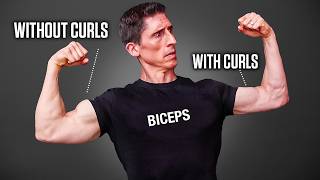
[04:13] a lot closer to the number that you actually thought you were burning in terms of calories. Can I ask you a question? If you were to do a bicep curl, do you think you'd get better results doing this or actually taking it through a full range of motion all the way down and all the way
[04:26] up. Well, it should come as no surprise, the full range of motion is better. But then why are you doing this when you're doing cardio? You're cutting your range of motion short often. For instance, if you use a Stairmaster or in this case a step melt, a lot of us take the option of taking short
[04:40] choppy steps. We don't drive the step all the way down through full hip extension. What that means is less work being done. And for you, less work means less calories, and less calories means less weight loss. And look at even your choices, like the elliptical machine. It's
[04:54] locking you into an abbreviated range of motion You can extend your legs for the back even if you wanted to And then even this I sure you seen people who stand up while they pedaling on a bike No this is not just some fancy Peloton trick It increasing the range of motion
[05:08] You're getting more hip extension. Also, unweighting your body. Remember, the more of your body weight that you're bearing during the exercise you're doing, the more calories you're burning, and therefore getting better bang for your buck. So remember, if it feels easier, oftentimes it is easier.
[05:21] Instead, look to make it harder. increase that range of motion and with that increased range of motion and work done you'll find better overall success when you find such images. All right so if all these cardio machines are lying to you are there at least some that are lying to you left? And the answer is yes and it
[05:37] starts with the stationary bike. It's the most accurate overestimating by only about seven percent and the reason for this is oftentimes the way that we calculate the calories burned here is through mathematical formulations and based off of power output. In other words why and we do that
[05:52] and we combine it with our bi-weight, which most of these machines will ask for, we get a much more accurate judgment. However, next up on the list is going to be the StairMaster. Here, we're looking at about a 12% overestimation on the number of calories that you burn.
[06:05] But you've got to make sure, once again, you're not leaning on that machine, like I said, and that you're taking those nice, long, full range of motion steps. Next one up down the list in terms of accuracy is going to be the treadmill, which really isn't such good news because so many people use this machine.
[06:18] And the problem here is twofold. Number one, the accuracy is now off by 13 to up to 20%. And even if you do what I told you and keep your hands off the handrails, sometimes you're still fighting a losing battle here. Because the calibration of the machine is a requirement to maintain its accuracy, and most gyms just don't calibrate the machines often enough, so that's something you can't even do anything about.
[06:37] And then finally, the most inaccurate of them all is the elliptical machines, sometimes off by as much as 42%. Mostly due to the fact that the range of motion varies greatly between even different models. Now, to put this all into real-world perspective, imagine this.
[06:50] If you spent 30 minutes on an elliptical machine, you might be overestimating the number of calories burned by 130. Now, think about that. If you're trying to create your overall deficit for the day, and you think you burned 130 calories more than you did,
[07:03] and therefore you could eat more food, you're kind of setting yourself up for disaster. If you separate this out for the entire year, if you were to take 130 calories in extra over your baseline rate every single day, that's a 14-pound weight gain by the end of the year.
[07:17] Let's face it, we need to figure this out. Or do we really? Because there's a few things you can do right now that are actually going to just nullify the inaccuracy of these machines and still help you to get back on track in terms of your weight loss And the first thing is just to choose a different machine because there are some that are just way better at burning a lot more calories So even if they off you still burning a lot more than you are right now And the main key here is to integrate
[07:39] one that has working arm movement. Not just going along for the ride like on an elliptical, but actually working and working hard. And one of the easiest ways to do this is with an air bike. You could burn about 20 to 25 calories for every single minute that you're on this. The other
[07:54] options to use a rolling machine. Again, resisted upper body movement as well as lower body movement here. Obviously, when you use these guys, you know how much more difficult they are. The difficulty is going to be a dead giveaway in terms of the effectiveness of the exercise. And finally, you
[08:08] can do something like this ski ergometer or the ski ERG. The point is you have alternatives to the standard cardio options that are ultimately going to do a better job of helping you burn calories. Yeah, I know they're not the most pleasant, but at the end of the day, what matters
[08:21] is the work that you do, and the more work you do, the more calories you burn, and ultimately, the more weight you'll lose. So you've got to consider it. But even if you decide that you just want to fix the machine you're using right now, you want to find ways to make it more accurate, what can you do? Well, the first thing, as I mentioned, is to try to find one that at least
[08:35] allows you to input your body weight, because when you do, you're going to have an infinitely closer accuracy when it comes to the number of calories burned. But the other thing I like to just recommend is throw a towel over it and stop looking at the calories. Instead, go off of your
[08:48] respiratory rate. The more difficult it is for you to carry on a conversation during exercise, the more indicative it is of the amount of effort you're putting forth. So aim for more breathlessness. In other words, whatever cardio machine you're using right now, if you're more breathless the
[09:01] next time you use it, you're likely working harder and therefore increasing your calorie burn. Or make it easier for yourself and do what I advise my athletes to do. Simply take the output that the machine gives you and divide it in half and use that to calculate your intake amounts for the
[09:14] Oh and by the way, don't rely on the wearable devices to try to improve your reporting on your calorie output. They're actually not much more helpful. As a matter of fact, the best of them has shown only a 20% inaccuracy with the worst
[09:26] one being actually 96% inaccurate. Yeah, even a blind school finds an acorn once in a while. So remember, if you're looking to lose weight and cardio is part of your equation here, at least make sure you're getting the right numbers back. In the meantime, if you're looking for more proof that trying to outrun a bad diet is
[09:41] a bad idea, you're going to want to watch this video right here. No, not that video. That video right there. If you're looking for a complete program, you can find it over at athens.com. If you haven't done so, click subscribe, share your notifications so you never miss a new video when we put one out. Oh, Jeff, can I tell you why?
[09:53] Sure. You're the best boss ever. You're so funny, Jesse. I think I love you.
⚡ Saved you 0h 10m reading this? Transcribe any YouTube video for free — no signup needed.