
Hurricane's Hidden Death Toll: 200x More
44sReveals a shocking statistic that the true death toll is 200 times higher, challenging common perception.
▶ Play Clip"The title promises a general insight, and the video delivers a specific example, but the content is thin and could be condensed."
This video explores the often-overlooked long-term health and mortality impacts of natural disasters, using the example of monkeys on an island hit by a hurricane. It highlights how stress, weakened immune systems, and environmental damage lead to increased deaths long after the event itself, and compares the lasting effects of different types of disasters.
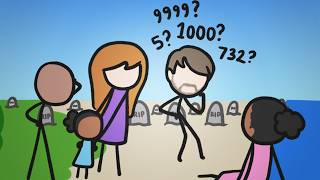
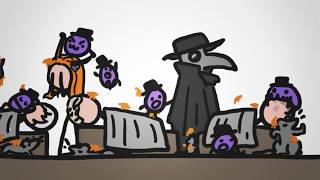
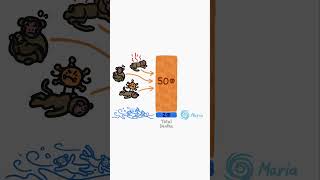
A powerful hurricane passed over an island with thousands of monkeys. Only two monkeys died during the storm itself, but in the years following, 50 more monkeys died than usual due to stress, weakened immunity, and disease.
Over half of the island's trees were knocked down, leading to increased heat-related illnesses and deaths among the monkeys. This shows that habitat destruction amplifies the disaster's long-term health effects.
On average, the number of victims after a hurricane exceeds 200 people, indicating that the aftermath of a storm can be deadlier than the storm itself.
Severe floods lead to heart attacks and farmer exhaustion from replanting fields, while earthquakes often cause disease outbreaks due to damaged sewage pipes and unsanitary conditions.
Earthquakes typically result in fewer long-term victims compared to other disasters with the same total death count, but the existence of post-disaster deaths means we should pay as much attention to the aftermath as to the event itself.
To understand the true death count of a hurricane, you should multiply the reported number of direct victims by around 200, accounting for the long-term indirect deaths.
How many monkeys died during the hurricane itself?
Only two monkeys died during the storm.
00:02
How many more monkeys died in the years after the hurricane compared to usual?
50 more monkeys died than usual.
00:14
What factor contributed to the monkeys' deaths after the hurricane?
Stress and weakened immune systems led to deaths from diseases.
00:14
What was the average number of victims after a hurricane?
The average number of victims exceeds 200 people.
00:40
What multiplier is suggested to estimate the true death count of a hurricane?
Multiply the reported number by around 200.
01:20
Delayed mortality after hurricanes
Illustrates that the true death toll of a disaster can be much higher than immediate casualties.
00:02Environmental damage as a multiplier
Shows how habitat destruction exacerbates long-term health impacts.
00:26Rule of thumb for true death count
Provides a practical heuristic for estimating the full impact of a hurricane.
01:20[00:02] тысячи обезьян. А когда мощный ураган пронесся прямо над этих обезьян, подумали, что им предстоит вернуться на место массовой трагедии. Но во время шторма погибли всего две обезьяны . Лишь спустя долгое время после того, как
[00:14] небо прояснилось, тела начали накапливаться. В годы после урагана погибло на 50 обезьян больше, чем обычно. Обезьяны, испытывавшие стресс и имевшие ослабленный иммунитет, погибали от болезней. Травмированные женщины
[00:26] рождения. А поскольку более половины деревьев на острове были вырублены, обезьяны привело к увеличению числа заболеваний и смертей, связанных с жарой. Все ураганы оставляют после себя подобные затяжные следы, иногда очень большие . Например, в среднем после
[00:40] число жертв превышает 200 человек. И другие стихийные бедствия тоже приводят к гибели людей. Сильные наводнения приводят к сердечным приступам и переутомлению фермеров, которым приходится заново засевать затопленные поля. Землетрясения часто приводят к
[00:53] вспышкам заболеваний из-за повреждения канализационных труб и создания антисанитарных условий. выяснить, что именно в конкретной катастрофе определяет количество слушателей, переживших ее землетрясения, обычно наблюдается меньшее количество жертв при том же общем числе погибших,
[01:05] бедствия. Но сам факт существования смертей после катастроф и того, что некоторые бедствия приводят к их многочисленным последствиям, означает, что нам, вероятно, следует уделять столько же внимания, а то и больше, чем
[01:20] пяти человек, вам следует умножить это число в уме примерно на 200 multiply that number in your head by around 200 to understand the true death count of the hurricane.
⚡ Saved you 0h 01m reading this? Transcribe any YouTube video for free — no signup needed.