
AI Summary
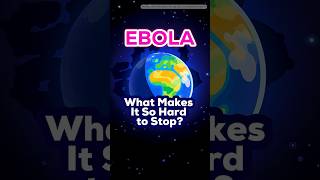
This video explains why Ebola continues to resurface, detailing the virus's deadly mechanism of action, the challenges of containment in high-risk regions, and the financial investment required to prevent future outbreaks.
Chapters
Ebola enters the body through contact with infectious bodily fluids. Immune cells that rush to destroy it become infected and are used to spread the virus, triggering extreme inflammation and internal bleeding.
The virus attacks cells that produce clotting proteins, making bleeding hard to stop. Organs lose oxygen and begin to fail, leading to severe complications.
Around half of infected patients die, with some outbreaks reaching a 90% death rate. Despite containment efforts, Ebola keeps returning.
In high-risk countries like the DRC, conflict has displaced millions into crowded camps where the virus spreads rapidly. A ruined health system allows infectious diseases to thrive.
Vaccines exist for some strains but not others, so many patients require round-the-clock care to survive.
Containing the current outbreak will cost around $518 million, an investment that can also help stop future outbreaks before they start.
Investing in Ebola containment is not only crucial for stopping the current outbreak but also serves as a preventive measure against future epidemics, making it a worthwhile expenditure.
Study Flashcards (7)
How does Ebola enter the body?
easy
Click to reveal answer
How does Ebola enter the body?
Through contact with infectious bodily fluids.
00:02
What happens to immune cells when they try to destroy Ebola?
medium
Click to reveal answer
What happens to immune cells when they try to destroy Ebola?
They become infected and are used to spread the virus.
00:02
What effect does Ebola have on clotting proteins?
medium
Click to reveal answer
What effect does Ebola have on clotting proteins?
It attacks the cells that make clotting proteins, making bleeding hard to stop.
00:16
What is the typical death rate for Ebola, and what can it reach in some outbreaks?
easy
Click to reveal answer
What is the typical death rate for Ebola, and what can it reach in some outbreaks?
Around half of patients die, with some outbreaks reaching 90%.
00:29
Why does Ebola spread rapidly in conflict zones like the DRC?
medium
Click to reveal answer
Why does Ebola spread rapidly in conflict zones like the DRC?
Conflict has displaced millions into crowded camps, and a ruined health system allows the virus to thrive.
00:42
Are there vaccines for all Ebola strains?
easy
Click to reveal answer
Are there vaccines for all Ebola strains?
No, vaccines exist for some strains but not others.
00:56
What is the estimated cost to contain the current Ebola outbreak?
easy
Click to reveal answer
What is the estimated cost to contain the current Ebola outbreak?
Around $518 million.
01:09
💡 Key Takeaways
Ebola's Immune Evasion
Explains how the virus hijacks the body's defense system, a key factor in its lethality.
00:02Mortality Statistics
Provides concrete numbers that underscore the severity of Ebola outbreaks.
00:29Conflict and Disease Spread
Highlights the link between displacement and epidemic risk, a critical public health insight.
00:42Cost-Effective Prevention
Frames containment spending as a preventive investment, a compelling argument for funding.
01:09Full Transcript
[00:02] stop? Once Ebola enters your body through contact with infectious bodily fluids, immune cells rush to destroy it. But the virus infects these cells and uses them to spread, killing some and triggering others to produce a massive
[00:16] flood of chemical signals that causes extreme inflammation and internal bleeding. Ebola also attacks the cells that make clotting proteins, so [music] that the bleeding becomes hard to stop. Organs lose oxygen and begin to fail.
[00:29] Around half of infected patients die, and in some outbreaks, the death rate has reached 90%. While many have been contained, Ebola keeps returning. Especially in high-risk countries like the DRC, conflict has displaced millions
[00:42] into crowded [music] camps where the virus spreads fast. Constant worse, and with a health system in ruins, an infectious disease can thrive. There are vaccines for some strains, but not for others, so many patients with
[00:56] Ebola need round-the-clock care to stay [music] alive. Containing the current [music] alive. Containing the current outbreak will cost around $518 million, and this investment can also help stop the next one before it starts. So,
[01:09] the next one before it starts. So, [music] it's money well spent.