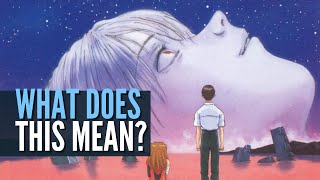

Why the TV ending of Evangelion is superior
45sControversial take that challenges popular opinion, sparking debate among fans.
▶ Play Clip"Title promises analysis, and the video delivers a detailed personal analysis of the endings."
The speaker shares first impressions of the final two episodes of Neon Genesis Evangelion and the film The End of Evangelion, comparing the two endings. They argue that the TV series ending, despite budget constraints, is superior because it focuses on Shinji's internal psychological battle, while the film provides external context but lacks emotional depth.
The speaker watched the final two TV episodes and The End of Evangelion, sharing initial thoughts and feelings.
The TV series finale received backlash, leading to the creation of The End of Evangelion a year later, retelling the ending from a different perspective.
The story rewards rewatching after knowing the ending, similar to how Star Wars backstories enhance original films.
Evangelion is not just about giant robots; it focuses on the pilots' inner lives, blending slice-of-life with apocalyptic mythology.
The series has three layers: slice-of-life, mythological battle, and the inner journey of characters, especially Shinji.
The external battle is a metaphor for the inner battle against trauma, fear, and the longing for healing.
The speaker believes the TV series ending is superior to The End of Evangelion because it focuses on inner conflict rather than external action.
The final episodes were made under extreme budget and time constraints, forcing the use of abstract imagery and stock footage.
Hideaki Anno's own depression influenced Shinji's character; a psychology book helped him understand his condition.
The film shows Shinji making worse decisions, presenting a mirror image of the TV series' healing arc.
The speaker finds the TV series ending more emotionally resonant and true to the story's core, while The End of Evangelion offers a contrasting, more external perspective that leaves them exhausted but intrigued.
What are the three layers of storytelling in Neon Genesis Evangelion?
Slice-of-life, mythological apocalyptic battle, and the inner journey of the characters.
6:26
Why did the TV series finale use abstract imagery and stock footage?
Due to extreme budget and time constraints; they ran out of money and resources.
10:10
What personal experience influenced Hideaki Anno's creation of Shinji?
Anno suffered from depression and read a psychology book that helped him understand his condition.
13:36
How does the speaker compare the TV series ending to The End of Evangelion?
The TV ending focuses on inner healing, while the film shows Shinji making worse decisions, acting as a mirror image.
19:51
What is the speaker's overall verdict on the TV series ending?
They believe it is superior and the ending the story needed, despite fan backlash.
8:08
External Battle as Inner Metaphor
Reveals the core thematic insight that the giant robot fights symbolize internal psychological struggles.
7:49Budget Constraints Forced Creativity
Explains how production limitations led to the unique abstract style of the finale.
10:10Anno's Depression Influenced Shinji
Connects the creator's personal battle with depression to the character's journey.
13:36Two Possible Endings
Highlights the deliberate contrast between the TV and film endings as a narrative choice.
19:51[00:00] so i've watched the final two episodes
[00:02] of neon genesis evangelion as well as
[00:04] the end of evangelion and i have
[00:08] thoughts
[00:09] and feelings and
[00:12] ideas
[00:13] and i want to share them with you and
[00:15] what you're about to see is an excerpt
[00:17] from my weekly show story secrets that i
[00:20] record every week for my patrons if you
[00:23] would like to get access to the full
[00:25] show take a look at patreon.com father
[00:29] roderick i would love it if you could
[00:30] join my patreon community
[00:36] [Music]
[00:49] in this episode i want to talk about my
[00:51] first impressions and it's just first
[00:53] impressions i'm not at the point yet
[00:54] where i would dare to give an analysis
[00:57] and an explanation of the finale of this
[01:00] story but i want to
[01:02] tell you
[01:03] what my first thoughts are after having
[01:06] seen the two last episodes of the
[01:08] television series
[01:10] and then also the two other episodes
[01:12] that were made a year later after the
[01:15] television series finale got a lot of
[01:18] backlash from from the fans at the time
[01:21] so they retold the story of what happens
[01:24] at the end
[01:25] of of uh
[01:27] shinji's journey you could say
[01:30] but this time from another perspective
[01:32] and and from a different angle and also
[01:34] with changes and it's fascinating uh to
[01:39] juxtapose these two to compare them to
[01:41] one another
[01:42] and it also had a huge impact on me
[01:45] because i was expecting certain things
[01:48] to happen and i was at first utterly
[01:50] confused and i have had a lot of
[01:52] emotions while watching both the ending
[01:54] of the television series and also
[01:56] the end of evangelion that's the name
[01:59] the overall title for these two
[02:01] kind of remake
[02:03] remade episodes
[02:05] um
[02:06] and and that that kind of wraps up that
[02:08] first part of the story because of
[02:09] course the manga continues the story and
[02:12] there are also a few other
[02:14] made for tv
[02:16] uh
[02:16] movies
[02:17] that have come out afterwards which i
[02:19] haven't seen yet but i'll get to that at
[02:21] a later point
[02:22] so that's what i would want to do first
[02:24] give you my overall
[02:27] sentiment and my first thoughts about
[02:29] the way this story
[02:31] uh ends and and where everything that
[02:34] i've been studying for so many months
[02:36] actually led to
[02:37] um and and and then what i want to do
[02:40] next time
[02:41] is
[02:42] to go back and re-watch now that i know
[02:44] how the story is ending
[02:47] i want to go
[02:48] back to the first episode and do a deep
[02:51] dive analysis of everything
[02:54] that i now can see in that first episode
[02:57] and then the second and the third we'll
[02:59] we'll be busy for a while
[03:01] that i've met that i missed because i
[03:03] didn't know where the story went i
[03:04] didn't know the full background this is
[03:06] one of those genius stories that
[03:09] it really pays off to go back after
[03:11] you've seen how it ends
[03:13] it's kind of
[03:14] a little bit with you know i'm a big
[03:16] star wars fan with star wars as well
[03:18] what they do now is to enhance the
[03:20] movies that we already know
[03:22] by telling the backstory so we've seen
[03:25] the story of obi-wan kenobi and now that
[03:28] we know how he spent his time on
[03:30] tatooine between the prequels and a new
[03:33] hope
[03:34] that when you now re-watch a new hope
[03:37] that character all of a sudden has way
[03:39] more depth than some of the things
[03:41] things that he says
[03:42] carry much more weight than they had
[03:45] when that backstory wasn't there and so
[03:48] i love that when when when the story has
[03:50] so many layers and and so many layers
[03:52] are added to that story that it makes
[03:54] you want to go back and re-evaluate what
[03:56] you thought you knew that for me is
[03:59] is part of the attraction of neon
[04:00] evangelion
[04:02] or neon genesis evangelion so that's
[04:05] what we're going to do
[04:07] and then every week when i do a deep
[04:08] dive per episode i will also create a
[04:11] short tic talk video where i just take
[04:13] one highlight of of that episode or i
[04:16] will just probably repackage it or
[04:18] re-record it um
[04:20] but as you know the tick tocks are only
[04:23] a few minutes you know it's two three
[04:24] minutes what i do on tick tock is
[04:26] usually considered to be very long
[04:28] because it's a short attention span type
[04:30] of medium but i hope that people are are
[04:34] are intrigued by what they see on tick
[04:36] tock so that they come over and if they
[04:38] become a patron they can also join you
[04:40] as an audience and listen to these shows
[04:42] what i love about this story is that it
[04:45] is not just
[04:46] a story about you know huge mega robots
[04:50] fighting each other uh what
[04:53] the the creators wanted to do was to set
[04:55] it apart from
[04:58] series that do that that
[05:00] you know are about these big
[05:02] uh mech robots fighting and battling
[05:05] each other they wanted to give this
[05:07] story
[05:08] um more of a soul maybe even literally
[05:11] in a certain way
[05:12] and that is why from the beginning we
[05:14] follow the pilots of those big you know
[05:18] robots or whatever creatures they are
[05:20] and we get to know a little bit of their
[05:22] backstory and the series constantly
[05:25] switches between the very mundane
[05:28] day-to-day life of these kids because
[05:30] they're all like 13 14 years old um
[05:34] trying to deal with school with you know
[05:36] their burgeoning emotions and going
[05:38] through puberty and whatnot so it
[05:41] from on the one hand this looks like a
[05:43] very kind of common
[05:45] japanese slice of life type of anime
[05:48] and then
[05:49] there are these big dramatic fighting
[05:52] scenes this overall
[05:54] huge mythology
[05:56] that
[05:57] shows you little pieces of what's going
[06:01] on but never reveals the full truth and
[06:04] and even at points during the story
[06:07] tries to
[06:08] kind of make you think
[06:10] about about things in a certain way and
[06:11] only to completely turn that up upside
[06:14] down later on when you realize what is
[06:16] truly going on and this is not just true
[06:18] for us as an audience but it's also true
[06:20] for a lot of the main characters who
[06:22] have actually no idea what they are
[06:24] involved in
[06:26] and then there is a third layer so
[06:28] you've got the slice of life stuff
[06:30] you've got the the big
[06:32] mythological apocalyptic battle going on
[06:35] and then there is the inner journey
[06:38] there is a
[06:39] what connects these two stories is what
[06:41] happens on the inside
[06:44] of the main characters and more
[06:45] particularly of shinji who is the the
[06:49] main the main character i wouldn't say
[06:50] the hero of the story because he's he
[06:52] definitely is not a hero and doesn't see
[06:55] himself as a hero but he's a protagonist
[06:57] and
[06:59] because of this inner story
[07:02] which also is about a battle but it's
[07:04] not a battle with forces from the
[07:06] outside it's a battle an inside battle
[07:09] between the good and evil inside of
[07:11] every one of us
[07:13] with with trauma and hurt and fear and
[07:16] everything that holds us back and then
[07:18] at the same time this longing for
[07:20] liberation for healing for you know
[07:23] something else
[07:24] and
[07:26] because you have that external story of
[07:28] a battle and you've got that internal
[07:30] story and it is at the same time
[07:32] about these regular kids that a lot of
[07:35] us can identify with because we've all
[07:37] been you know at that age 13 14 years
[07:39] old so we do recognize a lot of
[07:41] their emotions and the conflicts and the
[07:43] little things that make life very hard
[07:44] at that age
[07:47] but
[07:49] what i believe
[07:50] is so genius about this story is that
[07:52] ultimately the bigger story of the big
[07:56] outside external battle
[07:58] is
[08:00] i think a metaphor of the inner battle
[08:02] and that
[08:03] brings me to the last two episodes of
[08:05] the television series and why they are
[08:08] so incredibly good
[08:10] um
[08:11] and i know that this is
[08:14] this is kind of uh
[08:16] a solitary position not many people
[08:18] actually liked the ending of the
[08:21] television series even the majority of
[08:23] the people that follow me on tik tok and
[08:24] there are hundreds of thousands of them
[08:27] most of them agree that the way the
[08:29] television show ends is rubbish and if
[08:32] you really want to get a good experience
[08:34] of the ending of the story you have to
[08:35] watch the end of evangelion i
[08:38] disagree and i i really want to to
[08:43] stress
[08:44] how much these last two episodes first
[08:47] of all follow from the entire story that
[08:50] that came before it
[08:52] and then secondly are
[08:54] told in a way that is so
[08:57] creative and innovative
[08:59] and and touch upon such deep layers that
[09:03] that that are so relatable
[09:06] that i actually believe that the way the
[09:08] television show ended is far superior
[09:11] to the way they wrap up the story in the
[09:13] end of evangelion
[09:15] it's it's for me it's no doubt no
[09:17] discussion possible the television show
[09:20] ending
[09:21] is the ending that this story needed
[09:23] and yes
[09:24] the movie gives a lot of context and
[09:27] gives you a lot of like oh so what's
[09:29] going on
[09:31] what we didn't see in the television
[09:33] show
[09:34] but it's only information it doesn't for
[09:37] me it doesn't go to the core of what
[09:39] this story is about which is this inner
[09:41] conflict and so the last two episodes of
[09:43] the series are almost entirely taking
[09:46] place inside the minds
[09:49] of the main protagonists especially
[09:52] shinji but also to a lesser extent asuka
[09:55] and and and rey
[09:57] um
[09:58] and
[10:00] it's very atypical now one of the kind
[10:03] of pragmatic reasons for these final two
[10:06] episodes to be so different also
[10:08] stylistically
[10:10] is that they actually ran out of time
[10:12] and they ran out of resources
[10:14] the whole
[10:16] series was made under extreme duress it
[10:20] was very very difficult
[10:22] to get these episodes done in time
[10:25] especially getting the story started
[10:27] took months and months of preparation i
[10:29] think the first episode it took them six
[10:32] months to write it and to prepare for it
[10:34] and so they were in a crunch time wise
[10:37] they also were in a crunch budget-wise
[10:40] there was almost no money left and this
[10:42] is still an anime from the time that
[10:43] everything was hand-drawn and so
[10:46] yes of course there are a few i think
[10:48] computer graphics involved but still
[10:52] every
[10:53] second
[10:54] that you see consists of 24 individual
[10:57] frames you know that's how that's how uh
[11:00] uh animation works or in this case in
[11:03] anime oftentimes much less frames and
[11:06] that's one of the ways that anime has
[11:08] such a distinct
[11:09] style it's oftentimes because they use
[11:11] one cell sometimes for several seconds
[11:14] and they will just change the or move
[11:16] the background
[11:18] but but the rest of the image is static
[11:20] that's why
[11:21] everything is so stylized and and and
[11:24] oftentimes you're looking at a scene for
[11:26] instance when they go down to the the
[11:28] city below the surface of tokyo three
[11:31] and the only thing that moves is the
[11:33] background it's it's the the elevator
[11:36] but the rest is static it was just a
[11:38] very pragmatic way of saving money
[11:40] because
[11:40] then you don't have to draw all these
[11:43] different
[11:44] you know cells you can just use one
[11:46] drawing and then just
[11:47] have the background move you just make a
[11:49] bigger background
[11:50] so what was
[11:52] what was
[11:53] uh
[11:54] conceived as a as a way to cut the
[11:57] budget it was something that was that
[11:59] made also in a certain way the look that
[12:02] we associate so much with anime
[12:04] and
[12:05] the problem was that for the last two
[12:08] episodes of the television series they
[12:10] were under contract
[12:11] they didn't even have the money the
[12:13] budget to do like super low level
[12:17] cell animation
[12:19] so even with the tricks that they used
[12:21] in in previous episodes they weren't
[12:22] able to get to the end of the story and
[12:24] so that's why they they had to resort
[12:27] to even
[12:29] more mundane sources of imagery and
[12:31] that's why in this these two last
[12:34] episodes you will also see real footage
[12:36] like just stock footage from from people
[12:39] from trains from whatever and you see
[12:41] sketches you see pencil sketches
[12:44] they reuse almost everything that they
[12:47] created in the past including their
[12:49] their their pencil sketches to
[12:53] tell that story
[12:54] uh um of what happens on the inside of
[12:58] of shinji's mind
[13:00] so it's super abstract and i can i can
[13:02] totally
[13:03] see why that is jarring to a lot of
[13:06] people but what i think is so genius is
[13:08] that despite those constraints despite
[13:10] that crunch
[13:12] it still does something extraordinary
[13:15] because the
[13:17] the journey of
[13:18] shinji what he goes through what he
[13:22] starts to realize over time
[13:25] is is so
[13:26] deep and so true and the reason i think
[13:29] that it has such an emotional impact at
[13:31] least on me
[13:32] is that this is actually
[13:34] based on
[13:36] on uh hideako anno's
[13:38] own experiences
[13:40] he has often
[13:42] said in interviews that he suffers from
[13:45] depression and that before he started to
[13:47] make neon genesis evangelion he had
[13:51] had a period of time several years where
[13:54] he was in a deep depression
[13:56] and then someone
[13:58] gave him
[13:59] a book
[14:00] about psychology i'm not exactly sure
[14:02] which book it was
[14:04] but but during his depression he started
[14:05] to read that book and to him it was a
[14:07] revelation
[14:08] that psychology book helped him
[14:11] to understand what was going on
[14:14] why he was suffering from depression
[14:16] what the choices were
[14:19] that he needed to make and a lot of what
[14:22] you see in shinji's character and that
[14:24] also is sometimes grating and irritating
[14:26] is like he's always
[14:28] crying always whining complaining always
[14:32] blaming everyone around him
[14:34] but he's afraid to look inside so he he
[14:37] is constantly on the run
[14:39] he he wants to hide between other people
[14:42] and then when other people don't help
[14:43] him he feels even more powerless very
[14:46] very similar i think to what many people
[14:49] who suffer from depression also
[14:50] experience this is this this you're
[14:53] closed up from the world it seems like
[14:55] you're completely isolated no one can
[14:57] help you and you can't help yourself
[14:59] so
[15:00] there doesn't seem to be an exit and
[15:03] having more insight in
[15:05] how your brain works
[15:07] how your emotions are linked to neural
[15:10] pathways and how trauma can can make
[15:14] certain connections in your brain that
[15:16] are not healthy but you keep
[15:19] repeating the patterns and so that
[15:21] always kind of repeats and even
[15:23] strengthens
[15:24] the the depressed feelings
[15:27] once you start to understand how that
[15:28] works you can also
[15:30] maybe
[15:31] discover a way out
[15:34] and that is what is happening in these
[15:36] last two episodes where shinji who has
[15:39] gone through so much emotional trauma in
[15:41] his early years he lost his mom he has a
[15:45] horrible father again not spoiler
[15:47] because it's it's in the first episode
[15:50] his father is a horrible person
[15:53] um
[15:54] he he
[15:56] every time
[15:58] that he fights these
[16:00] big these angels these these aggressive
[16:03] monsters
[16:04] it's it's a reflection of what's
[16:06] happening inside of him he feels like
[16:08] he's he's in a fight with with forces
[16:10] that he can't understand that seem to
[16:12] come back all the time and there's
[16:14] there's no end to it and if you've
[16:16] defeated one then there is another one
[16:17] that pops up just like in depression you
[16:19] may sometimes have that feeling that no
[16:21] matter what you do no matter how
[16:23] much you try to resist
[16:25] it comes back in waves and then it takes
[16:28] you back into that darkness and into
[16:29] that solitude
[16:32] and and there seems to be no victory
[16:34] possible
[16:35] until
[16:36] you start to realize
[16:38] that
[16:40] you are the one
[16:41] that can make a change
[16:43] that
[16:44] healing has to come from
[16:46] the inside yes with maybe outside help
[16:50] and with people that explain to you or a
[16:52] book you know what that can tell you
[16:54] this is how it works
[16:56] you have to do the work there's no one
[16:57] who can do it for you you can't take a
[16:59] pill against depression you can take
[17:02] medication to suppress the symptoms
[17:05] but the the the origin
[17:08] of what causes this inner darkness that
[17:10] is something that's a fight you have to
[17:12] fight yourself
[17:13] that i think when i'm not a psychologist
[17:16] but this is what i gather from from the
[17:19] story this is what
[17:20] uh idiacoano wanted to tell
[17:24] the this is it's about his own battle
[17:26] and his own efforts to overcome
[17:29] this this isolation by opening up to the
[17:32] people and by accepting that life is
[17:36] fundamentally broken
[17:37] that that it's not you know it's no use
[17:41] to run away from pain and suffering like
[17:43] we all do but
[17:46] people that suffer from depression do it
[17:48] maybe to the extreme
[17:49] um but that the the the only way to to
[17:53] get out of that darkness is to accept
[17:56] that even though you may step into the
[17:58] light it's not all going to be it's not
[18:00] going to be like heaven there's still
[18:01] going to be pain and violence and
[18:03] suffering
[18:04] but you have to grow stronger you have
[18:06] to make the deliberate decision that you
[18:08] want to live
[18:09] and that you are worth
[18:11] living
[18:13] and that despite suffering you still
[18:16] have value
[18:18] and and so
[18:19] that's a journey that i think is is
[18:21] explained very well in these last two
[18:23] episodes and and for me that was the
[18:25] core of the story so i was so
[18:28] uh
[18:29] i was so fascinated that they that they
[18:31] dared to tell that part of the story and
[18:34] forego
[18:36] the whole you know bigger mythology
[18:38] which brings me to the to the end of
[18:40] evangelion which is which is the movie
[18:43] where in in the
[18:45] well these two more cinematic
[18:48] versions
[18:49] of this ending they show what happened
[18:51] at the same time in the outside world
[18:54] and so
[18:56] yeah that's fascinating that's
[18:58] really riveting and it's it's also very
[19:01] shocking because that that battle also
[19:03] culminates in a lot of violence and
[19:06] there were times there was like oh my
[19:07] gosh i can't believe they i can't
[19:10] believe they put this in the movie uh
[19:12] there was this infamous scene in in the
[19:14] hospital that a lot of people on tik tok
[19:16] wanted me to comment upon
[19:17] um
[19:19] and and that's just part of the
[19:22] tragic decisions that shinji takes over
[19:25] and over again
[19:27] and
[19:28] it's just
[19:29] minor tragedy compared to the
[19:32] mass murder that takes place in that
[19:34] final episode it's me it's really
[19:36] gruesome i want to warn you that this is
[19:39] unlike anything you've seen in the
[19:40] television series um and yet
[19:43] it's kind of a logical conclusion of
[19:45] that story it's it is an apocalyptic
[19:47] battle
[19:49] but what is the big
[19:51] shocker
[19:52] of the end of evangelion is not
[19:55] the scope of that final battle
[19:59] but it is that in that movie shinji
[20:02] takes
[20:03] different
[20:05] decisions
[20:06] instead of
[20:08] healing
[20:09] he is actually getting worse
[20:12] and so it's almost like a a mirror image
[20:16] of the end of the television series
[20:18] it's like the
[20:21] you know that in in in stranger things
[20:22] you've got the the regular world and
[20:24] then you've got the
[20:26] you know how do they call it the the
[20:27] underworld or the the upside down and
[20:30] and this is what
[20:31] what gave me such a whiplash when when
[20:34] watching the end of evangelion is like
[20:36] but where where is the story that they
[20:38] were telling in the last two television
[20:40] episodes this is the opposite
[20:43] and and it's only after seeing the whole
[20:45] thing that i started to wonder well
[20:47] maybe that's on purpose as well maybe
[20:49] that is what they wanted to do
[20:51] to tell
[20:53] two possible endings
[20:55] which then
[20:56] makes the end of evangelion very
[20:59] intriguing and definitely worth
[21:02] re-exploring but and i'm going to wrap
[21:05] things up and then i'm going into
[21:06] spoiler territory but my final thoughts
[21:10] about the end of evangelion is
[21:13] that
[21:14] it it baffled me i was watching and
[21:17] again i've studied this series i thought
[21:20] i knew what was going on
[21:22] and then i i'm just there were so many
[21:24] moments during that movie that i was
[21:26] like what is happening what what am i
[21:29] watching there are like minute long
[21:31] sequences where i'm completely
[21:34] out of
[21:35] any clue as to why that is included i
[21:38] there are hints
[21:40] that there is a rhyme and reason to all
[21:41] that
[21:42] but at the same time it goes so fast and
[21:44] there's so much happening that i just
[21:46] don't have the time to to think about it
[21:48] and so at the end of that movie i was
[21:50] exhausted
[21:52] i was emotionally intellectually
[21:54] completely exhausted i was like
[21:56] oh my goodness i have to re-watch this
[21:59] multiple times and i probably will have
[22:01] to do a lot of research
[22:03] in order to fully understand why they
[22:06] told the story this way and why
[22:09] this story this version of the story is
[22:11] so different and in many ways
[22:15] opposite to what they showed at the end
[22:17] of the television series
[22:19] so
[22:21] i i had so many emotions there was also
[22:25] a lot of tragedy
[22:26] in the end of evangelion there are
[22:28] moments where you're like
[22:30] no
[22:31] no they they ju they didn't do
[22:34] really
[22:38] there were there were just times that
[22:39] where i was just
[22:41] man
[22:43] don't tell this i don't want to see this
[22:45] story it's just too it's too emotional
[22:48] it's too hard it's too painful
[22:51] and you know what that's probably again
[22:53] on purpose they want us to feel like
[22:56] that this is why this series is so good
[22:58] it makes us feel so much
[23:00] it makes us emote and and reflect and
[23:04] and relate
[23:06] to what we see and there are not many
[23:09] series or many movies
[23:11] that are able to do that because we're
[23:14] so engulfed with media with stories and
[23:17] a lot of it is
[23:19] forgettable
[23:20] there's so many stories where like yeah
[23:22] that's that's a good popcorn movie i had
[23:24] a good time and then you asked me a week
[23:25] later what was the movie about uh yes
[23:27] something with dinosaurs i i don't know
[23:29] about the rest with neon genesis
[23:31] evangelion i mean i can tell you uh for
[23:35] hours
[23:36] what
[23:37] which moments struck me and what made me
[23:40] think and what i discovered and there's
[23:42] there's not a single day that i'm not
[23:44] thinking about the meaning of neon even
[23:47] uh neon genesis evangelion and it's not
[23:50] just because i i make stuff for tic toc
[23:53] it's just because this story is so good
[23:54] and i want to re-watch it and you know
[23:57] well that's why i'm doing this show
[23:59] that's why i'm sharing that with you
[24:00] knowing very well that not everyone will
[24:02] be as passionate about this series but i
[24:05] know that there are
[24:06] enough of you that that appreciate this
[24:09] and maybe even years later some of you
[24:11] may listen to this years after i've
[24:13] recorded this and still hopefully get
[24:15] some value out of it
[24:22] [Music]
⚡ Saved you 0h 24m reading this? Transcribe any YouTube video for free — no signup needed.