

My Resting Heart Rate Is 35 (Top 0.5%)
52sShocking elite health stats combined with the perfect combo of low heart rate and high HRV for longevity.
▶ Play Clip"Delivers a detailed protocol with scientific backing, but includes some self-promotional content."
The video presenter shares his personal experience maintaining a resting heart rate of 35-39 bpm and high HRV over 10 years. He explains the science linking low resting heart rate with longevity, backed by meta-analyses, and outlines specific lifestyle habits to achieve similar results.
Resting heart rate 35-39 bpm, considered elite, with HRV consistently over 100.
Low resting heart rate should be combined with high HRV for optimal health and longevity.
Every 10 bpm increase above 45 raises all-cause mortality by ~9%; 60-80 bpm increases risk by 12%; >80 bpm by 45%.
Aerobic exercise increases stroke volume and vessel elasticity, lowering resting heart rate even after accounting for exercise-induced heart rate spikes.
2018 meta-analysis found endurance training and yoga most effective for lowering resting heart rate.
More zone 2 cardio drops resting heart rate from 39 to 35; less cardio raises it to 41-42.
2020 Fitbit study shows daily step count linearly correlates with HRV up to 20,000 steps/day.
2025 study: 8 weeks of 16:8 fasting reduced resting heart rate by 9% and increased HRV by 9-12 points.
At 74-75 kg, resting heart rate 35-38; at 85-86 kg, rose to 45; suggests BMI >25 increases heart rate even with muscle.
Sauna raises heart rate like moderate cardio, improves vagal tone and cardiovascular efficiency.
A lower resting heart rate combined with high HRV is a strong longevity marker, achievable through consistent aerobic exercise, walking, intermittent fasting, maintaining healthy body weight, and sauna use.
What is the ideal combination for longevity according to the video?
Low resting heart rate together with high heart rate variability (HRV).
00:40
By how much does each 10 bpm increase above 45 raise all-cause mortality risk?
Approximately 9%.
01:47
What are the two most effective types of exercise for lowering resting heart rate?
Endurance training and yoga.
05:11
What was the effect of 8 weeks of 16:8 intermittent fasting on resting heart rate and HRV?
Resting heart rate reduced by 9% and HRV increased by 9-12 points.
07:22
What is the recommended daily step count to improve HRV per the Fitbit study?
Up to 20,000 steps per day.
06:16
What happens to resting heart rate when BMI exceeds 25?
It increases linearly.
09:20
HRV and resting heart rate combination
Emphasizes that both markers together are more predictive of longevity than either alone.
00:53Meta-analysis quantifying risk
Provides concrete numbers linking heart rate to mortality, making the advice evidence-based.
01:47Heartbeat budget illustration
Demonstrates how exercise can extend the time to reach a given heartbeat count, intuitively explaining longevity benefits.
04:17Intermittent fasting study
Highlights a relatively new study showing IF can directly improve heart rate metrics.
07:22Impact of body weight
Shows that even muscle mass can increase resting heart rate, challenging the assumption that more muscle is always better.
08:39[00:01] for over 10 years across multiple devices. My average resting heart rate is around 35 to 39 beats per minute, which is considered elite even among endurance athletes. And every time I go to the doctor, they ask whether or not
[00:13] I'm an athlete because for someone my age, the resting heart rate is usually around 50. But the slightly lower resting heart rate is a good marker of predictor of longevity. Over the past decade, I've followed many different
[00:26] programs. I've been different body weights plus or minus 10 kilos, and I've learned what influences my resting heart rate and what enables me to maintain it resting heart rate isn't always better. If your resting heart rate is low
[00:40] medications or because of an underlying medical condition, that's not good. The combination you actually want is a low resting heart rate together with a high heart rate variability, HRV. High HRV with low resting heart rate generally
[00:53] system and healthy autonomic nervous system function. That's the combination that's associated with longevity. And my HRV is over 100 consistently, which is also considered elite level. The perfect combo of resting heart rate less than 40
[01:06] and HRV over 100. You probably heard this proverb that you only have a life. If your heart beats very fast, you going to die sooner because you run out of heartbeats. At first glance, nature seems to support this idea a little bit.
[01:20] The longest living mammals in the world, like whales, have very low heart rates and they live significantly longer than humans. A mouse goes through about 1 billion heartbeats in its life. A whale on the other hand goes through about two
[01:32] to four billion. The difference is that the whale lives 200 years longer than the idea of heart rate predicting longevity. Now, you can't really take it at other animals doesn't always apply to humans. But human studies do support
[01:47] is associated with lower heart disease risk and better longevity. One large meta-analysis involving over 1.2 million people found that every 10 beat per minute increase in resting heart rate above 45 was associated with roughly a 9
[02:02] mortality. Individuals with a resting heart rate of 60 to 80 beats per minute had a 12% higher risk for all-cause mortality and 8% for cardiovascular disease mortality. Those with a resting heart rate above 80 had a 45% higher
[02:17] risk for all-cause mortality and 33% for cardiovascular disease mortality. lower resting heart rate will make you live longer. Instead, your resting heart rate is a reflection of how well your heart functions.
[02:30] of an imbalanced nervous system and vagal tone. It directly promotes atherosclerosis, myocardial ischemia, hypertension, and ventricular arrhythmias. Generally speaking, the healthier and more efficient your heart
[02:43] is, the slower it has to beat to pump out the same amount of blood. That's why resting heart rate somewhere in the 30s. Their heart is working very efficiently. The vast majority of people, however, have a resting heart rate of 60 to 70
[02:56] meta-analysis that I shared with you, that already increases their all-cause mortality by 12 to 45% compared to individuals with 45 beats per minute. is not just for athletes, but it's recommended for everyone who wants to
[03:11] longevity. A resting heart rate of 38 is already in the top 1% of the population, probably even less than that, maybe 0.5%. If your people for your age, then check out my top 1% health community. You'll start by
[03:25] taking the top 1% health assessment, which shows exactly where you rank your biggest health bottlenecks and tells you the next milestone you should focus on. Based on your results, you'll get the exact nutrition, training, and
[03:37] take you to the next level. Plus, you'll get live coaching from me. We even have a guarantee. You'll improve your health status by 25% within 60 days or you get your money back. Click the link below to get your health assessment, and let's
[03:50] talking about how to get a lower resting heart rate. Exercise makes your heart blood, which results in lower resting heart rate. Yes, during the exercise, your heart rate will rise over 100, even up to 180 or 190, but exercise increases
[04:05] stroke volume, it improves your blood vessel function and elasticity, which means that during your rest, your resting heart rate will be significantly lower than the person who doesn't exercise. The human lifespan of 80 years
[04:17] is around 3 billion heartbeats. The sedentary person who averages 70 beats heartbeats in about 81 years. Now, compare that to the person who exercises and is fit. They would average at 45 beats per minute. And even after
[04:31] accounting for 1 hour of exercise per day at an average heart rate of 155, that individual who exercises would reach 3 billion heartbeats in 114 years. and it's not a perfect example, but you get the point. Even if you spend 1 hour
[04:46] a day of exercising with your heart rate in the 150s, your general lower resting increased heart rate during your exercise. The difference is actually massive. Going through 3 billion heartbeats in 80 years, if you don't
[04:59] exercise, versus going through 3 billion heartbeats in 114 years, if you exercise. Research consistently shows that aerobic exercise lowers resting that aerobic exercise lowers resting heart rate. A 2018 meta-analysis of 191
[05:11] studies of different types of exercise found that all exercises lower resting heart rate, but the most effective ones are endurance training and yoga. the way it improves blood flow and pumping of the blood. Yoga potentially
[05:23] because of lowering stress, while still providing some aerobic stimulus and resting heart rate has become slightly lower when I introduced cardiovascular exercise, especially zone two cardio. If I spend more time doing cardio, then my
[05:36] resting heart rate drops. It's going to be around 35. If I do less cardio, it's going to increase slightly, it's going to be around 39, sometimes even 41, 42. structured cardio, my resting heart rate
[05:48] was because of walking a lot. For years, I averaged somewhere between 15,000 to 20,000 steps every day. Since then, I've started to walk a lot less. Nowadays, I walk around 9 to 10,000 steps per day, but my resting heart rate
[06:02] this is probably the result of compensation from more directed aerobic exercise. Given that I'm 10 years older now, the age-related increase in my resting heart rate would put me in the 45s if I didn't do anything. But, thanks
[06:16] exercise, I've managed to maintain the same resting heart rate. There's also a relationship between walking and higher heart rate variability. This 2020 study on over 8 million Fitbit users showed that daily step count correlated
[06:29] linearly with HRV. The higher the daily step count, the higher the HRV across all ages. They saw increases in HRV with up to 20,000 steps per day. Now, of study, but the population who's being studied is more health-conscious than
[06:42] the general population because they're all Fitbit users. Walking isn't very to a certain extent. In the context of heart rate, it helps to pump blood back circulation. That's why it helps to lower heart rate and increase HRV.
[06:56] Nowadays, I don't walk 15 to 20k steps anymore. I walk around 9 to 10k steps. that gives me the same effect as if I did no cardio and walked a lot more. But, the difference is time. I don't have time to walk 20k steps a day. So,
[07:10] compensate for that by doing dedicated zone two cardio, which is more time efficient in terms of improving your aerobic fitness. Another habit that rate is intermittent fasting. I've been practicing intermittent fasting for over
[07:22] 12 years, and I do think that it has contributed to my HRV and lower resting heart rate. A 2025 study found that 8 weeks of 16:8 intermittent fasting reduced resting heart rate by almost 9% while simultaneously increasing heart
[07:34] rate variability. The participants saw on average 6.6 beat reduction in their heart rate and 9 to 12 point increase in HRV, which is significant. I've noticed I'm eating slightly fewer calories and I'm doing a bit more controlled
[07:49] intermittent fasting, then my heart rate is lower, my HRV is higher. Now, the mechanistic explanation is probably because when you are in a fasted state, your resting heart rate also becomes
[08:01] eating all the time from morning to the evening, your metabolism is roaring all resting heart rate. But, if you give your body a little bit of a longer break, like 16-hour fast, it works like exercise that helps you to lower your
[08:15] resting heart rate. However, longer fasts don't appear to be better. A 2021 study showed that extended fasting can increase sympathetic nervous system activity, which will temporarily lower HRV. That's why I prefer a daily
[08:27] and 8. My eating window is something like 7 hours and I stop eating around 5 noticed is that body weight matters. When I weighed around 74-75 kg 8 years
[08:39] ago in my early 20s, my resting heart rate and HRV were both excellent, 35-38 for heart rate and 120 plus for HRV. About 5 years ago, I weighed around 85-86 kilos when I was doing more powerlifting. At that time, my resting
[08:53] heart rate also increased to 45 and my HRV dropped to around 90. Those are good results still, but compared to my previous results, they are slightly worse. Today, I weigh around 80-81 kg and my resting heart rate is still
[09:06] and my resting heart rate is still around 38-35 and HRV over 100. So, this too much muscle. If you have too much mass, even if it's muscle, your resting because your heart has to pump more blood and the more kilograms you have to
[09:20] It's been found that the resting heart rate increases linearly above a BMI of 25. The sweet spot is between 18 and 25. This means that even too much muscle can cardiovascular health, especially if you get a BMI of 30 or something. The
[09:36] body fat. They don't struggle with too much muscle in most cases. That's why having too much muscle. First, get to less than 15% body fat as a man and less than 25% as a woman. But, if you are lean, less than 15% as a man and less
[09:51] heart rate is still too high, then you might need to lose a little bit of weight, even if it's muscle. Usually, it doesn't apply to women, but some leaner men can still carry too much muscle for their frame. Or, the other option is
[10:03] you have a lot of muscle, but you're not doing any cardio, then your resting you can have muscle and a good resting heart rate, but to achieve that, you improve your aerobic fitness and cardiovascular health is the sauna.
[10:17] Sauna raises your heart rate almost like moderate cardio. It doesn't get you to very high heart rate, but it keeps you in the low 100s if you stay there for 15 cardiovascular system becomes more efficient, and your autonomic nervous
[10:30] parasympathetic activity. There is research showing that sauna use improves cardiovascular health, blood pressure, and vagal tone. And, there's plenty of data to suggest that regular sauna use is associated with reduced heart disease
[10:43] better heart function. Overall, your resting heart rate is one track. You don't need to go to an expensive laboratory to do it. Most smartwatches will automatically measure it. You can use certain sleep trackers
[10:56] and you can clearly see how your lifestyle affects this trend line of emphasize that although a lower resting heart rate is associated with better health outcomes with combined higher HRV, you don't necessarily want to chase
[11:09] want to take medications that lower your resting heart rate. You don't want to lower your resting heart rate. You want to pay attention to the combo of your heart rate is improving and it's going down a little bit, and at the same time
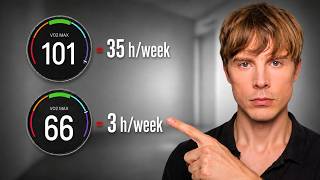
[11:23] your HRV is going up, that's a good sign. Now, just remember that your biomarker. There are many other the that matter. I also rank in the top 1% of virtually every other biomarker, such as VO2 max,
[11:35] kidney function. In fact, I ranked number one at the longevity World Cup. routine that enabled me to accomplish that.



⚡ Saved you 0h 11m reading this? Transcribe any YouTube video for free — no signup needed.