
Why 90% of Investors Lose Money
42sHigh relatability and emotional trigger for retail investors who recognize their own panic behaviors.
▶ Play Clip"Delivers a solid summary of the book's key concepts, though it includes a sponsor segment and some filler."
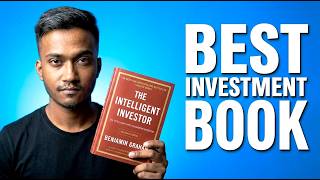
This video provides a comprehensive summary of Benjamin Graham's classic book 'The Intelligent Investor,' focusing on its timeless principles of investing psychology and risk management. The presenter, Vaibhav Kadnar, explains key concepts such as the difference between investment and speculation, the Mr. Market metaphor, margin of safety, and the categorization of investors into defensive and enterprising types, all while emphasizing the importance of emotional discipline over intelligence.
The book is about avoiding losses by not behaving like gamblers; investors lose money due to emotional reactions like anxiety and fear, not just picking wrong stocks.
The book does not promise overnight riches or secret strategies; it focuses on remaining rational when the market is emotional.
Written in 1949, the principles still apply because human behavior (fear and greed) hasn't changed, even though the market has.
Warren Buffett called it 'the best book on investing ever written,' recommending it as the first and foremost investment book.
An investment operation is one that upon thorough analysis promises safety of principal and an adequate return. Anything else is speculation.
Graham personifies the market as Mr. Market, a business partner who offers prices daily; investors should judge whether the price is reasonable, not follow his mood.
The biggest rule: don't rely on being right, rely on being safe. Buy with a buffer to survive mistakes.
Defensive investors seek safety, use diversification, and avoid over-trading; enterprising investors do deep research and look for undervalued opportunities.
The biggest enemy is not the market but your own emotions; high IQ people lose money because they can't manage fear and greed.
Graham's underrated rule: sometimes the most intelligent decision is to do nothing; patience is rewarded.
For defensive investors in India: invest in long-term equity, create a regular SIP, and avoid unnecessary experimentation.
The book's essence: it's more important to stop losing money than to make money; investing should be boring, disciplined, and rule-based.
The video concludes that successful investing is about emotional control and discipline, not intelligence or market prediction. By following Graham's principles—like margin of safety and acting less—investors can protect their capital and let compounding work over time.
What is the definition of an investment operation according to Benjamin Graham?
An investment operation is one which upon thorough analysis promises safety of principal and an adequate return.
03:03
What is the 'Mr. Market' concept?
It personifies the market as a business partner who offers prices daily; investors should judge whether the price is reasonable, not follow his mood.
04:37
What is the margin of safety?
It's a rule to buy with a buffer so that even if your analysis is wrong, your capital remains safe.
07:32
What are the two types of investors according to Graham?
Defensive investors (seek safety, diversify, avoid over-trading) and enterprising investors (do deep research, look for undervalued opportunities).
09:56
What is the biggest enemy of investing according to Graham?
Your own emotions (fear and greed), not the market.
11:49
What does 'act less and think more' mean?
Sometimes the most intelligent decision is to do nothing; patience is rewarded.
13:29
What is the core message of 'The Intelligent Investor'?
It's more important to stop losing money than to make money; investing should be boring, disciplined, and rule-based.
15:19
Investment vs. Speculation
Provides a clear, actionable definition that distinguishes investing from gambling.
03:03Mr. Market Metaphor
A powerful mental model that reframes market volatility as an opportunity rather than a threat.
04:37Margin of Safety
A core risk management principle that emphasizes capital preservation over profit maximization.
07:32Psychology Over Intelligence
Challenges the common belief that high IQ leads to investing success, highlighting emotional control as key.
11:49Boring Investing Wins
Summarizes the book's philosophy that discipline and consistency beat excitement and speculation.
15:19[00:01] Graham, this is his signature book whose price is around Rs. 1000 in the market today. in the market today. [Music]
[00:18] Investing book written This change investing book ever written This change investing book ever written [Music] lose money in the stock market because they picked the wrong stock, they
[00:31] lose money because they came to be investors but are behaving like gamblers. they get more excited and invest more of their money and as soon as the market goes down, they start doing all these things out of anxiety, confusion, checking news, opening YouTube,
[00:44] checking Telegram groups, etc. out of fear. If you too have faced all these things, then this video, this book is for you. This is not an boring book like a novel written in very small letters. In this,
[00:59] that will make you a millionaire overnight nor will you find any secret strategy or shortcut and perhaps this is the reason why most people are not able to complete this book. wrote this book, was never focused on
[01:12] contrary, his entire focus was on one thing: how can you remain rational and take your decisions when the whole world becomes emotional. Warren Buffett, Rakesh Jhunjhunwala and almost all successful investors follow the principles of this book.
[01:26] This book is actually very timeless. It was written in 1949. But even today all its tips work. Now you people might be thinking that this book was written in 1949. There was no internet, no apps, no crypto, no reels then. So
[01:39] what is its relevance in today's time? Look, your question is very valid. But you have to listen carefully to what I will say next. The market has changed but people have not changed. Even 70 years ago, people used to take decisions based on fear and greed and the same is happening today.
[01:53] Just one type has increased his speed. and Get Sell Something Just This The goal of this book is not to teach you how to understand the market. It simply improves your investing psychology. In fact,
[02:08] Warren Buffett also said a line about this book. This is by Father The Best Book on Investing Ever Returned. Recommended first and for most Intelligent first and for most Intelligent Investor Chapter 18
[02:21] So brother, there must be something in this book and if you want to know what that thing is, then definitely watch this video till the end and if you are serious about investing then make sure you like this video for the algorithm and placed at 1.25x for a better experience and yes every
[02:34] month I bring videos, books, summaries and all the things on such smart investing strategies, so don't forget to subscribe to this channel Vaibhav Kadner Let's start with the summary of Intelligent Investor by Benjamin Graham.
[02:51] returns, we need to understand a basic distinction. Benjamin Graham has made one line very clear in the beginning of this book.
[03:03] An investment operation is one which upon thorough analysis promises safety of principal and an adequate return. If you haven't read it before, let me investing money is not investment. Investment happens when you understand the risk first.
[03:17] Then you decide whether the principal will be safe or not and only then you have expectations of returns. And anything that does not fit this definition is not an investment but a speculation. The problem nowadays is that
[03:31] 90% of the people do not understand this difference. And even those who understand it do their focus is whether the price will go up or down today. Will it be right to buy now or should I book my profit tomorrow and exit? At the
[03:44] same time, the focus of an investor is that where am I buying? Where is my money going ? Does this business actually make money or not and can I keep this investment for 10 years without any tension. Those who
[03:57] speculators. On the exact opposite side of the spectrum, an investor Reads annual reports. Understands the strategy of the company and only then invests. And that speculation is not a bad thing, brother. It is completely up to you whether
[04:12] you want to do trading or investing. Both are completely different things. other's is long term. And when you get clarity in your mind whether you are an investor or a speculator, only then you will be
[04:24] this next concept I am going to teach you is one of the most powerful ideas in this book. This is a concept that does not teach you to fight the market but teaches you to use the market for yourself. And this concept is
[04:37] called Mr. Market. But before understanding the concept of this Mr. Market, I want to tell you a fun fact about this book. The book whose price in the market today is around ₹1.5 lakh. That is approximately $13.6 million. Are you
[04:53] thinking that such a high price is just because of one signature? These play a very important role in life and business. And if you are still using the same old pen and paper while signing documents, then wait a bit. If you have to
[05:07] wait a bit. If you have to or get it signed by someone, then now you can sign all your documents in just one click. By using Udoo's Sign app, which is one of Udoo's many other
[05:19] Simply you have to go to the link given by me in the description below, which is the link of Udu's sign app, and which is the link of Udu's sign app, and you will get options for many details like
[05:32] drag and drop them. Decide who will fill which details and then this, you can also set reminders here. And go to the signing parties for signature. There are three options to sign up on Odoo. Odoos
[05:47] automatic sign, drawing the sign and the third option is to upload a photo of the sign. And just by doing this, you can completely digitize the experience of your official agreements. Everyone receives a digital certificate as proof of authenticity. Moreover,
[05:59] it is legally valid not only in India but worldwide. What's more, you can check the status of all your contracts from a single dashboard, anytime, anywhere. So quickly go to Odoo Sign and put your digital signature on contracts. And
[06:11] try making your business even more professional. I have given its link in my description below. Make Sure To Mr. Market. Benjamin Grum did not use any complex formula to understand the market. He has basically turned the market into a human being
[06:25] and named that human being Mr. Market. Think of Mr. Market as your business partner of sorts. He comes to your house every morning and says, brother, today I am ready to sell you a share of my company at this price. If you
[06:38] I will leave from here. By doing this he keeps coming to you every day. different, sometimes he is very excited. Because he sees his future bright. Everything looks absolutely perfect. But sometimes he gets very depressed.
[06:52] Negative news, fear, uncertainty, sometimes price fall. Now your job as an investor is not to will tell you its price. The investor's job is to understand the value of that price. You will have to
[07:07] ask yourself this question again and again that is the price that the Egyptian market is offering me today reasonable for me? And this one simple question will be the difference between a reaction and a decision. Look, if you understand this concept, then your
[07:19] entire perspective of looking at the market will change. Whether the price is low or high. The first question you should ask yourself is whether it is reasonable for you? But while doing this, a new problem develops that if I invest money,
[07:32] how much should I invest? And to counter this problem, Graham made a rule that is known as margin of safety. According to him, the biggest rule of investing is that don't rely on being right, rely on being safe. Look, the
[07:46] simple purpose of this margin of safety is that you should be able to survive in the market even after making a mistake. I have studied so much. I can tell you exactly when the market will go up and when it will go down. Everyone is lying.
[07:58] Neither experts, nor analysts, nor the legend Warren Buffett himself, anyone can predict this. There is only
[08:10] buffer. Let me explain this buffer to you with an example. Imagine you are buying a house. Now the market price of that house is ₹1 crore. Now, after getting a slight discount on that price of ₹1 crore, you get that house for ₹95 lakh. Now suppose tomorrow
[08:22] some issue arises in that property, then it is possible that the market price of that house which was ₹1 crore may fall directly to ₹90 lakh or even ₹85 lakh. That means it is less than your buying price of ₹95 lakh. So by default you are going to incur loss in that deal.
[08:36] But if you had bought the same house worth Rs 1 crore for Rs 6065 lakh, then perhaps you would not have incurred a loss. On the contrary, you would still be in profit. Now this concept is same logic applies in the stock market as well, if you are buying any business at a price
[08:50] where it is already perfectly priced. So even if the market goes up or down a little, that mistake can prove very costly for you. The goal of investment is never to maximize profits. The goal of investment is actually to
[09:02] protect you from losses and in a way to protect you from inflation and to generate Look, I have heard a lot of people in the stock market saying that you have to take risks. If there is risk, there is risk.
[09:15] not take blind risks. The concept of this margin of safety is that even if your analysis turns out to be wrong, your capital should still remain safe. Because entire amount is lost, then brother, what will you invest?
[09:29] Where will you get more money to put into the market? By selling your house and car. I myself have that whenever I invest in the market considering myself very smart, then every time I have kept my margin of safety low and I am guaranteeing that
[09:42] you will make a mistake. I have made a mistake, you will also make one. There is a very fine line between confidence and overconfidence. And this overconfidence will only make you sink. safety would have become completely clear to you. Now let's move on to another new thing that not
[09:56] everyone invests in the same way. Some people want safety in life while some people actually want to make efforts. That is why Gram has divided investors into two categories. Number one defensive investor and second one
[10:08] not all investors are the same and the problem arises when people try to become heroes in the stock market without understanding their capabilities. That is why there are two categories and the first type in this is defensive investor. Their prime goal is
[10:21] who do not want to track the market daily or who do not have time to read the balance sheet or some people who want to take minimum risk. That is why these defensive investors follow diversification. Stay
[10:34] away from over trading. They believe in consistency and make most of their money on boring businesses. According to me, 90% of the people should be seen otherwise, there is no weakness in it. On the contrary, you do not think in the short term but
[10:47] in the long term and that too in this den age where everyone wants instant results. is enterprising investor. Now, an enterprising investor is one who has a lot of time and is ready to do deep research. Plus, one who understands numbers well
[10:59] and can also maintain his patience well. Now basically the difference between these two is that this entrepreneurship investors actually search for undervalued opportunities. Let's take
[11:11] advantage of the mood of Mr. Market, which we discussed earlier. But actually this category is not for everyone. Because if you are too lazy in research or you are unable to control your emotions and still want fast results, then if you
[11:24] you will enter into self-destruction mode. according to your own psychology, decide whether you are defensive.
[11:36] If yes then be boring and disciplined. And if you are psychologically enterprising then work hard and also maintain your patience. So now that you have clarity on both these things, let us understand another layer – which is psychology versus
[11:49] intelligence. In this book, Benjamin Gram literally repeats the same thing many times, which is that the biggest enemy of investing is not the market. The if we become smarter, read more books, study more data,
[12:02] then maybe investing will become easy for us. The reality is actually the opposite. People with high IQ are losing the most money in the market
[12:15] Look, whenever the market crashes, your logic does not work. Your fear gets triggered. And whenever the market keeps going up, your analysis does not work. Because your greed happens at that exact moment when your human
[12:27] psychology takes over your brain's thinking capacity and a person who is unable to manage his emotions, no matter how smart he is, ultimately makes a mistake somewhere. You must have heard this among your friends that
[12:39] whenever there is a bear market, people say that it is a bear market i.e. a falling market. Then people always keep saying that brother, it will fall further, stop. And whenever it is a bull Then people say, no no brother, it will go even higher. Now
[12:52] what is happening in both the cases? In both cases, people are taking decisions just by looking at the price. Actually, no one is looking at whether that stock has that value or not. That is why the job of an intelligent investor is to fight with himself,
[13:04] fight with his fear, fight with his greed and fight with his ego. The market will not test you again and again. These thoughts will come to your mind again and again that look brother, everyone is earning. also be the exact opposite that everyone is selling it. Why should I hold on
[13:17] ? And if you are not mentally strong then you will act at the wrong time again and again. That's why Graham has a very underrated rule that many people ignore in this book. That is act less and think more. You don't have to take decisions every day.
[13:29] less and think more. You don't have to take decisions every day. because sometimes the most intelligent decision is to do nothing. This market has always been rewarding patience. Even Warren Buffett did
[13:42] not make millions overnight. It took him 50 years to reach there. Now that all these things are clear, an important question arises before you that how can we apply all these theories we have discussed till now was philosophical, related to mindset,
[13:56] related to psychology. Now let us understand some practical things about how to apply this knowledge. This book was written keeping the US market in mind. But here the salaries little more volatility in the market. The
[14:10] people. So this framework is universal. But you will have to change its application So what would this mean in the Indian scenario ? If you are the number one defensive investor in India, that is, if you are working , building a business or
[14:25] cannot give daily time to the market, then always trade in long term equity. After that create a regular SIP. stay away from unnecessary experimentation. If you are defensive then you do
[14:39] not have to defeat the opponent. You just have to stay on the field till the end and you will automatically win. Most people in India fail because they allow too much short- decision-making. As soon as any agricultural news comes, you change your portfolio.
[14:52] After that, if some fake stock market guru sitting in Dubai made a video, you believed it. If there is a slight correction in the market, you change your entire strategy and if elections come, you change your entire plan. Look, if
[15:04] your plan is changing at every event then actually your plan is weak. You need to follow that consistency when it comes to investing. So mindset and an investing mindset. There
[15:19] If I had to summarize this entire book in one sentence, I would say that in investing, it is more important to stop losing money than to make money. Benjamin Graham never made investing glamorous, and neither did
[15:32] Warren Buffett. He never flaunted the Lamborghini Ferrari Dubai lifestyle. He made investing boring, disciplined and rule-based because he knew that boring things are the ones that last long. Just
[15:46] stay in the market till the end and compounding will start doing its work. And if you are young then make sure you start investing right away. Even if it is just an SIP of ₹500, do Because you do not know when in which investing process you will become a famous and successful
[16:00] person and it is possible that that time may come soon and you may become one. That's why you should check out Udu eSign and create your own digital signature. This is a smart way to sign all and paperwork. I have given its link in the description below.
[16:14] Udoo and brands like them enable us to bring such videos to you. So if you want more deep, no-nonsense finance breakdowns like this, where I connect books, psychology, and real-world money, don't
[16:29] 10 million subscribers by 2026 and I'm going to need all of you to achieve that. I will see you in the next video. Till then, keep hustling, keep learning and as always hustling, keep learning and as always keep inspiring.
[16:46] [Music] Then a lot of bums in the road Then a lot of bums in the road [Music]




⚡ Saved you 0h 16m reading this? Transcribe any YouTube video for free — no signup needed.