The #1 Biohack Is Managing Your Mind
60sChallenges the common biohacking focus on gadgets and supplements, offering a contrarian, science-backed perspective that sparks curiosity.
▶ Play Clip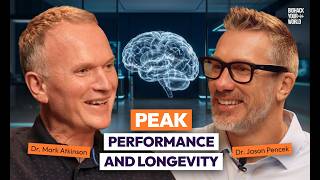
"The title promises a deep dive into the mind-body connection, and the interview delivers on that with practical advice and a clear framework, though it meanders into promotional territory."
In this interview at the Biohackers World Conference, Dr. Mark Atkinson discusses the importance of managing your mind as the ultimate biohack, emphasizing that health is about adaptive capacity. He shares his holistic approach, foundational practices like 'centering,' and the significance of addressing all dimensions of health—physical, cognitive, emotional, and mental—before diving into advanced tools and supplements.
Health is the ability of the body and mind to adapt and flex. Most people focus on physical and cognitive health, but emotional and mental health are equally important and interconnected.
The most important natural biohacking tool is knowing how to manage your mind, as it changes everything else in your life.
For clients, the first step is to establish a positive, personally meaningful vision that inspires them, then identify simple high-priority actions to move the needle.
Admit you're stressed, understand how it shows up for you (physical, behavioral, emotional), and learn to calm the nervous system and build spaciousness into busy lifestyles.
A quick self-regulation practice: soften your eyes, defocus your gaze, soften your tongue, breathe into your lower belly, and count down from 5 to 1. This activates the relaxation response and stops internal mental chatter.
How we think and perceive reality is a function of our state. Taking charge of your state first changes how you see the world and how you interact with others.
Have an honest conversation about the impact of poor sleep, identify what has worked in the past, build realistic routines (consistent bed/wake times, no screens an hour before, stop stressful work after 7 PM), and involve partners/family for accountability.
In your 40s and 50s, you can actually improve cognitive, physical, and psychological function with commitment and training, rather than decline. Example: Dr. Atkinson improved his VO2 max from bottom third to top 5% for his age through HIIT and zone 2 training.
At Longevity Science Academy, students paint a vision of how they want to be at age 95, then work backward to daily tactics and measurable milestones.
Common tracking includes VO2 max testing, DEXA scans, comprehensive biomarkers, organ-specific biological age testing, and salivary cortisol/DHEA for stress. Wearables are also useful and relatively cheap.
Fundamentals include omega-3s, vitamin D with K2, a high-quality multivitamin, magnesium (glycinate for sleep, malate for energy), protein, and creatine, especially for those exercising.
Stem cells are the body's repair system. As we age, circulating stem cells decline. Products like StemRegen Release (Dr. Atkinson is a consultant) mobilize stem cells from bone marrow into circulation, with promising clinical trials in heart failure and Parkinson's.
The five pillars are: Mind (regulating nervous system, managing stress), Eat (nutrition), Move (exercise), Sleep (recovery), and Connect (community, inspiration). Dial in these fundamentals before adding advanced diagnostics and treatments.
People are overdoing peptides. Focus on fundamentals and choose wisely; sometimes doing less and simplifying is more effective.
Biohackers are often at a 'creative mind' stage, individuating from consensus reality. Finding a community of like-minded people helps them feel connected and validated in their pursuit of health and growth.
Mind Management as Ultimate Biohack
This is the core thesis of the video, emphasizing that mental state is the foundation of all health.
00:53Centering Practice
Provides a practical, immediately usable technique for stress reduction that viewers can try right away.
04:33Peak Span Over Decline
Challenges the common belief that aging inevitably leads to decline, offering a hopeful and actionable perspective.
08:40Stem Cell Mobilization
Explains a cutting-edge area of biohacking with scientific backing, showing how to support the body's innate repair system.
13:42Five Pillars Framework
Provides a simple, memorable framework for health that prioritizes fundamentals over advanced interventions.
16:23[00:01] Health is really about adaptive capacity. It's the ability of the body mind to adapt and flex. Now we understand how stem cells work with the immune system. When you take charge of your state first, then you see the world
[00:14] >> Via hacking >> are about science, sleep, genetics, energy, >> community and technology, >> biohack your world. >> Hello, I'm Dr. Jason Penszik and I'm
[00:28] here at the Biohackers World Conference with Biohack Your World podcast. I'm here today with Dr. Mark Atkinson. He has come all the way from London to come sit and talk to us. Dr. Mark, thank you
[00:40] >> It's my pleasure to be here. >> Awesome. What I want to start with is asking you what do you think is the best natural biohacking tool that exists >> The most important one is knowing how to manage your mind because when you know
[00:53] how to manage your mind, it changes everything. That's awesome. And you came from conventional medicine and you slowly moved over to this area. What brought you into this change of, you know, conventional to, hey, maybe a
[01:06] >> So, I've always been holistic. So, I kind of see the world in terms of systems and I've always been to meditation, you know, took good care of my health and so pretty much knew even when I was in medical school that one
[01:19] integrated medicine. That's what I've been doing for 25 years. Oh wow. And so I understand your background this is it's not just about using all the tools
[01:32] that biohackers conference offers a lot of places out there that have you know different um ways to you know work on you know your mind or your energy you standpoint. So with patients or with people you see they could have perfect
[01:48] right supplements but can they still be unhealthy even with all that information bioarkers are perfect. Their longevity supplements are great, but you they that look like? >> 100%. And I think the first thing is
[02:01] capacity. Is the ability of the body mind to adapt and flex. And there's many domains of health. Most people focus on physical and cognitive health. And of course, that's the right place to start for the majority of people. But the area
[02:15] I'm as interested is also emotional and mental health. and and in my world and been on. You got to work on all dimensions that they're all connected on emotional mental health as well. >> That's about obviously don't even know
[02:29] someone when they when they want to talk to you? How do you start them? Like how do you think about this uh with a patient or client? outcome is that they want to have a positive vision, something that inspires
[02:42] it. You got to dial that in. it's got to be really personally meaningful and if they're so much more likely to kind of follow through and then it's just what are the simple high priority actions they can take that will move the needle
[02:57] sleep optimization it's good nutrition maybe more movement exercise and then the real key for lasting change is how to work with your nervous system manage your stress and ultimately you know work more skillfully
[03:13] managing stress is massive, right? We're all under a lot of stress. Everyone stress. How do you help people work through stress and manage their stress better so they can actually get into this point where they feel like fully
[03:27] >> Yeah. I think the first thing is to admit yourself that you're under stress. That's the most perhaps the most difficult part of it, right? Um and also to understand how stress shows up for you. It kind of varies according to the
[03:39] of very physical symptoms. whether it's kind of behavioral stuff or emotionally, they're reactive, they're impatient. So, you got to be clear about it. And then also clear about why it's an issue and why you want to change. And then there's
[03:52] some fundamentals of stress management. And one of the most important things is learning how to calm the nervous system, shift gears, and actually build more spaciousness into people's what tends to be very,
[04:07] very busy lifestyles. And when you're working with people are you I mean what are you suggesting people start bringing into their lives for this? Yeah. Well, I done maybe done in the past that's works. You start with what they're
[04:20] familiar with, but actually a lot of the the kind of practices and this is also what I offer through Longevity Science Academy is teaching some foundational self-regulation practice. Most most important one by far is the practice of
[04:33] centering and and I'm happy to maybe share that with you and anyone who's can be following the instructions at the same time. It's just a really quick >> way to feel much more grounded, centered, and access a calm mind. So, if
[04:48] >> please. Right now, I'd love to see this. >> Okay, let's do it. So, I think the first thing is uh soften your eyes. So, when we're stressed, we go into what's called a zoomed in state. We kind of lock in. So, the first thing is when we actually
[05:00] soften our eyes and then defocus the gaze and then just tune into the that does activates the body's relaxation response. And then the second thing we can do is to actually just open the mouth very slightly and then allow
[05:16] the tongue to be soft and that stops internal mental chatters. So vocalization. So you got soft eyes, soft tongue and then you just breathe down into your lower belly. Feel your feet as you can down from five, four, 3, two,
[05:31] one. That's the practice of centering pretty much the first practice I teach a do at the beginning of the session because then what we talk about you know they're talking from the stress state. So that's the number one practice I
[05:47] >> I just did that right now. That was great actually. That's what a great way >> And what I love is that you're starting before they even come to the fact of hey you need to be on supplements. We need to be on these drugs. We have you just
[06:01] like let's start with your body >> and just the center and then let's teach you how to work through the the simple things right these are the things we original right working on your own body
[06:14] to get you to the next level look you can take like I said already your unhealthy >> exactly and you know what what's really cool about it is as well the way we think about things and perceive reality
[06:26] is a function of our state when you take charge of your state first then you see the world in a very different way. The conversations you have, how you have those conversations changes. So I always say it starts with managing your state
[06:39] >> and then from there we kind of proceed. >> Most people sleep is terrible, right? have poor sleep. What things are you talking to people about to help them the big thing I see. Falling asleep, staying asleep is hard to do. And I mean
[06:52] someone to just look, I can give you all the drugs in the world and you fight trazadone. and they can be on ambient. You can just name drug and name peptides that's not working because they're mentally not able to do that. What are
[07:06] these people? >> Yeah, when it comes to kind of sleep, just have an honest conversation about the impact of poor quality or not enough >> Sometimes it's really good to bottom that out which is really genuine. Tell
[07:19] me how it's affecting you, affecting your relationships, your work, what is the price, what's the cost. Sometimes we need to kind of just contact the reality uh of it. And then the second thing is you know what have you already tried?
[07:32] >> What has worked just can you looking for success from the past that we can bring forward and then the third thing normally is just building out routines and then talking about is it going to be realistic to stick to a routine and if
[07:46] not how can you mitigate that prepare for it. And to be honest with you, a lot of it is about going to bed around the same time, waking up around the same time, going off screens about an hour beforehand, stopping work related stuff,
[07:59] stressful stuff after 7:00 p.m. There's some pretty kind of fundamental stuff, lot of people know what to do. It's actually just remind yourself to do it. So I'll often say, can you get your partner engaged with this at the same
[08:14] time? Can you get your family in it? So it's one thing to have one person make changes. But if you can get your partner to do at the same time your family then the chance of them being holding each other accountable increases chance of
[08:27] >> That's really great. So you're bringing partners in to help them keep them accountable too because your partner's doing it when uh sweetheart you didn't it now together as a group and that really does help that family dynamic. Is
[08:40] working on that you're really excited about in coming up in the future? Um, I'm excited about the concept of peak span, which is as you enter into your 40s and 50s, which most people associate with decline, actually realizing if
[08:54] you're committed and you put the training in, you can actually improve your cognitive and physical functioning, your psychological function, so life can actually get better. That's the subop of people I'm I'm working with. So, they
[09:08] really focus on peak span, and it's just like what is possible? like my V2 Max like about 5 years ago, it just wasn't great. It was in the bottom third and now it's the top 5% for my age. And you know what it was? I just committed to
[09:21] know what it was? I just committed to really working on my hits doing zone 2 training and and I just feel great as a result of it. And it just proved to me in my own experience that when there's a will and there's a focus and there's
[09:33] discipline behind it, not only can you just kind of prevent or mitigate decline, but actually you can elevate your health and performance uh in your >> What else can people do to help raise their their V2 max?
[09:48] >> Yeah, I think one is educate yourself around what it is, why it's important. you know, it's the peak amount of oxygen that your muscles can consume under significant exercise load. Now, if someone doesn't exercise already, that
[10:01] just sounds like kind of foreign, you know, kind of language, right? So, I think it's just ultimately is about getting fit and that really starts by genuinely wanting to care for your body, >> right? And that's again comes back to
[10:14] that you want. uh with all of our students longevity science academy we get them to kind of paint a a vision for how they are when they're age 95 okay so we go way out how do you want to be how do you want to feel so I want to be
[10:28] healthy fit lean happy connected you know living a personal life you know and when you really clear about is like what do I need to do together I need to prevent um a chronic disease I need to take good
[10:43] care of my body and my mind and how am I going do that on a daily basis. So we kind of go from what's the big picture to what's the strategies to what are the daily tactics, how am I going to track change and over time. So we set goals.
[10:56] It's like you know what are the measurable milestones. That's why kind as well. >> And what what are you tracking? What and keep for you? >> It depends where they're at and and what
[11:10] the focus on but for sure the vast majority do to max testing. They're going to do DEXA scans to look at body composition. So, we're going to see how got. We're going to do comprehensive biomarkers. We're going to do organ
[11:24] biomarkers. We're going to do organ specific biological um age testing. Um if they're particularly stressed, maybe do salivory, cortisol, DHEA kind of levels. It it just a lot of it depends on what the outcomes are and how much
[11:37] money they have available to them to invest, right? Because some of these tests can be quite expensive. Others of course you know will have wearables and relatively cheap these days that can be super motivational right so you can keep
[11:51] a track on you know your kind of steps you know the amount of sleep that you're getting >> is there any supplement right now that thing I want to put you on you know hey we're working together this is where I'm
[12:04] with with patients >> yeah some of the fundamentals uh so it would be omega-3s vitamin D K2 um a high quality multivit vitamin mineral uh etc. You know, typically a lot of people
[12:16] benefit from magnesium. You know, you know, if sleep's an issue, then we'll go to magnesium glycinate at night time. If energy is low, maybe magnesium malate, um, uh, protein paradise, big fan on is so important because we enter into our
[12:31] 40s, 50s beyond that, we're getting more protein and high quality protein, creatinine, particularly if they're exercising. Those are the foundations. One of the things I'm kind of really uh interested in is uh also uh indulgent
[12:46] stem cell mobilization. So you know what tends to happen as we get older is the body's ability to regenerate repair cell becomes compromised. So like for example there's a product stem regen release and um to be explicit I'm a consultant to
[12:59] them um that mobilizes the body's own repair system and stem cells that I'm really intrigued in which is how do we create the internal conditions that and heal itself. >> That's actually really interesting.
[13:14] actually work? How are we bringing more stem cells? So again, as we age, we know as your baby, tons and tons of stem cells. You get older and older and you know, I talk to practitioners that doing um you know, stem cells uh until from
[13:28] do you have when you're 7 years old, right? How much am I pulling from you at 40-year-old, a 30-year-old, I'm going to get a bunch more than a 70-year-old. So, are you getting people to make more? >> Yeah, this is really cool. So I think
[13:42] the first thing is to understand stem cells are essentially the core of the body's repair system. And there's two types. There's tissue resonant stem the skin, in the gut. And and they
[13:54] really convert into and replace cells that are damaged or need repair. But we circulating stem cells. They're essentially stored in the bone marrow as a reservoir and then they get mobilized in response to tissue damage.
[14:08] >> That gives them the circulation. They arrive at the place of tissue damage and then essentially they orchestrate the tissue repair response which is things called exoomes. Those exoomes can help reprogram the local repair cells
[14:23] and the local tissue resonance cells. Now here's the thing as we get older the number of circulating stem cells goes down significantly. But we can take products like stemogen release which is various ingredients
[14:35] that actually mobilizes that those stored stem cells in the bone marrow into the blood circulation and they've done some really interesting clinical trials on patient populations with heart failure or Parkinson's with
[14:48] some really impressive results. Now, the thing that excites me is I've always loved the idea as holistic doctor that we support the body's innate healing intelligence and capacity to recover. And yet people say to me, well, what
[15:02] the healing intelligence? I can say, well, there's life force energy, there's immune system. A little bit imprecise. >> But now we understand how stem cells work with the immune system. And then
[15:14] it's like ultimately and this is for me the essence of biohacking which is what can we change within the environment outside of us and with inside of us to
[15:26] enable us to thrive and flourish. So what what inputs do we need that support healthy immune system functioning, microbiome functioning, stem cell functioning? And so that's what I always think about is like the body has this
[15:41] astonishing ability to recover and repair. How can I stop getting in the way of that >> and how can I better support it? most is that you're talking about foundational stuff before people even
[15:56] come to see the practitioners who are doing hormones and giving stem cells and giving peptides and every you're like you're saying here's the foundation and if you don't do that the rest of stuff is just it's great but you need to work
[16:10] an important thing that even the lots of practitioners miss. >> Exactly. It's it's just taking care of the fundamentals. Um, I've written a was the mind body bible. And I just looked after the fundamental. I said if
[16:23] you dial in the five pillars, number one being mind, which is regulating your nervous system, managing your mind, dealing with your stress, and creating happiness. That's the first one. And then you got eat, which of course is
[16:36] nutrition. You got move, which is about exercise and movement. You got sleep, which is recovery. And then you've also got connect. And connect is really about connecting to things that light you up. connecting to to things that inspire
[16:49] you, expand you, that includes people, community, that kind of stuff. Those are the fundamentals. We dial in the fundamentals. Then we add on top of that the diagnostic testing, etc. And then we add in the more specialist kind of items
[17:03] on top of that. So that that's my kind of pretty much my core framework. >> Well, I love it because again, we're at Biohack World Conference and there's so tool. There's all these things for brain. There's things to work on. I have
[17:17] um something right now to protect get some EMF. And we have all these really cool tools. And I think we all forget it's the basics and like cuz people want I get my brain better? Let me go do brain tap and help me out. Well, maybe
[17:31] it's so great that you're doing this stuff. And you teach this stuff too, >> Yeah, I I teach it. And so, Longevity Science Academy, we have a certification program. And really it's for anyone who's passionate about health.
[17:44] >> Right. And and so what it is is it's distilled everything I've learned >> about health optimization, longevity, biohacking, human development, self-regulation into a fivemonth program. At the end of
[17:57] it, you can become a certified coach as a result of it. But a lot of people who enthusiasts who want to get the fundamentals right, but also we teach them how to personalize protocols for the clients, you know, to work on
[18:10] functional longevity to sleep optimization. And it also draws this incredible community of likehearted people as well. Ultimately, it's about living in harmony with your biological, your
[18:24] psychological, and your transpersonal nature. Right? And I think people who have been in the field for a while really start to get that, which is that ultimately it's about being at peace with who you are, taking good care of
[18:39] with who you are, taking good care of yourself. Um, showing up the best that >> and ultimately, at least in my framework, being a positive presence in of deeper work. >> I love it. Is there anything in the
[18:53] people are overdoing, doing too much, and should just cut back on? peptides. >> Yes. >> Yeah. >> And and so what all I would say is just
[19:08] bounce it up. Just take care of the fundamentals, you know, and and really do all the other necessary things that will support the body and and repairing itself. and then choose wisely when it comes to peptides. Sometimes in life
[19:23] we're trying to do more and more and more. And again with the experience, you kind of start to realize sometimes it's about doing less. It's about simplification. >> It's about really just dial back into
[19:36] what matters most. Am I still on track? You know, we can be living a life >> that 5 10 years ago made a lot of sense to us, but we've lost our way. Mhm. >> So we never want to lose sight of that. So you know I I think ultimately it's
[19:51] about this dynamic balance. >> But what I love about, you know, places like Bhack as well is you got this awesome community of people. They're super curious. They're positive. They're enthusiastic. They want to take great
[20:04] care of themselves. And and my experience has been this kind of event. You meet some pretty awesome people. I kind of perceived as being kind of maybe quite extreme in terms of the views, etc. But that's not the way I perceive
[20:17] it. What I see is these are people who deeply care. They want to learn about their biology. They want to become a better human being and do good in the it out. And that's why we have our certification, which is to ground the
[20:30] whole thing, provide an organizing framework for health optimization, longevity, and doing it with a bunch of great people. It's a lot of fun. This is community is one of the aspects we have to work on and I love how you bring this
[20:44] community too. I'm guessing there's like some kind of um group that kind of some coherent. >> Yeah, that's right. We have live master classes. We all together you know kind of inerson experiences you know and I
[20:58] think a lot of it is um it's almost like a homecoming for a lot of people right >> cuz a lot of people are into by hack as well. They're at a stage of development. So human development is a big part of my work as well which is um all about
[21:12] evolving beyond consensus reality and trying to figure out what's true for you as an individual. What are your core principles? What do you genuinely value? Taking responsibility for your health and the way you show up in life. And I
[21:25] find the vast majority of biohackers are at that stage of development. We call it a creative mind stage. So they're individuating, right? They're having to step out of consensus reality, out of the norm. And sometimes that can
[21:39] initially feel lonely. And yet when you come here and you kind of find your tribe and you learn from each other, you have that curiosity, then you realize, no, actually, I'm the one who's waking up to reality. I see what others don't
[21:53] see, right? I'm in touch with this kind of value of of health and I want to develop and grow as a human being. And we've all got little quirks >> and that's what makes this brilliant and fun and authentic. It's the best of all
[22:07] world. >> Awesome. Thank you for joining us today.
The host immediately introduces Dr. Mark Atkinson as a medical doctor who has come from London, establishing credibility and expertise. This leverages the authority bias, making viewers more likely to trust and engage with the content.
I'm here with [EXPERT NAME], [CREDENTIALS], who has [EXPERIENCE]. They're going to share [KEY INSIGHT] that will [BENEFIT].
AI-generated clip ideas for Shorts based on the transcript
Challenges the common biohacking focus on gadgets and supplements, offering a contrarian, science-backed perspective that sparks curiosity.
▶ Play ClipProvides actionable, simple stress-management techniques that are highly relatable and easily shareable in a short format.
▶ Play ClipA live demonstration of a quick relaxation technique that viewers can try immediately, offering immediate value and engagement.
▶ Play ClipInspires an older demographic with a positive, empowering message about reversing age-related decline, tapping into the anti-aging trend.
▶ Play ClipControversial take on peptide overuse in biohacking, offering a contrarian, no-nonsense approach that will spark debate.
▶ Play ClipSnapshot 2026-11-17
Performance history is still being collected — a chart appears once TubeSum has 3 or more observations for this video (2 recorded so far).
Exact daily observations; gaps mean no observation was taken that day.
| Date | Views | Avg views / hour | Channel median |
|---|---|---|---|
| 2026-11-17 | 22 | 1.2 | 3,392 |
| 2026-11-16 | 11 | 1.1 | — |
Audience reaction — separate from the performance metrics above.