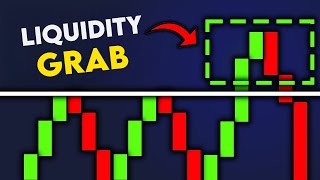

Hedge Funds Spend $90K on This
45sReveals insider knowledge about hedge fund training costs and what they look for, appealing to traders' desire for a competitive edge.
▶ Play Clip"Delivers exactly what the title promises—a comprehensive, actionable liquidity guide that's rare and refreshing."
This video teaches a liquidity-based trading strategy that exploits the market's algorithm, which targets stop losses to fuel price movements. The creator argues that consolidating markets are the best opportunities because they make liquidity points obvious, and advises entering where others place their stop losses.
Hedge funds spend around $90,000 on average per analyst for training on basic trading psychology.
Consolidation is sideways price movement without volatile moves; it makes liquidity points obvious.
Liquidity is areas with large open orders, including stop losses and buy orders—lots of money.
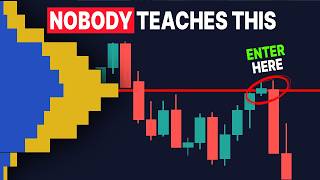
To be successful, you need to enter where most people are exiting—where others place their stop losses.
Stop losses make the market move; the algorithm targets them to fuel price direction.
If price breaks equal highs, look to short; if it breaks equal lows, look to enter long.
The market's algorithm is drawn to highs and lows of a range because it targets liquidity and money.
A real chart example shows how to mark range highs/lows, enter shorts on breaks, and target the next liquidity point.
Liquidity should be incorporated into your strategy, but not as the only signal; pair it with other tools.
What is liquidity in trading?
Areas with large open orders, including stop losses and buy orders—essentially pools of money.
02:31
What is the key principle for successful trading according to the video?
To enter where most people are exiting—specifically, where others place their stop losses.
03:00
Why does the market's algorithm target highs and lows of a range?
The market's algorithm is programmed to target liquidity and stop losses, using them as fuel to drive price.
03:54
If price breaks equal highs, what should you do?
You should look to short.
04:07
If price breaks equal lows, what should you do?
You should look to enter long.
04:07
How much do hedge funds spend on training per analyst?
Hedge funds spend around $90,000 on average per analyst for training on basic trading psychology.
00:45
Why is the bottom liquidity point more likely to be targeted after a break above the range?
The market is consolidating, making the closer liquidity point easier to reach, and the range represents fair value.
05:41
Enter Where Others Exit
This principle flips conventional trading logic and is the core actionable takeaway.
03:00Hedge Fund Training Costs
Provides a concrete number that underscores the importance of trading psychology.
00:45Trading the Break of Equal Highs/Lows
A clear, executable rule that can be immediately applied to charts.
04:07Stop Losses Fuel the Market
Explains the mechanism behind liquidity grabs, a fundamental market dynamic.
03:40[00:03] I started focusing on the algorithms a very long time ago. They're written by a programmer and they have to be written to go somewhere. Okay? Where are they that we're putting out. Those algorithms are going to that as sure as we're
[00:17] having this conversation. There's no doubt. They want to shake out the longs what do the smart people do that are on the bottom of these algorithms that are into these people. That's what algorithms do. So I'm able to take
[00:32] advantage of what they're giving me and keep printing the money, man. That's And we do it every day. Hundreds of times.
[00:45] probably. Hedge funds spend around on average $90,000 on training per analyst and training them on basic trading psychology. And once you realize how
[00:57] they look at the market and more specifically what they look for, you will instantly see your trading portfolio start to grow alongside with them. But what do they look for? You see, for every winner in the market,
[01:09] the market, there's a winner. It's basically a one-v-one on Rust in Call of Duty, but just on a bigger scale. And if your trading strategy doesn't take advantage of you profiting from the loser, it's probably not a good
[01:23] strategy. So what is a strategy that takes advantage of you profiting from the people that are wrong. Price is rising, creating higher highs and higher lows time and time again. But what happens when that narrative suddenly
[01:38] shifts? Lows get broken. The majority of traders would now see this break as the start of a structure shift, meaning the majority of traders would see this move as a break of structure and the start of a reversal to the downside. And they
[01:52] would now expect to see price continue this downward momentum and keep heading lower. But they're wrong. But how can you identify this happening before even happens? In order to understand this technique, we first need to understand
[02:06] consolidating markets. Consolidation, explained simply, is just sideways price movement where price just stays in a range moving sideways without really any volatile moves. Now, the majority of people would tell you not to trade in
[02:19] consolidating markets. Hell, I even made a video on how to avoid consolidating markets. But the more I've learned as a trader, the more I've realized consolidating markets present the most opportunity. The reasoning behind that
[02:31] is liquidity. To understand liquidity, you can just think of it as areas with large open orders in the market. It's basically just an area where there are a lot of stop losses and buy orders or, in other words, lots of money. Whenever you
[02:45] have consolidating sideways price action, it makes the liquidity points very, very obvious. There will naturally be a lot of stop losses right here for will naturally be a lot of stop losses right here for people entering short
[03:00] trades. That's just a given. Now, one of the greatest lessons I've learned as a trader is in order to be successful at trading, you need to be entering where most people are exiting. That is because of this simple little trick. If price
[03:13] breaks these equal highs, that means a lot of people will now see this as the start of an uptrend and will enter a long trade here. So they will most likely enter in a position like this, placing their take profit and putting
[03:25] their stop loss either here or here. If price does a fake out, it'll hit all these stop losses that just entered for a long opportunity. And when it hits these traders' stop losses, it'll give price fuel to keep heading lower. So in
[03:40] essence, stop losses make the market move. So when trading, you basically want to try to trap buyers or sellers and use their stop losses as fuel to drive price in the direction you are trading. The market's algorithm will
[03:54] naturally be drawn to highs and lows of this range because it's targeting liquidity. It's targeting orders. It's targeting money. And when price targets these highs and lows, this is where price will most likely reverse because
[04:07] of what I just taught you. So if price ever breaks equal highs, you should be looking to short. If price ever breaks equal lows, you should be looking to enter long. One of my favorite quotes in trading is from the legendary David
[04:20] paper where you are going to buy and where you are going to put your stop where you are going to put your stop loss. Don't buy it, but put an order in to buy it at where you are going to put your stop loss. And then just watch how
[04:32] many times the market goes to your order. You should be putting your entry where others are putting their stop loss. If you do that, you will instantly see how often it works because you are taking advantage of the losers in the
[04:45] trying to do. To prove my point even more, here's a chart. You can see the market was trending making higher highs and higher lows. Then all of a sudden, it dumps. Then price starts to consolidate with sideways price
[04:58] movement. This sideways price movement is the market trying to say this area is fair value for this particular asset at this very moment. So what we do is we mark the highs and lows of this range. Now, the algorithm is going to try to
[05:13] push price outside this range to trigger stop losses and create liquidity. So what you do is pretty simple. When price breaks this range, you will look to price breaks this upper end of the range. Now, the thingy behind this is
[05:28] simple. As stated before, the market targets liquidity. There are two obvious points of liquidity for the market to target next. One right here and one right here. Now, since the market is consolidating here, it is way more
[05:41] likely that the algorithm will target the closer liquidity because it's a lot easier to get to. And on top of that, by the market consolidating here, it's saying this range is fair value at the moment for this specific asset. So
[05:54] that's another reason why this bottom liquidity point is more likely to be targeted. So once price breaks this upper end of liquidity, you enter a short, target the next liquidity point, make some easy profits. But wait, we're
[06:06] not done. Price broke this lower liquidity point, so now we can target the upper liquidity. We enter a long, set our take profit at the upper liquidity, easy profits. But wait, we're still not done. Price broke this upper
[06:18] liquidity point, we enter a short targeting the lower liquidity, easy profits. But wait, we're still not done. Price broke this lower liquidity, we target the higher liquidity, price hits it, easy profits. But wait, we're still
[06:32] liquidity, we target the lower liquidity, easy profits. That's the power of this strategy. The market will always target liquidity and with consolidating price movement, it makes it very obvious on where that liquidity
[06:46] is. Now, sure, just because price breaks outside of a range, that doesn't necessarily mean it will always reverse and target liquidity in the opposite direction. Sometimes it breaks and just keeps heading in the same original
[07:00] direction. So I'm not saying by any means liquidity should be your one and only signal to enter a trade. But what I am saying though is that your strategy should incorporate liquidity somehow. Because like I said before, you need to
[07:14] take advantage of the losers in the market to make money in the market. So to do that, incorporate liquidity. You can pair it with supply and demand, order flow, fair value gaps, indicators, whatever. But the algorithm is literally
[07:28] programmed to make the market move. And the best way to do that is to target liquidity and stop losses. So next time you look at your chart, think of the obvious place of where you'd place your stop loss if you entered into the trade
[07:42] right now. And instead of placing your stop loss there, place your entry there instead. And just look how often it works out in your favor.
⚡ Saved you 0h 07m reading this? Transcribe any YouTube video for free — no signup needed.

![BEST MACD Trading Strategy [86% Win Rate]](https://img.youtube.com/vi/rf_EQvubKlk/mqdefault.jpg)