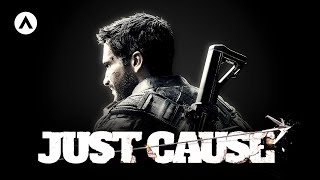

Why Just Cause Never Became a Top Franchise
45sThis segment sets up the entire rise and fall narrative, instantly hooking viewers with a bold claim about a beloved game series.
▶ Play Clip"Delivers a thorough history of the franchise, but the title promises a 'rise and fall' narrative that is only partially fulfilled."
This documentary traces the history of Avalanche Studios' Just Cause series, from its origins in the failed Rock Solid Studios to the commercial success of Just Cause 2 and the subsequent decline with Just Cause 3 and 4. It highlights the development challenges, technological innovations, and shifting market dynamics that shaped the franchise's trajectory.
Linus Blomberg and Christofer Sundberg left Paradox Interactive to found Rock Solid Studios in 2001. They developed a proprietary engine (RRSTech) and a Tremors tie-in game, but the failed Starbreeze acquisition and Vivendi's cancellation led to bankruptcy.
After Rock Solid's collapse, Blomberg and Sundberg founded Avalanche Studios in 2003. They built the Avalanche Engine, an 'advanced landscape engine' for sandbox games, inspired by titles like Frontier: Elite and aiming for player freedom.
The first Just Cause, codenamed 'Rico: Terror in the Tropics', featured CIA agent Rico Rodriguez overthrowing a dictatorship in San Esperito. The grappling hook was added mid-development, initially to support parachute mechanics.
Released in September 2006, the game received middling reviews due to empty sandbox, repetitive missions, and technical issues. Despite this, it sold 1.1 million copies, securing a sequel.
Avalanche identified three key areas: stunts (grappling hook and parachute combos like the Slingshot), combat (free-aim and improved AI), and open-world structure (side quests integrated into the main story).
Set in Panau, inspired by Hawaii and New Zealand, with diverse biomes. Powered by Avalanche Engine 2.0, it featured higher resolution textures and improved destructibility.
Despite competition, Just Cause 2 sold over 6 million copies in four years, boosted by PS3 YouTube uploads and PC modding community, including an official multiplayer mod.
The Manhattan studio took over, aiming to enhance all aspects. Introduced the wingsuit, improved destructibility, and a deeper backstory for Rico, set in the fictional Mediterranean republic of Medici.
Released in December 2015, it received middling reviews due to repetitive missions, AI issues, and technical problems. Sales were 'solid' but not disclosed, leading to a sequel.
Avalanche developed the Apex Engine to address technical issues, featuring dynamic weather events (tornadoes, blizzards) and a larger, more varied world (Solís). Despite this, the game sold below expectations.
Just Cause Mobile was canceled in 2023. Square Enix confirmed a new title in development, but the franchise's future remains uncertain.
The Just Cause series rose to prominence with Just Cause 2's innovative gameplay, but subsequent entries failed to evolve enough, leading to declining sales and critical reception. The franchise's future hinges on whether it can adapt to modern gaming expectations.
Christofer Sundberg
person
Linus Blomberg
person
Magnus Nedfors
person
Peter Johansson
person
Franchesco Antolini
person
Robert Meyer
person
David Grijns
person
Roland Lesterlin
person
Joe Ishikura
person
Game Informer
service
IGN
service
VideoGamer.com
service
GameZone
service
VentureBeat
service
Variety
service
Game Brain
service
What was the name of the studio founded by Blomberg and Sundberg before Avalanche?
Rock Solid Studios
02:20
What was the codename for the first Just Cause game?
Rico: Terror in the Tropics
05:47
What three key areas did Avalanche focus on improving for Just Cause 2?
Stunts, combat, and open-world structure
11:13
What was the name of the fictional island chain in Just Cause 2?
Panau
15:30
What percentage of players completed Just Cause 2's campaign?
18 percent
32:06
What was the name of the engine developed for Just Cause 4?
Apex Engine
34:51
What was the name of the villainous organization in Just Cause 4?
The Black Hand
33:08
What feature was added to Just Cause 3 to enhance air travel?
Wingsuit
25:16
Founding of Rock Solid Studios
The origin story of the developers who later created Just Cause, showing how early failures shaped their approach.
02:20Three Key Improvements for Just Cause 2
A clear breakdown of how the developers addressed criticism to create a successful sequel.
11:13Only 18% Completed Just Cause 2
A revealing statistic that influenced the franchise's focus on gameplay over story.
32:06Apex Engine Development
The technical overhaul aimed at fixing performance issues, but still failed to save the game commercially.
34:51Just Cause Mobile Cancellation
A sign of the franchise's decline, highlighting the challenges of expanding the IP.
40:17[00:01] What I do best: cause chaos.
[00:14] Not too dissimilar from a B-tier action movie franchise, Avalanche Studios’s Just Cause series never rose far above its station. It earned varying degrees of success across four entries, thereby enjoying a comfortable status quo that many of its Double-A
[00:29] counterparts would aspire to. However, such comforts came and went liberally, especially with the launch of a fourth installment in December 2018. The first Just Cause made an attempt at raising the stakes for the open-world genre popularized
[00:44] by Grand Theft Auto III. Gorgeous vistas and a ‘go anywhere and do anything’ mantra meshed perfectly with Avalanche’s goal of providing players with tools to instigate chaos as they saw fit. But Just Cause's stunning environments and freeform gameplay could only pull so much
[01:00] weight in a digital world that felt as unpolished as it played. Great strides were taken to improve upon the core mechanics in subsequent outings, which Avalanche realized rested squarely on the back of the havoc players could unleash with explosions, vehicles, high-powered weapons,
[01:16] and the constantly evolving grappling hook. Some would argue it was never enough. yet Just Cause 2 swung onto store shelves and sold like hotcakes in 2010. Unfortunately,
[01:31] sales tapered off from that point forward. Nonetheless, the development crew never wavered, pushing the envelope in terms of its technical prowess at every turn. But with Just Cause 4 performing below expectations, franchise faithful were left to ponder whether protagonist Rico
[01:47] Rodriguez had many more adventures ahead of him. This is the rise and fall of Just Cause.
[02:20] Frustrated by the thought that their bosses at Paradox Interactive prioritized money over creating games, developers Linus Blomberg and Christofer Sundberg left the Europa Universalis team and founded Rock Solid Studios in 2001. The Stockholm headquartered outfit
[02:36] quickly inked a deal with Vivendi Universal to produce a tie-in game based on Tremors, the comedy-horror film franchise and TV series. Rock Solid entered production on the tie-in during the spring of 2002, then unveiled the project
[02:49] that August with plans to eventually release it across PC, GameCube, PlayStation 2, and Xbox. Despite licensing IP for its market debut, the studio built many software tools from scratch by crafting a proprietary RRSTech graphics engine to power the unnamed
[03:06] Tremors adventure. The technology most notably boasted an advanced geometry system for detailed landscapes and smooth transitions into indoor environments, which garnered the attention of Codemasters who licensed the engine for its canceled MMORPG, Dragon Empires.
[03:21] Amid all this excitement were rumblings that Enclave developer Starbreeze Studios had expansion ambitions involving the acquisition of Rock Solid. Starbreeze ultimately breached the acquisition agreement, allowing the deal to fall apart and, thus, thrusting both companies into bankruptcy.
[03:36] The failed merger resulted in financial ruin for the Blomberg and Sundberg-founded firm; worst still, shortly after the Starbreeze deal went cold, Vivendi pulled the plug on Tremors and left Rock Solid with no choice but to permanently close up shop.
[03:50] Sundberg later admitted in a Game Informer sit-down that their biggest mistake with the first development house was in “trusting the wrong people.” But with so much more to give, the pair started anew by founding Avalanche Studios several months after Rock Solid’s sudden shuttering.
[04:17] Blomberg and Sundberg established Avalanche Studios in 2003 on the heels of Rock Solid’s collapse. Despite having only a handful of other developers on board, work on what would later become the Avalanche Engine kicked into high gear early on. The patented game engine
[04:32] spawned from technology Blomberg had spent years iterating upon, technology tailor-made for the sandbox adventures the team dreamed of creating. They described as an “advanced landscape engine” capable of rendering huge settings that showcased everything from small insects to
[04:47] volumetric clouds. An intricate weather system targeting realistic and moody settings further facilitated the path towards an open-ended opus. Speaking with Game Informer, Avalanche’s founding members insisted their interest in sandbox games predated the meteoric rise of Rockstar’s Grand
[05:02] Theft Auto. Blomberg, in particular, mentioned the Frontier: Elite series when addressing a desire to build worlds that ventured far “beyond the boundaries of the physical hardware.” Such ambitions held firm even though no one on the crew had any experience with the then-burgeoning
[05:17] open-world genre. Setting background limitations aside, the main goal for Avalanche’s future projects hinged on player freedom. Principle Designer Magnus Nedfors told Game Brain as much in a “Making of” interview, highlighting how, barring a few scripted sequences, the original
[05:33] Just Cause aimed to break the mold of simply tasking players with following instructions. The developers looked to classic arcade games and sophisticated strategy titles for inspiration, but were mostly influenced by other forms of media—comics, action movies, and pulp
[05:47] novels included. This amalgam of influences converged to inform the creation of Rico: Terror in the Tropics, the codename for an action adventure game wherein Mexican-born CIA Agent Rico Rodriguez infiltrated a South American dictatorship to overthrow the ruling despot of the
[06:03] fictional San Esperito. Later, Avalanche fittingly landed on the Just Cause title,
[06:23] based on a historical operation of the same name in which U.S. armed forces invaded Panama to remove President General Manuel Noriega from power in December 1989. Striking a deal with Eidos Interactive, the UK publisher behind Tomb Raider and Hitman,
[06:38] allowed for exponential studio growth. And the Just Cause creators needed as many hands on deck as possible to see their ambitious vision through to completion. Sundberg told IGN during E3 2005 that Avalanche’s overall vision centered on providing a realistic world
[06:53] where users could creatively dismantle a regime with the help of nearly endless possibilities. Player freedom factored into every facet of the open-ended experience as a result, from completing missions and traversing the island to performing stunts using land, sea, and air-based vehicles.
[07:10] Vehicles and weaponry weren’t the only tools designed for navigating San Esperito’s various obstacles. Midway through production, the developers brought Rico’s now-iconic grappling hook into the fray, mostly in hopes of facilitating the use of parachute mechanics
[07:23] that were fun but not widely practical for the minute-to-minute action. Nedfors couldn’t recall the grappling hook’s inception during the Game Brain discussion, yet remembered it evolved from one developer mapping out the idea before building an in-game
[07:37] prototype. Rendering the wire and figuring out other intricate details such as slack in the line presented quite the challenge. But outside of balancing technical specifications, Avalanche didn’t spend much time exploring the grappling system’s full potential,
[07:51] due in no small part to the mechanic entering the fold so deep into development. Little did developers know, it would later grow into a key touchstone for the franchise.
[08:21] In October 2004, Eidos Interactive advertized plans to publish Just Cause in 2005 for PC, PS2, and the original Xbox. The Head of European External Development at Eidos, Martin Alltimes,
[08:35] expressed confidence in the partnership yielding a great game. To the publisher, Avalanche seemed a good fit for its future slate of original content; the public wouldn’t learn why for several more months. The first details about the open-world project
[08:50] circulated at E3 2005, during which time the companies premiered a tech demo showcasing forest landscapes, city environments, vehicular travel, and the day-night cycle. Its promising
[09:02] E3 showing aside, Just Cause wasn’t ready for its previously scheduled 2005 release window. Eidos announced a delay later that year while reporting a six-month loss of $51 million,
[09:15] which soon thereafter contributed to the company’s stock hitting a record low. Avalanche stayed out of the public eye until early 2006, when word of Just Cause’s next-gen version on Xbox 360 hit the airwaves. Slated to launch alongside its PC and PS2 counterparts,
[09:31] the 360 iteration promised “something really special,” according to studio co-founder Christofer Sundberg; however, the added next-gen benefits merely provided enhanced graphics and Achievements. Irrespective of their platform of choice,
[09:45] not many were impressed by Just Cause as whole. The game shipped in September 2006 after roughly three years of production, inviting players to assume the role of CIA black ops agent Rico Rodriguez as he dismantled a fictional South American regime suspected of stockpiling
[10:02] weapons of mass destruction. Avalanche’s engine earned praise for rendering a vast open world accentuated by an impressive day-night cycle and plenty of exciting ways to roam. Yet, middling reviews and tepid player reception showed few could ignore the emptiness of the
[10:17] sandbox. Its lacking visuals and subpar animations weren’t worthy of applause, either. Add to that the repetitive missions and Just Cause’s first outing felt bereft of polish above all else.
[10:30] Still, it would eventually enjoy lifetime sales of a reported 1.1 million copies, its debut performing well enough to secure a sequel. And with that sequel, Avalanche Studios finally understood how Just Cause could differentiate itself in a market
[10:45] brimming with free-roaming action titles. Avalanche began brainstorming ideas for Just Cause
[11:13] 2 not long after deploying the original, fully aware of the nascent franchise’s unfulfilled potential. Taking the widespread criticism into account, the crew outlined the trouble spots and, in so doing, identified three key areas of improvement. Lead Game Designer Peter
[11:28] Johansson detailed all three during an interview with VideoGamer.com, telling the publication that an exorbitant amount of time went into Rico’s new stunts, specifically in figuring out ways to integrate them into regular in-game actions. Johansson noted that while the first
[11:43] outing featured a decent helping of over-the-top tricks, most users ignored such exploits because they never felt necessary. Permanently binding the grappling hook to a dedicated button standing in for Rico’s left arm movement supplied one resolution to the stunts problem in question.
[11:59] The enhanced grappling hook along with an overhauled parachute mechanic, thus, became the former CIA agent’s closest allies. Arguably, this notion was best realized with the so-called Slingshot maneuver, which could be activated by hooking Rico onto an object,
[12:12] reeling him in, then opening the parachute for a boost that let the character seamlessly glide through the air. Avalanche similarly inserted this level of control into Just Cause 2’s car-surfing stunts, tuning the movement so that shifting between positions atop moving vehicles
[12:28] enabled offensive and defensive maneuvers during gunfights. As a result, car chases gained a dimension of complexity that ventured far beyond the standard and stale mounted-gun fare. Refining combat occupied the second area of focus. The studio placed special emphasis on ensuring
[12:45] every enemy encounter felt “challenging and tactical,” a feat accomplished with an all-new aiming system and revamped AI. While Just Cause included lock-on aiming, its successor benefited from free-aim mechanics. The developers approached free-aiming with two
[13:00] objectives in mind—maintaining the fast-paced action and adhering to simplicity. These parameters begat a hybrid system, whereby users controlled the weapon’s crosshairs until a bit of assistance kicked in whenever the reticle drew close to the target.
[13:15] Understandably, refining enemy AI for the sequel required more of a developmental effort. As opposed to building upon their original work, Avalanche rewrote the AI and based it on a “sophisticated planning system” that supplied Rico’s adversaries with a host of new tricks.
[13:29] Just Cause 2 foes could, in turn, use their environment strategically, call for backup, and protect important objects and installations. The AI advancements covered combat encounters as
[13:41] fire off shots with greater accuracy, and force players into evasive or cover-based maneuvers. And it all facilitated the Adaptive Difficulty System. Because of its non-linearity,
[13:56] the Just Cause follow-up featured a difficulty framework capable of gradually scaling in accordance with a player’s actions throughout the game. Late-game missions, for example, included a heightened security presence because the government battling
[14:08] Rico had to adapt to the chaos he unleashed in previous missions. The structure and size of the open world constituted the final pillar of improvement. Rico’s debut adventure strung together missions in linear fashion, with lots of ground to cover
[14:22] between each objective and not much to do while making the trip. To address this uniquely open-world issue, developers removed the disconnect between the main story content and side activities by ensuring every task drove the game forward. Side quests such as stronghold takeovers
[14:38] and random free-roaming events like disrupting pipelines all contributed to Rico’s efforts of destabilizing a de facto dictatorship. Avalanche banked on this marriage between story and side quests guaranteeing that users never roamed too far before finding interesting activities.
[14:57] Just Cause’s creators set the second entry several years after the happenings in San Esperito.
[15:13] On hiatus from the Agency, Rico Rodriguez had taken a South American vacation cut short by his old partner convincing him to accept one final job—an objective that involved tracking down and possibly eliminating his former mentor, Tom Sheldon. But the premise of Rico pursuing a
[15:30] suspected rogue agent played second fiddle to the action-packed gameplay and massive open world. The fictional island chain of Panau served as Sheldon’s refuge of choice, its topography primarily influenced by Hawaii and New Zealand. Avalanche pulled inspiration
[15:45] from the varied climate zones that comprised both locales; as such, Panau included biomes ranging from sandy beaches, jungles, and snowcapped mountains to deserts and urban environments. Just Cause 2’s setting additionally created a melting pot of Asian cultures,
[16:00] predominantly borrowing from Malay culture while also tipping a hat to traditions across China, Japan, and Thailand. The studio accomplished this much and more courtesy of Avalanche Engine 2.0,
[16:12] an advanced version of the old engine no longer hindered by the restrictions of sixth-generation hardware. Higher resolution textures, upgraded destructibility, detailed characters, and a brand-new animation system were all powered by the advanced technology.
[16:27] But even with remarkable tools at its disposal, the crew faced challenges. Magnus Nedfors, Game Director on Just Cause 2, divulged in a GameZone interview that supporting free-roam experiences across a 400 square mile map densely populated with activities proved particularly
[16:43] difficult. Playtesting only added to the grind since no one player engaged with the world in the same manner as their counterparts. Factoring in hundreds of activities designed to facilitate Just Cause’s theme of instigating chaos only exacerbated the playtesting-related strains.
[16:58] The creative process that fueled the project’s production didn’t help, either. As Nedfors put it, the team preferred ironing out the details as production moved along, complicating the day-to-day for producers who preferred when plans were mapped out in advance. Features such as the
[17:13] grappling hook received constant iteration as a consequence, yet few would argue with the results. The commercial and critical success of the sequel showed Avalanche’s efforts paid dividends.
[17:52] Eidos and Avalanche Studios formally revealed Just Cause 2 in January 2008, showcasing only a handful of screenshots at the time but promising a 2008 launch across PC, PlayStation 3, and Xbox 360. The announcement’s accompanying press release described the new
[18:09] interactive adventure as an “over-the-top Hollywood blockbuster of a video game;” the public would’t get to see it in action for quite some time, though. For reasons unknown, Eidos postponed Just Cause’s sophomore effort to a nebulous 2009 launch window.
[18:23] The project later slipped into March 2010, the details of its second delay similarly shrouded in mystery. A significant corporate shakeup behind-the-scenes may have contributed to the prolonged development period in some capacity. In March 2009, Eidos Interactive’s shareholders
[18:40] accepted Square Enix’s bid to purchase the British publisher for approximately $120 million USD, a deal that included Deus Ex, Hitman, and Tomb Raider assets. Just Cause proved itself to be yet another valuable property the following year when
[18:56] the sequel’s free demo generated an impressive two million downloads on PlayStation Network, Steam, and Xbox Live. And despite arriving in the same month as Final Fantasy XIII and God of War 3,
[19:08] the full release of Just Cause 2 also fared incredibly well on the sales charts. Rico’s second outing drew praise as one of the most exciting open-world games in years. Critics labeled it a must-play for adrenaline junkies, thanks to the huge open world,
[19:22] ridiculous stunts, intense destructibility, and, of course, the game-changing link between the grappling hook and parachute which made maneuverability an exciting adventure in its own right. Panau provided the perfect sandbox, too, featuring countless activities that waded
[19:37] into the realm of redundancy but still gave players a reason to regularly dive back in—be it in short bursts or longer play sessions. Just Cause 2 boasted a few blemishes as well, shipping with a number of annoying hiccups that hampered the experience. For many,
[19:53] the infrequent checkpoint system represented the biggest stumbling block, considering how longer missions threw exceedingly difficult challenges at the player with no room for grace in the save game department. The targeting system similarly marched to the beat of dysfunction,
[20:06] as it turned the franchise’s already troublesome gunplay into a tedious affair. Numerous technical woes, the occasional frustrating mission, and a campaign that hardly held player interest underscored the problem areas. Yet, these flaws were easily ignored
[20:22] given the myriad other victories. And those in-game victories translated to commercial wins that saw Just Cause 2 exceed sales expectations and move over six million copies in four years. The Stockholm outfit built from the ashes of Rock Solid Studios finally had a bonafide hit.
[20:52] Longevity factored heavily into Just Cause 2’s impressive sales figures, with it thriving based on two noteworthy elements—the PS3 version’s YouTube upload feature and the PC modding
[21:04] community. The most popular videos uploaded by PS3 players topped 12 million views; meanwhile, modders implemented multiplayer features on PC encouraging Avalanche to release an official multiplayer mod in late 2013. Naturally, the creative team felt it prudent to further
[21:20] explore community features when crafting Rico’s next dictator-dismantling endeavor, but such an expansion wouldn’t happen under the stewardship of the Stockholm-based firm. While the group behind Just Cause 1 and 2 directed its gaze towards the apocalyptic Mad Max universe, a new
[21:37] satellite studio took the reins on Rico’s return. Former Atari executive David Grijns left the company in 2010, harboring dreams of establishing a game studio in his hometown of New York City. Grijns chiefly envisioned a company that would help turn the metropolis into a legitimate place
[21:53] for growing the gaming business. The industry veteran’s old friend, Christofer Sundberg, assisted in bringing his vision to fruition. In November 2011, Avalanche announced the founding of its Manhattan arm where Co-Founder David Grijns served as General Manager.
[22:07] Speaking with Game Informer for the December 2014 cover story, Sundberg explained that he cast his mind toward a third Just Cause game as soon as production wrapped on the sequel. But the Chief Creative Officer wanted a fresh perspective and, thus, after months of brainstorming,
[22:22] the Manhattan office entered pre-production on what would become Just Cause 3. The goal from the start was to amplify and enhance all of the property’s disparate parts, from world density and core mechanics to destructive capabilities and Rico’s
[22:36] personality. Just Cause 3 would usher in an evolutionary shift for the brand, one made possible by the Manhattan team’s decision to bring the protagonist's character arc full circle. The 2006 title painted somewhat of a goofy image for the hero; he gained a sleeker edge for the
[22:52] 2010 installment, taking on a persona consistent with the Scorpion nickname mercenaries used to identify him. Even then, Sundberg admitted the worlds of Just Cause’s earlier outings constituted the strongest characters, meaning Rico had long been due for a deeper personality. This notion
[23:08] manifested in the creation of Medici, a fictional Mediterranean republic the protagonist escaped amid a military coup during his adolescence. The loss of his parents during the takeover led by General Di Ravello marked the catalyst that led to his CIA recruitment, thereby starting the
[23:23] character on a path of dismantling dictators the world over. At the behest of childhood friends, that path pulled Rico back into Medici’s borders where his knack for toppling oppressive regimes presented him an opportunity to liberate his homeland from Di Ravello.
[24:02] A Mediterranean-esque locale seemed ideal for examining both Rico’s past and the new technical advancements rendered possible by the Avalanche’s upgraded engine. Select Assassin’s Creed entries aside, the Mediterranean boasted a lot of untapped potential in gaming; thus, the developers borrowed
[24:19] from the sights and topography of Sicily, Malta, Greece, and Monaco. Each location provided a guide for mapping out an world packed with more terrain, denser areas, and air-friendly navigational possibilities, all informed by the Manhattan office’s vision of pushing for verticality.
[24:36] Avalanche’s versatile terrain system constituted the most significant improvement to its engine between the seventh and eighth-console generations. As such, though Medici bordered on the same size as Panau, it featured small islands, mammoth mountains, and cities spread across five
[24:51] biomes, including coastal areas, pastoral fields blooming with flowers, scrublands, forested zones, and ice-capped mountains. Better yet, the new heightmap system sidestepped merely emphasizing a
[25:04] top layer of terrain to instead permit volumetric terrain capable of realizing 3D formations. Suddenly, Rico’s navigational prowess extended to caves, overhangs, and tunnels. The newly
[25:16] implemented verticality also engendered the advent of another vehicle for air travel—the wingsuit. Game Director Roland Lesterlin pitched wingsuit mechanics early in development. According to Lead Player Mechanics Designer Joe Ishikura, the idea worked theoretically, yet its first iteration
[25:33] crashed and burned, failing to befit the action of Just Cause 3. Ishikura said that in its infancy, activating the wingsuit with the press of a button felt like sudden transportation into a different game altogether. Several rounds of trial and error supported the mastery of the
[25:48] feature’s final glider-like controls, opening the door for a second slingshot grapple maneuver. The boosted Avalanche Engine's approach to destruction similarly elevated the core tenets of Just Cause gameplay, especially since explosions had long
[26:02] become an integral part of the experience. Tearing down statues and blowing enemy airplanes out of the sky produced detailed visual feedback, but the upgraded scale of destructibility benefited the action in far grander fashion. For instance,
[26:15] players chased across a bridge by an enemy convoy could blow up the bridge with the right tools, then escape while leaving their pursuers behind in the literal dust and rubble. Reactivity played its own part in Avalanche’s vision of a living, breathing open world,
[26:29] such that it extended to how Rico responded to player inputs and how civilian NPCs reacted towards the protagonist’s behavior. Lesterlin noted in a VentureBeat interview that a reactive world meant players would never feel the need to halt their movements—each button press was
[26:44] intended to elicit some kind of reaction. As for the game world itself, reactivity evolved in a way that ensured Rico couldn’t wingsuit across a field without farmers down below pausing to catch sight of what soared above them. Avalanche had taken the simplicity of the
[26:59] original Just Cause and dialed it up to 11. Yet, saving space for the growth of Rico and its world design chops didn’t prevent the company’s Manhattan firm from staying true to the zany tone of the franchise. Rico’s tragic backstory may have been the backbone of the third game,
[27:13] but developers insisted Just Cause 3 in no way constituted a story-driven romp. The overarching narrative represented a tool for teaching players the rules and tricks embedded in the world around them. Lesterlin told Game Informer the team hoped users would learn about the likes of
[27:29] duel-tethering during the campaign, then feel motivated to test the same mechanic by duel-tethering something outrageous along the lines of a helicopter and ground vehicle. A brand-new upgrade system supplemented the over-the-top action, inspired by the
[27:42] dedicated modding community on PC that contributed so significantly to the sequel’s longevity. Simply referred to as mods, the upgrades weren’t aimed at enhancing Rico, per se—as Avalanche saw it,
[27:54] the action hero had already become plenty powerful. Players would instead start the game with a number of preexisting abilities, then build upon those skills with mod unlocks. Interestingly, the unlocks were tied to a range of challenges; completing wingsuit challenges
[28:09] begat wingsuit mods, destruction-based tasks awarded grenade mods and so on. All in all, this approach offered player choice beyond that of past Just Cause installments, leaving developers certain they’d produced the ultimate sandbox—a “gamer’s game”
[28:25] as Lesterlin once described it. If the 2010 title had raised the IP’s profile, its successor seemed poised to reach greater heights. Many would argue it came up short.
[28:55] Barring a brief tease, Just Cause 3 entered the limelight in November 2014 when Avalanche partnered with Game Informer to announce the magazine’s December cover reveal. Such news combined with the Stockholm office’s planned rollout of Mad Max suggested 2015 would be
[29:12] the company’s “biggest year since inception.” The team especially drove home that point upon debuting gameplay footage of Just Cause 3 during Square Enix’s E3 2015 presentation. Viewers were
[29:24] in awe of the high-octane action and explosive fun. If nothing else, the Just Cause brand knew how to entice audiences with masterful showpieces. And the anticipation that blessed from the reveal held public interest through to the game’s December 2015 launch on PC, PS4, and Xbox One.
[29:41] But when compared to its universally beloved predecessor, the third release struck out. Rico Rodriguez’ Mediterranean-set mission was met with middling reception from critics and fans alike. There arguably existed no better sandbox on the market at the time. The tuned
[29:58] gameplay mechanics and genuine sense of freedom intersected to unleash picture perfect chaos, such that players could replicate their most bombastic Hollywood blockbuster dreams. It may not have hit the same standards of quality that other major 2015 titles such as Bloodborne and
[30:13] The Witcher 3: Wild Hunt set in place, yet crisp visuals and an almost unmatched fun factor compensated for several shortcomings. Still, the hiccups proved far too distracting.
[30:25] Repetitive missions often got in the way of the thrill ride, for example, particularly when it came to the much-loathed escort objectives. Unintelligent friendly and enemy AI caused a fair few problems as well. Egregious bugs and mostly console-based frame rate issues added to
[30:42] the symphony of errors that revealed Just Cause 3 as an unpolished cut below its forerunner. Square Enix never disclosed concrete sales numbers for Just Cause 3, yet the publisher’s early 2016
[30:54] earnings report said its so-called “solid” performance, along with that of Rise of the Tomb Raider, helped boost revenue considerably. It evidently performed well enough to warrant Square Enix signing off on a fourth chapter in the saga.
[31:35] Not unlike other sequels, Just Cause 2 and 3 fleshed out what had come before in terms of gameplay and world design. Avalanche Studios essentially relied on the same approach when crafting the fourth game, but deviated in ways that longtime fans may not have anticipated.
[31:50] Marketing speak for previous entries notably drilled home the notion that Just Cause by no means offered a story-driven experience. Studio Co-Founder Christofer Sundberg shared insight into why story played a secondary or tertiary role in a series of tweets in 2013,
[32:06] wherein he questioned why games should focus on storytelling when the data proved that consumers didn’t care. Just Cause 2 provided one such data point, with the developer divulging that only 18 percent of players completed the second game’s campaign. Bearing those numbers in mind,
[32:22] Sundberg argued story-driven AAA games no longer made commercial sense, though the likes of The Last of Us were the exception. Evidently, this train of thought held firm throughout Just Cause 3’s production cycle. It changed by the time the 2018 installment entered development, however.
[32:39] Game Director Franchesco Antolini noted during an interview with Variety that, in terms of storytelling, Just Cause 4 marked Avalanche’s attempt at being “more plausible rather than campy.” The game itself still built on the sandbox gameplay and
[32:53] other core strengths of the franchise because developers knew what audiences wanted. Yet, they also tried their hand at delivering a relatively in-depth narrative, thereby allowing players interested in the story to deeply explore Rico Rodriguez and the new foe he faced.
[33:08] To a certain extent, then, the crew set out to deviate from the brand’s classic structure. The first step manifested in the formation of a “proper narrative team,” which devised the villainous Gabriela Morales and the mercenary outfit she ran, The Black Hand. For her part,
[33:23] Gabriela represented the perfect foil to Rico—his penchant for chaos matched against her orderliness; where he prioritized intuitiveness, she thrived on strategy. Avalanche wanted an
[33:35] antagonist who could competently challenge their leading man to approach obstacles differently, perhaps with more thoughtfulness. As a result, Gabriela’s Black Hand operation bore a lot in common with real-world Private Military Companies like Blackwater.
[33:49] The development team insisted, however, that Just Cause 4 featured an apolitical narrative—hence the creative decision to disguise militant enemies with face masks. When questioned by Variety about the ideals separating Rico’s mission from that of The Black Hand, Antolini said freedom sat at
[34:04] the center of the conflict. Rico aimed to relieve the fictional South American nation of Solís from its oppressor, Oscar Espinosa; meanwhile, the private army enforced Espinosa’s rule without oversight. According to the Game Director, not even the player’s actions inspiring a homegrown
[34:20] revolution wore the stench of politics-influenced storytelling. Ignoring the history behind the Just Cause name and the newer game’s stated goal of conveying a deeper story campaign, it seemed Avalanche had its sights set on marketing an experience focused squarely on pretty explosions.
[34:35] And once again, the studio reengineered its technology to pursue such ends.
[34:51] After spending years modifying the Avalanche Engine, the company shelved its old technology and started anew with the bespoke Apex Engine. As stated by Franchesco Antolini, Avalanche didn’t
[35:03] want the action series returning to market with the same troubles that plagued the 2015 entry; he particularly highlighted Just Cause 3’s console-specific issues as one motivating factor behind the overhaul. Engineers, thus, equipped Apex with a brand-new animation system,
[35:19] physics-based rendering, better HDR lighting, then-unrivaled draw distances, increased fidelity of destruction, and a trove of bells and whistles that facilitated Just Cause 4’s most daring feature—dynamic weather events. Impressively, the engine’s extreme weather system
[35:36] simulated tornadoes, blizzards, lighting storms, and sandstorms, none of which were scripted. Senior Game Designer Robert Meyer described the events as “real physicalized simulations in the world” during a late 2018 preview, noting that the weather-centric technology demanded the most team
[35:53] effort since it involved cooperation from all internal disciplines. Every detail had to work as players would expect. For instance, the sight of a tornado tearing across an airport wouldn’t alone sell a sense of realism; sitting airplanes needed to be sucked into the vortex’s orbit,
[36:08] then subsequently tossed around. Enemy forces were similarly designed to exhibit appropriate extreme weather behaviors. And balancing it all counted as a key part of the equation, otherwise the supposedly dynamic moments could’ve rendered the game unplayable and unpleasant.
[36:24] The open world naturally went hand-in-hand with the weather design baked into it. Rico found himself exploring Solís in Just Cause 4, the IP’s biggest playground. Beyond the map’s massive size,
[36:36] variety additionally played an integral role in world design—a response to the relative homogeneity that pervaded Just Cause 3’s Mediterranean-inspired setting. Solís contained four different biomes, including the harsh and Andes-like alpine environment, a rainforest,
[36:51] grasslands, and a desert locale. Each climate zone included an extra layer of diversity, designed in hopes of regularly conjuring up new discoveries for players. Story missions underwent an overhaul between games, too, marking what Robert Meyer called
[37:06] a “return to form in some respects.” The fourth title adopted Just Cause 2’s open mission structure, yet still fell in line with the deeper narrative. Following the first set of introductory objectives, then, users would start Operations, a series of missions revolving
[37:21] around each biome and extreme weather event. One biome-specific operation may have tasked Rico with unearthing the cause of tornadoes in the region. And the open-ended nature of even pausing the tornado arc to get a head start on, say, the sandstorm branch. In keeping with
[37:40] the theme of variety, Avalanche embraced this structure so players never felt forced to remain in one climate zone for too long. As was the custom for Just Cause, player choice came first; thus, the community’s influence never wavered. Many gadgets and vehicles were inspired
[37:56] by the gameplay footage fans shared online from previous installments. Avalanche’s dedication to providing a greater sense of freedom additionally engendered the advancement of the beloved grappling hook. In the third game, adding up to six grapple tethers came by means of progression;
[38:11] developers believed accessing all six right off the bat served as a good starting point for the fourth title. Grappling hook mods generated about twice as many tethers, which could be outfitted with retractors for sticking targets together, booster rockets, and air lifters that
[38:25] worked like the balloons in Metal Gear Solid 5. It appeared as though Avalanche left no stone unturned in its pursuit of elevating the marquee brand. While efforts of this kind had paid off handsomely in the past, Just Cause 4 ultimately sold below expectations.
[38:51] Just Cause 4 landed on PC, PS4, and Xbox One in December 2018, six months after its reveal during Microsoft’s E3 conference. The game’s quick arrival failed to garner much critical praise,
[39:04] evidenced by Metacritic scores whose averages sank lower than the 2006 debut. Explosive action, neat weather effects, and fresh customization tools offered only so much in a game that
[39:16] fans and reviewers felt employed none of these features to their fullest extent. Avalanche’s attempt at weaving a worthwhile tale didn’t stick the landing either, nor did the revised mission structure solve the issue of bland and redundant objectives. Performance hiccups and technical
[39:31] glitches compounded the myriad shortcomings, and presumably had an adverse effect on sales. Square Enix withheld specifics, but confirmed Just Cause 4’s sluggish start amid a February 2019 Q&A session with investors. It sold below expectations, enough so that launch
[39:47] sales couldn’t offset development costs. The publisher further attributed its operating loss of 1.7 billion yen in the HD Games sub-segment to the fourth outing’s poor performance, adding that holiday sales of Shadow of the Tomb Raider and Dragon Quest Builders 2 “were also
[40:03] not enough to compensate for the shortfall of Just Cause 4.” Within three months of release, Square Enix launched the experience on Xbox Game Pass. Many interpreted this series of events as writing on the wall for Just Cause.
[40:17] And the cancellation of Just Cause Mobile probably won’t ease those concerns. Announced during the 2020 Game Awards, Just Cause Mobile was touted as a free-to-play shooter boasting a story campaign, 30-person competitive multiplayer, and four-player co-op. It promised four distinct
[40:34] game modes and movement mechanics found in the core games, including grappling hook, parachute, and wingsuit functionality. Originally slated for 2021, Square Enix delayed the iOS and
[40:46] Android title to 2022 because of complications stemming from the Covid-19 pandemic. A second delay pushed it beyond the 2022 window without explanation. Upon terminating development, the
[40:59] publisher removed Just Cause Mobile’s early access builds from digital storefronts on July 3, 2023. Just Cause 5 may wait in the wings, though. After unloading IP such as Tomb Raider,
[41:11] Deus Ex, and Legacy of Kane in a sale to Embracer Group, Square Enix held onto the Avalanche-created property. Company President Yosuke Matsuda stated in a May 2022 financial report that in addition
[41:23] to Just Cause remaining part of the Square Enix family, the publisher was also "at work developing a new title in the franchise.” What the eventual release may entail eludes the public; even Rico Rodriguez’s potential involvement remains unclear. Still, it seems that in spite
[41:39] of its pitfalls, Square Enix is not yet ready to sunset the blockbuster action series. Christofer Sundberg and other co-creators originally envisioned Just Cause as “a game where people could skydive onto the roof of a car and keep on going.” The basic concept morphed with
[41:55] each new iteration, evolving and leaving space for even grander scenarios. For some reason, the thrill-seeking charm of Just Cause lost its luster over time. The sandboxes grew larger and the action became increasingly more outlandish, yet these advancements seemingly buckled beneath
[42:10] the weight of stagnation in terms of storytelling, missions, and the lack of multiplayer support. In short, as gaming outgrew the standards established by generations past, Just Cause got left behind,
[42:23] only beginning to catch up a little too late. Should the series receive a new lease on life, it may take more than Rico’s explosion-happy antics to reel in audiences new and old.
⚡ Saved you 0h 44m reading this? Transcribe any YouTube video for free — no signup needed.