
How Call of Duty 4 Changed Gaming Forever
45sTaps into nostalgia and the massive impact of a beloved game, sparking engagement from FPS fans.
▶ Play Clip"The title accurately describes the content, but the video is a lengthy documentary with some filler and sponsor-like segments."
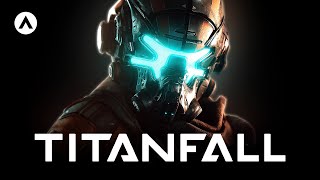
This video chronicles the complete history of the Titanfall franchise, from its origins in the split between Infinity Ward and Activision to the creation of Respawn Entertainment, the development and release of the original Titanfall and its sequel, and the eventual decline of the series. It covers the design philosophy, technical innovations, and the unfortunate release timing that contributed to its commercial struggles.
After the success of Call of Duty 4: Modern Warfare, the co-founders of Infinity Ward, Jason West and Vince Zampella, were ousted from Activision. They founded Respawn Entertainment in April 2010, emphasizing IP ownership to ensure creative integrity.
Respawn partnered with Electronic Arts through the EA Partners label. EA would publish their games while Respawn retained the rights, and EA funded the studio with several million dollars. This deal was considered unprecedented by analysts.
The team started with a blank slate. Lead Artist Joel Emslie used plastic model-making to create an 8-foot power suit, which evolved into the 20-foot-tall Titans. The design ethos of 'big versus little' was established.
A programmer testing the Source Engine discovered wall-running mechanics in a Half-Life 2 corridor. This movement mechanic became a core part of Titanfall's parkour-style gameplay, changing the project's trajectory.
Game Director Steve Fukuda identified three primary goals: mobility, survivability, and bridging multiplayer mechanics with cinematic storytelling. These drove the development of the genre-defying shooter.
Due to resource constraints, Respawn abandoned a separate single-player campaign and instead integrated story elements into multiplayer, using introductory cinematics and post-mission narratives to deliver the plot.
Titanfall relied heavily on Microsoft's Azure cloud infrastructure for AI processing and campaign content, offloading tasks from the console CPU. This allowed for higher quality graphics and stable experiences but also made the game dependent on internet connectivity.
Titanfall was revealed at E3 2013 and impressed with its movement and combat. However, skepticism arose over its multiplayer-only focus, reliance on cloud, and the 6-on-6 player count, which some felt was too low.
Titanfall launched in 2014 to favorable reviews, praised for its exciting gameplay and innovation. Critics, however, noted the lack of content and single-player campaign. The game faced cheating scandals and dwindling support over time.
Respawn addressed criticisms by developing a full single-player campaign for Titanfall 2. They used a '211' design model (two parts pilot combat, one part pilot mobility/puzzle, one part Titan combat) and drew inspiration from Half-Life and Portal.
The buddy Titan BT-7274 was designed with a personality, inspired by buddy cop films like Lethal Weapon. The team avoided cute animations, instead giving BT an emotive eye and distinct mannerisms to make it relatable.
Titanfall 2 introduced six Titan classes, more customization, and a progression system designed by Todd Alderman (of Call of Duty 4 fame). The multiplayer was slowed down to make it more accessible and strategic.
Titanfall 2 launched on October 28, 2016, one week after Battlefield 1 and one week before Call of Duty: Infinite Warfare. This crowded release window severely hurt its sales, despite critical acclaim.
After Titanfall 2, the franchise expanded with a mobile RTS and Apex Legends, a battle royale set in the same universe. However, no new mainline Titanfall games were announced, and support for Titanfall 2 dwindled, leading to server issues and a 'Save Titanfall' campaign.
Respawn discontinued sales of Titanfall 1 in 2021, and the future of the franchise remains uncertain. Despite its cult following, the series is effectively on hold, with Apex Legends taking precedence.
Titanfall's rise and fall is a story of innovation and unfortunate timing. Despite critical acclaim and a dedicated fanbase, the franchise struggled commercially due to release date clashes and shifting priorities, leaving its future uncertain.
Jason West
person
Vince Zampella
person
Drew McCoy
person
Joel Emslie
person
Steve Fukuda
person
Richard Baker
person
Jon Shiring
person
Frank Gibeau
person
Justin Hendry
person
Chad Grenier
person
Sean Slayback
person
Brent McLeon
person
Todd Alderman
person
Andrew Wilson
person
Source Engine
tool
Azure
tool
EA Partners
service
Steam
service
VG247 interview
link
Polygon interview
link
Engadget article
link
GamesRadar interview
link
The Telegraph article
link
GameSpot interview
link
IGN statement
link
Who founded Respawn Entertainment and when?
Jason West and Vince Zampella founded Respawn Entertainment in April 2010.
02:47
What was the key principle emphasized by West and Zampella when founding Respawn?
IP ownership, believing it was the best way to ensure the integrity and quality of their creative endeavors.
02:47
What was the deal between Respawn and Electronic Arts?
EA would publish Respawn's games while Respawn retained the rights, and EA funded the studio with several million dollars.
03:02
What were the three primary design goals for Titanfall?
Mobility, survivability, and bridging the gap between multiplayer mechanics and cinematic storytelling.
05:55
How did Respawn incorporate story into Titanfall?
They integrated story elements into multiplayer, using introductory cinematics and post-mission narratives.
06:40
What was the '211' design model in Titanfall 2?
Each single-player level involved two parts Pilot combat, one part Pilot mobility and puzzling, and one part Titan combat.
17:08
What inspired the buddy relationship between Jack Cooper and BT?
Buddy cop films like Lethal Weapon and Beverly Hills Cop.
18:42
Why did Titanfall 2 underperform commercially?
It was released between Battlefield 1 and Call of Duty: Infinite Warfare, a crowded release window that hurt its sales.
24:49
What was the player count for Titanfall's multiplayer matches?
6-on-6 with 12 computer-controlled combatants.
12:29
What was the name of the Titan in Titanfall 2?
BT-7274, nicknamed BT.
18:30
Founding of Respawn
The founding of Respawn by West and Zampella after their ousting from Activision is a pivotal moment in gaming history, leading to the creation of Titanfall and Apex Legends.
02:47Wall-Running Discovery
The accidental discovery of wall-running in the Source Engine became a defining mechanic of Titanfall, showcasing how small experiments can shape a game's identity.
05:15Cloud Computing with Azure
Titanfall's reliance on Azure was a pioneering use of cloud computing in gaming, but it also created a dependency that limited its reach.
08:10Release Date Disaster
The release date clash with Battlefield 1 and Call of Duty: Infinite Warfare is a classic example of how poor timing can doom a critically acclaimed game.
23:57End of Sales
The discontinuation of Titanfall 1 sales marks the effective end of the franchise, highlighting the challenges of maintaining a niche IP.
27:45[00:26] The 2007 release of Call of Duty 4: Modern Warfare significantly altered the trajectory of the first-person shooter genre, revolutionizing multiplayer games by introducing now irrevocable In unleashing the groundbreaking experience, developer Infinity Ward turned Call of Duty
[00:45] into a household name, effectively setting the stage for its transition into one of entertainment But while publisher Activision s golden goose reached for the stratosphere, a behind-the-scenes
[00:57] falling-out slowly begat a very public legal dispute. Infinity Ward s ousted co-founders Jason West and Vince Zampella refused to sit idly by after their split from Activision, however, instead striking out on their own with dozens
[01:11] Respawn Entertainment came as the result of this exodus. And strategic deals with Electronic Arts and Microsoft allowed the studio of industry veterans to venture beyond their wheelhouse, specifically to a distant future ravaged by war, wars fought
[01:28] Frenetic movement ruled the day in Titanfall, alongside the exoskeletons that players could Critics and players lauded the first game s ingenious design, though its online-only
[01:42] accessibility left much to be desired for those who wanted more out of the futuristic A second entry righted the wrongs of its predecessor on multiple counts, yet an ill-timed launch The series more or less lives on in Respawn s uber popular Apex Legends, but the battle
[02:01] Much to the chagrin of Titanfall faithful, any hope for the brand s proper return never This is the rise and fall of Titanfall.
[02:47] Jason West and Vince Zampella publicly announced Respawn Entertainment in April 2010. In so doing, the duo emphasized the importance of IP ownership , fully believing it constituted the best way to ensure the integrity and quality of their creative endeavors.
[03:02] Joining forces with Electronic Arts through the EA Partners label provided Respawn this opportunity, courtesy of an arrangement that analysts deemed unprecedented. The deal worked such that EA would manage publishing duties of future Respawn projects
[03:16] whose rights the studio owned all while funding the developer with several million dollars Since the team had yet to decide on what its debut experience would entail, West merely teased that a huge, summer blockbuster sat on the horizon.
[03:32] Huge couldn t have been more accurate given the final product s subject matter. Despite the pedigree of its founding members, the California-based crew balked at immediately
[03:44] As Producer Drew McCoy stated in a VG247 interview, Respawn started with a blank slate, leaving Exploring the various pitches that developers tossed around proved challenging without the
[04:00] In lieu of the right equipment, then, some artists resorted to old school techniques, The road to 20-foot-tall battle bots began with Lead Artist Joel Emslie using plastic
[04:14] An 8-foot power suit entered the equation soon thereafter, offering just enough height for regular-sized soldiers to fit right inside.
[04:26] Thoughts about the stressors of survivability in multiplayer games pervaded in-house conversations at the time, too, the problem being that a headshot from across a map in Battlefield or Call of Duty could instantly eliminate an unaware player.
[04:40] Respawn shifted the stakes, building new foundations based on Emslie s positioning of a three-inch The shooter s big versus little design ethos, thus, took hold from this point forward.
[04:59] Titanfall s anthropomorphic battle mechs drew life from plastic model-making experiments, but its parkour-intensive movement mechanics spawned because of one programmer s wall-running While examining different game engines during the prototyping stage, a Respawn programmer
[05:15] working in an evaluation version of Valve s Source Engine tested wall-running mechanics in a Half-Life 2 corridor typically blocked by Combine Soldiers. As opposed to facing the infantrymen head on, the developer wall-ran behind the soldiers,
[05:29] Drew McCoy explained that seeing this marriage of movement and combat changed a lot for him Evidently, the mod impacted the trajectory of the project, as well.
[05:42] Once the basic tenets of towering Titans and fast-moving pilots were settled on, the crew nailed down the differentiating factors between its new IP and the competition it would face in a market oversaturated with military shooters.
[05:55] According to Game Director Steve Fukuda, mobility, survivability, and bridging the gap between multiplayer mechanics and cinematic storytelling represented the three primary goals that drove Respawn to craft its genre-defying first-person shooter.
[06:09] The interest in cinematic storytelling didn t form on a whim. McCoy later told VentureBeat that Titanfall developers prototyped a single-player campaign Without a sufficient amount of production time and manpower, leads figured they lacked
[06:25] the resources to build multiplayer and single-player components that could withstand the scrutiny All development efforts honed in on online play as a result, yet abandoning the story campaign outright wasn t on the cards.
[06:40] Respawn combined the strengths of both offerings to formulate a storyline, character, and cool moments that players would hopefully invest in long-term. The final result culminated in a shooter whose story-driven multiplayer battles allowed users
[06:53] to absorb the plot chapter-by-chapter specifically via introductory cinematics and post-mission All in all, the narrative framing dropped pilots onto a battle-worn planet at the start
[07:05] of each online match to complete relatively bog standard FPS objectives like point capture. Throughout the game, pilots would unlock giant mechs, ever so slightly shifting the balance 1980s sci-fi in the vein of Star Wars, Blade Runner, and vehicle sim Abrams Battle Tank
[07:22] influenced the design of Titanfall s mechs, with every machine s core aesthetic harkening Built to empower the player in and out of the cockpit, Titans enjoyed more than their But ensuring the hulking mechs didn t break the game required a delicately played balancing
[07:39] act, which Respawn managed, in part, by equipping all pilots with anti-Titan weapons capable of dispatching the battle bots with some semblance of ease. Developers further dampened the raw power of machines upon limiting their movements,
[07:53] eschewing jumping mechanics and restricting rocket-powered capabilities to dashing maneuvers. Interestingly, maintaining equilibrium across the game s design scheme ventured far beyond It also applied to the structure of the ambitious multiplayer suite, especially since the very
[08:10] fabric of Titanfall s existence relied wholly on Azure Microsoft s cloud-based technology that, as far as gaming applications were concerned, seemed widely unproven at the time.
[08:36] Respawn entered preproduction on Titanfall in 2011, initially looking to seventh-generation Using Source Engine seemed the optimal decision, given the small team s familiarity with its
[08:49] Source provided a few other benefits as well, according to Software Engineer Richard Baker who noted in a Polygon interview that the Valve-created engine supported Respawn s vision of targeting 60 frames per second on PS3 and Xbox 360.
[09:04] On top of its frame rate advantage over competing third-party engines, Source further constituted a safe bet for development on PS3 or, as Baker put it, the riskiest platform on the market.
[09:16] Eventually, the studio shelved the PS3 iteration altogether. But Respawn shifted its priorities away from seventh-gen consoles before its publishing partner Electronic Arts struck an exclusivity deal with Microsoft.
[09:29] For one, the technical constrains of the older hardware weighed heavily on the team while it worked towards ironing out Titanfall s various gameplay mechanics. Developers also expressed concerns about wasting resources by optimizing code for a generation
[09:41] As such, instead of moving forward with what Joel Emslie described as jerry-rigged techniques, focusing on then-next-gen technology became a top priority for the Titanfall crew, an
[09:55] effort permitting them the opportunity to pursue far more ambitious ends. Speaking with Engadget in 2014, Engineer Jon Shiring claimed he began advocating for the implementation of dedicated servers soon after the studio opened its doors in 2010.
[10:10] The expense involved in such an undertaking caused a bit of apprehension, though, leading to discussions with Microsoft about future plans for the Xbox ecosystem. Said plans revolved around the Azure cloud infrastructure, a service Microsoft primarily
[10:23] The tech giant expanded its server footprint for Xbox One, offering developers extra computing power because the console itself could only deliver so much in the way of raw horsepower.
[10:35] Azure, consequently, proved an essential part of Titanfall s genetic makeup by untethering Respawn from the limitations of the console s CPU. Offloading certain systems namely AI processing and campaign content to dedicated servers
[10:50] freed up space for the internal systems of a PC or Xbox One to output higher quality In addition, studio co-founder Vince Zampella maintained cloud implementation mitigated issues such as host advantage as well as introduced more stable experiences, which suggested Azure
[11:08] Furthermore, the cloud computing structure supported AI bots, the so-called popcorn enemies who spawned as cannon fodder to supply players with XP bonuses.
[11:20] The game s dependence on cloud services convinced some developers Titanfall wouldn t have been And it was that dependence that arguably stopped the title short of reaching its full potential.
[11:37] Hints about Respawn Entertainment s debut outing began circulating in 2011, thanks to comments wherein EA Labels President Frank Gibeau teased the studio s sci-fi shooter. Gibeau withheld concrete details, yet boasted the new property had the potential to compete
[11:51] An April 2013 trademark filing by Respawn and a Kotaku report a couple of months thereafter outed the mech motif before the developer could lift the veil itself.
[12:03] However, Titanfall still managed to wow the crowd during Xbox's E3 2013 press briefing. The intersection of maneuverability and combat especially captured the audience s attention,
[12:15] yielding the shooter a unique identity that helped build anticipation for its 2014 release on PC, Xbox 360, and Xbox One. Its multiplayer focus and reliability on cloud computing invited skepticism, though.
[12:29] So, too, did news that Titanfall would only support 6-on-6 matches, with 12 computer-controlled combatants boosting the number of pilots assigned to each team. Despite the public s less-than-cheerful response, Respawn stuck to its guns.
[12:44] Lead Designer Justin Hendry insisted the limited headcount represented the ideal way to play, evidenced by playtests in which higher counts left users feeling uncomfortable about the Most notably, the team found there existed too many ways for pilots to ambush their foes,
[13:00] since Titanfall s verticality and mobility permitted no less than five directions from These various points of attack were deliberately designed to discourage ground level skirmishes
[13:12] An excess number of fighters on the battlefield, then, meant players had few ways to properly Plus, if smaller player counts worked out for success stories such as Gears of War and
[13:25] Left 4 Dead, the hope was that Titanfall would similarly benefit from a show of restraint. Many concerns stemmed from the furor surrounding the disastrous launches of Diablo 3 and EA
[13:39] s own SimCity in 2012 and 2013, respectively. The unreliability of internet connections raised a few red flags in its own right, not to mention the fact that not every region hosted Azure data centers.
[13:52] As a result, territories like South Africa missed out entirely on the game s release Not everyone dismissed the potential of cloud-based gaming. The importance of Azure to Titanfall s viability led to conjecture that the shooter counted
[14:08] And many would come to agree with that sentiment. The title reviewed favorably upon launch, receiving high marks for its exciting gameplay Some argued the game raised the bar for first-person shooters, while simultaneously delivering
[14:25] Those who weren t convinced by Titanfall s charms felt the dearth of multiplayer modes, lack of a single-player campaign, and the limited pilot and Titan builds left much to
[14:38] In the years following Titanfall s release, cheating and hacking scandals, effectively It didn t help that Respawn continuously pulled resources from the title as time wore on.
[14:50] The brand received one more chance to stick the landing, yet circumstances beyond the creators s control left Titanfall 2 swaying in the wind relatively early in its life cycle.
[15:11] By June 2016, Respawn Entertainment s first mech-laden military shooter had generated It enjoyed a rather long tail on Xbox One in terms of player retention, yet the PC player
[15:24] Many considered this a result of minimal content offerings and the absence of a proper story campaign the development crew didn t disagree. User feedback and internal research showed Titanfall s primary issue did indeed come
[15:41] One solve lay nestled in the necessity for a single-player mode, which Respawn hoped The team dismissed any attempts at relegating itself to following convention, however, and
[15:54] instead tried introducing pilot mobility and Titan destruction to solo play early in the As far as targeting this particular gameplay loop was concerned, Executive Producer Drew McCoy said they wasted a decent amount of time on endeavoring to graft multiplayer mechanics
[16:11] When this period of trial and error concluded, yet another phase began, informed by a decision Such division engendered what Respawn termed action blocks, unpolished prototypes crafted
[16:27] by individual designers who were tasked with building interesting ideas that would shape The studio planned on stitching together the best concepts, thereby concocting an overarching framework wherein each single-player mechanic worked in concert.
[16:43] Apart from discouraging iteration on discarded prototypes, there were generally no constraints placed on what the action blocks could or could t include. Designers freely explored everything from platforming mechanics to puzzle-solving segments.
[16:56] Even the time travel shenanigans that appeared in Titanfall 2 s final build grew out of the Over time, these experimental efforts established the touchstone of the solo campaign, grounded
[17:08] in a design structure labeled 211 so named for its emphasis on single-player levels involving two parts Pilot combat, one part Pilot mobility and puzzling, and one part Titan combat.
[17:20] Game Director and Co-Writer Steve Fukuda explained to GamesRadar that Respawn s 211 model unlocked the spirit of the narrative adventure from a design perspective. And in looking to Half-Life and Portal for inspiration on how best to convey story, Titanfall
[17:34] 2 creators developed a winning formula bolstered by piecing together various action blocks Senior Game Designer Chad Grenier s crane puzzle block elevated The Beacon mission, for example; meanwhile, Sean Slayback s pilot-throwing concept, though too complex for interactivity,
[17:51] Attempts to channel Half-Life drove the injection of a mystery narrative, one capable of keeping users on their toes while giving them reason to experience the campaign in full.
[18:03] A buddy story set the stage for this ambitious goal, casting players in the role of a militia rifleman who becomes a pilot after inheriting a Titan. Notably, the protagonist s mechanical buddy demanded just as much developmental effort
[18:15] as every other aspect of the expansive sequel.
[18:30] In Titanfall 2 s nascent stages, Respawn knew it would pair the protagonist, later named The sidekick internally bore the nickname of Buddy Titan, or BT for short, before receiving
[18:42] Drawing inspiration from Lethal Weapon and Beverly Hills Cop, the union between Jack Cooper and BT would begin like that of a typical buddy cop pairing, seeped with awkwardness
[18:54] Believably presenting such a tale to players proved quite the challenge. The studio, thus, turned to Terminator, Robocop, and the anime Gargantia on the Verdurous Planet
[19:07] as sources of influence, yet hoped to build an independent thinking mech that could come As well as being equipped with a machine gun and missiles, then, BT was also armed with Early in production, the mech either presented as an obedient pet or a disagreeable AI partner;
[19:26] the latter behavioral trait drove playtesters to dislike the character. Fitting the walking war machine with some semblance of a personality necessitated finesse, Cutesy animations reminiscent of Pixar s Wall-E were avoided at all costs, considering their
[19:44] But because the world of Titanfall often saw pilots form deep bonds with Titans, BT had An emotive eye served as one essential solution, providing a human-like characteristic bolstered
[19:59] by specific mannerisms like BT appearing right-handed when Jack took control, but using the left arm dominantly when functioning independent of player influence. All told, a five-person crew balanced BT s range of intricacies after approximately seven
[20:14] However, the melding of lovable qualities with an innate partiality towards causing mass destruction additionally demanded representation in the Titan s physical appearance. For one, BT needed a design separate from its counterparts, something easily identifiable
[20:29] A distinctive look for the machine started with a defined silhouette, much akin to the unmistakable outline of Clint Eastwood characters in spaghetti westerns. The design team further differentiated BT from the pack by adding brighter colors to
[20:43] its back, ensuring users knew which direction their partner faced when attempting to access Finally, elements from contemporary military technology like the Apache helicopter s angular body were incorporated into the build in an effort to prevent the robot from appearing
[20:59] Such incredible attention to detail indicated Respawn viewed the single-player campaign as much more than window dressing for an otherwise $60 multiplayer game.
[21:11] The motivating factor behind the story-based experience didn t exclusively hinge on a desire to ingratiate fans and newcomers in the Titanfall universe, however. Rather, the studio also perceived it as a means for onboarding people into Titanfall
[21:24] 2 s online component, letting users familiarize themselves with wall-running, movement, and Lead Designer Brent McLeon divulged as much in a discussion with The Telegraph, upon explaining
[21:37] In replaying the original title, Respawn staff realized the super chaotic moment-to-moment action made it difficult to discern areas of improvement after failing.
[21:50] Slowing down the pace of Titanfall 2 helped in myriad ways, as did supplementing reactive gameplay mechanics with proactive decisions for players to make. Said changes manifested in the addition of challenging maps and modes that forced multiplayer
[22:03] competitors to seriously consider their loadout selections ahead of each match. The new environments received simplified designs for similar reasons, with the express intent of offering predictable and easy-to-master levels.
[22:16] Titanfall 1 s limited options for playable Titans fueled several other multiplayer-focused As opposed to the three mech types that comprised the first game s lineup, Respawn built six
[22:28] different Titan classes the second time around, each one specializing in a certain ability. An incendiary arsenal powered the Scorch class, for instance, while the Northstar Titan upped The new Titans, alongside grapple and phase shift abilities, catered to playstyles that
[22:45] befit specific user preferences; the same held true for pilot and Titan customization options, which further addressed critiques leveled against the franchise s 2014 outing. Better still, Todd Alderman, the person responsible for Call of Duty 4 s groundbreaking progression
[23:00] system, left his mark on Titanfall 2 by introducing a similar feature to the fast-paced shooter. Progression elevated both Respawn and Titanfall to new levels as the company moved away from the proof of concept project that was the first Titanfall and iterated on its successful
[23:15] Unfortunately, all of the IP s core strengths and newly added enhancements mattered little when a fall 2016 release date sandwiched it between two of the genre s biggest heavy hitters.
[23:57] Respawn unleashed a teaser trailer for Titanfall 2 in April 2016, followed by a full reveal during the E3-adjacent EA Play event that June. In addition to promising a story campaign that explored the unique bond between man
[24:10] and machine, EA and Respawn surprised audiences by confirming the sequel would launch across PC, PlayStation 4, and Xbox One. Vince Zampella once divulged the original Titanfall had always been a timed console
[24:23] exclusive for Xbox; it was EA s extension of the deal not long before launch that kept PS4 owners were pleased to finally have a seat at the mech-shaped table, except the
[24:35] poor timing of Titanfall 2 s release meant countless first-person shooter fans across all platforms were unlikely to give it an honest chance. Titanfall 2 s October 28th due date arrived one week after Battlefield 1 debuted and one
[24:49] The former s release date announcement unsettled pundits and fans, yet EA CEO Andrew Wilson assured investors in a May 2016 earnings call that Battlefield and Titanfall appealed to
[25:03] Bearing that in mind, the publisher saw no reason to worry whether its biggest fall releases Game Director Steve Fukuda sang somewhat of a different tune post-launch, acknowledging
[25:16] concerns that a publisher wouldn t put its full muscle behind an IP it didn t own. Naturally, the back-to-back shipping of Battlefield and Titanfall sequels only exacerbated the And despite the critical acclaim and positive word-of-mouth, Zampella would later tell GameSpot
[25:32] that Titanfall 2 sold well but should have performed better. He attributed the shooter s shortcomings to its super crowded release window and aggressive Regardless, the future still seemed bright for the Respawn-owned brand.
[25:47] Real-time strategy game Titanfall: Assault expanded the franchise to mobile devices in Apex Legends landed two years later, inviting players to join a battle royale set 30 years On the heels of the battle royale s arrival, Zampella teased more Titanfall content for
[26:05] Andrew Wilson subsequently elaborated on this news upon confirming EA s plans to produce a premium Titanfall experience for the same time frame. For reasons unknown, the premium title never so much as received a formal reveal.
[26:21] Vince Zampella s May 2020 statement to IGN that no new Titanfall games were in development implied Electronic Arts and Respawn had shelved the previously teased endeavor. Dwindling support for the sequel further compounded uncertainty about what lay ahead and what
[26:36] A
[26:49] Steam sale paired with the release of Titanfall content in Apex Legends worked wonders for SteamDB data showed the sequel's player count had increased by 650 percent across two days in April 2021, good tidings for a then-five-year-old title.
[27:05] On the other hand, however, server errors and DDoS attacks wreaked havoc on the game These targeted hacks often proved so severe that players found themselves unable to access
[27:17] Frustrated fans publicly aired their grievances, believing EA had committed precious few resources But a dubious Save Titanfall campaign involving Apex Legends hacks, and ulterior motives allegedly
[27:31] aimed at reviving the unannounced Titanfall Online, overshadowed those who merely wanted to enjoy their favorite multiplayer game undisturbed. Following a year of peaks and valleys, Respawn concluded 2021 by discontinuing sales of the
[27:45] While hardly surprising news given Titanfall s age, fears that the franchise s days were The studio attempted to quell such concerns; its insistence that Titanfall remained central
[27:58] to Respawn s DNA won over some, though skeptics won t soon be convinced. After years of feeling underserved, especially in the wake of Apex Legends s meteoric success, Yet, it s the fruits of the battle royale s success that may one day see eager pilots
[28:15] standby for another chance at Titanfall.
⚡ Saved you 0h 29m reading this? Transcribe any YouTube video for free — no signup needed.