
How Watch Dogs Was Inspired by a Real Cyberattack
60sTies a popular video game to a real-world cyberattack, sparking curiosity about the intersection of fiction and reality.
▶ Play Clip"Delivers a thorough, well-researched history of the franchise, matching the title's promise of a rise and fall narrative."
This video provides a comprehensive retrospective on the Watch Dogs franchise, tracing its origins from a conversation about privacy to its evolution through three main installments. It covers the development, critical reception, commercial performance, and the controversies that shaped each game, ultimately questioning the series' future.
The video opens by discussing the exponential growth of computer-run industrial control systems and the real-world implications, citing the Stuxnet virus as an example. This sets the stage for the premise of Watch Dogs, which explores the dangers of an interconnected world.
The idea for Watch Dogs stemmed from a conversation among Ubisoft Montreal developers about the ease with which people store private information on their phones. This led to the development of features like the Profiler, which retrieves personal data from NPCs.
Chicago was chosen as the setting due to its reputation as a city in crisis and its storied criminal history, which made the idea of a SCADA-like system plausible. The city later became America's most surveilled city, which felt like a home run for the team.
Watch Dogs' version of Chicago runs on the Central Operating System (ctOS), a mainframe designed to control nearly every aspect of the city's civic resources, from traffic lights to crime prediction technology. This Orwellian control motif underpins the game's mechanics.
Ubisoft was initially skeptical about making hacking the core pillar of a Triple-A game, but developers pivoted to focus on privacy and moral dilemmas, which resonated with the attention hacktivist groups like Anonymous were receiving.
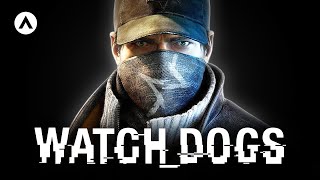
Aiden Pearce was designed as a streetwise character who is keenly aware of his surroundings. His aesthetic, including a mask and a baseball cap, was chosen to reflect his desire to go unnoticed, and his trench coat was used to showcase wind physics.
Ubisoft Montreal repurposed an abandoned driving engine to create the Disrupt Engine, which powers Watch Dogs. It is built on three pillars: dynamism (simulation network), impact (reputation system), and seamless connectivity (multiplayer).
The E3 2012 demo was inspired by a YouTube video on the Stuxnet virus and depicted a world where corporations profit from personal data. The impressive visuals led to speculation about it being a next-gen title, which was confirmed at the PS4 reveal event.
Watch Dogs was delayed from November 2013 to Spring 2014 to ensure quality. The announcement of multiple Collector's Editions with region-exclusive DLC caused backlash, as players would need to spend up to $1,200 to get all content.
A comparison between the 2012 reveal and the 2014 story trailer led to accusations of a graphical downgrade. Digital Foundry confirmed that lighting, reflections, and NPC behaviors were less advanced in the final build, even on high-end PCs.
Despite mixed reviews, Watch Dogs broke Ubisoft sales records, selling over 10 million units within a year. It was a key driver of Ubisoft's historic earnings in the 2014-2015 fiscal year.
Players criticized the lack of believability in the game world, the somber protagonist, and weak storytelling. Ubisoft Montreal took this feedback to heart, leading to a livelier setting and a more charismatic protagonist in the sequel.
Watch Dogs 2 is set in San Francisco, chosen for its tech culture and sunny locale. The protagonist, Marcus Holloway, is a young African American hacker from Oakland, whose charm and light-hearted disposition shift the tone of the series.
The sequel removed the 'Ubisoft towers' mechanic, replacing it with a progression system based on DedSec's online following. This was designed to mimic social media progress and encourage exploration.
Watch Dogs 2 improved driving controls, expanded hacking possibilities, and introduced a cooperative multiplayer mode. The game was built from the ground up for PS4 and Xbox One, avoiding the graphical downgrade issue.
Watch Dogs 2 received better reviews than its predecessor, but its launch sales were lower, with less than 80,000 units sold in the UK in its first week. However, it eventually sold over 10 million units, thanks to good word-of-mouth.
Clint Hocking led the development of Watch Dogs: Legion, which introduced the 'Play as Anyone' mechanic. The game uses a relational database called the Census System to generate unique NPCs with backstories and relationships.
Legion is set in a dystopian post-Brexit London, which was chosen a year and a half before the Brexit vote. The setting was intended to explore contemporary events and create a meaningful narrative about civil unrest and surveillance.
Legion faced game-breaking bugs at launch, including crashes and save file glitches, which delayed the multiplayer update. Despite this, it sold 1.9 million digital units in three days, breaking series records.
The future of the franchise is uncertain. The series has had a rocky existence, with genre-defining ideas packaged in average-at-best adventures. If Ubisoft continues to invest, it may need to overcome more growing pains.
The Watch Dogs franchise has experienced a turbulent journey, marked by high expectations, controversies, and mixed reception. Despite its commercial successes, the series has struggled to fully realize its ambitious concepts, leaving its future uncertain.
Jonathan Morin
person
Dominic Guay
person
Clint Hocking
person
Yves Guillemot
person
Laurent Detoc
person
Colin Graham
person
Mathieu Leduc
person
Liz England
person
Cameron Labine
person
Chris Dragert
person
Danny Bélanger
person
Tony Key
person
Alex Parizeau
person
Disrupt Engine
tool
Census System
tool
Ubisoft
service
Digital Foundry
service
PlayStation Blog
link
Forbes
link
Game Developer
link
IGN
link
The Guardian
link
EDGE Magazine
link
GameSpot
link
VentureBeat
link
The Evening Standard
link
The Washington Post
link
What real-world event inspired the premise of Watch Dogs?
The Stuxnet virus, a digital weapon allegedly co-engineered by U.S. and Israeli intelligence to debilitate the Iranian nuclear program.
00:29
What is the name of the fictional operating system that controls Chicago in Watch Dogs?
The Central Operating System (ctOS).
04:04
What was the initial pitch for Watch Dogs?
What if I knew everything about you?
04:51
Why did Ubisoft initially doubt hacking as a core mechanic?
They believed hacking had yet to reach mainstream audiences and wasn't enough to warrant being the core pillar of a Triple-A game.
05:06
What are the three pillars of the Disrupt Engine?
Dynamism, impact, and seamless connectivity.
08:01
What was the main reason for the graphical downgrade in Watch Dogs?
Developers knew nothing about Sony's and Microsoft's eighth-console generation plans, so they had to predict new hardware capabilities, running the demo on a very powerful PC.
14:55
How many units did Watch Dogs sell within its first year?
10 million units.
16:03
What was the biggest criticism of the original Watch Dogs according to Dominic Guay?
Players never found the game world believable; the city felt flat and the revenge plot with a brooding main character pulled many out of the experience.
17:00
How did Watch Dogs 2 address the criticism of Aiden's constant use of lethal force?
They equipped the protagonist, Marcus Holloway, with a taser for non-lethal engagements, allowing for no-kill playthroughs.
21:49
What is the 'Play as Anyone' mechanic in Watch Dogs: Legion?
It allows players to recruit and play as any NPC in the game, each with unique backstories, abilities, and relationships.
28:35
What is the Census System in Watch Dogs: Legion?
A massive relational database that generates NPCs with unique backstories, schedules, and relationships in real time.
29:33
How did the writing team handle the complexity of Legion's branching narratives?
They made DedSec the protagonist, allowing the creative team to guide the hacker group through a traditional hero's journey regardless of which characters formed the crew.
31:18
What was the setting of Watch Dogs: Legion and why was it chosen?
A dystopian post-Brexit London, chosen because creators believed they had a responsibility to examine contemporary events to create something meaningful.
32:52
What were the launch issues of Watch Dogs: Legion?
PC and last-gen consoles experienced rampant crashing, and PC users had save file glitches that led to lost progress.
34:40
How many digital units did Watch Dogs: Legion sell in its first three days?
1.9 million digital units.
35:22
Stuxnet as Inspiration
Connects the game's premise to a real-world cyberattack, grounding the fiction in reality.
00:29ctOS Concept
The central fictional system that drives the game's mechanics and themes.
04:04Pitching Hacking
Shows how Ubisoft overcame skepticism by focusing on privacy and moral dilemmas.
05:06Graphical Downgrade Controversy
A major controversy that affected the game's reputation and Ubisoft's marketing strategy.
13:17Commercial Success
Demonstrates the financial impact of the franchise despite mixed reviews.
16:03Play as Anyone
A revolutionary concept that required new technologies and design approaches.
28:35Post-Brexit Setting
Shows how the developers used contemporary events to create a meaningful narrative.
32:52[00:00] The use of computer-run industrial control systems has grown exponentially over the last decade and change. Such infrastructures help cities and nations around the world
[00:12] manage power plants, surveillance, and countless other integral functions. But as sci-fi media has long predicted, interconnected supercomputers can facilitate just as many problems as they solve. In 2010, 100,000 Supervisory Control and Data Acquisition,
[00:29] or SCADA, networks were discovered to have been targeted with the sophisticated Stuxnet virus, a digital weapon allegedly co-engineered by U.S. and Israeli intelligence agencies to debilitate the Iranian nuclear program. Developer Ubisoft Montr al studied such headline news when
[00:46] formulating its cautionary tale about the horrors of an interconnected world in Watch Dogs. Announced with an awe-inspiring trailer during E3 2012, Watch Dogs counted among first games
[00:58] shown for the eighth console generation. While its final form failed to fulfill the promise of the original teaser, many would argue the title s gameplay mechanics still showcased the power of next-gen technology. These talking points undoubtedly boosted Watch Dogs s
[01:13] sales numbers early on and helped it sustain long legs with over 10 million copies sold. But this incredible momentum waxed and waned over the course of the series s life cycle. Watch Dogs
[01:25] 2 released to better reception, though it came and went with little fanfare. And the third installment found itself beset by game-breaking performance issues at launch. Watch Dogs has, thus far, managed to claw its way back from multiple downturns, raising questions as to how Ubisoft
[01:42] will reinvent the hacking-focused series next. This is the Rise and Fall of Watch Dogs.
[02:03] The kernel of the idea that engendered Watch Dogs s conception stemmed from a conversation between Ubisoft Montr al developers four to five years before its 2014 release. In an interview with
[02:16] the PlayStation Blog, Creative Director Jonathan Morin recalled how the discussion centered on the ease with which the average person stores private information in their phones and the life-changing implications of such ease of access. These conversations eventually grew
[02:30] more thought-provoking, culminating in the development of Watch Dogs features like the Profiler a tool used for retrieving personal information from non-playable characters. Yet the basis of Watch Dogs s underlying premise dug deeper than simple data storage. Developers
[02:46] also cited the shocking investigation into a presumed murder in Chicago as a source of inspiration, especially since police findings hinged on data analytics and CCTV footage. The death of Chicago s Board of Education President, Michael Scott,
[03:00] in November 2009 rocked the state of Illinois. Notably, the manner in which his remains were discovered led local police to believe his passing resulted from foul play. In pursuit of more concrete answers, authorities employed data analytics to probe through
[03:15] hours of surveillance footage; their findings revealed the gentleman had taken his own life. According to Jonathan Morin, the Montr al-based studio extrapolated a bit from these events when deciding that Chicago would serve as the setting of its city-hacking, open-world adventure.
[03:31] The metropolis s reputation as a city in crisis rested at the forefront of the decision as well, given that its storied criminal history lent plausibility to the idea of a SCADA-like system being installed within city limits. That Chicago became America s most surveilled city after
[03:48] Montr al selected the locale felt like a home run for the team, Morin later told Forbes. Watch Dogs version of the Windy City ran on an electronic infrastructure that developers dubbed the Central Operating System or ctOS. The mainframe was designed to control nearly
[04:04] every aspect of the urban landscape s civic resources, from traffic lights and crime prediction technology to electricity grids and cellular communications. Combining the Orwellian-esque control motif with satire about society s willingness to surrender private details
[04:19] through smart devices laid the groundwork for Watch Dogs s in-game mechanics. Thus, developers gave players the tools to suspend working bridges one minute, then steal money from a random person s bank account the next. No matter how simple or complex, each of these actions were
[04:35] funneled through what Morin described as the project s toughest selling point hacking.
[04:51] The Montr al crew s initial pitch posed a fairly straightforward question What if I knew everything about you? Given Ubisoft s penchant for requiring a differentiator, a hook that avoids being another gimmick, hacking sat at the forefront of the proposal. The powers
[05:06] that be weren t convinced at first, believing hacking had yet to reach mainstream audiences, certainly not enough to warrant it becoming the core pillar of a Triple-A video game. Developers deftly pivoted to a different tactic, prioritizing privacy and the moral conundrums presented to
[05:22] hackers. It seemed a shrewd move considering the attention being garnered by hacktivist collectives like Anonymous. The moment-to-moment challenge for Watch Dogs didn t rely on the execution of hacking, then; making the right judgment call proved far more instrumental to the experience.
[05:38] Consequently, the main gameplay feature demanded the utmost simplicity, achieved by mapping each hacking-related action to a single button. Removing complex controls represented a key point of interest for the development team. After all, the ability to
[05:52] take control of various electronic objects had to remain consistent when players operated vehicles, engaged in shootouts, or participated in any number of secondary mechanics. Morin stated in a Game Developer sit-down that in pursuing barebones hacking controls, the studio
[06:08] even opted to excise shooting for a time, which helped further refine other gameplay elements. Though formulating exciting and intuitive hacking mechanics necessitated a long, iterative process, Watch Dogs s playable anti-hero came to life with relative ease.
[06:24] Ubisoft Montr al first examined protagonists in games like its own Assassin s Creed, realizing that contextualization hardly played a part in their basic behaviors. These characters typically navigated in-game worlds like robots, their movements seldom adjusting to changing
[06:41] circumstances. Watch Dogs creators wanted to push the envelope in this regard with their new IP. Protagonist Aiden Pearce, thus, embodied the role of a streetwise character, someone keenly aware of his surroundings who thrived on going unnoticed. Everything from
[06:56] Aiden s actions to his aesthetic design needed to reflect as much. He wore a mask to disguise himself from news media, for instance, pulling it up when engaging in illegal activities. Similarly, the character wore a hat whose brim he d tug down to avoid attracting unwanted attention. Morin
[07:12] argued the baseball cap won out over a hoodie as such disguises had been done to death. Finally, the studio fitted its plainly-dressed hacker with a trench coat predominantly used for hiding various items. The coat also provided another way of showcasing wind physics, an aspect of the
[07:28] experience made possible by the Disrupt Engine. Sometime after acquiring the Driver IP, Ubisoft dedicated a team to building a brand-new driving game engine. As the publisher s North American President, Laurent Detoc, explained in an IGN interview, the driving-centric project ultimately
[07:45] fell to the cutting room floor. As opposed to utilizing the AnvilNext Engine that powered Assassin s Creed 3, Ubisoft Montr al repurposed the abandoned driving engine, retrofitting it in a way to suit the needs of Watch Dogs. Senior Producer Dominic Guay broke the Disrupt
[08:01] technology down into three pillars. The engine s surface layer revolved around dynamism, defined as the in-game simulation network that governed how systems interacted with one another to facilitate
[08:13] branching reactions. This layer of the technology, in turn, guaranteed civilians would open umbrellas whenever it rained. Such a layer of immersion also informed clothing simulation, whereby high winds
[08:25] tugging at an NPC's clothes would result in a character tightening their jacket. Guay devoted the second tier to impact, noting that, in the absence of a black and white morality system, Watch Dogs judged player behavior according to the city s perception of
[08:40] Aiden s actions. Animation Director Colin Graham described it as a reputation system, designed to ensure users never felt their decisions were guided by some invisible thread. Disrupt s third core tenet catered to seamless connectivity to the game s multiplayer component,
[08:56] which required neither loading nor matchmaking. In general, Ubisoft Montr al devised an online suite for Watch Dogs that augmented the action. One player could accept a contract with another s name on it, infiltrate their target s world, and wait for the perfect opportunity to strike. This
[09:13] optional game of cat and mouse further elevated the hacking conceit. Better still, the multiplayer suite worked across console generations, thanks to the Disrupt engine s flexibility. The technology behind Watch Dogs was built with then-next-gen consoles in mind, but accommodated
[09:30] the needs of PS3 and Xbox 360 hardware. And in an attempt to create as much parity between the console generations as possible, the Montr al group made certain the core experience played the same on all platforms. On PC, PS4, and Xbox One, the differences manifested via improvements
[09:47] to particle simulation, shaders, wind, water, and AI behavior. Ubisoft showcased these next-gen enhancements and more to great applause during Watch Dogs s first public showing, yet the
[10:00] showcase would eventually prove equally beneficial and detrimental to the IP s initial outing.
[10:13] Ubisoft s E3 2012 media briefing boasted more than its share of heavy hitters, with the likes of Assassin s Creed 3 and Far Cry 3 taking center stage. By the end of the show, however, the public had taken a special interest in a newly revealed property.
[10:28] The Watch Dogs demonstration took inspiration from a YouTube video on the Stuxnet virus, and depicted a fictional world where private corporations profited from personal data collection through their power over a major city s Central Operating System. Jonathan Morin sold viewers on the
[10:44] promise of weaponizing a metropolis, using its supercomputer to uncover the citizenry s darkest secrets. But the title s awe-inspiring visual presentation especially turned heads, courtesy of its impressive dynamic lighting, wind physics, and stunning attention to the smallest details.
[11:01] At the time, Ubisoft could only confirm the project s release on PC, PS3, Wii U, and Xbox 360, yet speculation about its status as a next-gen title persisted
[11:13] for several months due to the E3 demo s unbelievable visual fidelity. The publisher finally cleared the air at the PS4 reveal event in February 2013, wherein Watch Dogs
[11:25] reappeared as a PS4 title slated to arrive with the console s launch later that year. News of the inevitable Xbox One version hit the airwaves a few months thereafter but not before Ubisoft came under fire for the game s appalling list of special edition packages. Four different
[11:42] Collector s Editions were announced in Europe, for instance, neither of which contained every piece of supplemental content. And multiple regions received exclusive DLC in certain editions, meaning players would have to purchase Collector s Editions from around the
[11:55] world to enjoy Watch Dogs in its entirety a commitment that would ve cost $1,200. Despite the glitz and glamour, Watch Dogs wasn t ready for primetime, evidenced by a delay that
[12:07] pushed the title out of its November 2013 release date to Spring 2014. An official statement from Ubisoft communicated a refusal to compromise on quality, as the publisher expected Watch Dogs
[12:19] to embody the capabilities of next-gen gaming. Company CEO Yves Guillemot elaborated further, noting the importance of providing time for additional polish to a property slated to count among the perennial pillars of Ubisoft's financial performance. In short, projects such as Watch Dogs
[12:36] would prove paramount to the French company s long-term goal of winning the next generation. The Montr al crew had different reasons for taking advantage of a protracted development cycle. Morin revealed one of the main motivating factors behind
[12:49] the delay stemmed from some playtesters discovering complex systems too early, leading to unintended outcomes that disrupted the flow of the game. When it finally landed on store shelves in May 2014, these intricacies seemed the least of player concerns.
[13:17] Ubisoft unveiled the Watch Dogs release date in a March 2014 story trailer that quickly garnered backlash because of what many perceived as a visual downgrade. This discourse picked up steam when a NeoGAF post claiming to confirm the downgrade went viral online,
[13:33] presenting a side-by-side comparison of the 2012 reveal video and 2014 story trailer. Would-be players and media outlets agreed there existed a notable difference between the two. Ubisoft
[13:46] representatives were less inclined to admit as much; one PR manager went so far as to insist a downgrade would be ridiculous. Regardless, the change in graphical quality was irrefutable.
[13:58] A post-launch technical analysis from Digital Foundry concluded that lighting and reflection effects appeared less advanced in the final build. How wind simulation impacted in-game
[14:11] objects had taken a hit during development, as well. The number of NPCs on-screen along with their once robust set of behaviors similarly lacked the technical depth shown in 2012. These downgrades even applied to high-end PCs with Ultra settings enabled.
[14:27] Ubisoft CEO Yves Guillemot addressed the matter in July 2015, telling The Guardian that Watch Dogs s downgrade controversy forced the publisher to adjust tactics and only show demos playable on
[14:39] a game s target machines. Senior Producer Dominic Guay later explained the rationale behind the graphical shift, which hinged on the fact that developers knew nothing about Sony s and Microsoft s eighth-console generation plans during the early days of production. Therefore, despite
[14:55] building Watch Dogs for next-gen technology, Ubisoft Montr al had to predict new hardware capabilities, a practice that meant running the original demo on a very powerful PC.
[15:07] Interestingly, if the studio had its way, Watch Dogs would not have premiered at E3 2012 in any capacity. Speaking with EDGE Magazine, Jonathan Morin claimed Guillemot pushed for the project
[15:19] s trade show appearance, though developers expressed trepidation because it felt a bit early. Morin added that the Ubisoft executive s intuition paid off in hindsight. The title launched to middling critic and user reception, yet neither that nor the drama surrounding its
[15:35] visuals impacted sales. Early data showed Watch Dogs broke Ubisoft sales records in its first 24 hours at retail; within a week, the hacking-centric adventure eclipsed four
[15:47] million units sold worldwide. The French publisher suddenly had yet another megahit on its hands. Watch Dogs s debut enjoyed boundless success upon release. On the back of a pre-delay budget
[16:03] totaling more than $68 million, a figure that didn t include marketing spend, the title moved 10 million units ahead of its one-year anniversary. Along with a diversified holiday 2014 lineup that
[16:15] included two Assassin s Creeds and Far Cry 4, the new IP drove Ubisoft to historic earnings for the third quarter of the 2014-2015 fiscal year. Thus, as the investment in open-world
[16:27] games continued to pay dividends, Watch Dogs became a pivotal part of the company s growth. Not all facets of the newly minted franchise would return for its inevitable follow-up entry. The graphical downgrade aside, Aiden Pearce, the somber Chicago setting, and lackluster
[16:43] storytelling received the bulk of the criticism leveled against Watch Dogs. Ubisoft Montr al took note of the scorn, with Senior Producer Dominic Guay spending hours combing through NeoGAF threads for user feedback. Guay told GameSpot the biggest takeaway was that players never
[17:00] found the game world believable. The bustling city of Chicago felt flat instead of lively, and the revenge-seeking plot with its brooding main character pulled many out of the experience.
[17:12] Watch Dogs 2 addressed each critique head-on, resulting in a livelier setting and a younger, more enthusiastic protagonist. Notably, the San Francisco setting counted among the first
[17:24] decisions made about the sequel, an easy choice given the Montr al crew s eagerness to design a world based on a sunnier locale. That the Bay Area s tech culture has long been heralded as a hub of innovation further secured its consideration as the ideal backdrop for a narrative structured
[17:40] around technology-based conspiracies. While San Francisco couldn t be built to scale because of its overwhelming size and legal issues concerning certain buildings, Watch Dogs 2 creators did their best to capture the spirit of the metropolis. The Watch Dogs version of
[17:54] the Bay, consequently, encompassed Oakland, San Francisco proper, a scaled down Silicon Valley, and a portion of Marin County, the latter of which made the cut due to its sandbox type of feel.
[18:06] After settling on a central location, the studio knew a young hacker boasting a hacker s motivation should constitute the glue that tied the narrative together. Ubisoft Montr al quickly
[18:18] using the series Anonymous analogue DedSec for tackling big data concerns. An African American man from Oakland who d witnessed racial injustice and was framed for a cybercrime anchored
[18:33] the next phase of the then-nascent property. While youth and race differentiated Watch Dogs 2 s Marcus Holloway from Aiden Pearce, Marcus additionally shifted the tone, his charm and light-hearted disposition reflecting the new game s presentation. It made sense, then,
[18:49] that where Aiden s lone wolf approach mirrored his grim history, Marcus s personable characteristics opened the door for an emphasis on teamwork. And the collaborative bent paired well with the new character s passion for activism, giving rise to DedSec s mission of facilitating
[19:04] social change by exposing corruption. These changes to the Watch Dogs blueprint couldn t only manifest in character work and storytelling, though. Player feedback on the original suggested the sequel demanded gameplay improvements on multiple fronts.
[19:17] To the delight of many, one update forced the abandonment of a long-running Ubisoft staple.
[19:31] Assassin s Creed and Far Cry reinvigorated the open-world genre in myriad ways, yet the so-called Ubisoft towers these brands introduced became a source of great frustration as developers from
[19:43] across the industry repurposed the mechanic in their own sandbox adventures. Generally speaking, the mechanic functioned such that accessing towers on a map unlocked missions and points of interests in surrounding areas. Watch Dogs boasted a similar gameplay system. Rather than
[19:58] reappropriate towers for the sequel, Ubisoft Montr al booted them in favor of a revised approach to story progression. Instead of linking progression to story beats or set locations, developers devised a system wherein players could focus on exploring.
[20:14] Virtual followers who supported the DedSec cause represented the linchpin of said system. Speaking to VentureBeat, Dominic Guay explained that building progression around DedSec s online following seemed natural considering how people in the real world viewed their personal progress on
[20:30] social media. Attracting followers when completing activities was designed to function like earning XP, in that a progressively larger following begat bigger operations and new cooperative activities.
[20:42] In spite of its public-facing social endeavors, DedSec still needed a semblance of anonymity and mystique. The sequel s creative leads tapped into the DIY nature of hacker culture, fitting
[20:54] characters like Wrench with digital masks, while borrowing visual aesthetics from the Animated GIF Culture and 1940s pulp comics when crafting the collective s propaganda material. Art Director Mathieu Leduc insisted these touches added flavor and attitude to DedSec and the overall experience,
[21:11] elements the previous title arguably lacked. The Do-It-Yourself motif also aided in differentiating Marcus gameplay style. Watch Dogs s original anti-hero used a nightstick
[21:23] as his weapon of choice; the Watch Dogs 2 lead s agility combined with online research inspired the Montr al firm to devise a DIY weapon fit for a more athletic fighting style. As a result,
[21:35] Marcus adopted a billiard ball with a length of rope wound through it as his primary melee weapon. And in response to criticism about Aiden s constant use of lethal force, Guay and Game Director Danny B langer said the crew thought it prudent to equip the younger
[21:49] hacker with a taser for non-lethal engagements, effectively allowing for no-kill playthroughs. Each element worked to expand upon the brand s core conceit, which the first outing only delivered to a degree. For instance, the number of hackable machines and smart devices at Aiden
[22:05] s disposal was severely limited compared to the possibilities presented to Marcus. Ubisoft made the effort to work more closely with real hackers, too, hiring them as consultants who validated scripts and helped tweak gameplay mechanics. Of course, Watch Dogs couldn t
[22:19] replicate the challenge of hacking, but the action wasn t about complex processes so much as it centered on the creativity of what players could do with the skillset at their fingertips.
[22:35] On top of elevated storytelling and hacking capabilities, Watch Dogs 2 received a number of other game-changing adjustments. Driver creator Ubisoft Reflections helped revamp the previously dismal driving controls. An overhauled multiplayer component allowed users
[22:49] to enjoy specially designed missions with fellow players, further distancing the San Francisco-set romp from the relatively lifeless streets of Chicago. Better yet, according to Dominic Guay, the cooperative mode used an algorithm to increase the chances of players encountering
[23:04] during compatible times of the day. The sequel especially benefitted from being built from the ground up for PS4, Xbox One, and higher-end PCs. As such, fans were assured they had no reason to worry over another graphical downgrade controversy. Guay imparted as much
[23:21] during an interview with The Evening Standard, informing the publication that an evolved version of the Disrupt engine significantly expanded upon the newer game s graphics. Players could, in turn, expect realistic lighting and effects, in addition to a larger and better detailed cityscape.
[23:38] Disrupt s upgraded technology presented Ubisoft Montr al with an opportunity to reevaluate the relationship between the player character and the in-game world, as well. Watch Dogs 2 broke away from centering the world around the protagonist and their behavior,
[23:51] no longer focusing NPC reactions on the user s antics. Developers figured non-playable characters should also react to each other, and created situations wherein one Bay Area citizen might pick a fight or call the cops on someone else. Higher-intelligence NPCs served as but another
[24:08] beat of immersion that helped breathe life into the digital representation of San Francisco. Each enhancement introduced in Watch Dogs 2 stemmed from an internal belief that the sequel needed to one up its predecessor. Ubisoft s Senior VP of Sales and Marketing,
[24:22] Tony Key, addressed this notion long before the second project s announcement, telling GameSpot a potential follow-up had to bring something innovative and entertaining to the table, lest the brand fall into early stagnation. Lucky for Ubisoft,
[24:36] the Marcus Holloway-starring adventure injected the IP with a much-needed burst of energy. Ubisoft publicly mentioned Watch Dogs 2 for the first time during a February 2016 earnings
[24:51] briefing, in which the publisher expressed intentions of shipping the sequel before the end after photos of a gift box mailed to influencers made the rounds on social media. It was in a Watch Dogs-dedicated livestream that the French company formally introduced the world to Marcus Holloway
[25:04] and the reimagined San Francisco Bay Area. The development team s insistence that it listened to feedback coupled with the new protagonist and setting excited newcomers and fans alike. A more in-depth showing at E3 2016 drummed up quite a bit of anticipation,
[25:21] too. And the brief span of time between the project s reveal and November 2016 due date eliminated the drawn out waiting period that had plagued the original title s marketing cycle. Many felt Ubisoft Montr al s efforts paid off since the Watch Dogs franchise s sophomore
[25:37] endeavor received marginally better reviews than its gloomier predecessor. The shift to a less self-serious tone narrowed the barrier to immersion, for one. A greater emphasis on hacking mechanics as well as an easy-going and likable lead character also sealed the
[25:51] deal. But the storytelling still suffered in places, often clashing with over-the-top gameplay antics while subjectively failing to hold player interest long-term. Though widely deemed a massive leap forward, soft launch sales indicated not all fans of
[26:06] the original were willing to give the IP a second chance. In the UK, for instance, data estimates suggested Watch Dogs 2 moved less than 80,000 units in its debut week, a stark contrast from the 380,000 units that Watch Dogs pushed during its first seven days. The United
[26:23] States NPD charts showed the San Francisco-based adventure premiered at number eight in November, due in large part to a month whose sales were dominated by Call of Duty, Battlefield, and Pok mon Sun and Moon. A Ubisoft representative said in a statement that other Triple-A titles had
[26:40] similarly struggled to start strong, but the publisher believed generally positive critic and user reviews would bolster Watch Dogs 2 s commercial success in the long run. This belief in the game s staying power eventually bore fruit. During a February 2017 financial call,
[26:55] Yves Guillemot cited good word-of-mouth as the reason for an incredible surge in sales that proved integral to the brand s long-term future. It marked the beginning of a long tail, considering Watch Dogs 2 later featured on the list of 11 Ubisoft games that sold 10-plus million
[27:12] units throughout the PS4 and Xbox One era. As that era of consoles wound down, discourse regarding next-generation technology swelled with industry pundits and players musing over the
[27:26] questionable necessity of even higher fidelity graphics. But creators had their sights set on far more than photorealistic visuals and increased frame rates. Veterans from outfits such as Naughty Dog proposed the true measure of next-gen consoles would be rooted in a developer s
[27:42] ability to design intricate in-game simulations capable of fostering unparalleled levels of immersion. The third Watch Dogs stepped up as one of the first titles to realize these ambitions.
[27:54] Splinter Cell and Far Cry 2 scribe Clint Hocking spearheaded the project, his penchant for designing experiences with emergent game systems helping Ubisoft fulfill the original promise of Watch Dogs. Hocking exited Ubisoft two years after shipping Far Cry 2 in 2008, then lent his talents
[28:11] to Valve, Amazon, and LucasArts. Ubisoft welcomed the veteran game designer back with open arms in 2015 when the Toronto studio s Managing Director, Alex Parizeau, consulted Hocking
[28:23] about leading production on the what would become Watch Dogs: Legion. The wheels began turning from that point forward, as ideas involving playable NPCs and real population simulation cemented the
[28:35] building blocks of the franchise s most ambitious adventure, a journey whose thesis argued that anybody could be a hero in times of unrest. Upon adopting the novel Play as Anyone motif,
[28:47] Ubisoft Toronto developed a need for new technologies to support its idiosyncratic vision. Hocking divulged to The Washington Post that the initial two years of production consisted of several prototypes that died on the vine; given the frequency at which new challenges emerged,
[29:02] leaders found high morale difficult to maintain amongst staff. Yet, Lead Programmer Chris Dragert claimed the crew reveled in the problem-solving nature of Legion s development. Sit-downs where programmers gathered to solve technical and design obstacles were called The Beast meetings,
[29:17] a moniker that more or less understated the immense task of building the Census System. As the massive relational database behind Legion s in-game simulations, the Census came to life fairly early on. The system spawned NPCs like every other game,
[29:33] except profiling a character prompted the relational database to generate a backstory for characters in real time. A profiled NPC then became a persistent part of the player s world, someone possessing a unique look, lifestyle, schedule, and relations to their fellow NPCs.
[29:49] If recruited to DedSec, the non-playable character morphed into a playable operative, complete with specific abilities and a user-assigned class. Unsurprisingly, logistical problems with crafting
[30:01] the Census arose across several departments due to the sheer number of variables. Unknowns regarding player behavior forced developers to rethink open-world design standards. Lead Game Designer Liz England disclosed in a Washington Post interview that Ubisoft
[30:15] Toronto didn t concern itself with predicting user-related conduct so much as it focused on making room for every possible scenario. Animators also had to contend with creating cinematics for characters whose physical features and attitude were a mystery. A solve for this
[30:30] peculiar dilemma manifested as novel technology structured around predictability. Put simply, the tech in question worked such that a cutscene starring two characters with different lengths of dialogue could dynamically expand and compress itself. Animations would speed up or slow down,
[30:46] as a result; similarly, Legion s dynamic lighting rig could change in real time based on varying skin tones. The need to account for dozens upon dozens of
[31:02] possible story outcomes affected the scriptwriting process, as well. Legion boasted five primary questlines at the start, which complicated the narrative. To better streamline things, Lead Writer Cameron Labine said DedSec entered the role of protagonist, allowing the creative
[31:18] team to guide the hacker group through a traditional hero s journey irrespective of which characters formed the crew. Writing the script unraveled a whole host of other hard-to-manage issues, all tackled by a massive writing department. Many writers were
[31:32] assigned a specific persona to draft, such as a tailor or mechanic. Each persona then received myriad traits for diversification s sake, adding to the combinations of animations, skillsets, voices, backstories, and procedurally-generated body and face types that supplied the cornerstone
[31:49] on which the Census conjured every NPC. All told, the script went through multiple drafts, the entire process informed by a technique wherein a first draft with generic lines delineated the structure of conversation. Writers then revised subsequent iterations of the script,
[32:05] exchanging generic dialogue sequences to befit every possible character. Infinite diversity was impossible, of course, and developers never hid the fact that players would inevitably encounter repeat faces, voices, and behaviors.
[32:20] Still, the system featured enough variables to blur the lines quite a bit, making for experiences bolstered by a semblance of reality. And if Ubisoft Toronto wanted the NPC-driven world to truly feel alive, it had to stick the landing on realism. A player couldn t kill a woman s husband,
[32:37] then expect to successfully recruit the widow as a DedSec operative. These relational dynamics between NPCs were additionally heightened by the world they occupied a near-future, post-Brexit London. The team had the city locked in as Legion s setting
[32:52] a year and a half before the Brexit vote; however, the decision posed a great source of inspiration since Hocking believed creators across all mediums bore the responsibility of examining contemporary events to create something meaningful for audiences to engage with. Ubisoft Toronto answered
[33:08] the call by imaging a dystopian post-Brexit London governed by an authoritarian regime. Naturally, the Brexit talking point, along with the focus on civil unrest and a surveillance state, incited controversy. Within days of Watch Dogs: Legion s E3 2019 announcement,
[33:25] pundits on BBC s Politics Live show labeled it a paranoid apocalyptic fever dream. But this portrayal of a possible near future, even if hyperbolic, provided the perfect backdrop for
[33:37] a DedSec-led resistance movement. Unfortunately for the game s creators, its troubled launch left little room for discussion about the content and overarching themes.
[33:53] Originally scheduled to arrive by the end of March 2020, Watch Dogs: Legion and two other Triple-A titles were delayed by several months following the disappointing sales for The Division 2 and Ghost Recon: Breakpoint. Both Tom Clancy-branded games debuted in 2019,
[34:09] their subpar performance a product of ineffective gameplay innovations and live-service-related shortcomings. Because The Division and Ghost Recon sequels led to less-than-expected earnings, Ubisoft gave Legion extra time to stew in hopes the Toronto team could deliver an
[34:25] optimal experience. The extended production period may have helped in some respects, yet technical issues pervaded Watch Dogs: Legion when it landed in the fall of 2020 for Google Stadia, PC, last-gen, and next-gen consoles.
[34:40] Players on PC and last-gen consoles encountered rampant crashing problems at launch. PC users additionally fell victim to save file glitches that culminated in lost progress. It didn t take long for Ubisoft to prioritize addressing the game-breaking bugs,
[34:55] forcing Toronto to postpone its multiplayer update beyond the December 2020 release date. When the online cooperative modes finally hit consoles and Stadia in March 2021, Legion s PC
[35:07] user-base had to wait an extra nine days amid concerns about another game-crashing bug. The third Watch Dogs title performed well despite its many hiccups, breaking series records by selling 1.9 million digital units in just three days. In terms of the content itself,
[35:22] the technical flaws only plagued the London-set outing for so long. In fact, Legion enjoyed a robust post-launch content release schedule that included free and paid DLC, with the Season Pass containing story missions starring Aiden Pearce, Watch Dogs 2 s Wrench,
[35:38] and a non-canon member of the Assassin s Order. Such support ground to a halt in January 2022 once Ubisoft confirmed that September 2021 s 5.6 patch had marked the final update
[35:51] of consequence. The multiplayer suite would repeatedly cycle through seasons three, four, and five, however, providing some semblance of refreshed online offerings on a regular basis. Beyond Legion s recycled multiplayer seasons, what the future holds for Watch Dogs remains
[36:06] to be seen. Its rocky existence equates to genre-defining ideas packaged inside of arguably average-at-best adventures that stopped short of reaching their full potential. If Ubisoft still considers Watch Dogs vital to its portfolio, the inconsistent trajectory of
[36:22] the ctOS-powered property indicates it may have a few more growing pains to overcome.
⚡ Saved you 0h 37m reading this? Transcribe any YouTube video for free — no signup needed.